
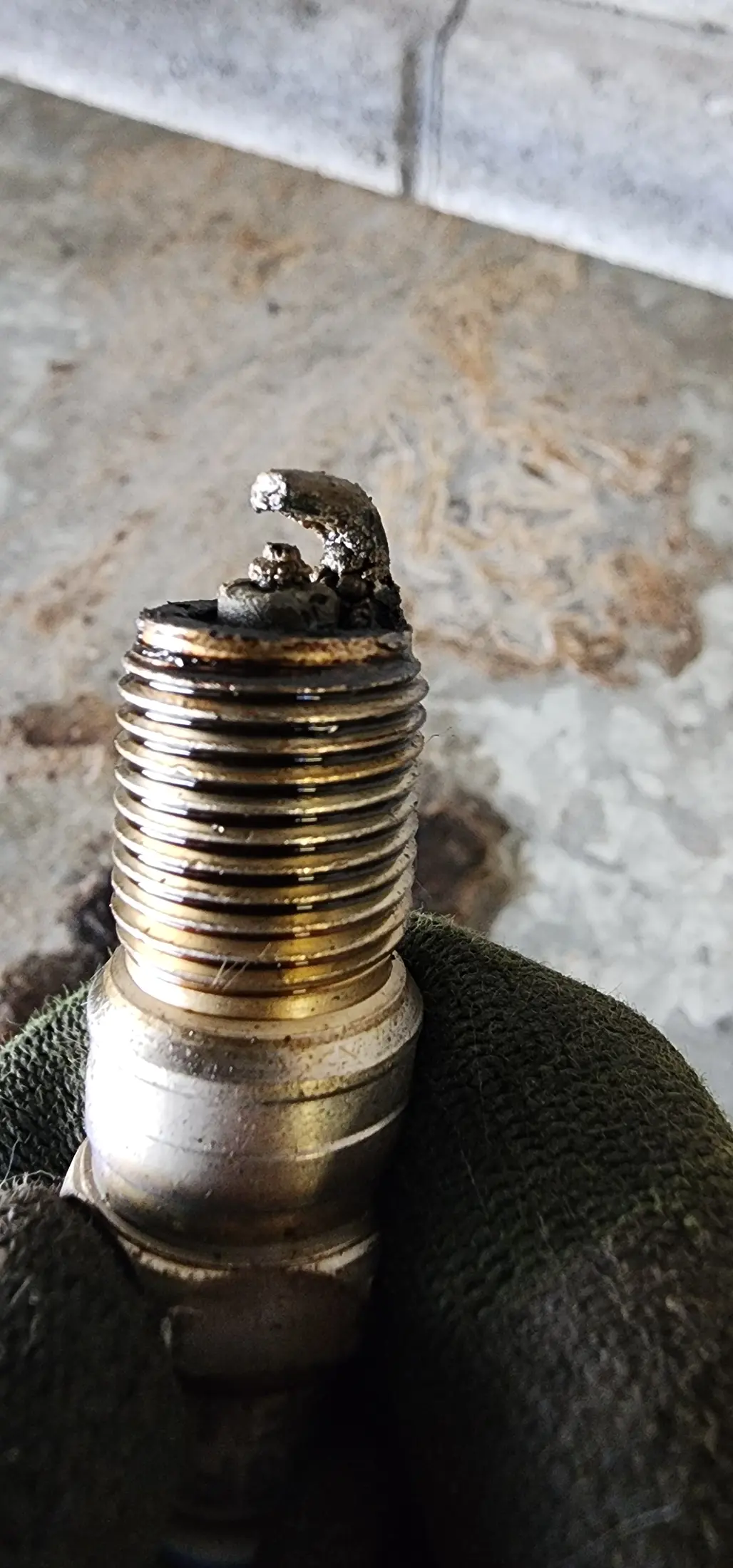
Cylinder 3 was misfiring. I changed out the spark plug, and the old one had mineral deposits and oil on the threads, but no oil on the ceramic part. I don't think it's abnormal for the spark plugs to be oily, and it had been a long time since the spark plugs were last changed out. It stopped misfiring after I changed out the spark plug, but I want to know if it's a sign of future problems. I haven't done a compression test or a leakdown test. Ideally, I could just stop with changing out one spark plug and do nothing else, but I also realize it could be anything from the valve cover gasket, to valve seals, to something bigger that'd require taking off the cylinder heads and lapping the valves, replacing the cylinder head gaskets, etc. I don't want to have to go through that again if I don't have to, since my last attempt at rebuilding an engine from a different car wasn't successful, and I was without a car for months.
You are using an out of date browser. It may not display this or other websites correctly.
You should upgrade or use an alternative browser.
You should upgrade or use an alternative browser.
'04 3.8L V6 mineral deposits and oil on #3 cylinder. Does it need a rebuild or something simpler?
- Thread starter joeybuddy96
- Start date

gkomo
now i can hopefully expect to receive the shaft
I'm going through something similar on my 5.0 on cylinder #7, however mine seems much more aggressive. I have oil on my plug threads and my plug gets fouled (but no deposits like yours) every two weeks or so. I will tell you the same thing everyone has told me to do from my thread, compression and leak down test (which i have yet to do myself).
In the meantime, i'm trying the 'cheaper route' of adding oil and fuel additives to help my situation.
How long does your plug last before getting caked with deposits and oil again?
In the meantime, i'm trying the 'cheaper route' of adding oil and fuel additives to help my situation.
How long does your plug last before getting caked with deposits and oil again?

This is the first time I've changed out the spark plug since I got it. The last time they'd been changed was over two years before that after sitting idle for two years, so I'm hoping it's all just from age and nothing to worry about.I'm going through something similar on my 5.0 on cylinder #7, however mine seems much more aggressive. I have oil on my plug threads and my plug gets fouled (but no deposits like yours) every two weeks or so. I will tell you the same thing everyone has told me to do from my thread, compression and leak down test (which i have yet to do myself).
In the meantime, i'm trying the 'cheaper route' of adding oil and fuel additives to help my situation.
How long does your plug last before getting caked with deposits and oil again?

Doesn't look good. First thing in my mind is coolant. Did some Google-ing to confirm as best I can. Hate to be the bearer of bad news, but....
View: https://youtu.be/QEn3x0y5G2o?si=2vYf55VHekzirlag
View: https://youtu.be/QEn3x0y5G2o?si=2vYf55VHekzirlag
Doesn't look good. First thing in my mind is coolant. Did some Google-ing to confirm as best I can. Hate to be the bearer of bad news, but....
View: https://youtu.be/QEn3x0y5G2o?si=2vYf55VHekzirlag
It sounds like according to that video, that could mean either the intake manifold gasket (I think there are three of them) or a leaking head gasket. The engine oil that leaks onto the pavement (that's another thing that will be hard to track down, although the transmission pan does have oil on it--I'll have to clean it to see where that's coming from) or on the dipstick doesn't have that creamy Irish liqueur color or consistency. I'll try checking one of the other spark plugs to see if it has that same residue on it later, or maybe fish the old one out of the trash to examine the color of it again. If it's got to be one of the two, I'd prefer it to be the intake manifold gasket--if it's the cylinder heads, I dread having to take all the timing components off, yoinking the cylinder heads, and especially trying to put the puzzle back together, etc..
This video says it could possibly the valve seals, or in the worst case scenario, major engine problems.
View: https://www.youtube.com/watch?v=lVCs5gWLUyI&t=1m50s
I should also mention that oil does appear to be leaking from the head gaskets, I think, but I haven't seen it in the coolant or in the transmission fluid. It's losing 1-3oz of motor oil every time I drive it about 20 miles; that's about how much motor oil ends up on the garage floor after each trip. I don't know what the cutoff point is for an acceptable amount of leakage before it becomes severe enough to make replacing the gaskets unavoidable. The last time I tried to rebuild an engine, the costs got really out of hand (I took that car's cylinder head to get resurfaced, valve job, got connecting rod and crankshaft bearings, new timing belt, tensioner, etc), so I'm thinking about just what actually *needs* to get done. I haven't done the leakdown/compression tests yet.
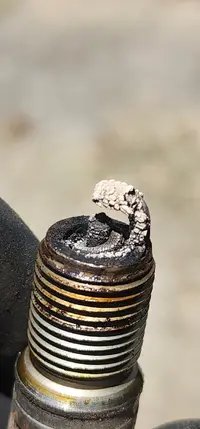
Got a misfire on cylinder 4. Swapped out the spark plug. It had a little bit of oil on the threads, but a lot of white residue on the anode. That suggests to me that it's the valve seals.
I still haven't done the leakdown test. I got a Jegs tester, but I haven't tried it out yet. It's still leaking at least 1-3oz of motor oil every 20 miles. If I'm having to replace the valve seals and fix the oil leaks at the same time, I don't know just what kind of replacement is too extreme. The timing belt has to come off, so why not the cylinder heads to change out the gaskets? Why not the oil pan to put a new gasket or RTV on that? How about replacing the piston rings? I don't know how much is too much. I just want the oil leaks to stop.
I still haven't done the leakdown test. I got a Jegs tester, but I haven't tried it out yet. It's still leaking at least 1-3oz of motor oil every 20 miles. If I'm having to replace the valve seals and fix the oil leaks at the same time, I don't know just what kind of replacement is too extreme. The timing belt has to come off, so why not the cylinder heads to change out the gaskets? Why not the oil pan to put a new gasket or RTV on that? How about replacing the piston rings? I don't know how much is too much. I just want the oil leaks to stop.
Attachments
gkomo
now i can hopefully expect to receive the shaft
Interesting, i suspect my 5.0 may have bad valve seals leaking oil into my #7 cylinder, but its just black carbon/sludge. Never white residue on the anode like your photo. So thats common of valve stem leaks?
My two thoughts are leaking valve stem seals or stuck piston rings. I foul my #7 spark plug once a week and it needs to be cleaned/replaced.
But back to your question, if you just want the oil leaks to stop, then just focus on that and don't go balls deep into the entire engine.
My two thoughts are leaking valve stem seals or stuck piston rings. I foul my #7 spark plug once a week and it needs to be cleaned/replaced.
But back to your question, if you just want the oil leaks to stop, then just focus on that and don't go balls deep into the entire engine.
I tried to do the leakdown test, but right now I'm stuck on trying to get the hose screwed into the spark plug hole. The threads are m14 1.25. The reason it's not screwing in is because the length of the thread section is too short and ends at a much wider cylindrical section--that section bumps up against the cylinder head before the threads can get a grip. No amount of fiddling around lets it screw in. I've got a Jegs kit and an Amazon kit, but both did the same thing. I tried taking off the o-ring on the Jegs hose, which did allow it to screw in, but then it's not air-tight at that point. I ran a die over the threads, so that's not the problem, either. Where can I get a hose or metal tube that isn't going to do the exact same thing? It looks like every kit on Amazon has the same short threaded section.
Am I going to have to do some big elaborate project with angle grinding a spark plug apart or something?
Am I going to have to do some big elaborate project with angle grinding a spark plug apart or something?
Attachments
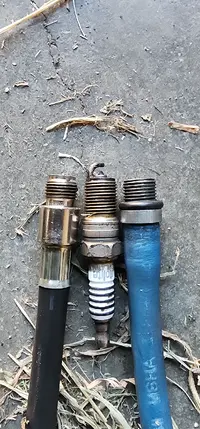
Finally got the leakdown test done. I just took the o-ring off of the hose, and even with the air leaking out of the surrounding threads, enough air was abke to run through the system to pressurize it.
Pretty much every spark plug had hardened white residue and some oil on the threads.
I tested all of them when the engine had completely cooled down and without pouring any oil into the valve covers. Idk how in the world others test it warm or hot without getting scalded or first-degree burns. Maybe with insulated sleeves and gloves. It was already hard enough without the engine being hot.
I didn't read that I was supposed to check the PCV valve during the testing. I'm hoping that doesn't mean I have to do the whole entire test over again (or even a single cylinder). Air was coming out of the oil cap during every cylinder test, so it's possible that was from the PCV valve, but without retesting all six cylinders, I won't know for sure. I can't mentally picture the path the air would flow through all the way from each cylinder to the PCV valve. I read that air from the PCV valve can mean bad piston rings, but since I tested them with the engine cold and without the seal that warm oil provides, that might not be it. I think the chances that all six cylinders would have bad piston rings is pretty low.
Cyl 1 85/80 supposedly 30% on the other one. Air mostly from vacuum hose going to air filter assembly, but also from dip stick and oil cap. Some from throttle body. Checked it again after I checked the other 5 cylinders, got 95/85, 20%; no air from anywhere but the oil cap.
Cyl 2 72/69 (keep in mind the absolute psi going into it has more to do with how impatient I was with the air compressor and trying to get the TDC. I'm more concerned with the relative leakage psi), 30%-20% on other one. Some air coming from oil cap, no air from anywhere else. Checked it after the other 5, got 96/86, 25%, no air from anywhere but the oil cap.
Cyl 3 92/90, 0% on the second one. Barely any air coming from the oil cap. No air coming from anywhere else.
Cyl 4 79/76, 17%. Some air from the oil cap, no air from anywhere else.
Cyl 5 82/78, 7%. Some air from the oil cap, no air from anywhere else.
Cyl 6 94/84, 10%. Some air from the oil cap, no air from anywhere else.
To sum up, every port pushed at least some air out the oil cap, with pretty much zero air from everywhere else, including the radiator. No cylinder tested worse than 10% to 25% leakage, although the 0% leakage on cyl 3 and 25% on cyl 1 is a significant delta, I think. All of the spark plugs had hard, white residue built up on them, some more than others. The PCV valve not being checked during testing leaves me with fewer hints than guesses.
Pretty much every spark plug had hardened white residue and some oil on the threads.
I tested all of them when the engine had completely cooled down and without pouring any oil into the valve covers. Idk how in the world others test it warm or hot without getting scalded or first-degree burns. Maybe with insulated sleeves and gloves. It was already hard enough without the engine being hot.
I didn't read that I was supposed to check the PCV valve during the testing. I'm hoping that doesn't mean I have to do the whole entire test over again (or even a single cylinder). Air was coming out of the oil cap during every cylinder test, so it's possible that was from the PCV valve, but without retesting all six cylinders, I won't know for sure. I can't mentally picture the path the air would flow through all the way from each cylinder to the PCV valve. I read that air from the PCV valve can mean bad piston rings, but since I tested them with the engine cold and without the seal that warm oil provides, that might not be it. I think the chances that all six cylinders would have bad piston rings is pretty low.
Cyl 1 85/80 supposedly 30% on the other one. Air mostly from vacuum hose going to air filter assembly, but also from dip stick and oil cap. Some from throttle body. Checked it again after I checked the other 5 cylinders, got 95/85, 20%; no air from anywhere but the oil cap.
Cyl 2 72/69 (keep in mind the absolute psi going into it has more to do with how impatient I was with the air compressor and trying to get the TDC. I'm more concerned with the relative leakage psi), 30%-20% on other one. Some air coming from oil cap, no air from anywhere else. Checked it after the other 5, got 96/86, 25%, no air from anywhere but the oil cap.
Cyl 3 92/90, 0% on the second one. Barely any air coming from the oil cap. No air coming from anywhere else.
Cyl 4 79/76, 17%. Some air from the oil cap, no air from anywhere else.
Cyl 5 82/78, 7%. Some air from the oil cap, no air from anywhere else.
Cyl 6 94/84, 10%. Some air from the oil cap, no air from anywhere else.
To sum up, every port pushed at least some air out the oil cap, with pretty much zero air from everywhere else, including the radiator. No cylinder tested worse than 10% to 25% leakage, although the 0% leakage on cyl 3 and 25% on cyl 1 is a significant delta, I think. All of the spark plugs had hard, white residue built up on them, some more than others. The PCV valve not being checked during testing leaves me with fewer hints than guesses.
Attachments
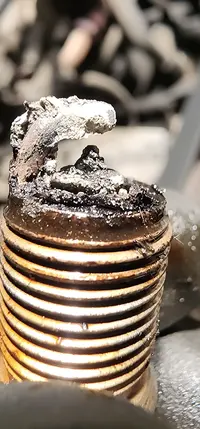
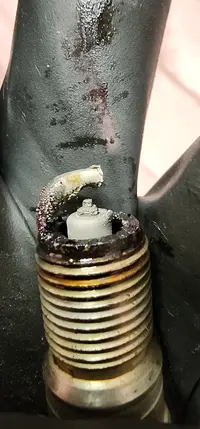

Both of those plug indicate oil (of course) and very lean.
Here is what I would do at this point:
Buy our build a cheap smoke machine. Start at the throttle body then hold the blade open. I think you have a significant vacuum leak somewhere.
Look into an air/oil separator rig for your year car.
Replace the plugs and change the fluids.
Next, we need to get a good look at fuel pressure. How old is your fuel pump? Also, take a look at your PCV screen and valve and see what kind of shape they're in.
Here is what I would do at this point:
Buy our build a cheap smoke machine. Start at the throttle body then hold the blade open. I think you have a significant vacuum leak somewhere.
Look into an air/oil separator rig for your year car.
Replace the plugs and change the fluids.
Next, we need to get a good look at fuel pressure. How old is your fuel pump? Also, take a look at your PCV screen and valve and see what kind of shape they're in.
@Noobz347 I've never changed the fuel pump or fuel filter in the year and a half since I've owned it, and I'm unaware of the previous owner ever having replaced it.
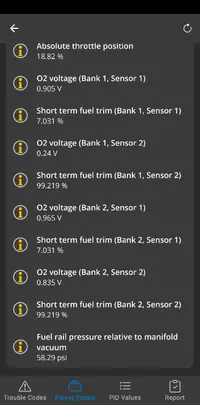
I should mention that I got all four of the o2 sensors changed out about a month ago. They'd been throwing error codes for several months related to a lean mixture. It's possible that the spark plugs could've been messed up during that time by the o2 sensors going bad.
I made an attempt at a DIY smoke machine, but it put barely any pressure into the vacuum lines. I'll either make a second attempt at making a more airtight DIY machine or get a cheap one like you mentioned. The cheapest one is about $35 on Amazon, but the paint bucket (that has never had paint in it) in my garage is free.
Has anyone written up a guide for the base model sn95? A lot of the people that have written guides for installing an aftermarket AOS are for GT or Cobras. It seems to me that AOS systems are targeted at racing rather than dailies, because you have to keep draining them out before the oil starts blocking the PCV hoses. I don't fully understand the principle behind AOSes. Ordinarily, the PCV valve filters liquid oil from getting into the PCV hose and the air/oil vapors go to the intake plenum, right? So does the AOS catch oil that has cooled down enough that it condenses back into liquid?
I should mention that I got all four of the o2 sensors changed out about a month ago. They'd been throwing error codes for several months related to a lean mixture. It's possible that the spark plugs could've been messed up during that time by the o2 sensors going bad.
I made an attempt at a DIY smoke machine, but it put barely any pressure into the vacuum lines. I'll either make a second attempt at making a more airtight DIY machine or get a cheap one like you mentioned. The cheapest one is about $35 on Amazon, but the paint bucket (that has never had paint in it) in my garage is free.
Has anyone written up a guide for the base model sn95? A lot of the people that have written guides for installing an aftermarket AOS are for GT or Cobras. It seems to me that AOS systems are targeted at racing rather than dailies, because you have to keep draining them out before the oil starts blocking the PCV hoses. I don't fully understand the principle behind AOSes. Ordinarily, the PCV valve filters liquid oil from getting into the PCV hose and the air/oil vapors go to the intake plenum, right? So does the AOS catch oil that has cooled down enough that it condenses back into liquid?
Has anyone written up a guide for the base model sn95? A lot of the people that have written guides for installing an aftermarket AOS are for GT or Cobras. It seems to me that AOS systems are targeted at racing rather than dailies, because you have to keep draining them out before the oil starts blocking the PCV hoses. I don't fully understand the principle behind AOSes. Ordinarily, the PCV valve filters liquid oil from getting into the PCV hose and the air/oil vapors go to the intake plenum, right? So does the AOS catch oil that has cooled down enough that it condenses back into liquid?
It's not a matter of cooling. The oil gets atomized from all of the activity inside of the engine block. A separator pulls the oil mist from that metered air, out before it gets to the intake.
I got the fuel filter changed out. I ordered a new fuel pump, but the pump wasn't compatible with the OEM version, and they didn't include the adapter pigtail, so I've got to go through the whole rigmarole with returning and getting a new one. I didn't know there was a difference between two kinds of pumps until I'd gotten the old one all the way out, so I had to put it all back together without installing a new one, and I'm going to have to do all of it over again once I get another replacement pump.

Small update: I got an Autobest pump, and it's the OEM version. It came with a pigtail, so even if the pump was incompatible, it'd still have worked. I'll work on it probably some time this week.
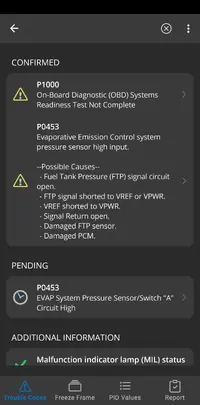
In the meantime, it's been throwing error codes and the service engine light is on. Back when I was attempting to change out the pump, the tank slipped off the jack, so it could've put tension on a connector or tube, so maybe I broke something. I'd put everything back the way it was and didn't notice anything different, so I have no idea where to start with this problem. There's like a dozen tubes and connectors I could've damaged. I looked around the tank at the connectors that are visible, but everything seemed secure and connected and undamaged. Just one more bit of routine preventative maintenance that is now potentially a disproportionately big problem. Any ideas on what to look for when I'm replacing the pump?
In the meantime, it's been throwing error codes and the service engine light is on. Back when I was attempting to change out the pump, the tank slipped off the jack, so it could've put tension on a connector or tube, so maybe I broke something. I'd put everything back the way it was and didn't notice anything different, so I have no idea where to start with this problem. There's like a dozen tubes and connectors I could've damaged. I looked around the tank at the connectors that are visible, but everything seemed secure and connected and undamaged. Just one more bit of routine preventative maintenance that is now potentially a disproportionately big problem. Any ideas on what to look for when I'm replacing the pump?
Attachments
gkomo
now i can hopefully expect to receive the shaft
I don't think anything down by the tank would affect the O2 sensor codes... need to dive deeper into those.
Similar threads
- Replies
- 17
- Views
- 836
- Replies
- 14
- Views
- 442

- Replies
- 11
- Views
- 446

- Replies
- 3
- Views
- 504

What's it Worth?
1997 Cobra, a ton of mods and restoration
- Replies
- 2
- Views
- 340