
So a while back my check fuel cap light came on. Fuel cap was on, after about 20 miles my check engine light came on. I pulled the codes and it was a code for the fuel cap. I got a new one from autozone, disconnected the batteries to clear the codes, and took it out. For about 50 miles everything was fine. Then the check fuel cap light came on, a little while later the CEL came on. Do I need to buy a fuel cap from Ford? What else could it be?
You are using an out of date browser. It may not display this or other websites correctly.
You should upgrade or use an alternative browser.
You should upgrade or use an alternative browser.
Check fuel cap and CEL
- Thread starter alcook59
- Start date

hotcobra03
Active Member
po 457
hey good luck with that...i have po 455/457.. thier is a tsb out on this problem.i have found when my lite comes on the car will have drivablity problems like stalling at a lite or rpms drop when stopping..see if this helps? Printable View (116 KB)
Article No.
03-20-3 DRIVEABILITY - MALFUNCTION INDICATOR LAMP (MIL) ILLUMINATED WITH DTC'S P0442, P0455, P0456, P0457, P1442 OR CHECK FUEL CAP LAMP ILLUMINATED WITH DTC P0457
Publication Date: September 24, 2003
FORD: 1997-2000 CONTOUR
1997-2002 ESCORT
1997-2003 CROWN VICTORIA, MUSTANG, TAURUS
1998-2003 ESCORT ZX2
2000-2003 FOCUS
2002-2003 THUNDERBIRD
1997 F-250 HD
1997-99 F-250 LD
1997-2003 E SERIES, EXPEDITION, EXPLORER, F-150, RANGER, WINDSTAR
1999-2003 F SUPER DUTY
2000-2003 EXCURSION
2001-2003 ESCAPE, EXPLORER SPORT TRAC, EXPLORER SPORT
LINCOLN: 1997-98 MARK VIII
1997-2002 CONTINENTAL
1997-2003 TOWN CAR
2000-2003 LS
1998-2003 NAVIGATOR
2002-2003 BLACKWOOD
MERCURY: 1997-99 TRACER
1997-2000 MYSTIQUE
1997-2003 GRAND MARQUIS, SABLE
1999-2002 COUGAR
1997-2003 MOUNTAINEER
This article supersedes TSB 03-9-8 to update the vehicle lines and Service Procedures.
ISSUE:
Some vehicles may exhibit a Malfunction Indicator Lamp (MIL) illuminated with Diagnostic Trouble Codes (DTCs) P0442, P0455, P0456, P0457 or P1442 or a "Check Fuel Cap" Lamp illuminated with DTC P0457 for the Evaporative Emission System. This may be caused by loose or leaking hoses, loose or broken fuel cap, a leak at the top of the fuel filler pipe neck, etc.
ACTION:
Use the Rotunda Leak Detector Smoke Machine (Part 218-00001) or equivalent, to locate and repair leaks in the Evaporative Emission System. Refer to the following Service Procedure for details.
Definitions of Acronyms
CVS Canister Vent Solenoid
DTC Diagnostic Trouble Code
EVAP Evaporative Emissions System
EVMV Electronic Vapor Management Valve
FTP Fuel Tank Pressure
MIL Malfunction Indicator Lamp
NGS New Generation STAR Tester
PID Parameter Identifier
WDS Worldwide Diagnostic System
SERVICE PROCEDURE
NOTE: THIS PROCEDURE SUPERSEDES ALL OTHER PROCEDURES PUBLISHED IN SERVICE MANUALS AND TSB ARTICLES.
NOTE: MANY EVAP LEAKS ARE CAUSED BY A LOOSE OR FAULTY CAP. IF THE FUEL CAP IS SUSPECT DURING VISUAL INSPECTION, DO NOT DISTURB THE FUEL CAP UNTIL THE DIAGNOSTIC PROCEDURE IS COMPLETE. IF THE LEAK VERIFICATION FAILS, THE CAP CAN BE REPOSITIONED OR REPLACED AND THE TEST REPEATED. THIS ACTION WILL ISOLATE THE CAP FROM THE REST OF THE EVAP SYSTEM AS A POTENTIAL CONCERN. IF DEBRIS ON THE SEALING SURFACE OF THE CAP APPEARS TO BE THE SOURCE OF THE LEAK, CLEAN THE CAP AND REINSTALL.
OVERVIEW OF TEST PROCEDURES
NOTE: SEE ( FIGURE 1 ) AT END OF ARTICLE FOR TEST PROCEDURE FLOWCHART.
This TSB provides the following procedures:
Check the EVAP Canister Purge Valve (9C915) for a no flow condition
Locate a leak so that a repair can be performed
Verify repair by utilizing a metered air pressure test
EVAP CANISTER PURGE VALVE NO FLOW TEST
Using WDS Datalogger select the following PID's: EVAPVM# (or EVMV#), EVAPCV# and FTP.
Start the vehicle.
Close both the Canister Vent Solenoid (CVS) (EVAPCV# On or 100% duty cycle) and the EVAP Canister Purge Valve (EVAPVM# Off or zero % duty cycle).
While monitoring the FTP PID, command open the EVAP Canister Purge Valve with the EVAPVM# PID to 100% duty.
If the FTP decreases and/or the RPM changes and/or the engine stalls, the test passed. Turn off engine and proceed to test procedures below. Otherwise replace the EVAP Canister Purge Valve, verify the repair by repeating the No Flow Test and return vehicle.
SYSTEM LEAK CHECK (SMOKE TEST PROCEDURE)
Disconnect the larger of two manifold vacuum lines at the EVAP Canister Purge Valve and cap it at the EVAP Canister Purge Valve (see Figure 2 ).
Connect the Smoke Machine power cables to vehicle battery. The "Power Indicator Lamp" should be on indicating a good battery contact.
Position the selector valve on Rotunda's Smoke Machine Control Panel to "SMOKE".
Locate the vehicle's Evaporative Emission Service Test Port and remove the green cap. The EVAP Service Test Port is located close to or on the EVAP Canister Purge Valve.
WARNING: DO NOT REMOVE THE SCHRADER VALVE. REMOVING THE SCHRADER VALVE FROM THE TEST PORT ON VEHICLES EQUIPPED WITH THE ELECTRONIC VAPOR MANAGEMENT VALVE (9G641) AND/OR ELECTRONIC VAPOR MANAGEMENT VALVE & BRACKET ASSEMBLY (9G683) (SEE FIGURE 3 ), OR EVAP CANISTER PURGE VALVE (9C915) AND/OR EVAP CANISTER PURGE VALVE & BRACKET ASSEMBLY (9F933) (SEE FIGURE 2 ) WILL PERMANENTLY DAMAGE THE VALVE.
Install the EVAP Emission Test Port Adapter that is provided with the Rotunda's Smoke Machine to EVAP Canister Purge Valve test port.
NOTE: SPECIAL PROCEDURES HAVE BEEN DESIGNATED FOR WINDSTAR, LS, THUNDERBIRD & PZEV FOCUS BECAUSE THEY HAVE A CHECK VALVE THAT WILL PREVENT SMOKE FROM ENTERING THE FILLER NECK.
Connect black smoke hose nozzle tip to the EVAP Emission Test Port Adapter. For all except Windstar, LS, Thunderbird & PZEV Focus - Use NGS or WDS to close CVS. (CVS WILL REOPEN AFTER NINE (9) MINUTES OF CONTINUOUS OPERATION).
For all except Windstar, LS, Thunderbird & PZEV Focus - Remove the fuel cap from the vehicle. Depress remote starter button: Smoke will be introduced into the EVAP Emission System. Secure the fuel cap once smoke is seen exiting from the fuel tank's neck area. For Windstar, LS, Thunderbird & PZEV Focus, do not remove fuel cap. Depress starter button and introduce smoke to system until it can be seen exiting the CVS (located by filler neck). Once smoke is seen, use NGS or WDS to close CVS. (CVS WILL REOPEN AFTER NINE (9) MINUTES OF CONTINUOUS OPERATION).
Press and release the remote starter button in intervals of approximately 15 seconds on and 15 seconds off. Use the halogen light provided with the Smoke Machine to look for smoke in the engine compartment, EVAP hoses to EVAP Canister Purge Valve, CVS, carbon canister and area around the fuel cap. Wiggle fuel vapor lines to check for leaks. Check for leaks in areas that are difficult to access, such as connections on top of the tank where connections may be or inside frame rails. Use the black light to ensure that there are no leaks. If a leak is detected, repair as necessary. If the leak is not detected from the top, check under the bottom of vehicle. Inspect the EVAP hoses running to the carbon canister, fuel filler neck, CVS, and EVAP Canister Purge Valve. Go to LEAK VERIFICATION to verify any repair or if no leak is found.
LEAK VERIFICATION (METERED AIR SYSTEM)
Position the selector valve located on the Smoke Machine control panel to "METER".
Verify calibration of the flow meter by using the .020" calibrated leak orifice. To do this, insert air supply hose (transparent hose) nozzle tip into appropriate EVAP System calibrated leak orifice located on the front of the Smoke Machine panel.
TURN ON: Depress the remote starter button. Observe the position of the flow meter indicator ball. Position the flow meter red pointer flag so it aligns with the measurement of the indicator ball. Release the button and remove the air supply hose nozzle tip from the EVAP System calibrated leak orifice.
NOTE: THIS FLOW METER CALIBRATION MEASUREMENT INDICATES THE VEHICLE PASS OR FAIL CRITERIA BASED ON THE .020" EVAP SYSTEM LEAK STANDARD.
Connect the transparent air supply hose nozzle tip into the EVAP Service Test Port adapter.
Use NGS or WDS Diagnostic tool to CLOSE the CVS.
Depress the remote starter button on the Rotunda's Smoke Leak Detector. The indicator ball in the flowmeter will go all the way to the top indicating the system is being pressurized. Continue to depress the remote starter button until the ball stops descending. Once the indicator ball has stopped descending, observe if it is above or below the red indicator flag. If performing this verification following a repair, go to Step 7. If performing this verification after performing the SYSTEM LEAK CHECK (SMOKE TEST PROCEDURE), go to Step 8.
Leak Verification After Repair
If the measurement is below the indicator flag the system has passed. The test procedure is complete. Remove the Smoke Machine Test equipment from the vehicle and reconnect the large EVAP Canister Purge Valve manifold vacuum hose and the test port's green cap.
If the measurement is above the indicator flag, repeat SYSTEM LEAK CHECK (SMOKE TEST PROCEDURE).
Leak Verification After Passing SYSTEM LEAK CHECK (SMOKE TEST PROCEDURE)
If the measurement is below the indicator flag the system has passed, go to Step 9.
If the measurement is above the indicator flag, repeat SYSTEM LEAK CHECK (SMOKE TEST PROCEDURE).
Using WDS Datalogger or NGS select the FTPV PID.
Remove Fuel Cap and turn the vehicle's ignition switch to the run position and check the FTPV PID.
The nominal value for the FTPV PID is 2.6V. If the value is greater than 2.8V or less than 2.4V, the FTP sensor is out of range and should be replaced. Verify the repair by checking to see if the new sensor is in range. For all except Windstar, LS, Thunderbird & PZEV Focus - if the sensor is within range, the concern is no longer present. (Windstar, LS, Thunderbird & PZEV Focus go to Step 12.)
For Windstar, LS, Thunderbird & PZEV Focus only verify that filler neck clamps are in good working order and tightened. Repair as necessary. If no problem is found with clamps, replace the fuel cap.
OTHER APPLICABLE ARTICLES:
NONE
SUPERSEDES:
03-9-8
Figure 1 - Article 03-20-3
Figure 2 - Article 03-20-3
Figure 3 - Article 03-20-3
WARRANTY STATUS:
INFORMATION ONLY
--------------------------------------------------------------------------------
NOTE: The information in Technical Service Bulletins is intended for use by trained, professional technicians with the knowledge, tools, and equipment to do the job properly and safely. It informs these technicians of conditions that may occur on some vehicles, or provides information that could assist in proper vehicle service. The procedures should not be performed by "do-it-yourselfers". Do not assume that a condition described affects your car or truck. Contact a Ford, Lincoln, or Mercury dealership to determine whether the Bulletin applies to your vehicle.
Copyright © 2003 Ford Motor Company
hey good luck with that...i have po 455/457.. thier is a tsb out on this problem.i have found when my lite comes on the car will have drivablity problems like stalling at a lite or rpms drop when stopping..see if this helps? Printable View (116 KB)
Article No.
03-20-3 DRIVEABILITY - MALFUNCTION INDICATOR LAMP (MIL) ILLUMINATED WITH DTC'S P0442, P0455, P0456, P0457, P1442 OR CHECK FUEL CAP LAMP ILLUMINATED WITH DTC P0457
Publication Date: September 24, 2003
FORD: 1997-2000 CONTOUR
1997-2002 ESCORT
1997-2003 CROWN VICTORIA, MUSTANG, TAURUS
1998-2003 ESCORT ZX2
2000-2003 FOCUS
2002-2003 THUNDERBIRD
1997 F-250 HD
1997-99 F-250 LD
1997-2003 E SERIES, EXPEDITION, EXPLORER, F-150, RANGER, WINDSTAR
1999-2003 F SUPER DUTY
2000-2003 EXCURSION
2001-2003 ESCAPE, EXPLORER SPORT TRAC, EXPLORER SPORT
LINCOLN: 1997-98 MARK VIII
1997-2002 CONTINENTAL
1997-2003 TOWN CAR
2000-2003 LS
1998-2003 NAVIGATOR
2002-2003 BLACKWOOD
MERCURY: 1997-99 TRACER
1997-2000 MYSTIQUE
1997-2003 GRAND MARQUIS, SABLE
1999-2002 COUGAR
1997-2003 MOUNTAINEER
This article supersedes TSB 03-9-8 to update the vehicle lines and Service Procedures.
ISSUE:
Some vehicles may exhibit a Malfunction Indicator Lamp (MIL) illuminated with Diagnostic Trouble Codes (DTCs) P0442, P0455, P0456, P0457 or P1442 or a "Check Fuel Cap" Lamp illuminated with DTC P0457 for the Evaporative Emission System. This may be caused by loose or leaking hoses, loose or broken fuel cap, a leak at the top of the fuel filler pipe neck, etc.
ACTION:
Use the Rotunda Leak Detector Smoke Machine (Part 218-00001) or equivalent, to locate and repair leaks in the Evaporative Emission System. Refer to the following Service Procedure for details.
Definitions of Acronyms
CVS Canister Vent Solenoid
DTC Diagnostic Trouble Code
EVAP Evaporative Emissions System
EVMV Electronic Vapor Management Valve
FTP Fuel Tank Pressure
MIL Malfunction Indicator Lamp
NGS New Generation STAR Tester
PID Parameter Identifier
WDS Worldwide Diagnostic System
SERVICE PROCEDURE
NOTE: THIS PROCEDURE SUPERSEDES ALL OTHER PROCEDURES PUBLISHED IN SERVICE MANUALS AND TSB ARTICLES.
NOTE: MANY EVAP LEAKS ARE CAUSED BY A LOOSE OR FAULTY CAP. IF THE FUEL CAP IS SUSPECT DURING VISUAL INSPECTION, DO NOT DISTURB THE FUEL CAP UNTIL THE DIAGNOSTIC PROCEDURE IS COMPLETE. IF THE LEAK VERIFICATION FAILS, THE CAP CAN BE REPOSITIONED OR REPLACED AND THE TEST REPEATED. THIS ACTION WILL ISOLATE THE CAP FROM THE REST OF THE EVAP SYSTEM AS A POTENTIAL CONCERN. IF DEBRIS ON THE SEALING SURFACE OF THE CAP APPEARS TO BE THE SOURCE OF THE LEAK, CLEAN THE CAP AND REINSTALL.
OVERVIEW OF TEST PROCEDURES
NOTE: SEE ( FIGURE 1 ) AT END OF ARTICLE FOR TEST PROCEDURE FLOWCHART.
This TSB provides the following procedures:
Check the EVAP Canister Purge Valve (9C915) for a no flow condition
Locate a leak so that a repair can be performed
Verify repair by utilizing a metered air pressure test
EVAP CANISTER PURGE VALVE NO FLOW TEST
Using WDS Datalogger select the following PID's: EVAPVM# (or EVMV#), EVAPCV# and FTP.
Start the vehicle.
Close both the Canister Vent Solenoid (CVS) (EVAPCV# On or 100% duty cycle) and the EVAP Canister Purge Valve (EVAPVM# Off or zero % duty cycle).
While monitoring the FTP PID, command open the EVAP Canister Purge Valve with the EVAPVM# PID to 100% duty.
If the FTP decreases and/or the RPM changes and/or the engine stalls, the test passed. Turn off engine and proceed to test procedures below. Otherwise replace the EVAP Canister Purge Valve, verify the repair by repeating the No Flow Test and return vehicle.
SYSTEM LEAK CHECK (SMOKE TEST PROCEDURE)
Disconnect the larger of two manifold vacuum lines at the EVAP Canister Purge Valve and cap it at the EVAP Canister Purge Valve (see Figure 2 ).
Connect the Smoke Machine power cables to vehicle battery. The "Power Indicator Lamp" should be on indicating a good battery contact.
Position the selector valve on Rotunda's Smoke Machine Control Panel to "SMOKE".
Locate the vehicle's Evaporative Emission Service Test Port and remove the green cap. The EVAP Service Test Port is located close to or on the EVAP Canister Purge Valve.
WARNING: DO NOT REMOVE THE SCHRADER VALVE. REMOVING THE SCHRADER VALVE FROM THE TEST PORT ON VEHICLES EQUIPPED WITH THE ELECTRONIC VAPOR MANAGEMENT VALVE (9G641) AND/OR ELECTRONIC VAPOR MANAGEMENT VALVE & BRACKET ASSEMBLY (9G683) (SEE FIGURE 3 ), OR EVAP CANISTER PURGE VALVE (9C915) AND/OR EVAP CANISTER PURGE VALVE & BRACKET ASSEMBLY (9F933) (SEE FIGURE 2 ) WILL PERMANENTLY DAMAGE THE VALVE.
Install the EVAP Emission Test Port Adapter that is provided with the Rotunda's Smoke Machine to EVAP Canister Purge Valve test port.
NOTE: SPECIAL PROCEDURES HAVE BEEN DESIGNATED FOR WINDSTAR, LS, THUNDERBIRD & PZEV FOCUS BECAUSE THEY HAVE A CHECK VALVE THAT WILL PREVENT SMOKE FROM ENTERING THE FILLER NECK.
Connect black smoke hose nozzle tip to the EVAP Emission Test Port Adapter. For all except Windstar, LS, Thunderbird & PZEV Focus - Use NGS or WDS to close CVS. (CVS WILL REOPEN AFTER NINE (9) MINUTES OF CONTINUOUS OPERATION).
For all except Windstar, LS, Thunderbird & PZEV Focus - Remove the fuel cap from the vehicle. Depress remote starter button: Smoke will be introduced into the EVAP Emission System. Secure the fuel cap once smoke is seen exiting from the fuel tank's neck area. For Windstar, LS, Thunderbird & PZEV Focus, do not remove fuel cap. Depress starter button and introduce smoke to system until it can be seen exiting the CVS (located by filler neck). Once smoke is seen, use NGS or WDS to close CVS. (CVS WILL REOPEN AFTER NINE (9) MINUTES OF CONTINUOUS OPERATION).
Press and release the remote starter button in intervals of approximately 15 seconds on and 15 seconds off. Use the halogen light provided with the Smoke Machine to look for smoke in the engine compartment, EVAP hoses to EVAP Canister Purge Valve, CVS, carbon canister and area around the fuel cap. Wiggle fuel vapor lines to check for leaks. Check for leaks in areas that are difficult to access, such as connections on top of the tank where connections may be or inside frame rails. Use the black light to ensure that there are no leaks. If a leak is detected, repair as necessary. If the leak is not detected from the top, check under the bottom of vehicle. Inspect the EVAP hoses running to the carbon canister, fuel filler neck, CVS, and EVAP Canister Purge Valve. Go to LEAK VERIFICATION to verify any repair or if no leak is found.
LEAK VERIFICATION (METERED AIR SYSTEM)
Position the selector valve located on the Smoke Machine control panel to "METER".
Verify calibration of the flow meter by using the .020" calibrated leak orifice. To do this, insert air supply hose (transparent hose) nozzle tip into appropriate EVAP System calibrated leak orifice located on the front of the Smoke Machine panel.
TURN ON: Depress the remote starter button. Observe the position of the flow meter indicator ball. Position the flow meter red pointer flag so it aligns with the measurement of the indicator ball. Release the button and remove the air supply hose nozzle tip from the EVAP System calibrated leak orifice.
NOTE: THIS FLOW METER CALIBRATION MEASUREMENT INDICATES THE VEHICLE PASS OR FAIL CRITERIA BASED ON THE .020" EVAP SYSTEM LEAK STANDARD.
Connect the transparent air supply hose nozzle tip into the EVAP Service Test Port adapter.
Use NGS or WDS Diagnostic tool to CLOSE the CVS.
Depress the remote starter button on the Rotunda's Smoke Leak Detector. The indicator ball in the flowmeter will go all the way to the top indicating the system is being pressurized. Continue to depress the remote starter button until the ball stops descending. Once the indicator ball has stopped descending, observe if it is above or below the red indicator flag. If performing this verification following a repair, go to Step 7. If performing this verification after performing the SYSTEM LEAK CHECK (SMOKE TEST PROCEDURE), go to Step 8.
Leak Verification After Repair
If the measurement is below the indicator flag the system has passed. The test procedure is complete. Remove the Smoke Machine Test equipment from the vehicle and reconnect the large EVAP Canister Purge Valve manifold vacuum hose and the test port's green cap.
If the measurement is above the indicator flag, repeat SYSTEM LEAK CHECK (SMOKE TEST PROCEDURE).
Leak Verification After Passing SYSTEM LEAK CHECK (SMOKE TEST PROCEDURE)
If the measurement is below the indicator flag the system has passed, go to Step 9.
If the measurement is above the indicator flag, repeat SYSTEM LEAK CHECK (SMOKE TEST PROCEDURE).
Using WDS Datalogger or NGS select the FTPV PID.
Remove Fuel Cap and turn the vehicle's ignition switch to the run position and check the FTPV PID.
The nominal value for the FTPV PID is 2.6V. If the value is greater than 2.8V or less than 2.4V, the FTP sensor is out of range and should be replaced. Verify the repair by checking to see if the new sensor is in range. For all except Windstar, LS, Thunderbird & PZEV Focus - if the sensor is within range, the concern is no longer present. (Windstar, LS, Thunderbird & PZEV Focus go to Step 12.)
For Windstar, LS, Thunderbird & PZEV Focus only verify that filler neck clamps are in good working order and tightened. Repair as necessary. If no problem is found with clamps, replace the fuel cap.
OTHER APPLICABLE ARTICLES:
NONE
SUPERSEDES:
03-9-8
Figure 1 - Article 03-20-3
Figure 2 - Article 03-20-3
Figure 3 - Article 03-20-3
WARRANTY STATUS:
INFORMATION ONLY
--------------------------------------------------------------------------------
NOTE: The information in Technical Service Bulletins is intended for use by trained, professional technicians with the knowledge, tools, and equipment to do the job properly and safely. It informs these technicians of conditions that may occur on some vehicles, or provides information that could assist in proper vehicle service. The procedures should not be performed by "do-it-yourselfers". Do not assume that a condition described affects your car or truck. Contact a Ford, Lincoln, or Mercury dealership to determine whether the Bulletin applies to your vehicle.
Copyright © 2003 Ford Motor Company
hotcobra03
Active Member
gasket
was this something you fixed yourself...i am getting ready to fix mine,,,the vacuum hose that goes from tb inlet tube to purge valve in fender,has crumbled,,if you rub it you hand gets black and it doesnt just wipe off,,,...the cap was changed first and than i found that tsb
mine did the same thing turned out to be the rubber gasket on the poin on the filler tube that goes ito the gas tank
was this something you fixed yourself...i am getting ready to fix mine,,,the vacuum hose that goes from tb inlet tube to purge valve in fender,has crumbled,,if you rub it you hand gets black and it doesnt just wipe off,,,...the cap was changed first and than i found that tsb

eliteJAE
Member
mine did the same thing turned out to be the rubber gasket on the poin on the filler tube that goes ito the gas tank
+1
i got the same codes, and it turned out to be the rubber grommet where the filler neck meets the tank.
I chose to drop the tank to replace this since mine was really degraded and crumbling, i wanted to make sure nothing fell into the tank. If you choose to do it this way, just put your car up on ramps or stands, then use a jack with a 2x4 to lower the tank enough so you can reach in and replace it.
eliteJAE
Member
if you mean the plastic thing where the filler meets the tanks, its the fuel filler or fuel tank grommet, its like 10 bucks at the ford dealership.
eliteJAE
Member
 you mean at the beginning of the filler neck where you put the nozzle in? the little valve there?? or at the end of the filler neck where it meets the tank??
eliteJAE
Member
ok so on the very end, around the filler neck, there is a rubber grommet that seals the gap between the filler neck and the tank. This is what fails very often on mustangs, it just crumbles after time. This is what i replaced.
Other than that, im not aware of what other plastic you mean, i dunno if you mean actually INSIDE the filler tube at the end maybe? i thought there was just a screen there??
Other than that, im not aware of what other plastic you mean, i dunno if you mean actually INSIDE the filler tube at the end maybe? i thought there was just a screen there??
hotcobra03
Active Member
hotcobra03
Active Member
parts
SECTION 303-13: Evaporative Emissions 2003 Mustang Workshop Manual
DESCRIPTION AND OPERATION Procedure revision date: 11/12/2002
--------------------------------------------------------------------------------
Evaporative Emissions Printable View (79 KB)
Component Location
Item Part Number Description
1 9F980 Evaporative emission test port
2 9C915 Evaporative emission canister purge valve
3 9F945 Canister vent solenoid
4 9D653 Evaporative emission canister
5 9C047 Fuel vapor control valve tube assembly
The evaporative emission system:
is equipped with an on-board refueling vapor recovery (ORVR) system.
prevents hydrocarbon emissions from reaching the atmosphere.
stores fuel vapors in the evaporative emission (EVAP) canister that are generated during vehicle operation or hot soak, or vehicle refueling, until they can be consumed by the engine.
routes the stored fuel vapors to the engine during engine operation.
is controlled by the powertrain control module (PCM) which uses various sensor inputs to calculate the desired amount of purge flow. The PCM regulates the purge flow, induced by the application of intake manifold vacuum, by varying the duty cycle applied to the EVAP canister purge valve.
has an evaporative emission test port for test purposes.
The fuel vapors are routed:
from the fuel tank through the fuel vapor control valve and fuel vapor vent valve.
to the EVAP canister through a vapor line.
to the engine when the EVAP canister purge valve is opened by the PCM.
The fuel tank pressure (FTP) sensor:
monitors the pressure levels in the fuel tank.
communicates the pressure reading to the PCM during the OBDII leak test.
is located in-line above the fuel tank and is serviced as part of the fuel vapor control valve tube assembly.
The evaporative emission canister:
is located in the left rear quarter panel.
contains activated carbon.
stores fuel vapor.
The fuel tank filler cap:
relieves system pressure above 14 kPa (56.21 inches H 2 O).
relieves system vacuum below 3.8 kPa (15.26 inches H 2 O).
The canister vent solenoid:
is normally open.
seals the EVAP system for the inspection and maintenance (I/M 240) test and OBDII leak and pressure tests.
is mounted to the evaporative emission canister.
is repaired as a separate item.
The evaporative emission (EVAP) canister purge valve:
is normally closed.
regulates purging of the EVAP canister.
is controlled by the PCM.
is located in the right front inner fender well.
The fuel vapor control valve tube assembly:
consists of the fuel vapor control valve, fuel vapor vent valve and an in-line fuel tank pressure sensor.
prevents suspended liquid fuel from being drawn into the evaporative emission canister along with the fuel vapors.
returns the liquid to the fuel tank.
includes a fresh air transfer tube routing fresh air between the canister vent solenoid hose and the fuel tank filler pipe assembly.
requires two grommets to seal the fuel vapor control valve and fuel vapor vent valve to the fuel tank.
The evaporative emission (EVAP) system monitor:
is a self-test strategy within the PCM, which tests the integrity of the EVAP system.
monitors the EVAP system for leaks.
monitors electronic EVAP components for irrationally high or low voltages.
monitors for correct EVAP system operation.
utilizes intake manifold vacuum to test the EVAP system and involves several stages.
The evaporative emission (EVAP) test port:
is used to connect the Evaporative Emission System Leak Tester to the EVAP system.
is located on the EVAP canister purge outlet tube near the EVAP canister purge valve.
--------------------------------------------------------------------------------
SECTION 303-13: Evaporative Emissions 2003 Mustang Workshop Manual
DESCRIPTION AND OPERATION Procedure revision date: 11/12/2002
--------------------------------------------------------------------------------
Evaporative Emissions Printable View (79 KB)
Component Location
Item Part Number Description
1 9F980 Evaporative emission test port
2 9C915 Evaporative emission canister purge valve
3 9F945 Canister vent solenoid
4 9D653 Evaporative emission canister
5 9C047 Fuel vapor control valve tube assembly
The evaporative emission system:
is equipped with an on-board refueling vapor recovery (ORVR) system.
prevents hydrocarbon emissions from reaching the atmosphere.
stores fuel vapors in the evaporative emission (EVAP) canister that are generated during vehicle operation or hot soak, or vehicle refueling, until they can be consumed by the engine.
routes the stored fuel vapors to the engine during engine operation.
is controlled by the powertrain control module (PCM) which uses various sensor inputs to calculate the desired amount of purge flow. The PCM regulates the purge flow, induced by the application of intake manifold vacuum, by varying the duty cycle applied to the EVAP canister purge valve.
has an evaporative emission test port for test purposes.
The fuel vapors are routed:
from the fuel tank through the fuel vapor control valve and fuel vapor vent valve.
to the EVAP canister through a vapor line.
to the engine when the EVAP canister purge valve is opened by the PCM.
The fuel tank pressure (FTP) sensor:
monitors the pressure levels in the fuel tank.
communicates the pressure reading to the PCM during the OBDII leak test.
is located in-line above the fuel tank and is serviced as part of the fuel vapor control valve tube assembly.
The evaporative emission canister:
is located in the left rear quarter panel.
contains activated carbon.
stores fuel vapor.
The fuel tank filler cap:
relieves system pressure above 14 kPa (56.21 inches H 2 O).
relieves system vacuum below 3.8 kPa (15.26 inches H 2 O).
The canister vent solenoid:
is normally open.
seals the EVAP system for the inspection and maintenance (I/M 240) test and OBDII leak and pressure tests.
is mounted to the evaporative emission canister.
is repaired as a separate item.
The evaporative emission (EVAP) canister purge valve:
is normally closed.
regulates purging of the EVAP canister.
is controlled by the PCM.
is located in the right front inner fender well.
The fuel vapor control valve tube assembly:
consists of the fuel vapor control valve, fuel vapor vent valve and an in-line fuel tank pressure sensor.
prevents suspended liquid fuel from being drawn into the evaporative emission canister along with the fuel vapors.
returns the liquid to the fuel tank.
includes a fresh air transfer tube routing fresh air between the canister vent solenoid hose and the fuel tank filler pipe assembly.
requires two grommets to seal the fuel vapor control valve and fuel vapor vent valve to the fuel tank.
The evaporative emission (EVAP) system monitor:
is a self-test strategy within the PCM, which tests the integrity of the EVAP system.
monitors the EVAP system for leaks.
monitors electronic EVAP components for irrationally high or low voltages.
monitors for correct EVAP system operation.
utilizes intake manifold vacuum to test the EVAP system and involves several stages.
The evaporative emission (EVAP) test port:
is used to connect the Evaporative Emission System Leak Tester to the EVAP system.
is located on the EVAP canister purge outlet tube near the EVAP canister purge valve.
--------------------------------------------------------------------------------
eliteJAE
Member
ok just to clarify this is what im talking about, it looks the same for other years, just varies in diameter i think:
Ford Mustang fuel filler neck grommet 1979 to 1997
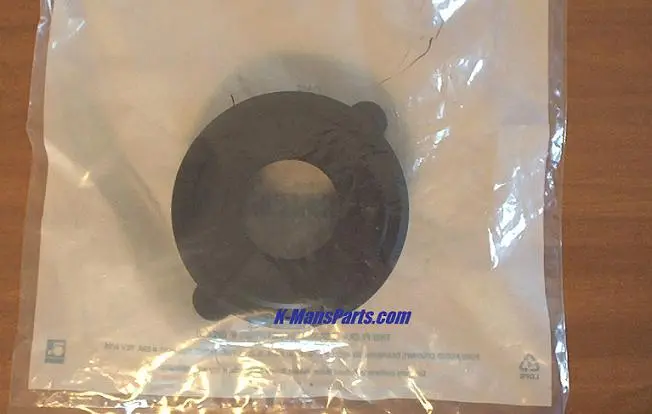
Ford Mustang fuel filler neck grommet 1979 to 1997
yes i fixed it myself. i just pulled the lines off the filler tube and unbolted everything inside the fuel door. it took me a while but i got it.
Can you give me any advice on how to replace the seal on my filler neck.I have a 92 lx 5.0 and she's leaking gas when i fill it up.Thanks
Similar threads
- Replies
- 3
- Views
- 441

- Replies
- 2
- Views
- 161
- Replies
- 0
- Views
- 78
- Replies
- 4
- Views
- 292
- Replies
- 8
- Views
- 847
