Some wires and vaccum lines?

lancec2c30

Member
May 14, 2008
570
0
16
Washington
I searched through all of Tmoss's diagrams, but couldn't find anything on some of the wires that go to the solenoid on the drivers side fender well.

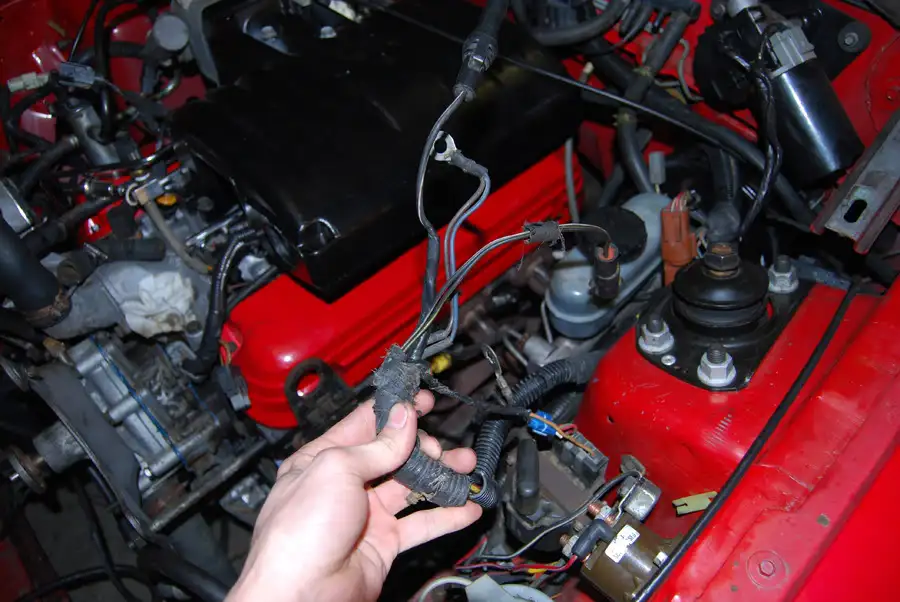
The first comes off of the engine harness. Does it go to the + or - side of the solenoid?

DSC_0158.webp


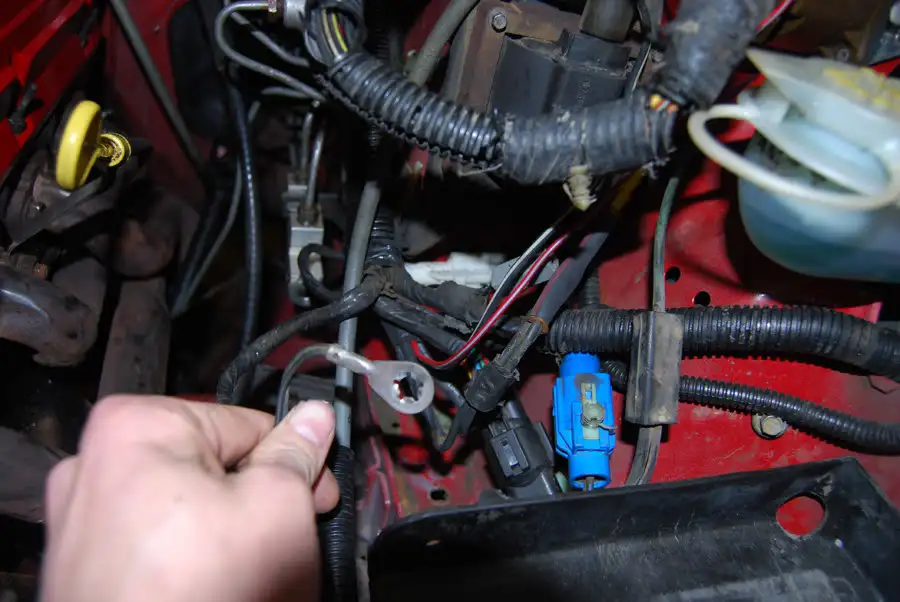
This one comes off of the dash harness through the firewall I believe. Same as before. + or -?

DSC_0160.webp


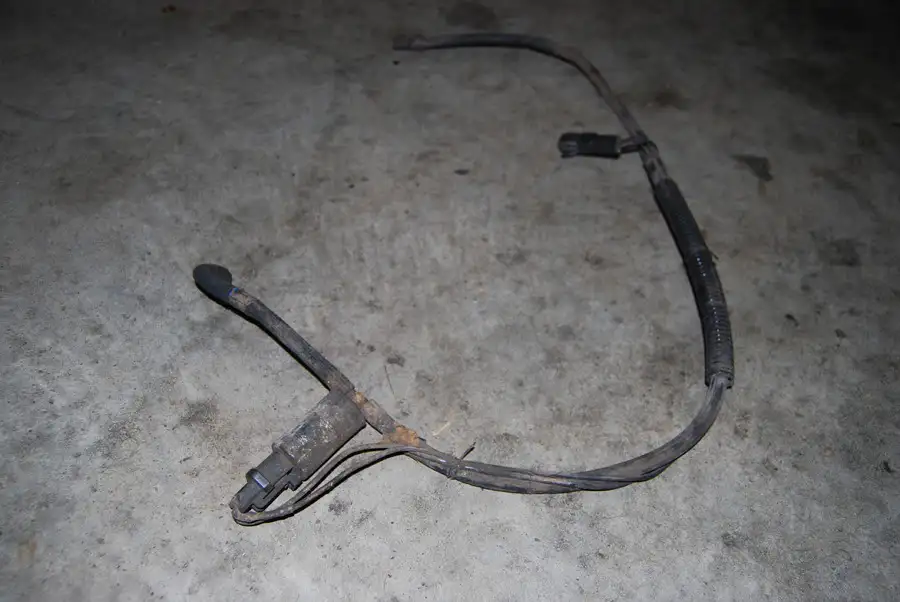
Then I have this hose with some gizmo T'ed into it. Something tells me it was part of the mess that comes off with the air pump. But I just wanted to clarify.

DSC_0157.webp


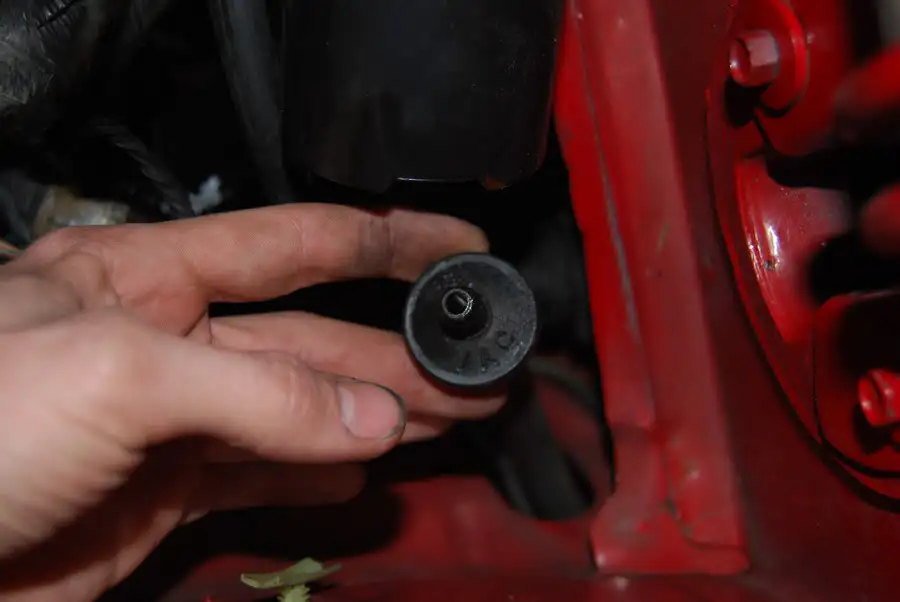
Finally there is a vaccum line coming out of that hole in the top corner of the drivers side of the engine bay. It appears the other end is broken off. But I don't know what it used to go to?

DSC_0161.webp


Any input would be greatly appreciated.

:nice:
 
the vacuum line with the solenoid on it is for the charcoal canister, the electrical plug should be on the passenger side by the coolant sensor somewhere. And the last one in the hole by the firewall I want to say is for the cruise control but i'm not 100 percent on that.
 
In your first pic the blue and the brown go to the battery post on the solenoid.

In your second pic the 2 blacks are screwed with a hex head screw to the inner fender right behind the battery.

In the third pic that assembly goes to the charcoal canister located at the front bottom of the engine bay on the passenger side. You are better off putting that back in. One end attaches to the canister and the other end goes to the underside of the front of the upper intake.

In the fourth pic that goes to the plastic vacuum manifold that is bolted to the firewall. It specifically goes to the fitting marked "S/C".
 
Some more diagrams h & helpful tech notes...

Starter solenoid wiring 86-91 5.0 Mustangs with standard starter

52294d1192414749-3g-alternator-install-how-starter-solenoid-wiring-75-.gif


Starter solenoid wiring 92-93 Model cars and earlier models with high torque mini starter.

53216d1201020653-car-wont-start-starter-solenoid-wiring-use-mini-starter-75-.gif


Grounds are important to any electrical system, and especially to
computer controlled engines. In an automobile, the ground is
the return path for power to get back to the alternator and battery.


1.) The main power ground is from engine block to battery: it is
the power ground for the starter & alternator.

2.) The secondary power ground is between the back of the
intake manifold and the driver's side firewall. It is often missing or
loose. It supplies ground for the alternator, A/C compressor
clutch and other electrical accessories such as the gauges.
Any car that has a 3G or high output current alternator needs
a 4 gauge ground wire running from the block to the chassis
ground where the battery pigtail ground connects.

The 3G has a 130 amp capacity, so you wire the power side
with 4 gauge wire. It stands to reason that the ground side
handles just a much current, so it needs to be 4 gauge too.

The picture shows the common ground point for the battery & extra 3G
alternator ground wire as described above in paragraph 2. A screwdriver
points to the bolt that is the common ground point.
The battery common ground is a 10 gauge pigtail with the computer ground
attached to it.

Picture courtesy timewarped1972
ground.jpg


Correct negative battery ground cable.
56567d1230679358-positive-negative-battery-cable-questions-86-93-mustang-oem-style-ground-cable.gif


3.) The computer has its own dedicated power ground that comes off the ground pigtail
on the battery ground wire. Due to it's proximity to the battery, it may become
corroded by acid fumes from the battery.
In 86-90 model cars, it is a black cylinder about 2 1/2" long by 1" diameter with a black/lt green wire.
In 91-95 model cars it is a black cylinder about 2 1/2" long by 1" diameter with a black/white wire.
You'll find it up next to the starter solenoid where the wire goes into the wiring harness.


4.) All the sensors have a common separate ground. This
includes the TPS, ACT, EGE, BAP, & VSS sensors.

5.) The O2 sensor heaters have their own ground (HEGO ground)
coming from the computer. This is different and separate from
the O2 sensor ground. It is an orange wire with a ring terminal
on it. It is located in the fuel injector wiring harness and comes out
under the throttle body. It gets connected to a manifold or bolt on
back of the cylinder head.

6.) The TFI module has 2 grounds: one for the foil shield around
the wires and another for the module itself. The TFI module
ground terminates inside the computer.

7.) The computer takes the shield ground for the TFI module and
runs it from pin 20 to the chassis near the computer.

8.) The computer's main power ground (the one that comes from
the battery ground wire) uses pins 40 & 60 for all the things it
controls internally.

See Automotive Test Tools for help for help troubleshooting voltage drops across connections and components. .

fig-7.gif


Extra grounds are like the reserve parachute for a sky diver.
If the main one fails, there is always your reserve.

The best plan is to have all the grounds meet at one central spot
and connect together there. That eliminates any voltage drops
from grounds connected at different places. A voltage drop
between the computer ground and the alternator power ground will effectively
reduce the voltage available to the computer by the amount of the drop.
 
I have another question.

The MAP module is mounted to about the middle of the firewall right?

It has a vacuum line that I would guess goes somewhere on the upper intake. But The plastic piece in the middle of the hose broke off when I pulled the motor. I can't find the other half of the vacuum line, more importantly. I can't find out where it is supposed to plug in at.

Any takers?
 
Well I am using the V8 parts off of a speed density donor car. But I have converted it to mass air. So I should just cap off that vacuum line?

I live in Chehalis Washington.
Thanks for the picture, it cleared up one mix up. Haha
 
correct. If you are running a MAF sensor the MAP, or BAP, same thing really, does not get a vacuum line hooked up to it. The sensor must be open where the vacuum line would be. Just cap off the vacuum line you had going to it and you should be good.
 
Alright, I think this is the last wire I have left to hook up.

It's the main ground cable off the battery, attaches to the engine block somewhere. I read that it goes on the front of the engine near the oil filter. But I looked all over and can't seem to find the spot.

Anyone know?

Thanks.
 
Hopefully tomorrow is the big day to start this thing up, but I have come across a couple small things.

Now the vacuum line coming off of the charcoal canister goes into the front of the manifold. From what I could tell, that barb passes through to the back of the intake, and there is another line back there. It is broken off and I can't find out where it goes.

I have the vacuum tree on the passenger side of the firewall, right near where the A/C equipment used to be hooked up. There is another vacuum tree below that one on my 5.0 car, with one line going into the fender, and some others trailing off. My 4 cyl. doesn't have that second vacuum tree, do I need it?

If you need a picture of anything, let me know.
 
The vacuum tube that is pressed into the back of the manifold and is broke off is used for the vacuum on the MAP sensor.

The vacuum tree (Check Valve) on the passenger side with a line tailing off into the passenger side is used for your HVAC (Heating, Ventilation, A/C) and that line runs to a vacuum reserve cannister in the passenger side fender.
 
Alright, so if I converted to mass air, and plugged off the MAP sensor line coming from the actual unit mounted to the firewall, I should be able to plug the line in the back of the intake manifold also? It won't affect the charcoal canister any?
 
It will not affect the charcoal cannister at all!
The front line to the charcoal cannister and and rear line to the MAP sensor are not connected they are 2 separated lines pressed into the manifold.
The rear line is capped off with a rubber cap if you have the BAP sensor.