If you are thinking about getting in-grown toenail surgery, be aware of the facts going into it. I was not really informed prior to having the surgery done. Learn from me—I implore you!
I went in to get my two big toenails done as both suffered from in-growns. I'm not a doctor, so pardon my spelling of the medical terms.
The doctor cleans the surface and then uses ethyl-chloride, which basically feels like liquid nitrogen, to numb the surface before using the local anesthetic in the joint at the base of the toe. The doctor will also use a tourniquet to help improve the effects of the anesthesia.
Then the doctor uses a tool to cut out the nail and pull it out before the root.
To prevent the nail from growing back as it had, the doctor will use a chemical—acid—to burn and kill the root.
After the procedure, you can drive yourself home, but the balls of your feet will feel numb, which does require increased attention while behind the wheel. It would be safest to have someone drive you to and fro.
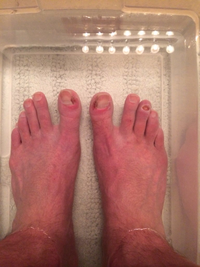
Post op, soaking with epsom salt is needed 3-4 times per day with a light application of antibacterial ointment and fresh bandages. This soaking process will last about 3-4 weeks or until chemical-burn drainage has ceased. Do not stop soaking until drainage has ceased!
Now, 95% of the time this will work. However, 5% of the time, which was my case, the in-grown will return.
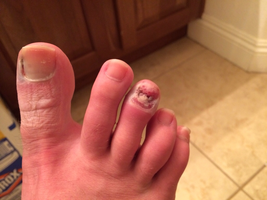
A year later, I went in for the same procedure and also to have a nail completely removed as it had a damaged nail-bed and kept getting infected. Yes, in-growns can lead to infections, and the last thing you want to do is subject yourself to 4-5 regiments of antibiotics annually, which is why I went through with these procedures.
This time, the doctor cut away more of the nail and also used a fresh bottle of acid while using more of it. Needless to say, it doesn't appear that the nails will be growing back.
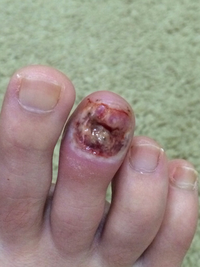
However, despite the soaking, I'm getting nail infections. I have gone to see the doctor two additional times as a result. Ironically, I have gone through two more regiments of antibiotics. This last visit was illuminating. Not only did the doctor pull the scabs off after applying 2-3 times the amount of local anesthetic as during the original procedure, but I learned that it will be important not to allow showers to introduce secondary bacterial infections, so I'm now having to apply antibacterial dish soap in the shower. Also, I wasn't supposed to let it scab up. No, I was supposed to take a q-tip, take the cotton off, and scrape the toe's nail-bed to remove scar tissue and prevent the scabbing. I tried doing this once. It hurt. It hurt very bad. I stopped and did not try again. Then it scabbed, and later came the infection.
So, if you are going to get this procedure done, take note of the following points:
I went in to get my two big toenails done as both suffered from in-growns. I'm not a doctor, so pardon my spelling of the medical terms.
The doctor cleans the surface and then uses ethyl-chloride, which basically feels like liquid nitrogen, to numb the surface before using the local anesthetic in the joint at the base of the toe. The doctor will also use a tourniquet to help improve the effects of the anesthesia.
Then the doctor uses a tool to cut out the nail and pull it out before the root.
To prevent the nail from growing back as it had, the doctor will use a chemical—acid—to burn and kill the root.
After the procedure, you can drive yourself home, but the balls of your feet will feel numb, which does require increased attention while behind the wheel. It would be safest to have someone drive you to and fro.
Post op, soaking with epsom salt is needed 3-4 times per day with a light application of antibacterial ointment and fresh bandages. This soaking process will last about 3-4 weeks or until chemical-burn drainage has ceased. Do not stop soaking until drainage has ceased!
Now, 95% of the time this will work. However, 5% of the time, which was my case, the in-grown will return.
A year later, I went in for the same procedure and also to have a nail completely removed as it had a damaged nail-bed and kept getting infected. Yes, in-growns can lead to infections, and the last thing you want to do is subject yourself to 4-5 regiments of antibiotics annually, which is why I went through with these procedures.
This time, the doctor cut away more of the nail and also used a fresh bottle of acid while using more of it. Needless to say, it doesn't appear that the nails will be growing back.
However, despite the soaking, I'm getting nail infections. I have gone to see the doctor two additional times as a result. Ironically, I have gone through two more regiments of antibiotics. This last visit was illuminating. Not only did the doctor pull the scabs off after applying 2-3 times the amount of local anesthetic as during the original procedure, but I learned that it will be important not to allow showers to introduce secondary bacterial infections, so I'm now having to apply antibacterial dish soap in the shower. Also, I wasn't supposed to let it scab up. No, I was supposed to take a q-tip, take the cotton off, and scrape the toe's nail-bed to remove scar tissue and prevent the scabbing. I tried doing this once. It hurt. It hurt very bad. I stopped and did not try again. Then it scabbed, and later came the infection.
So, if you are going to get this procedure done, take note of the following points:
- Be ready for 1-2 months of soaking and tenderness
- Muster the courage necessary to take a bald q-tip to your nail-bed even if it is going to hurt
- Request that the doctor use a fresh bottle of the chemical used to kill the nail root
- Protect yourself from bacteria even in the shower by utilizing antibacterial dish soap
- And be safe: take someone with you to the surgery; don't drive yourself home.