Engine (EGR Deleted) Solution the hotter combustion chambers?

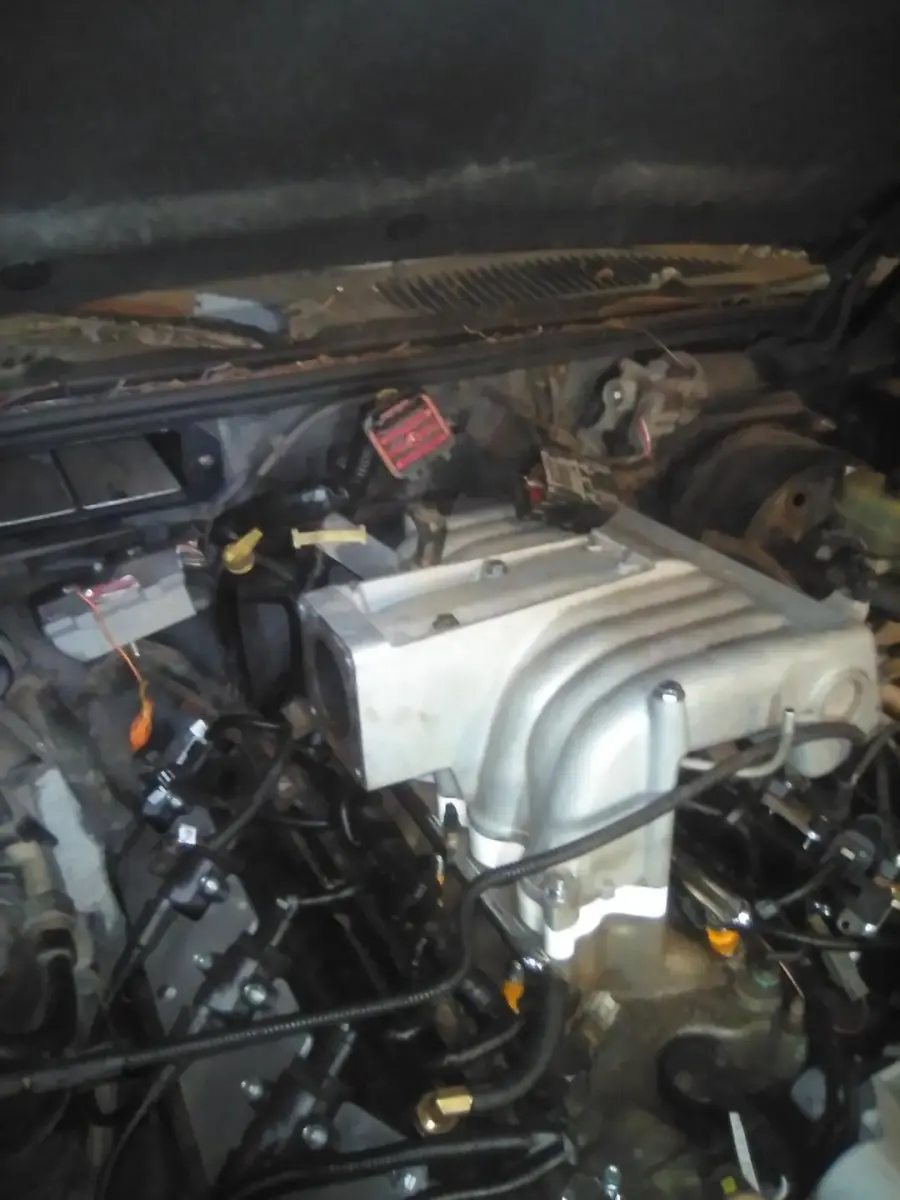
I Had to use a 1" spacer between the upper and lower plenum so that the upper plenum would clear the "Godzilla" coils. So, I happen to have the added benefit of a cooler upper plenum. It might help you in the future if there is enough hood clearance in your Mustang.
1" Delrin spacer
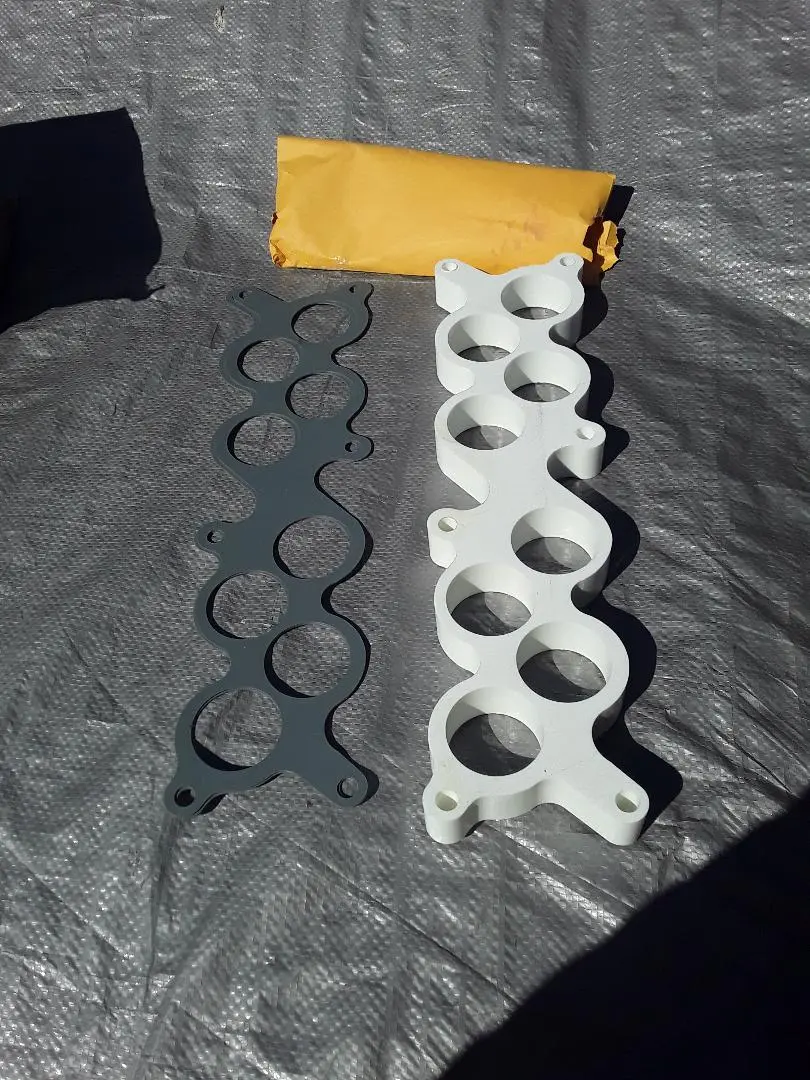
97mmspacer.webp

Installed
97mm upper plenum 1st time.webp
 
  • Like
Reactions: PonyGTrider
I Had to use a 1" spacer between the upper and lower plenum so that the upper plenum would clear the "Godzilla" coils. So, I happen to have the added benefit of a cooler upper plenum. It might help you in the future if there is enough hood clearance in your Mustang.
1" Delrin spacer
Mine is a 90 GT with a stock hood and 3/8” is the tallest spacer I can fit there. So I have a 3/8” phenolic spacer. The intakes will be cooler when I block the EGR port at the heads.
Thank you
 
  • Like
Reactions: GOvert
They are a great hood that is for sure and the car will look awesome with it! I (and I think @95steedamustang) like how the HO Fibertrends are finished underneath as it made for easy work when it was painted.
I like the curvature of the cowl on the HO hoods. Unfortunately the underside is raw fiberglass in the center but I finished it and smoothed it with resin and its finished under now
 
  • Like
Reactions: GOvert
@Mustang5L5 I haven't heard of the thin razor blade trick. I knew that I didn't want hot gases hitting against the "Delrin" spacer if the passageway wasn't entirely clogged and really didn't want to remove the lower plenum just to block off the holes in the heads, so I used a 1/2" pipe thread tap and a brass Allen head plug to block it. I may have already said this but here are the pictures for anyone wanting to do the same.
97mm tap lower plenum.webp

97mm lower intake plugged.webp
 
Last edited:
  • Like
Reactions: DadLife0724
I need to find myself a 3/8" spacer with the hole blocked off too.

I have seen guys in the past just take the fat end off a razor and sandwich it there.
My 3/8” phenolic spacer has the EGR hole but in my case I’ll order a set of either FLP-1250-S3 or FLP-1262-S3 lower intake gaskets, those S3 gaskets don’t have the EGR hole so you block those gases right at the heads and that keeps some of the heat down
 
  • Like
Reactions: GOvert
In hindsight, that’s what I should have done but I don’t want to pull the lower intake. Just looking to block it at the lower

Only one I can find is the bbk 3/8” without the hole
 
  • Like
Reactions: PonyGTrider
Good to see that you found it. Good price too with bolts and other necessary parts. I know that aren't any people around here doing the coil-near-plug 5.0 conversions and I've only encountered 2 handfuls online doing such, but it is good to see that the 3/8" spacer is available. I think that 3/8 inch one could be used to clear the "Godzilla" coils, maybe. It might take a 1/2 inch spacer. I would have to measure the "proof of concept" vehicle.
I purchased a 1.5 inch spacer for my '54 F100 5.0 c-n-p project mainly to jack up the upper plenum some under the massive truck hood. I'm not really sure about the gains or losses. It will be an experiment and it's not a race vehicle, just a SONIC and "crusing the coast" truck.
1.5inchintakespacer.webp
 
Last edited:
In hindsight, that’s what I should have done but I don’t want to pull the lower intake. Just looking to block it at the lower

Only one I can find is the bbk 3/8” without the hole
Yeah sometimes plans change and come up after the fact but that spacer will work fine
 
@Mustang5L5 I haven't heard of the thin razor blade trick. I knew that I didn't want hot gases hitting against the "Delrin" spacer if the passageway wasn't entirely clogged and really didn't want to remove the lower plenum just to block off the holes in the heads, so I used a 1/2" pipe thread tap and a brass Allen head plug to block it. I may have already said this but here are the pictures for anyone wanting to do the same.

Tapping for a pipe plug is an excellent way to address the lower intake ERG port. I used a Dorman steel shouldered expansion plug on mine., as mentioned earlier in the thread. I did tap and plug the exhaust crossover/EGR passages coming out of my AFR heads (1/4" NPT) to stop the exhaust gasses from heating up the lower.

Another old school way to address the lower intake EGR passage (if you had the lower intake off) would be to pack it with furnace cement. This method worked on patching up late 70's to early 80's Ford EGR spacers found under the carburetors The exhaust gasses would eat away at the cast EGR spacer over time and you would have an under-hood exhaust leak. Pack the ERG spacer cavity with furnace cement and move on. Not very elegant, but it was highly effective with no comebacks. There may be some suitable high temp epoxy products on the market today, but this was an inexpensive "Saturday Afternoon Hardware Store Solution" that would work. Welding a passage closed is really the best answer, but not everyone has convenient access to that.

Edit: typo
 
Last edited:
Think of it like an old car
An old car has no EGR and runs fine
No overheated intakes or heads or any of that
If yours runs poor, it's not the EGR's fault or the cylinder head temp
Think of what manicmechanic's boss 302 would do (mine)
It would run like a raped ape with no EGR, be hot as a firecracker and still run like a raped ape
Rethink your EGR strategy
We all breathe the same air
If your processor sees no pintle valve movement of the EGR valve from the EVP sensor, it will run like puke, just like if you put a bb in the vacuum line
Trying to chit the system is futile with resistors, the processor wants to see pintle valve movement
 
Tapping for a pipe plug is an excellent way to address the lower intake ERG port. I used a Dorman steel shouldered expansion plug on mine., as mentioned earlier in the thread. I did tap and plug the exhaust crossover/EGR passages coming out of my AFR heads (1/4" NPT) to stop the exhaust gasses from heating up the lower.

Another old school way to address the lower intake EGR passage (if you had the lower intake off) would be to pack it with furnace cement. This method worked on patching up late 70's to early 80's Ford EGR spacers found under the carburetors The exhaust gasses would eat away at the cast EGR spacer over time and you would have an under-hood exhaust leak. Pack the ERG spacer cavity with furnace cement and move on. Not very elegant, but it was highly effective with no comebacks. There may be some suitable high temp epoxy products on the market today, but this was an inexpensive "Saturday Afternoon Hardware Store Solution" that would work. Welding a passage closed is really the best answer, but not everyone has convenient access to that.

Edit: typo
Actually the Felpro 1250 intake gaskets have an insert to allow you to keep the EGR port open or block it off.
The 1250-S3 has the port blocked off
 
  • Like
Reactions: 90trunk and GOvert
Think of it like an old car
An old car has no EGR and runs fine
No overheated intakes or heads or any of that
If yours runs poor, it's not the EGR's fault or the cylinder head temp
Think of what manicmechanic's boss 302 would do (mine)
It would run like a raped ape with no EGR, be hot as a firecracker and still run like a raped ape
Rethink your EGR strategy
We all breathe the same air
If your processor sees no pintle valve movement of the EGR valve from the EVP sensor, it will run like puke, just like if you put a bb in the vacuum line
Trying to chit the system is futile with resistors, the processor wants to see pintle valve movement
Yeah I thought about how those older cars worked fine without that damn EGR…
On your last paragraph I think the resistors are just to keep the check light off and one thing I’m not sure how it works; does the computer disables the EGR function if the pint is static? (No vacuum hose or by way of resistors plug)
I heard that when the computer sees no activity from the EGR it registers as “non operating” and disables that function, but only if the check is blinking? I’m confused about that whole sequence…
 
Yet another question arises on this same subject.
If it is a fact that after deleting the EGR the combustion chamber’s temperature will rise (By how much?) Will it be wise to use one step/Two step colder heat range spark plugs to prevent pre-ignition???? So what to use instead of FR5’s and 3924’s so I don’t have to back down my ignition timing advance???
 
Last edited: