
So I just changed pads and rotors all the way around on my girlfriend's 2010 model. I didn't open any bleeder valves and I had plenty of brake fluid in the reservoir. After I got done the brakes will go all the way to the floor with moderate pressure. Car still stops but if you hold pressure on the brake pedal after stopping it goes all the way to the floor. After driving it around a few mins it didn't improve and the brake light and traction control light came on the dash. I was thinking about the possibility of blowing out a piston seal when I was pressing the calipers in to go back over the pads and rotor. Anyone every experience this?
You are using an out of date browser. It may not display this or other websites correctly.
You should upgrade or use an alternative browser.
You should upgrade or use an alternative browser.
Brake issue after changing pads and rotors
- Thread starter squirrel0420
- Start date

If you blew a piston then you would see fluid on the ground.
I would try and bleed the brakes with new fluid and see of the pedal firms up.
If not, there's a good chance that the master cylinder is leaking internally requiring a rebuild or replace. This [could] be the result of one of the seals inside of the M/C, "rolling" when you pushed it back with the caliper pistons.
I would try and bleed the brakes with new fluid and see of the pedal firms up.
If not, there's a good chance that the master cylinder is leaking internally requiring a rebuild or replace. This [could] be the result of one of the seals inside of the M/C, "rolling" when you pushed it back with the caliper pistons.

On the rear pistons, do they have to be positioned in a certian orientation as far as the notches go?If you blew a piston then you would see fluid on the ground.
I would try and bleed the brakes with new fluid and see of the pedal firms up.
If not, there's a good chance that the master cylinder is leaking internally requiring a rebuild or replace. This [could] be the result of one of the seals inside of the M/C, "rolling" when you pushed it back with the caliper pistons.
On the rear pistons, do they have to be positioned in a certian orientation as far as the notches go?
I'm not sure what you're referring to.
Can you post images of it?
I'm not sure what you're referring to.
Can you post images of it?
Attachments
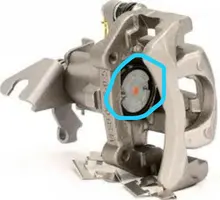

Yes,
The notches should be positioned as shown in the picture.
You need to get the codes from the brake/traction control light.
It may be as simple as clearing the codes.
Does this car have a electric park brake?
Or is it still a lever you pull up?
If a electric park brake, then the proper procedure would have been to put the rear brakes in the "Service Position" with a scan tool before doing the rear brakes.
Then after doing the brakes, there may be a "deactivate service position" procedure and a park brake set point procedure that needed to be performed with the scan tool.
If you don't do it this way it may be the cause of your warning lights.
I could be wrong on this, as I have not done a Ford in a while, but GM is all about having to do this stuff with their systems.
You even get warnings that the vehicle speed is limited to 45 mph if all of the steps are not done correctly with the scan tool.
Some of the GM vehicles will even think that there is a massive brake fluid leak after pumping the brakes to get the caliper pistons extended to the pad.
Then you have to clear the codes twice to get them to go away. It is really annoying.
The notches should be positioned as shown in the picture.
You need to get the codes from the brake/traction control light.
It may be as simple as clearing the codes.
Does this car have a electric park brake?
Or is it still a lever you pull up?
If a electric park brake, then the proper procedure would have been to put the rear brakes in the "Service Position" with a scan tool before doing the rear brakes.
Then after doing the brakes, there may be a "deactivate service position" procedure and a park brake set point procedure that needed to be performed with the scan tool.
If you don't do it this way it may be the cause of your warning lights.
I could be wrong on this, as I have not done a Ford in a while, but GM is all about having to do this stuff with their systems.
You even get warnings that the vehicle speed is limited to 45 mph if all of the steps are not done correctly with the scan tool.
Some of the GM vehicles will even think that there is a massive brake fluid leak after pumping the brakes to get the caliper pistons extended to the pad.
Then you have to clear the codes twice to get them to go away. It is really annoying.
It's the traditional handle style parking brake. If those notches aren't positioned the way that I showed, would that cause the brake pedal to go to the floor? From everything I've been reading it sounds like I have an issue with the master cylinderYes,
The notches should be positioned as shown in the picture.
You need to get the codes from the brake/traction control light.
It may be as simple as clearing the codes.
Does this car have a electric park brake?
Or is it still a lever you pull up?
If a electric park brake, then the proper procedure would have been to put the rear brakes in the "Service Position" with a scan tool before doing the rear brakes.
Then after doing the brakes, there may be a "deactivate service position" procedure and a park brake set point procedure that needed to be performed with the scan tool.
If you don't do it this way it may be the cause of your warning lights.
I could be wrong on this, as I have not done a Ford in a while, but GM is all about having to do this stuff with their systems.
You even get warnings that the vehicle speed is limited to 45 mph if all of the steps are not done correctly with the scan tool.
Some of the GM vehicles will even think that there is a massive brake fluid leak after pumping the brakes to get the caliper pistons extended to the pad.
Then you have to clear the codes twice to get them to go away. It is really annoying.

stormsedge
5 Year Member
Would the piston not being in the right position give me the issue that I'm having?Check the piston orientation…but bleed the brakes before throwing any more parts at it.
stormsedge
5 Year Member
I wouldn’t think so.Would the piston not being in the right position give me the issue that I'm having?
Well here's a little update. I took car to the shop instead of pulling my hair out and he says both rear calipers need replaced. I find this kind of strange that both would happen to fail simultaneously. I'm really thinking of getting it back and checking the alignment on the piston notches and see if it makes a difference. If it does come to it is there anything special to know about changing out the rear calipers? Because I'll be honest, this is my first time dealing with the screw in type

I could but I'd be lying hahaTell me you removed the MC cap before you pressed the calipers in.

I was taught to do brakes by an old school mechanic, he said Always,Always remove the MC cap before compressing caliper pistons.
This step ensures the brake fluid has a place to go and doesn't do damage.......
This step ensures the brake fluid has a place to go and doesn't do damage.......
I'm with you there my dad taught me the same way but see I decided to partake in the devils lettuce beforehand and it fogged my mind.I was taught to do brakes by an old school mechanic, he said Always,Always remove the MC cap before compressing caliper pistons.
This step ensures the brake fluid has a place to go and doesn't do damage.......

Only thing you can do to your stang when enjoying mother nature is a Wash and Wax, otherwise you risk damage to more then braincellsI'm with you there my dad taught me the same way but see I decided to partake in the devils lettuce beforehand and it fogged my mind.
Similar threads

- Replies
- 16
- Views
- 532
- Replies
- 1
- Views
- 155

- Replies
- 0
- Views
- 145
- Replies
- 3
- Views
- 306

