Fuel Pressure Gauge Install Questions

gs5pointOh

New Member
Apr 22, 2005
3
0
0
I'm wanting to install a 52mm fuel pressure gauge in an Apillar pod on my '88 GT. Wanting to go the electric route for illumination, but unsure of the "low budget" components needed. I'm thinking Apillar pod, electric gauge with 1/8" NPT, Schrader valve fittings, sending unit (can you use an oil pressure sending unit?), fuel pressure module, and plenty of wire? Is this correct? Help...I'm confused! :shrug:
 
A mechanical gauge also has a bulb in it for light at night. With fuel pressure gauges.. you have a mechanical gauge, inwhich the gauge is about 40-50 bucks.. but then you have to run a braided like from the gauge to the shrader valve which allows actually FUEL to make the gauge work. This setup puts fuel inside the car, and if you have a bad ground, or the line breaks.. you will have 35-45 psi of fuel spilling in your car... That's why right on the gauge it says "to be mounted on the outside of vehicle ONLY" Fuel can not come past the firewall to be legal. Now an electrical gauge costs like 200 bucks. They come two different ways... one, with a huge isolator inwhich if I remember correctly, you fill the line up with coolant (antifreeze) and then run it to the gauge. Pressure goes from the fuel line to the isolator, pressurizes and transfers that to the coolant, and you get your reading. Second... they have ones with senders that work like any other aftermarket gauge... Just run a wire to it and you're done. If I'm wrong on anything, someone correct me.

Nick
 
electric guage by itself will cost either $90 for a basic one, or $200 for the memory one. must use sender the gauge comes with.

here is a pic of the sender on a fuel reg.

a88c0d32.webp


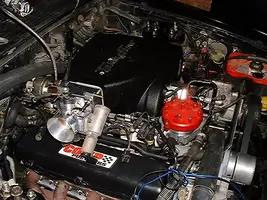
here is a mechanical gauge setup. you can see the bradied line behind the throttle body, and the gauge resting on the cowl. on '86 the schrader vavle is by the fuel reg. on '87 -93 it is behind the alternator. it isn't a permanent mount, but you get the idea.

ce8b58bd.webp
 

Attachments

  • a88c0d32.webp
    a88c0d32.webp
    46.1 KB · Views: 1,246
  • ce8b58bd.webp
    ce8b58bd.webp
    77.9 KB · Views: 1,281
It seems the the eletrical gauge is it. I'm still unsure on how to install. I've seen electric fuel pressure gauges for $20 on ebaymotors. They have the 1/8" terminal on the back. It seems you can buy the brass fittings to screw into the schrader valve (Home Depot), then a sending unit connects to the fittings (which unit?), and the wiring runs from the sending unit to the gauge. Do the power/ground wires from the battery/silenoid splice into the wires running to the gauge to get power? :shrug:
 
I think you would have a tough time getting an electric FPG for $20. On an EFI car there is a fitting that is made by Russell, Aeroquip or any of the guys that make braided lines and fittings. It attaches to the schreader valve on the fuel rail and gives you a -4 AN outlet. From there you have options. The cheap way is to get something like an Auto meter sport-comp and mount it up on the cowl OUTSIDE of the cockpit. I like that myself but some poeple dont like guages outside the car. Run braided line, not the plastic stuff that comes with the guage. If you have a performance shop that deals with roundy round cars near you, they generally sell pre made braided -4 lines meant for brakes that come in verious lengths and work great for this. They are usually cheaper and easier than making your own.

The next option up in cost would be a mechanical guage with an isolator. The isolator mounts in the engine compartment and the line from the isolator to the guage only contains antifreeze so it can be mounted in the cockpit. This is my favorite option. It costs about double option one but half of option 3.

Option 3 is probably easiest install wise because you are only running wires instead of fluid lines and probably opens up a couple of new mounting options but it is also the most costly. This third option is the electrical FPG previously mentioned that does run in the neighborhood of $200. Since there is no fuel line you can mount it anywhere you can run a wire. I personally like mechanical guages because they are generally more cost efficient and react a bit quicker.

Now you said something about illumination...not real sure where your going with that because all the guages mechanical or electrical will have lights. Unless your talking adout some kind of colored or bling bling digital ricer guage in which case I can help you. But in either case all that is required for the lighting is to run a ground and one wire to either the instrument dimmer switch or to the illumination wire in the radio plug.

And one more thing....I wouldn't suggest getting that home depot schreader valve adaptor. For one I've never seen one there but if they DO have one, it would most certainly be a 45* JIC fitting and not a 37* AN. Putting a 37* hose end on a 45* fitting could give you sealing issues and leave you with a dangerous fuel leak.
 
I really appreciate the replies Guys. I definetly want to go with the cheapest gauge that will mount in the Apillar pod I have. I've heard about the isolator with the mechanical gauges that you have to purge out the air with a 50/50 antifreeze and water mixture. Can these isolators be purchased individually? If you agree, I should get a 2 1/16" mechanical gauge, isolator, braided line, and the schrader valve fittings you suggested, and the 'ol teflon tape? :scratch:
 
i would just go with the elec gauge setup. that way you wont have to mess around with the isolator, bleeding it, and running the line to the gauge. with the elec, there is still no fluids going inside the car. thats just me though.
 
I Had A Fule Rail That Leaked Like Over A Gallon In Seconds In My Driveway,luckly I Smelled It And Turned The Car Off, I Was Going To Give Somone A Ride.i Later Relized I Also Had A Cracked Plug Wire Causeing Sprk To Jump To The Block.if I Had Pulled Out And Laid Into It,my Car Would Not Exist Right Now. Do It Safe!!
I Think Ill Go Electric Sender