
I have a recently purchased 95 GT, new to the forum. Car has some issues but at least it had been starting, idling, and accelerating alright. Couple of weeks ago, under normal acceleration, I started getting a miss and loss of power. I think I have tracked it down to a lack of vacuum between the EGR valve and the fuel pressure regulator. I'm running rich with a rough idle. I have a fuel pressure in the 40s with no change when removing the vacuum line to the regulator. I cannot feel any vacuum from the line with my finger. How do I determine if I have a bad EGR valve, pressure sensor, or vacuum solenoid?
You are using an out of date browser. It may not display this or other websites correctly.
You should upgrade or use an alternative browser.
You should upgrade or use an alternative browser.
No Vacuum To Fuel Pressure Regulator
- Thread starter redtorino
- Start date


I think your vac line for the fpr should be by its self from the manifold
Although I'm not that familiar with 95 models, stock intake?
Have you run the codes?
Although I'm not that familiar with 95 models, stock intake?
Have you run the codes?

Wow. Engine compartment is messed up from previous owner. I may have also contributed because I took the valve covers off to put on new gaskets. I'm going to have to find some diagrams and pictures to try and figure those hose connections out.

The following are diagrams courtesy of Tmoss & Stang&2birds
See the following website for some help from Tmoss (diagram designer) & Stang&2Birds (website host) for help on 88-95 wiring; http://www.veryuseful.com/mustang/tech/engine/ Everyone should bookmark this site.
94-95 5.0 Mustang ECC
http://www.veryuseful.com/mustang/tech/engine/images/94-95_5.0_EEC_Wiring_Diagram.gif
TFI module wiring for 94-95 Mustang GT
http://www.veryuseful.com/mustang/tech/engine/images/Mustang-94-95-IgnitionControlModule.gif
Complete computer, actuator & sensor wiring diagram for 91-93 Mass Air Mustangs
http://www.veryuseful.com/mustang/tech/engine/images/91-93_5.0_EEC_Wiring_Diagram.gif
Complete computer, actuator & sensor wiring diagram for 88-91 Mass Air Mustangs
http://www.veryuseful.com/mustang/tech/engine/images/88-91_5.0_EEC_Wiring_Diagram.gif
Ignition switch wiring
http://www.veryuseful.com/mustang/tech/engine/images/IgnitionSwitchWiring.gif
Fuel, alternator, A/C and ignition wiring
http://www.veryuseful.com/mustang/tech/engine/images/fuel-alt-links-ign-ac.gif
O2 sensor wiring harness
http://www.veryuseful.com/mustang/tech/engine/images/mustangO2Harness.gif
Vacuum diagram 89-93 Mustangs
http://www.veryuseful.com/mustang/tech/engine/images/mustangFoxFordVacuumDiagram.jpg
HVAC vacuum diagram
http://www.veryuseful.com/mustang/tech/engine/images/Mustang_AC_heat_vacuum_controls.gif
TFI module differences & pin out
http://www.veryuseful.com/mustang/tech/engine/images/TFI_5.0_comparison.gif
Fuse box layout
http://www.veryuseful.com/mustang/tech/engine/images/MustangFuseBox.gif
Mustang 5.0 Lights and Radio schematic, by TMoss:
http://www.veryuseful.com/mustang/tech/engine/images/mustangFoxLights-Radio_diag.gif
87-92 power window wiring
http://www.veryuseful.com/mustang/tech/engine/images/mustang87-92%20PowerWindowWiring.gif
93 power window wiring
http://www.veryuseful.com/mustang/tech/engine/images/mustang93PowerWindows.gif
T5 Cutaway showing T5 internal parts
http://www.veryuseful.com/mustang/tech/engine/images/5_Speed_Cutaway_Illustrated.jpg
Visual comparison of the Ford Fuel Injectors, picture by TMoss:
http://www.veryuseful.com/mustang/tech/engine/images/Ford_Injector_Guide.jpg
Convertible top motor wiring http://www.veryuseful.com/mustang/tech/engine/images/mustang88VertTopMotorCkt.gif
Engine mounted fuel injector harness
http://www.veryuseful.com/mustang/tech/engine/images/mustangEngineHarness.gif
Location of the TPS, IAB, and the 10-pin connectors on a 5.0, picture by TMoss:
http://www.veryuseful.com/mustang/tech/engine/images/TPS_IAB_Pic.jpg
Starter circuit
http://forums.stangnet.com/attachment.php?attachmentid=21328&d=1080916057
Alternator diagram for 94-95 Mustangs.
http://www.veryuseful.com/mustang/tech/engine/images/Mustang-94-95-Alt.gif
See the following website for some help from Tmoss (diagram designer) & Stang&2Birds (website host) for help on 88-95 wiring; http://www.veryuseful.com/mustang/tech/engine/ Everyone should bookmark this site.
94-95 5.0 Mustang ECC
http://www.veryuseful.com/mustang/tech/engine/images/94-95_5.0_EEC_Wiring_Diagram.gif
TFI module wiring for 94-95 Mustang GT
http://www.veryuseful.com/mustang/tech/engine/images/Mustang-94-95-IgnitionControlModule.gif
Complete computer, actuator & sensor wiring diagram for 91-93 Mass Air Mustangs
http://www.veryuseful.com/mustang/tech/engine/images/91-93_5.0_EEC_Wiring_Diagram.gif
Complete computer, actuator & sensor wiring diagram for 88-91 Mass Air Mustangs
http://www.veryuseful.com/mustang/tech/engine/images/88-91_5.0_EEC_Wiring_Diagram.gif
Ignition switch wiring
http://www.veryuseful.com/mustang/tech/engine/images/IgnitionSwitchWiring.gif
Fuel, alternator, A/C and ignition wiring
http://www.veryuseful.com/mustang/tech/engine/images/fuel-alt-links-ign-ac.gif
O2 sensor wiring harness
http://www.veryuseful.com/mustang/tech/engine/images/mustangO2Harness.gif
Vacuum diagram 89-93 Mustangs
http://www.veryuseful.com/mustang/tech/engine/images/mustangFoxFordVacuumDiagram.jpg
HVAC vacuum diagram
http://www.veryuseful.com/mustang/tech/engine/images/Mustang_AC_heat_vacuum_controls.gif
TFI module differences & pin out
http://www.veryuseful.com/mustang/tech/engine/images/TFI_5.0_comparison.gif
Fuse box layout
http://www.veryuseful.com/mustang/tech/engine/images/MustangFuseBox.gif
Mustang 5.0 Lights and Radio schematic, by TMoss:
http://www.veryuseful.com/mustang/tech/engine/images/mustangFoxLights-Radio_diag.gif
87-92 power window wiring
http://www.veryuseful.com/mustang/tech/engine/images/mustang87-92%20PowerWindowWiring.gif
93 power window wiring
http://www.veryuseful.com/mustang/tech/engine/images/mustang93PowerWindows.gif
T5 Cutaway showing T5 internal parts
http://www.veryuseful.com/mustang/tech/engine/images/5_Speed_Cutaway_Illustrated.jpg
Visual comparison of the Ford Fuel Injectors, picture by TMoss:
http://www.veryuseful.com/mustang/tech/engine/images/Ford_Injector_Guide.jpg
Convertible top motor wiring http://www.veryuseful.com/mustang/tech/engine/images/mustang88VertTopMotorCkt.gif
Engine mounted fuel injector harness
http://www.veryuseful.com/mustang/tech/engine/images/mustangEngineHarness.gif
Location of the TPS, IAB, and the 10-pin connectors on a 5.0, picture by TMoss:
http://www.veryuseful.com/mustang/tech/engine/images/TPS_IAB_Pic.jpg
Starter circuit
http://forums.stangnet.com/attachment.php?attachmentid=21328&d=1080916057
Alternator diagram for 94-95 Mustangs.
http://www.veryuseful.com/mustang/tech/engine/images/Mustang-94-95-Alt.gif
Thanks jrichker! Very helpful group of diagrams and schematics. I'll see if I can unravel this mess tomorrow.
Ok, vacuum connections to fuel pressure regulator are corrected. Regulator checks good: 36 psi with vacuum and about 42 without vacuum. Still rough and rich at idle. MAF is clean, O2 sensors check good, and I'm getting spark at all 8 plugs. Curiously, I had about a dozen codes when I brought the car home right after the purchase. I cleared them and left the battery unhooked for several days. Now I cannot get any codes. Even though the jumper wire is in place the check engine light stays steady in KOEO and KOER (no blinking). Same with the light/meter method. What would you guys recommend as the next 2 or 3 checks I should do?

Drive it around and see if it sets a cel.
Do you have cats?
Is all the emission stuff present?
Have you checked the timing etc?
Do you have cats?
Is all the emission stuff present?
Have you checked the timing etc?
Found it in the tech section but does not relate to a constant cel on situation, check all your grounds, the wiring diagram s in post #5 should show ground locations
Grounds sound like as good as any place to start. I'll check that next.
RaggedGT, emissions stuff has been modified. Air pump is out with replacement pulley in place. Cats are gone. Many of the vacuum hoses and electrical boxes are just hanging on their fasteners--no nuts holding them in place. Leads me to believe the engine has been out at least once. Despite the engine bay disorder, when I purchased the car it was running smooth. So something changed, has failed, or came loose since I purchased it.
I'm a little hesitant to drive it because it is running so rough and starts so hard. I'm afraid it will quit and the streets are very busy near me. If I can't get any codes after looking for ground problems, I might give it a try late at night.
RaggedGT, emissions stuff has been modified. Air pump is out with replacement pulley in place. Cats are gone. Many of the vacuum hoses and electrical boxes are just hanging on their fasteners--no nuts holding them in place. Leads me to believe the engine has been out at least once. Despite the engine bay disorder, when I purchased the car it was running smooth. So something changed, has failed, or came loose since I purchased it.
I'm a little hesitant to drive it because it is running so rough and starts so hard. I'm afraid it will quit and the streets are very busy near me. If I can't get any codes after looking for ground problems, I might give it a try late at night.
If it is running as ruf as you say I'd at least change the plugs before driving it around, plugs are cheap and they are possibly fouled by running rich, it is a band aid but you could possibly drive it around, or at see if it will run better, albeit for a while.Grounds sound like as good as any place to start. I'll check that next.
RaggedGT, emissions stuff has been modified. Air pump is out with replacement pulley in place. Cats are gone. Many of the vacuum hoses and electrical boxes are just hanging on their fasteners--no nuts holding them in place. Leads me to believe the engine has been out at least once. Despite the engine bay disorder, when I purchased the car it was running smooth. So something changed, has failed, or came loose since I purchased it.
I'm a little hesitant to drive it because it is running so rough and starts so hard. I'm afraid it will quit and the streets are very busy near me. If I can't get any codes after looking for ground problems, I might give it a try late at night.
Look around and make a list of things missing or incorrect and the people here can help. Use the links in post #5 to help you straighten out what you can.
Are you saying that the computer will not go into Diagnostic mode?Ok, vacuum connections to fuel pressure regulator are corrected. Regulator checks good: 36 psi with vacuum and about 42 without vacuum. Still rough and rich at idle. MAF is clean, O2 sensors check good, and I'm getting spark at all 8 plugs. Curiously, I had about a dozen codes when I brought the car home right after the purchase. I cleared them and left the battery unhooked for several days. Now I cannot get any codes. Even though the jumper wire is in place the check engine light stays steady in KOEO and KOER (no blinking). Same with the light/meter method. What would you guys recommend as the next 2 or 3 checks I should do?
Dump the codes: Codes may be present even if the Check Engine Light (CEL) isn't on.
Dumping the computer diagnostic codes on 86-95 Mustangs
Revised 26-July-2011. Added need to make sure the clutch is pressed when dumping codes.
Codes may be present even if the check engine light hasn’t come on, so be sure to check for them.
Here's the way to dump the computer codes with only a jumper wire or paper clip and the check engine light, or test light or voltmeter. I’ve used it for years, and it works great. You watch the flashing test lamp or Check Engine Light and count the flashes.
Post the codes you get and I will post 86-93 model 5.0 Mustang specific code definitions and fixes. I do not have a complete listing for 94-95 model 5.0 Mustangs at this time.
Be sure to turn off the A/C, and put the transmission in neutral when dumping the codes. On a manual transmission car, be sure to press the clutch to the floor.
Fail to do this and you will generate a code 67 and not be able to dump the Engine Running codes.
If your car is an 86-88 stang, you'll have to use the test lamp or voltmeter method. There is no functional check engine light on the 86-88's except possibly the Cali Mass Air cars.
89 through 95 cars have a working Check Engine light. Watch it instead of using a test lamp.
The STI has a gray connector shell and a white/red wire. It comes from the same bundle of wires as the self test connector.
WARNING!!! There is a single dark brown connector with a black/orange wire. It is the 12 volt power to the under the hood light. Do not jumper it to the computer test connector. If you do, you will damage the computer.
What to expect:
You should get a code 11 (two single flashes in succession). This says that the computer's internal workings are OK, and that the wiring to put the computer into diagnostic mode is good. No code 11 and you have some wiring problems. This is crucial: the same wire that provides the ground to dump the codes provides signal ground for the TPS, EGR, ACT and Map/Baro sensors. If it fails, you will have poor performance, economy and driveablity problems
Some codes have different answers if the engine is running from the answers that it has when the engine isn't running. It helps a lot to know if you had the engine running when you ran the test.
Dumping the Engine Running codes: The procedure is the same, you start the engine with the test jumper in place. Be sure the A/C is off, and clutch (if present) is pressed to the floor, and the transmission is in neutral. You'll get an 11, then a 4 and the engine will speed up to do the EGR test. After the engine speed decreases back to idle, it will dump the engine running codes.
Trouble codes are either 2 digit or 3 digit, there are no cars that use both 2 digit codes and 3 digit codes.
Your 86-88 5.0 won't have a working Check Engine Light, so you'll need a test light.
See AutoZone Part Number: 25886 , $10

Alternate methods:
For those who are intimidated by all the wires & connections, see Actron® for what a typical hand scanner looks like. Normal retail price is about $30 or so at AutoZone or Wal-Mart.
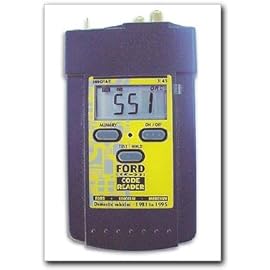
Or for a nicer scanner see www.midwayautosupply.com/Equus-Digital-Ford-Code-Reader/dp/B000EW0KHW Equus - Digital Ford Code Reader 3145.
It has a 3 digit LCD display so that you don’t have to count flashes or beeps.. Cost is $22-$36.
Well new plugs helped a little but only for a couple of miles. It stalled out at all three stops. No real change, no ground problem, fuel pressure good, no codes. Lurking on f150 forums and someone mentioned a leaking intake manifold gasket. Resulted in too much air in cylinder. No sensors to pick up this problem. I'm leaning to something like that.
Well thats not good, Replace wires? Cap, rotor?
Spray some starter fluid around upper/lower intake gasket, vac lines, check pcv valve/hose. Rpm will change where vac leak is.
Be careful with the starter fluid, it is flammable,
When you say no codes do you mean no codes or you get code11 koeo/koer?
Spray some starter fluid around upper/lower intake gasket, vac lines, check pcv valve/hose. Rpm will change where vac leak is.
Be careful with the starter fluid, it is flammable,
When you say no codes do you mean no codes or you get code11 koeo/koer?
Nope, I haven't replaced the wires, cap, rotor or coil. I guess for the money I could give that a go. I have not done the starter fluid check but that is something I could do this weekend with my fire extinguisher nearby  . No codes is codes, not even 11, in KOEO or KOER.
. No codes is codes, not even 11, in KOEO or KOER.
The how to run codes sticky I think address that. I had the same misconception that no codes means things are ok but thats not the case, you should get a code 11 if computer thinks things are ok, check the sticky for what to do when no code show. I had to replace my computer.
Don't start chasing your tail with vac leaks and new parts until you get the computer thing fixed
Don't start chasing your tail with vac leaks and new parts until you get the computer thing fixed
Similar threads
- Replies
- 2
- Views
- 127
- Replies
- 2
- Views
- 186


- Replies
- 11
- Views
- 304

- Replies
- 9
- Views
- 221


