Engine (EGR Deleted) Solution the hotter combustion chambers?

PonyGTrider

5 Year Member
Feb 27, 2019
625
110
63
Mexico
I learned that, Deleting EGR valve increases combustion chambers temperature.
Do any colleagues out there that deleted their EGR valve had any issues with the combustion chambers being too hot and if so how did you alleviate that problem?

This is a straightforward question to the people that have deleted their EGR valve if they have encountered problems after that deletion and if so, how did you solve them, and if I should expect more issues with aluminum heads.
I’m no searching or expecting a gain, I just want to clean out the engine bay and I really don’t want to start a discussion about why or why not to delete that valve, so please refrain from asking the typical questions like:
“Why you want to remove de EGR”? Or
“You won’t gain any hp” or
“There is no benefits from deleting the EGR”, etc, etc, etc.

Thank you all
 
I deleted my EGR on a 1971 Mustang back in the 1980’s. The one effect of that single change I noticed, was more preignition than before. I moved from a medium grade fuel to the highest octane fuel available, and removed a few degrees of initial timing, and the problem was solved. Now, that second change did result in lower overall horsepower, but I was willing to give that up for the engine packaging change. Good luck.
 
  • Like
Reactions: PonyGTrider
I deleted my EGR on a 1971 Mustang back in the 1980’s. The one effect of that single change I noticed, was more preignition than before. I moved from a medium grade fuel to the highest octane fuel available, and removed a few degrees of initial timing, and the problem was solved. Now, that second change did result in lower overall horsepower, but I was willing to give that up for the engine packaging change. Good luck.
That’s what I’m looking for. Some real world effects and some real experiences under such conditions.
I will keep you inputs into consideration for my decision, thank you
 
My most recent 5.0 has the "sonic" style EGR that has a passage through the intake instead of an external pipe. The passageway was clogged and the EGR valve has a vacuum leak. So I made a block off plate to go where the valve was and tapped the hole in the lower intake with a 1/2" pipe thread tap and screwed in an Allen head plug. Mine runs a lot better now, but that is because I fixed a vacuum leak that was within the EGR valve. Engines do run cooler with "functioning" EGR systems. Also, I had to go into my "tune" and switch off the EGR stuff. I'm working with an EEC-V pcm.
Here is how I made mine. This should be worth a COKE. (A little analog CAD for you guys)
1997mm egr block off plate pattern.webp

1997mm egr block off plate pattern marked.webp

1997mm egr block off plate rough cut.webp

1997mm egr block off plate belt sanded.webp

1997mm egr block off plate done.webp

Or you can purchase one already made Ron Francis 5.0 EGR block off plate
 
Last edited:
My most recent 5.0 has the "sonic" style EGR that has a passage through the intake instead of an external pipe. The passageway was clogged and the EGR valve has a vacuum leak. So I made a block off plate to go where the valve was and tapped the hole in the lower intake with a 1/2" pipe thread tap and screwed in an Allen head plug. Mine runs a lot better now, but that is because I fixed a vacuum leak that was within the EGR valve. Engines do run cooler with "functioning" EGR systems. Also, I had to go into my "tune" and switch off the EGR stuff. I'm working with an EEC-V pcm.
Here is how I made mine. This should be worth a COKE. (A little analog CAD for you guys)
1997mm egr block off plate pattern.webp

1997mm egr block off plate pattern marked.webp

1997mm egr block off plate rough cut.webp

1997mm egr block off plate belt sanded.webp

1997mm egr block off plate done.webp

Or you can purchase one already made Ron Francis 5.0 EGR block off plate
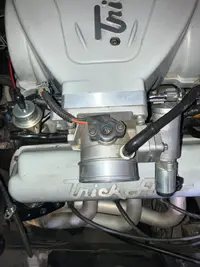
Very good, I’m going the other route just remove the EGR and spacer together and made a 3/4” spacer (Bracket) for the throttle cable bracket.
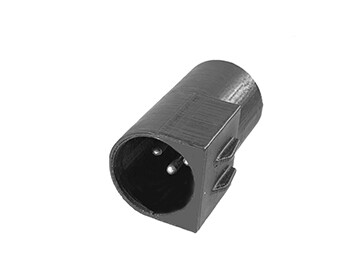
As far as the EGR position sensor I made a resistors plug to keep the check engine light “In check”.
I keeping everything in good order just in case I don’t like my 306 behavior I will re-install everything back.

Thank you IMG_6098.webp
 
Last edited:
  • Like
Reactions: GOvert
That’s what I’m looking for. Some real world effects and some real experiences under such conditions.
I will keep you inputs into consideration for my decision, thank you
I deleted my EGR on a 1971 Mustang back in the 1980’s. The one effect of that single change I noticed, was more preignition than before. I moved from a medium grade fuel to the highest octane fuel available, and removed a few degrees of initial timing, and the problem was solved. Now, that second change did result in lower overall horsepower, but I was willing to give that up for the engine packaging change. Good luck.
What is your actual timing set now, if you don’t mind?
My 306 is at 14 degrees of advance
 
My base is 10 but the program in the pcm has full control over what it is at any particular moment as it has to do with temp, rpms etc. I know this answer doesn't help much. I do know that if you make it too advanced it will run hot.
Here is what google says:
Yes, ignition timing that is too advanced makes an engine run hotter because the air/fuel mixture ignites too early in the compression stroke, causing peak combustion pressure and heat to occur when the piston is still rising or near the top, leading to higher cylinder temperatures, exhaust gas temperatures, and potential detonation (pinging/knocking). This inefficient burn transfers excessive heat to cylinder walls and exhaust, often causing overheating, hot spots, and damage like burnt valves or pistons.
 
  • Like
Reactions: PonyGTrider
@PonyGTrider EEC-IV OBD1 you can do or make the tri-resistor circuit to make the pcm think that everything is intact. I didn't try that on my EEC-V controlled 5.0. I had to use the main EGR wire that feeds the pcm as a "wideband" o2 sensor wire that feeds the wideband reading on the "dashboard" in the tuning laptop for "realtime" running feedback. But all Fox body 5.0s are EEC-IV so it is different than what I have.
 
  • Like
Reactions: PonyGTrider
My base is 10 but the program in the pcm has full control over what it is at any particular moment as it has to do with temp, rpms etc. I know this answer doesn't help much. I do know that if you make it too advanced it will run hot.
Here is what google says:
Yes, ignition timing that is too advanced makes an engine run hotter because the air/fuel mixture ignites too early in the compression stroke, causing peak combustion pressure and heat to occur when the piston is still rising or near the top, leading to higher cylinder temperatures, exhaust gas temperatures, and potential detonation (pinging/knocking). This inefficient burn transfers excessive heat to cylinder walls and exhaust, often causing overheating, hot spots, and damage like burnt valves or pistons.
Oh ok, I used to run 16 degrees no pinging whatsoever but backed up a couple degrees.
I’ll keep in mind all your inputs.

Thank you
 
@PonyGTrider EEC-IV OBD1 you can do or make the tri-resistor circuit to make the pcm think that everything is intact. I didn't try that on my EEC-V controlled 5.0. I had to use the main EGR wire that feeds the pcm as a "wideband" o2 sensor wire each that feeds the wideband reading on the "dashboard" in the tuning laptop for "realtime" running feedback. But all Fox body 5.0s are EEC-IV so it is different than what I have.
Yeah that’s what made a three resistor plug and it worked fine when I had a faulty EGR sensor
 
Last edited:
I made my own block off plate and ran an EGR eliminator plug too. This in my '54 Ford with '93 5.0 conversion. A couple thousand miles on it with no problems to date. However, it doesn't see any track time.........just a cruiser.

P1010004_4 (2).webp
 
I made my own block off plate and ran an EGR eliminator plug too. This in my '54 Ford with '93 5.0 conversion. A couple thousand miles on it with no problems to date. However, it doesn't see any track time.........just a cruiser.

P1010004_4 (2).webp
Good job
 
UPDATE:
Well I gave it a try and didn’t like the engine behavior. I had some hesitation and weird acting. The upper intake got hotter because of the hot gases were stuck in it and didn’t feel comfortable.
So I put everything back together and set up a plan for my next try.

I will wait until I get a set of of Felpro 1262-S3 to port match the heads/intake and since those gaskets don’t have EGR previsions they will block off the EGR port on the head preventing the gases from going up to the intakes and maintaining them cooler. Then I have a chip with the EGR function deleted so the computer don’t get fooled and it wont adjust timing advance per the EGR signal.

I’ve to say this was a good leaning experience and will try again because I definitely want a cleaner engine bay.

Will see, thank you all for your ideas!