
Hey guys. I have a 79 pace car. It’s a 4 cylinder car that I am in the process of changing over to a v8 car. I have already replaced the rearend and front to five lug. I want to run an in tank fuel pump. Can anyone tell me if a later model tank will work on the 79? I’m going carbureted so the pump doesn’t need to go big for efi. Any help would be appreciated
You are using an out of date browser. It may not display this or other websites correctly.
You should upgrade or use an alternative browser.
You should upgrade or use an alternative browser.
1979 foxbody in tank fuel pump
- Thread starter Tgm624
- Start date

Most in tank pumps are high pressure for fuel injection. You don’t need high pressure for a carb application. A low pressure external electric pump will work fine such as ones made by Carter.

Is there a specific reason why you want a later model tank?
Here's a link for a Fox carb'd tank:
Here's a link for a Fox carb'd tank:

You already have everything you need. Just pull the existing tank and clean it up. Install a new filter on the fuel pickup tube and put it back together. Run an external low pressure fuel pump to a regulator and then then run individual bowl feeds off of the regulator. If you feel like it is necessary (most prefer to do this) get a return style regulator and run a return line back to the tank. This will require you to make a provision on the tank for the return line.
There are differences in the fuel tanks on our cars from 79-93 and are as follows:
1979 through April 1981 - the 1979 & 1980 with the 2.3 got the smallest tank ever in a Fox which was 11.5 gallons, the rest got the 12.5 gallon tank
April 1981 through 1986 - got the 15.4 gallon carbureted tank (in 1986 this would have been only the 4 cylinder cars)
1986 through 1993 - got the 15.4 gallon EFI tank (in 1896 this would have been only the 5.0 cars)
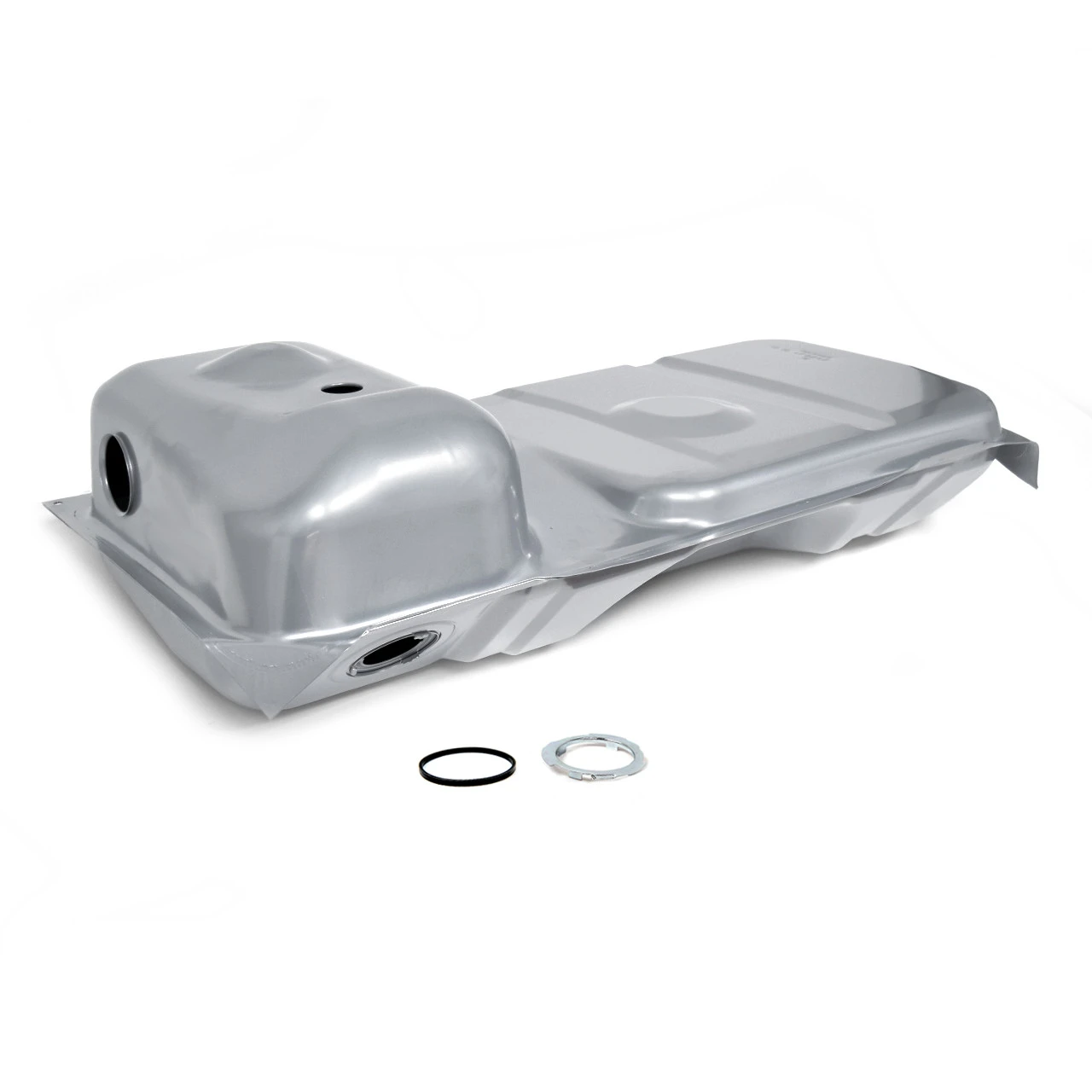
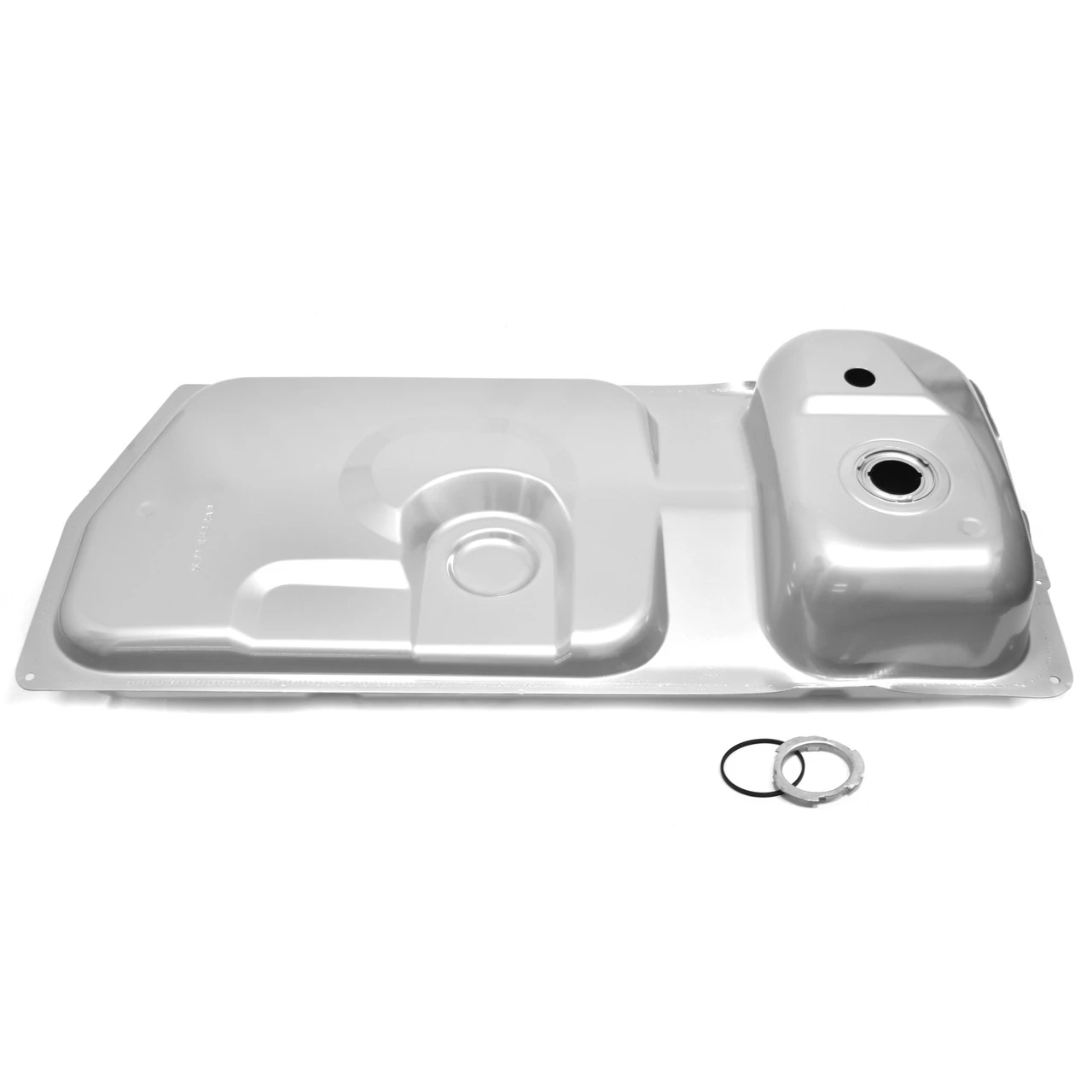
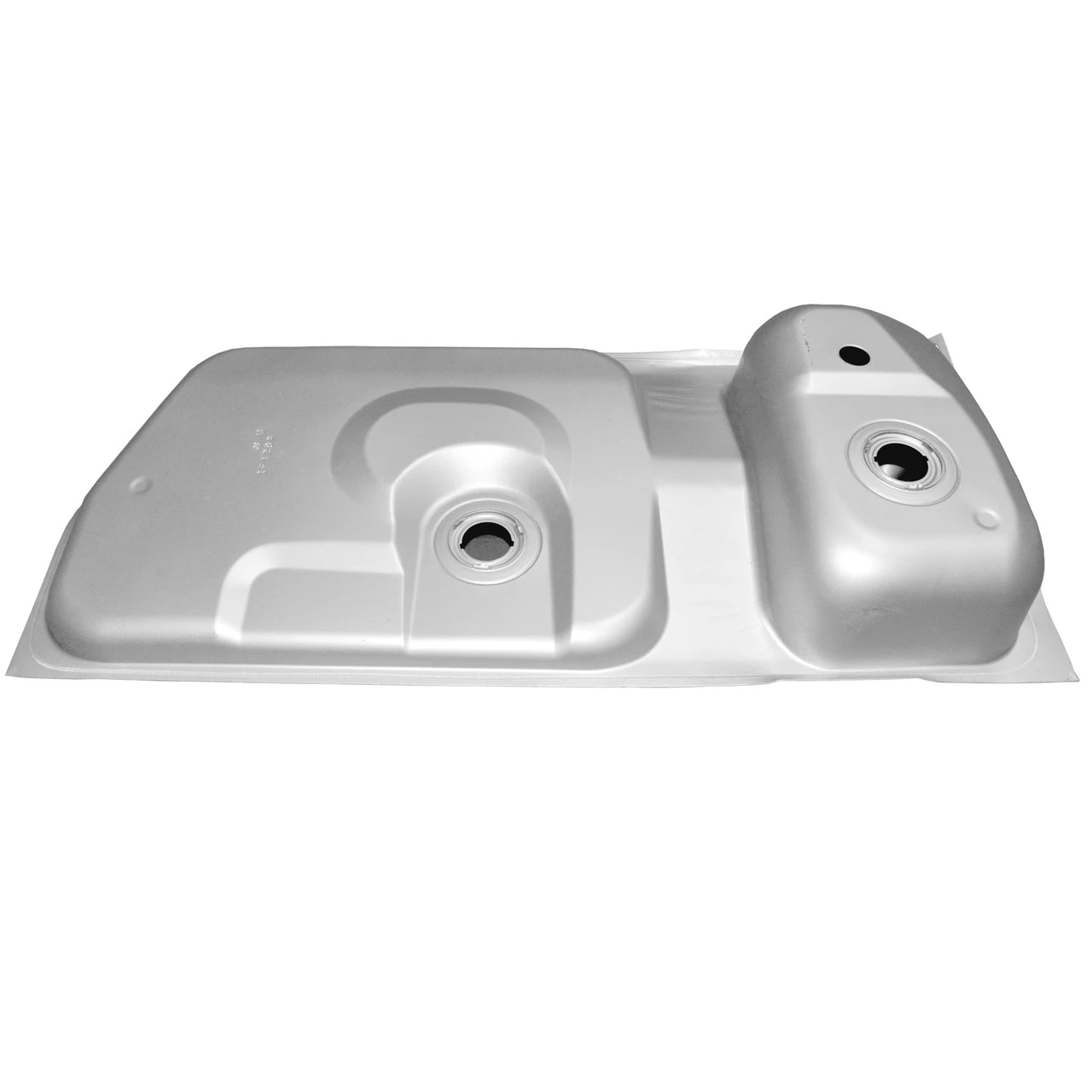
On the carbureted 1979 through 1986 tanks the pickup tube and the sending unit were one piece but different. The 1979 through pre April 1981 sending unit/pickup mounted on the bottom front of the fuel tank where the April 1981 through 1986 mounted on top of the tank. On the 1986 through 1993 EFI tanks the fuel pump has its own hanger and the sending unit is mounted in a physically different location but both on top of the tank.
You can search and find images of the pickup/sending units for the 1979 - pre-April 1981 and the carbureted April 1981 - 1986 cars. You can see the differences between the carbed tanks and the EFI tanks here:
1979 through pre-April 1981:
April 1981 - 1986:
1986 through 1993 EFI cars:
So I am pretty sure that the EFI tanks are a direct bolt in on the April 1981 and up cars but the pre April 1981 cars and down there are mounting issues but I want to say that they can be over come.
There are differences in the fuel tanks on our cars from 79-93 and are as follows:
1979 through April 1981 - the 1979 & 1980 with the 2.3 got the smallest tank ever in a Fox which was 11.5 gallons, the rest got the 12.5 gallon tank
April 1981 through 1986 - got the 15.4 gallon carbureted tank (in 1986 this would have been only the 4 cylinder cars)
1986 through 1993 - got the 15.4 gallon EFI tank (in 1896 this would have been only the 5.0 cars)
On the carbureted 1979 through 1986 tanks the pickup tube and the sending unit were one piece but different. The 1979 through pre April 1981 sending unit/pickup mounted on the bottom front of the fuel tank where the April 1981 through 1986 mounted on top of the tank. On the 1986 through 1993 EFI tanks the fuel pump has its own hanger and the sending unit is mounted in a physically different location but both on top of the tank.
You can search and find images of the pickup/sending units for the 1979 - pre-April 1981 and the carbureted April 1981 - 1986 cars. You can see the differences between the carbed tanks and the EFI tanks here:
1979 through pre-April 1981:
April 1981 - 1986:
1986 through 1993 EFI cars:
So I am pretty sure that the EFI tanks are a direct bolt in on the April 1981 and up cars but the pre April 1981 cars and down there are mounting issues but I want to say that they can be over come.
Modern fuel is not the same as it once was. It is more susceptible to evaporating out of the carb bowls as the car sits, as well as evaporating and boiling in the fuel lines
Except, the fuel tank has nothing to do with this.
A carb pickup in an OEM tank with a LP external pump is all that's required.
External pumps are nowhere near as reliable as in-tank ones. If they were, manufacturers wouldn't go through everything to put them inside the tank.
And adding an external pump does not give you a return line or a return fitting in your tank. Its the return style fuel setup that keeps fuel flowing, which keeps it cool.
That's a lot of assumption.
Even still, if a return system is what is desired (not required) it's simple to get a pickup with a return fitting. The rest is a function of the regulator.
Still simpler than shoe-horning a tank that doesn't fit although, I'm not certain what issues there are with later model tanks in an early model Fox. What I [do] know is that there are plenty of Fi converted Early model Fox cars using external pumps like those from Aeromotive and others.
I would argue that the reason for OEM to select internal pumps is because they are universally applicable and therefore, "cheap" although, the reliability angle can also be true.
Its a fact. If a car manufacturer could save $0.10 per car and get away with it, they would. 100% of the time. They determined long ago that external electric fuel pumps were not reliable enough to put them into the hundreds of millions of cars they manufacture. They could do it, but then the pump would burn up before the warranty was up and they'd have to replace the pump. It would cost them more than it saved them.
These FI conversions you know of using external pumps are small numbers of vehicles, with small numbers of miles on them. And you don't have to look too far into the reviews for these style of pumps to find somebody who's pump shat the bed on them.
Provide your data or say that this is what you believe.
Or... argue until you're satisfied.

The bottom line is that there are multiple methods to get there that don't require throwing max cash to fit a square peg into a round hole.
IF it's a drop-fit, great! Otherwise, there are drop-in solutions which, BTW is why I asked the [OP] the question.
So you can put an external pump on these cars that looks damn near identical to the in tank pumps and they are reliable. As a matter of fact Walbro makes them so I am going to say pretty darn reliable.
 walbrofuelpumps.com
I can think of a host of reasons for the manufactures to put the pump in the tank like east of assembly, fuel is used to cool the pump (at least until you reach about a 1/4 of a tank), and if it leaks it just leaks into the tank. The last is a weak reason as there are several other connection points that can leak as well.
My biggest complaint about an in-tank mounted pump is having to service it because they never have issues when you are low on fuel.
GSL Inline Fuel Pumps
walbrofuelpumps.com
I can think of a host of reasons for the manufactures to put the pump in the tank like east of assembly, fuel is used to cool the pump (at least until you reach about a 1/4 of a tank), and if it leaks it just leaks into the tank. The last is a weak reason as there are several other connection points that can leak as well.
My biggest complaint about an in-tank mounted pump is having to service it because they never have issues when you are low on fuel.
That's the same thing my kids do when they want to win an argument. "Prove it" "name one example", etc.
2 can play at that game. Please list the names, addresses, install dates, and mileage of everybody you've ever met who's running an external electric fuel pump.
And you appear to be the same kind of person indicated in my signature. Not the first, by any means.
Its a fact of life. Those are not 200k mile fuel pumps. If I had a nickel for every external fuel pump I've seen go bad, I'd have enough to buy a new tank and an in-tank electric pump.
We should then include the number of in-tank pumps that have failed.

I think your opinion is well stated in this thread and you have nothing else to offer.

Something worth mentioning is safety when adding an electric fuel pump to a carb car. Its a good idea to put in a safety switch of some type to shut off the pump in certain situations. Like an accident that stalls the engine with the key on because it will just keep pumping fuel.
There are several styles. One is an oil pressure switch that you would wire into your fuel pump relay to open the circuit when oil pressure drops. It's bypassed when cranking.
https://www.summitracing.com/parts/...ya-eIM5kWPk-hptmPRr86qUqB__tULbBoCTGsQAvD_BwE
Or they have electronic ones that take a signal from your tach like this https://www.classicindustries.com/p...TlLVLuCRXTPDsW9fIVuEcGWuaCVKI6HgAfXCB6dzDsiPw
There are several styles. One is an oil pressure switch that you would wire into your fuel pump relay to open the circuit when oil pressure drops. It's bypassed when cranking.
https://www.summitracing.com/parts/...ya-eIM5kWPk-hptmPRr86qUqB__tULbBoCTGsQAvD_BwE
Or they have electronic ones that take a signal from your tach like this https://www.classicindustries.com/p...TlLVLuCRXTPDsW9fIVuEcGWuaCVKI6HgAfXCB6dzDsiPw

@Tgm624
Just put a mechanical fuel pump on it and ride.
It's got a carburetor on it, 7psi is all you need, no cutoff switch, no wiring, no return line, you don't need to pull the engine to install, no return line to worry about, dirt cheap and dead nuts reliable.
Just need the timing cover and the eccentric (?) whatever it's called that bolts to the cam gear.
Just put a mechanical fuel pump on it and ride.
It's got a carburetor on it, 7psi is all you need, no cutoff switch, no wiring, no return line, you don't need to pull the engine to install, no return line to worry about, dirt cheap and dead nuts reliable.
Just need the timing cover and the eccentric (?) whatever it's called that bolts to the cam gear.

They Walbro’s are pretty quite if you install them with isolators like these:
Run lines that are good for ethanol fuels and you should be good to go.
Run lines that are good for ethanol fuels and you should be good to go.
I honestly think in a carbureted application is just personal preference. I’m not going to tear into the timing chain cover to install the eccentric vs wiring up a pump.
Similar threads
- Replies
- 5
- Views
- 447
- Replies
- 8
- Views
- 919

- Replies
- 7
- Views
- 450

- Replies
- 4
- Views
- 432
- Replies
- 7
- Views
- 479