
I have and owen this stock 1985 5.0L 302 Mustang GT all of its 40 years, has about 71,000 miles on it, About 10 years ago it started to have a high idle, ill say when warmed up and choke is off. 1,100 RPMs I have had the carb rebuilt since then but still a high idle, (That is not the issue) I have checked all the normal stuff, There is not a idle set screew like a normal carb the 4180C is known to have this issue. Just seeing if anyone has any ideas, The 4180C was a holly carb built for Ford for the 1983-1985 high perfomrance engines. Could a EGR value cause this? Thoughts
You are using an out of date browser. It may not display this or other websites correctly.
You should upgrade or use an alternative browser.
You should upgrade or use an alternative browser.
Engine 1985 Holly 4180C high Idle
- Thread starter Woody1965
- Start date


Yes, the EGR can, get a vacuum gauge, the best tool to use in a carb application, hook it up and give the readings at idle and at 2k rpms.

LIke said above, check everything that has a vacuum hose to it... Not a bad time to buy some new vacuum line and start replacing it " while your there". If your car was anything like my 83, before I de smogged it, nothing but a nightmare of vacuum lines and vacuum sensors....

85GTStangGuy
5 Year Member
Couple of random thoughts....
Accelerator cable hanging/sticky? Throttle kicker not operating correctly? Choke malfunctioning?
Accelerator cable hanging/sticky? Throttle kicker not operating correctly? Choke malfunctioning?
Here is a picture of the carb off my 83... I replaced that " emissions" carb with a Summit 500 cfm carb....
Pretty sure there is an idle screw on it... I will pull the carb off the shelf and look for one...
Had to take the carb off my 67 dodge a few times to clean it... Something about modern fuel and Carbs..... Amazing what was floating around in the float bowls... Looked like a oil slick on the ocean....


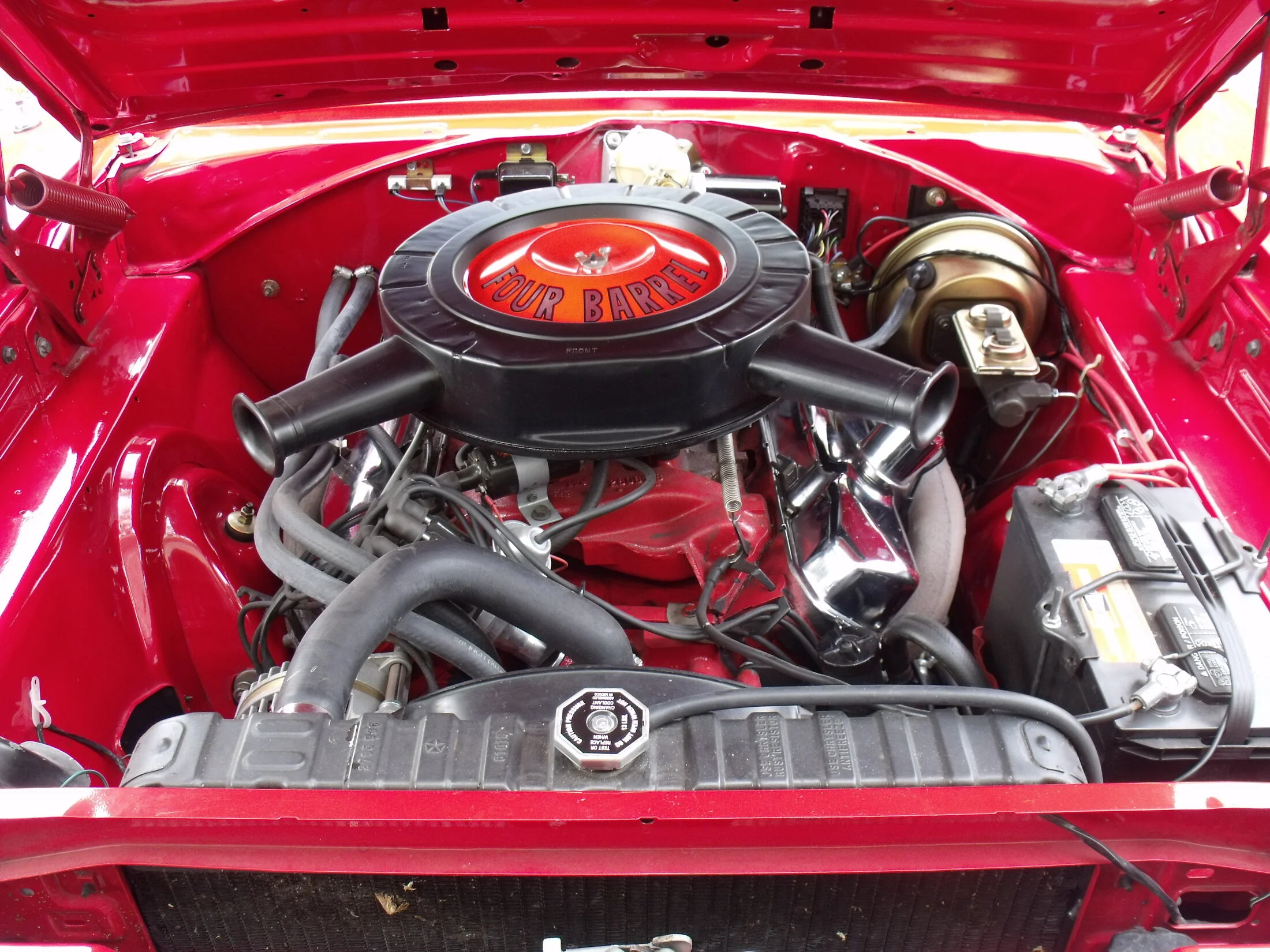
Pretty sure there is an idle screw on it... I will pull the carb off the shelf and look for one...
Had to take the carb off my 67 dodge a few times to clean it... Something about modern fuel and Carbs..... Amazing what was floating around in the float bowls... Looked like a oil slick on the ocean....
I have, just by spraying around the intake and general stuff, Is there a different way of checking ?Have you checked for vacuum leaks?
Thanks
I will try that, I also never did it with the car fully warmed up, So I can test that way also, maybe someting is moving when the block gets hotter ?Vacuum gauge?
there are so many vacuum solenoids on this era of Mustang that could be....I will try that, I also never did it with the car fully warmed up, So I can test that way also, maybe someting is moving when the block gets hotter ?
My bet is worn out, Hard Cracked vacuum lines and hoses......
85GTStangGuy
5 Year Member
Vacuum gauge?
I second what Captain autostealer said.


Blackhawkxx
Mustang Master
- Mar 3, 2023
- 548
- 537
- 103
Are you saying , that with the summit carb on your engine, that you can’t get the idle below 1100 rpm ?
If that’s the case, you could have a major vacuum leak, or the engine timing is way advanced.
As stated, a Vacuum gauge is a must have.
Also, on the 4180, with A/C, you should have a Kicker solenoid that mounts to those 2 1/4-20 tapped holes on the base plate. That’s what the idle screw hits.
These carbs are also prone to sticking throttle blades that don’t close all the way. Were you able to physically push the throttle closed ?
Also, all Holley carb have a secondary stop screw that’s under the carb by the Vacuum secondaries that can be adjusted. This will definitely affect your idle speed if it’s set wrong.
I noticed that your not running the factory heat shield nor the EGR cast iron spacer plate on what seems to be the factory intake manifold? That will lead to a gasket blow out by where the EGR valve was due to exhaust heat coming up the EGR. Ask me how I know…
I have owned my 84 5.0 for forty years and finally gave up on my 4180 as well.
I have also got rid of most of the Vacuum emissions stuff, keeping the vapor stuff intact. That’s another Vacuum leak source as well, as it uses engine Vacuum to operate. These dam cars were so compromised from the factory to begin with, and there is no way for all that emissions stuff to survive after 40 years,
Leading to all kinds of vacuum leaks.
Hope this helped some.
Scott
If that’s the case, you could have a major vacuum leak, or the engine timing is way advanced.
As stated, a Vacuum gauge is a must have.
Also, on the 4180, with A/C, you should have a Kicker solenoid that mounts to those 2 1/4-20 tapped holes on the base plate. That’s what the idle screw hits.
These carbs are also prone to sticking throttle blades that don’t close all the way. Were you able to physically push the throttle closed ?
Also, all Holley carb have a secondary stop screw that’s under the carb by the Vacuum secondaries that can be adjusted. This will definitely affect your idle speed if it’s set wrong.
I noticed that your not running the factory heat shield nor the EGR cast iron spacer plate on what seems to be the factory intake manifold? That will lead to a gasket blow out by where the EGR valve was due to exhaust heat coming up the EGR. Ask me how I know…
I have owned my 84 5.0 for forty years and finally gave up on my 4180 as well.
I have also got rid of most of the Vacuum emissions stuff, keeping the vapor stuff intact. That’s another Vacuum leak source as well, as it uses engine Vacuum to operate. These dam cars were so compromised from the factory to begin with, and there is no way for all that emissions stuff to survive after 40 years,
Leading to all kinds of vacuum leaks.
Hope this helped some.
Scott
I thought about that idle control solenoid, also a missing EGR plate under the carb was mentioned, are you running a spacer between the carb and intake?
Thanksthere are so many vacuum solenoids on this era of Mustang that could be....
My bet is worn out, Hard Cracked vacuum lines and hoses......
No..Are you saying , that with the summit carb on your engine, that you can’t get the idle below 1100 rpm ?
If that’s the case, you could have a major vacuum leak, or the engine timing is way advanced.
Hope this helped some.
Scott
I am running the stock plate between EGR and Carb, Solenoid works with AC,I thought about that idle control solenoid, also a missing EGR plate under the carb was mentioned, are you running a spacer between the carb and intake?
I am running the stock plate and heat shield, not sure what Ask me how I know statement means ?Are you saying , that with the summit carb on your engine, that you can’t get the idle below 1100 rpm ?
If that’s the case, you could have a major vacuum leak, or the engine timing is way advanced.
As stated, a Vacuum gauge is a must have.
Also, on the 4180, with A/C, you should have a Kicker solenoid that mounts to those 2 1/4-20 tapped holes on the base plate. That’s what the idle screw hits.
These carbs are also prone to sticking throttle blades that don’t close all the way. Were you able to physically push the throttle closed ?
Also, all Holley carb have a secondary stop screw that’s under the carb by the Vacuum secondaries that can be adjusted. This will definitely affect your idle speed if it’s set wrong.
I noticed that your not running the factory heat shield nor the EGR cast iron spacer plate on what seems to be the factory intake manifold? That will lead to a gasket blow out by where the EGR valve was due to exhaust heat coming up the EGR. Ask me how I know…
I have owned my 84 5.0 for forty years and finally gave up on my 4180 as well.
I have also got rid of most of the Vacuum emissions stuff, keeping the vapor stuff intact. That’s another Vacuum leak source as well, as it uses engine Vacuum to operate. These dam cars were so compromised from the factory to begin with, and there is no way for all that emissions stuff to survive after 40 years,
Leading to all kinds of vacuum leaks.
Hope this helped some.
Scott
I do have AC, that seems to work fineDo you have air condoning? If so there is a solenoid that kicks the idle up when the air is on. Maybe malfunctioning or misadjusted?
The screw/spring would be your idle adjustment.. I would guess it sits on the AC " high idle" solenoid...
Your solenoid works with the ac on? turn the ac off and adjust this screw..
Remove the throttle cable and see this makes a difference... Your cable could be binding... It just pulls off the linkage....
If there is no return spring be sure and hold the throttle linkage closed when you do this..
How are your carb base gaskets? All of them 40 years old?? Replace them all...
Lots of NO or LOW cost areas to look at..
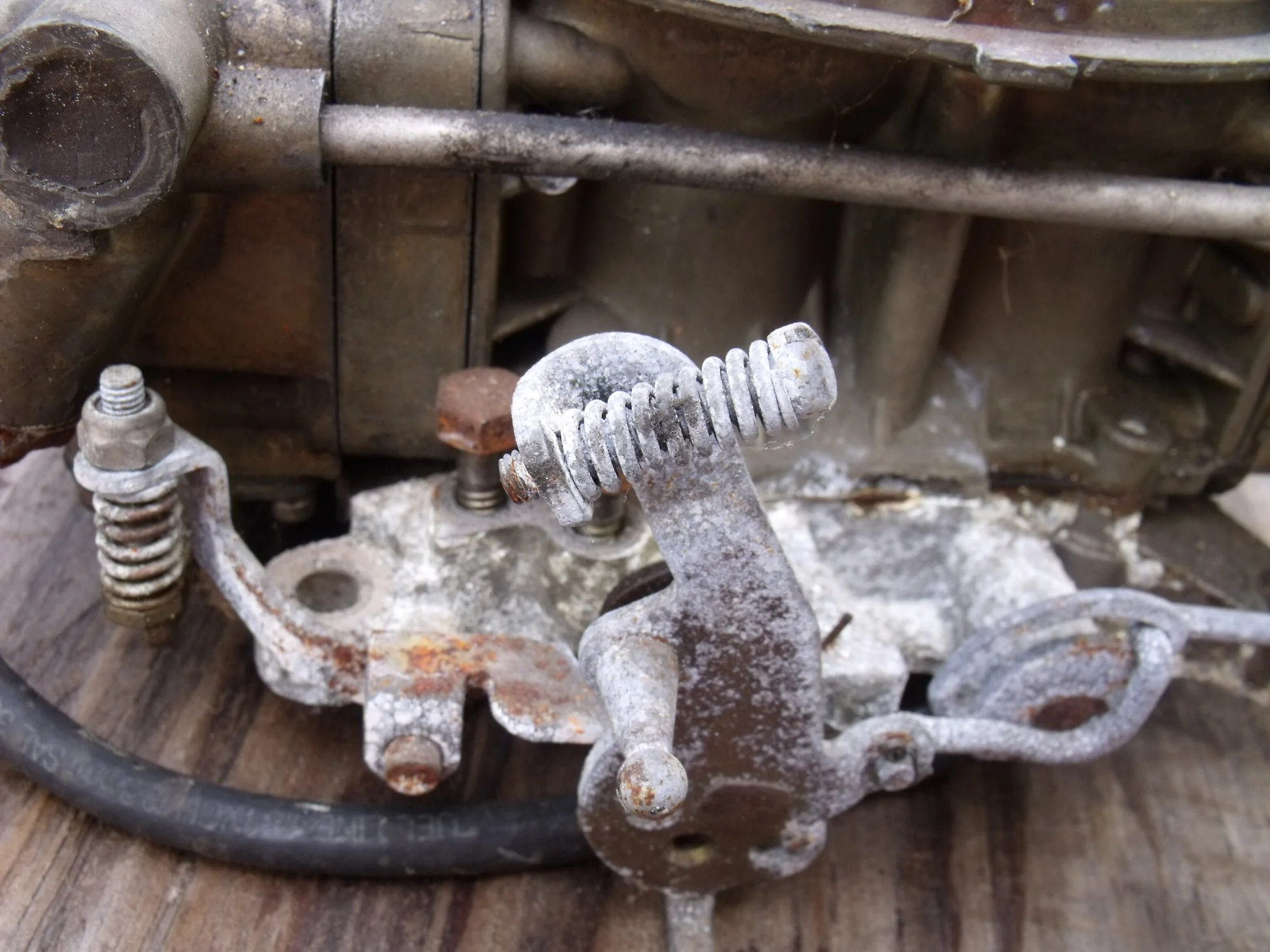
Your solenoid works with the ac on? turn the ac off and adjust this screw..
Remove the throttle cable and see this makes a difference... Your cable could be binding... It just pulls off the linkage....
If there is no return spring be sure and hold the throttle linkage closed when you do this..
How are your carb base gaskets? All of them 40 years old?? Replace them all...
Lots of NO or LOW cost areas to look at..
I believe you are confusing my pics and post in your comments... I am not the OP here, just trying to help....Are you saying , that with the summit carb on your engine, that you can’t get the idle below 1100 rpm ?
If that’s the case, you could have a major vacuum leak, or the engine timing is way advanced.
As stated, a Vacuum gauge is a must have.
Also, on the 4180, with A/C, you should have a Kicker solenoid that mounts to those 2 1/4-20 tapped holes on the base plate. That’s what the idle screw hits.
These carbs are also prone to sticking throttle blades that don’t close all the way. Were you able to physically push the throttle closed ?
Also, all Holley carb have a secondary stop screw that’s under the carb by the Vacuum secondaries that can be adjusted. This will definitely affect your idle speed if it’s set wrong.
I noticed that your not running the factory heat shield nor the EGR cast iron spacer plate on what seems to be the factory intake manifold? That will lead to a gasket blow out by where the EGR valve was due to exhaust heat coming up the EGR. Ask me how I know…
I have owned my 84 5.0 for forty years and finally gave up on my 4180 as well.
I have also got rid of most of the Vacuum emissions stuff, keeping the vapor stuff intact. That’s another Vacuum leak source as well, as it uses engine Vacuum to operate. These dam cars were so compromised from the factory to begin with, and there is no way for all that emissions stuff to survive after 40 years,
Leading to all kinds of vacuum leaks.
Hope this helped some.
Scott
Similar threads
- Replies
- 5
- Views
- 234
- Replies
- 9
- Views
- 742

- Replies
- 11
- Views
- 462

- Replies
- 12
- Views
- 701
