Aviator’s engine delivers peak power of 302 horsepower at 5,750 rpm and peak torque of 300 lbs.-ft. at 3,250 rpm; 90 percent of peak torque is available at only 2,000 rpm. It meets the California Air Resources Board’s Ultra Low Emission Vehicle (ULEV) standard.
The Aviator team began with a new, very rigid aluminum block that weighs 70 pounds less than a comparable iron block. It is fitted it with 10.03:1 high-compression pistons for good power and fuel economy, and upgraded connecting rods for durability. New aluminum four-valve heads and an aluminum intake manifold with variable-length runners optimize airflow at all engine speeds to improve low-speed tractability and high-rpm power with greatly reduced combustion noise.
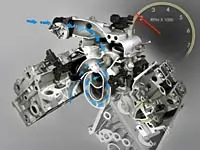
LOW RPM
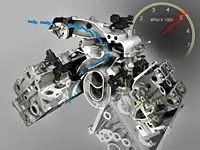
HIGH RPM
Often, engine designers use aggressive intake port tuning for a high degree of tumble in the intake charge to achieve quick and powerful combustion for good torque at low engine speeds. Two disadvantages of this approach are increased noise at high engine speeds and reduced peak power. But Aviator uses an internal valve to switch from a long intake path at low engine speeds to a short intake path at high speeds. The long path produces a column of air that helps promote better cylinder filling for more torque and better low-end response than a traditional intake. When the manifold switches to the short-path configuration, the engine breathes more freely to maximize peak power.
Aviator engineers took other actions to reduce the engines sound levels during development. For example, the rigid deep-skirt block has six-bolt main bearing caps and a lower architecture that limits bolt forces to the vertical direction, which improves overall stiffness and reduces noise. New computer-engineered engine mounts not only lessen the transmission of noise and vibration to the chassis but also are tuned to use the engine as a mass damper for better ride comfort.
Other noise-fighting features include very stiff accessory mounts, roller-finger cam followers, dual fuel rail dampers and a thicker front engine cover. A molded engine shroud further reduces sound levels, but Aviator engine design engineer Rob McWilliams notes, “We found that by carefully studying noise sources and making subtle changes, we could deliver impressive refinement throughout the power band without having to resort to aggressive sound-blanketing techniques.”




 I do that several times a day


