
I knew at some point that Bung reference was going to come and Bite me in the Butt (no pun intended)lol
You are using an out of date browser. It may not display this or other websites correctly.
You should upgrade or use an alternative browser.
You should upgrade or use an alternative browser.
Air Fuel ratio bung location.
- Thread starter Praetorious
- Start date

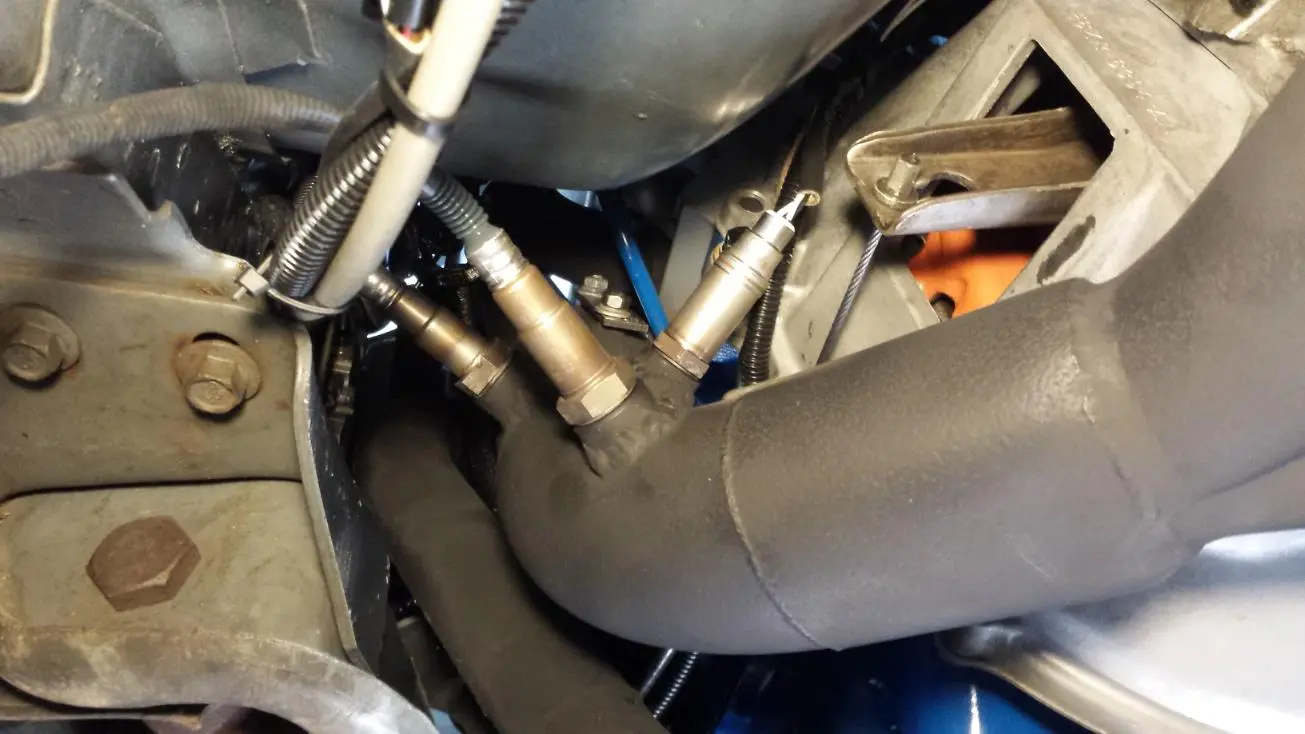
How I mounted mine in a single turbo, 3" downpipe on my Capri.
I was always curious how accurate widebands are, so I bought
two different brand kits, and ran them next to each other.
Pretty close (cold start)
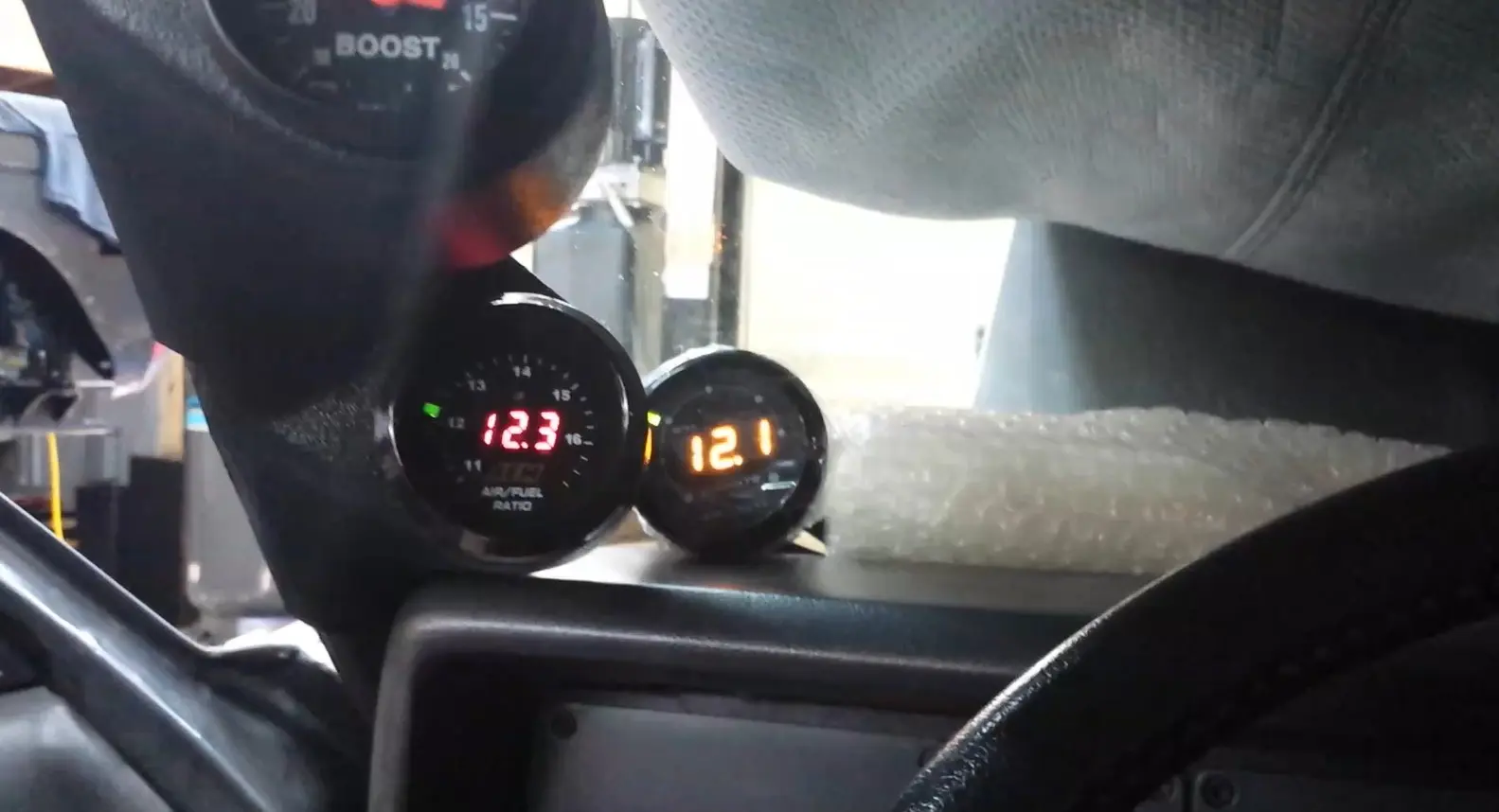
I was always curious how accurate widebands are, so I bought
two different brand kits, and ran them next to each other.
Pretty close (cold start)

YesSo the wide band is located after your X but before the cats, correct?

Blackhawkxx
Mustang Master
- Mar 3, 2023
- 550
- 537
- 103
Just curious as I'm thinking of getting one, why did you think it is one of the best?One of the best AFR gauge kits available
Thank you for all that info too,specially the bungs,i wasn't aware they were 2 types,seems like stepped is the way to go, hole is already drilled and you dont risk ruining the thread on the new bung while drilling the hole plus our welder is a bit temperamental, anything i can do to make his job easier he will like that,lolSoon at work, I/we will be installing a pair of O2 sensor bungs for the wideband O2 AFR gauge. These come with plugs. We are installing two and are purchasing these with the plugs in case we thought that we had an engine problem and wanted to momentarily swap to the other side. They will be 1.5" from the stock narrowband sensors and clocked at about 11 next to the narrows that are at 9.5.
O2 bungs with plugs
One of the best AFR gauge kits available
ADDED: Here is a link to just a pair but they don't have the step which I prefer. If you use the non-step ones, make sure the hole in the pipe is big enough for the sensor.
pair of two bungs without the step, with plugs
GOvert
15 Year Member
@Blackhawkxx The AEM AFR wideband gauge set/kit was highly recommended by a pro-tuner associate. I installed it on a vehicle that the pcm was tuned for the specific injectors and MAFS. I get regular readings bouncing around between 14 to 15 air/fuel ratio but closer to 14.2 to 14.7 so I feel that the AEM AFR set-up is functioning well and accurate. As of yet, I haven't compared it to another brand, but I do have a spare O2 bung with a plug in it for when that time comes.
@OX1 I see that you have done what I was already proposing. I need to find my cheap one and install next to the AEM to see how close that it is to it.
@OX1 I see that you have done what I was already proposing. I need to find my cheap one and install next to the AEM to see how close that it is to it.
I've been told the Innovate controls/monitors the heater circuit better than the AEM.
I know the AEM starts working faster than the Innovate. Not sure if the Innovate does not want to
display until it thinks heater circuit is warmed up enough??
The Innovate digital display is larger, but I still think AEM is easier to read (crisper, maybe)
They are both about the same price and as I posted, read pretty much the same A/F.
I know the AEM starts working faster than the Innovate. Not sure if the Innovate does not want to
display until it thinks heater circuit is warmed up enough??
The Innovate digital display is larger, but I still think AEM is easier to read (crisper, maybe)
They are both about the same price and as I posted, read pretty much the same A/F.
Blackhawkxx
Mustang Master
- Mar 3, 2023
- 550
- 537
- 103

Has anyone here ever used the AutoMeter wideband gauge?
You really need to post a link to what you're referring to.
There are stand-alone gauges that require a signal from an actual wide-band to reflect useable data and then there are wide-bands ("kits" so to speak) that include a gauge.
Now... You can take a simple AFR gauge and feed it garbage from a narrow-band sensor but the readings from the display are utter gibberish; nothing more than a light show.
I have used an analog autometer gauge to display data sent from the analog feed of my Innovate LM1 wide band.
I do [not] like digital gauges in my 80's era Fox Mustang.

Blackhawkxx
Mustang Master
- Mar 3, 2023
- 550
- 537
- 103
Here are a couple.You really need to post a link to what you're referring to.
There are stand-alone gauges that require a signal from an actual wide-band to reflect useable data and then there are wide-bands ("kits" so to speak) that include a gauge.
Now... You can take a simple AFR gauge and feed it garbage from a narrow-band sensor but the readings from the display are utter gibberish; nothing more than a light show.
I have used an analog autometer gauge to display data sent from the analog feed of my Innovate LM1 wide band.
I do [not] like digital gauges in my 80's era Fox Mustang.
Both of those include the sensor so they are more than just gauges.

gkomo
now i can hopefully expect to receive the shaft
GOvert
15 Year Member
@OX1 The two that you are comparing, do they both use the Bosch lsu. 4.9 WB sensor?
When I use the word "kit", I mean everything necessary to install the gauge/Bosch lsu 4.9 wideband sensor including the bung and other hardware.
From AEM 30-4110
I have the power wire piggybacked off of a "key on" power source.
On my '97 5.0, the wideband O2 sensor is ~24" from the head on the driver's side.
On the '89 5.0, the "H" pipe connection is further downstream than we feel comfortable installing the wideband O2 sensor bungs. That is why we picked the spots on the long tube header collectors' next to the stock "narrowband" sensors to place the wideband Bosch sensor/s.
AEM afr 30-4110 installation instructions PDF There is s good description as to how the Bosch lsu 4.9 sensor functions.
ADDED" I/we going to install a bung on everything else that I work on from everything to carbureted to fuel injection. Way back when, we would install Holley carbs, they always smelled rich when we were running around but not when we would go down to the beach at the "Gulf of Mexico".
When I use the word "kit", I mean everything necessary to install the gauge/Bosch lsu 4.9 wideband sensor including the bung and other hardware.
From AEM 30-4110
Features:
- Interchangeable black and white faceplates included for customizing gauge appearance (digital gauges only)
- 4.9 LSU wideband sensor and weld-in bung included (PN 30-4110)
- No free air sensor calibration required, ever
- Interchangeable black and silver bezels included
- Interchangeable black and white faceplates included
- 52mm (2-1/16") gauge housing
- 0-5v analog output (10-20 AFR range only)
I have the power wire piggybacked off of a "key on" power source.
On my '97 5.0, the wideband O2 sensor is ~24" from the head on the driver's side.
On the '89 5.0, the "H" pipe connection is further downstream than we feel comfortable installing the wideband O2 sensor bungs. That is why we picked the spots on the long tube header collectors' next to the stock "narrowband" sensors to place the wideband Bosch sensor/s.
AEM afr 30-4110 installation instructions PDF There is s good description as to how the Bosch lsu 4.9 sensor functions.
ADDED" I/we going to install a bung on everything else that I work on from everything to carbureted to fuel injection. Way back when, we would install Holley carbs, they always smelled rich when we were running around but not when we would go down to the beach at the "Gulf of Mexico".
Last edited:
I'm splitting the signal from the wideband sensor when the Moates QuarterHorse device is attached to the pcm and the RT results are appearing on the "laptop" digital dashboard.
For these scenarios, I prefer to have an AFR meter that has an external output.
I mean, in general: Folks that want AFR meters want it to do more than just power a gauge even if not at first.
GOvert
15 Year Member
@Noobz347 That's what is nice about the more advanced WB/gauge kits.
I just walked out to my 5.0 vehicle and verified the wiring. The 6-pin connector from the WB O2 sensor first plugs into the gauge. Then I have the 5-volt "analog" output (white wire) going to the pcm/laptop wire. Diagram in the PDF document listed above.
I hope this discussion helps other people. At first, I wasted $50- on a cheap gauge kit that was nothing more than a 4-wire narrowband sensor hooked up to a cheap gauge. Then I bought a cheap WB kit, but it did have the Bosch lsu 4.9 WB O2 with it. Now after purchasing the AEM afr kit, I want to compare it to the cheaper wideband kit.
I just walked out to my 5.0 vehicle and verified the wiring. The 6-pin connector from the WB O2 sensor first plugs into the gauge. Then I have the 5-volt "analog" output (white wire) going to the pcm/laptop wire. Diagram in the PDF document listed above.
I hope this discussion helps other people. At first, I wasted $50- on a cheap gauge kit that was nothing more than a 4-wire narrowband sensor hooked up to a cheap gauge. Then I bought a cheap WB kit, but it did have the Bosch lsu 4.9 WB O2 with it. Now after purchasing the AEM afr kit, I want to compare it to the cheaper wideband kit.
I hope this discussion helps other people.
I think it does. There is new stuff coming out all the time. I do see that the kits are evolving. There was time that the gauges fed by by narrow band sensors were all the rage and I mean internet fights over whether or not that "light show" was worth the time of day. I call those, "Boy Racer Kits".

And now it appears there are more inexpensive kits that are still true wide band kits. That's a good thing.
@OX1 The two that you are comparing, do they both use the Bosch lsu. 4.9 WB sensor?
AEM is 10-12 years old and Innovate, about 5. Whatever wideband sensor they came with at that time.
I'd have to dig up instructions to see what exact O2 they are, but they are whatever came with the "kits".
Normally I agree, but A/F just seems harder to read analog to me, especially idle/part throttle when it is bouncing around a lot.I have used an analog autometer gauge to display data sent from the analog feed of my Innovate LM1 wide band.
I do [not] like digital gauges in my 80's era Fox Mustang.
That said, I did put a lot of work into my factory looking "analog" voltmeter, for 86 guage setup.
(in addition to stick on face I designed, I had guts replaced with an actual voltmeter with the correct sweep)
Normally I agree, but A/F just seems harder to read analog to me, especially idle/part throttle when it is bouncing around a lot.
There are a lot of nice gauges out there. The one I have is white faced, amber backlight, and has an idiot light you can set for too far rich/lean. It's a quick reference. My LM-1 feeds a data log if I [really] need to be accurate on the reading.
I bought it to match my Kenne Bell Boost/Vac and Fuel Pressure gauges. It's not a perfect match but it's pretty good.
Similar threads
- Replies
- 15
- Views
- 824


- Replies
- 11
- Views
- 462

- Replies
- 32
- Views
- 2K

- Replies
- 2
- Views
- 956