Bucking And Surging Help

slow5ohgt

Member
Nov 5, 2012
35
1
8
Just looking for a little help chasing a problem on an 88 gt. Car sat for about five years prior to me buying it a few weeks ago. Ive done the following:

drained tank and filled with new, have run two full tanks through it
freeze plugs
cooling system flush
new a/c system
new heater core
new plugs
new wires
new cap and rotor
new coil
set timing to 12 degrees initial with spout out
cleaned fuel injectors
replaced fuel filter
replaced tps
cleaned throttle body
cleaned ect sensor
cleaned iac

Car cranks and runs, although will not idle when cold (probably a bad iac, which i will replace once ive narrowed down the rest of the problem). Normal driving is pretty good with exception to a backfire through intake every now and then. Under hard acceleration car bucks and surges all the way through the rpm range. Compression is good on all cylinders and the motor is very tight, vacuum registers around 15lbs at idle, tps is .97 at idle and 4.7 at WOT with key on engine off. no check engine light (The car has one that cycles on when key is turned on, but it goes back off, not sure if this is actually a functional light or not). Ive reached a point where im not sure what to do next. I would like to check fuel pressure because it feels like its starving for fuel under heavy acceleration, but i dont have a guage that will hook to the fuel rail. Someone throw me a bone here!

By the way, its good to see the stangnet forums again. I was on here about 10 years ago under another username. I couldnt remember the password so I tried a password reset and I dont know what email it went too, but its not one I currently use, so i had to create a new one.
 
I took a car from a cow pasture this summer, and just dropping the tank and cleaning up the fuel system wasn't enough.
I had to replace the tank, pump, and pickup sock. (along with the filter and cleaning the injectors)

I would start with a check of fuel pressure myself.
If it misses, you can pull injector wires one by one, like sparkplug wires, and see if you can find the cylinder that makes no change in idle.
 
Its not a cylinder specific issue. Its running on all 8, its just running poorly on all 8. Fuel pressure is what im leaning towards as well, im just trying to find a guage that I can use to check it since I dont own one. If i dont find someone to lend me one locally soon ill probably end up buying one to check it with. What should fuel pressure be, isnt it like 35 at idle, 50+ at WOT?


I had hoped that cleaning the injectors and replacing the fuel filter would be enough, but apparently that is not the case. When you cleaned your injectors, did you run them on a flow machine to force a cleaner through them, or did you just soak them?
 
Its not a cylinder specific issue. Its running on all 8, its just running poorly on all 8. Fuel pressure is what im leaning towards as well, im just trying to find a guage that I can use to check it since I dont own one. If i dont find someone to lend me one locally soon ill probably end up buying one to check it with. What should fuel pressure be, isnt it like 35 at idle, 50+ at WOT?


I had hoped that cleaning the injectors and replacing the fuel filter would be enough, but apparently that is not the case. When you cleaned your injectors, did you run them on a flow machine to force a cleaner through them, or did you just soak them?

I tore mine down, soaked them, then put them back together with the RJM injector rebuild kit. (abt 20 bux)

Fuel pressure is supposed to be checked with the vacuum line taken off the regulator (which simulates WOT), and pressure needs to be around 40 psi. Below 35 psi would be unacceptable to me, but the car will run with less pressure, just not very well. When the vacuum line is put back on the regulator, the pressure will drop about 5 psi or so.

EDIT:
Check the inside of the vacuum line on the regulator for any signs of gasoline.
A bad regulator can bleed gas into the engine through that vacuum line. (preforated diaphram)
 
I tore mine down, soaked them, then put them back together with the RJM injector rebuild kit. (abt 20 bux)

Fuel pressure is supposed to be checked with the vacuum line taken off the regulator (which simulates WOT), and pressure needs to be around 40 psi. Below 35 psi would be unacceptable to me, but the car will run with less pressure, just not very well. When the vacuum line is put back on the regulator, the pressure will drop about 5 psi or so.

EDIT:
Check the inside of the vacuum line on the regulator for any signs of gasoline.
A bad regulator can bleed gas into the engine through that vacuum line. (preforated diaphram)

ok, ill take a look at this tonight. So if removing the vacuum line increases the fuel pressure. Would it be safe to assume that if I pull the vacuum line and the car runs better, that its a sign that fuel pressure is low? This is of course assuming that the pump can produce enough pressure. Im just trying to troubleshoot for cheap, lol.
 
Dump the codes: Codes may be present even if the Check Engine Light (CEL) isn't on.

Dumping the computer diagnostic codes on 86-95 Mustangs

Revised 26-July-2011. Added need to make sure the clutch is pressed when dumping codes.

Codes may be present even if the check engine light hasn’t come on, so be sure to check for them.

Here's the way to dump the computer codes with only a jumper wire or paper clip and the check engine light, or test light or voltmeter. I’ve used it for years, and it works great. You watch the flashing test lamp or Check Engine Light and count the flashes.

Post the codes you get and I will post 86-93 model 5.0 Mustang specific code definitions and fixes. I do not have a complete listing for 94-95 model 5.0 Mustangs at this time.

Be sure to turn off the A/C, and put the transmission in neutral when dumping the codes. On a manual transmission car, be sure to press the clutch to the floor.
Fail to do this and you will generate a code 67 and not be able to dump the Engine Running codes.

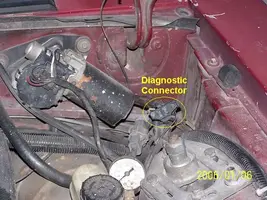
Underhoodpictures007-01.webp


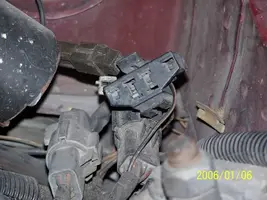
Underhoodpictures010.webp


If your car is an 86-88 stang, you'll have to use the test lamp or voltmeter method. There is no functional check engine light on the 86-88's except possibly the Cali Mass Air cars.

computer-self-test-connector-with-test-lamp-01-65-gif.55020


The STI has a gray connector shell and a white/red wire. It comes from the same bundle of wires as the self test connector.

89 through 95 cars have a working Check Engine light. Watch it instead of using a test lamp.

computer-self-test-connector-with-check-engine-light-01-65-gif.55021


The STI has a gray connector shell and a white/red wire. It comes from the same bundle of wires as the self test connector.


WARNING!!! There is a single dark brown connector with a black/orange wire. It is the 12 volt power to the under the hood light. Do not jumper it to the computer test connector. If you do, you will damage the computer.

What to expect:
You should get a code 11 (two single flashes in succession). This says that the computer's internal workings are OK, and that the wiring to put the computer into diagnostic mode is good. No code 11 and you have some wiring problems. This is crucial: the same wire that provides the ground to dump the codes provides signal ground for the TPS, EGR, ACT and Map/Baro sensors. If it fails, you will have poor performance, economy and driveablity problems

Some codes have different answers if the engine is running from the answers that it has when the engine isn't running. It helps a lot to know if you had the engine running when you ran the test.

Dumping the Engine Running codes: The procedure is the same, you start the engine with the test jumper in place. Be sure the A/C is off, and clutch (if present) is pressed to the floor, and the transmission is in neutral. You'll get an 11, then a 4 and the engine will speed up to do the EGR test. After the engine speed decreases back to idle, it will dump the engine running codes.

Trouble codes are either 2 digit or 3 digit, there are no cars that use both 2 digit codes and 3 digit codes.

Your 86-88 5.0 won't have a working Check Engine Light, so you'll need a test light.
See AutoZone Part Number: 25886 , $10
4


Alternate methods:
For those who are intimidated by all the wires & connections, see Actron® for what a typical hand scanner looks like. Normal retail price is about $30 or so at AutoZone or Wal-Mart.

Or for a nicer scanner see Equus - Digital Ford Code Reader (3145) – It has a 3 digit LCD display so that you don’t have to count flashes or beeps.. Cost is $30.
 

Attachments

  • Underhoodpictures007-01.webp
    Underhoodpictures007-01.webp
    49 KB · Views: 363
  • Underhoodpictures010.webp
    Underhoodpictures010.webp
    71.3 KB · Views: 427
OK, update.

I dumped codes and got a code 11 with key on engine off. Key on engine on I got 11 then 4 (both expected), then it performed the self diagnostic test, and then I got 21, 42, 33. Based on the info I can find this is what they mean, hopefully someone can verify:

21 - ect out of range
42 - system rich - fuel control
33 - ALL - EGR did not open/ respond during test or if memory code, did not open intermittently - EVP EVR PFE

My amatuer analysis here is that the ECT is bad (or has bad wiring, which I will check), which explains codes 21 and 42, but code 33 is a mystery to me. I suppose it could mean a bad egr. The real question is, does it even matter. On my 89 gt i capped the vacuum line and completely removed the smog system and the motor did not suffer, so from here should I replace the ECT and ignore the EGR codes?

In addition to dumping codes, I also pulled the vacuum line from the FPR and drove it yesterday to and from work. There was no fuel whatsoever coming from the FPR port. I tested fuel pressure this evening and with FPR hooked up I got 30psi at idle, jumped to 40 when motor is revved. With FPR unhooked, it stays around 43psi regardless of rpm, so im thinking my pump and FPR are fine. I also took a look at injectors again while i was at it. Injectors are solid black, no color whatsoever, which doesnt match anything on the injector charts ive found online, so im guessing this means they are not OEM. Where should I go from here guys?
 
Update #2

Replaced ECT This morning. Also repaired bad wiring going to guage temp sensor (im sure its not related to problem, but fixed anyways). Car runs much better and is 90% of the way there, but still has a slight surge under hard acceleration, and idle is not completely smooth. Could this be related to the EGR being stuck open slightly? Im not sure what the egr would cause if not functioning correctly. I checked vacuum again, and still showing 15 at idle. Is it possible to just remove egr entirely?
 
Update #3

Deleted egr valve. Test drove problem still there. Unhooked fpr and test drove. Car runs perfect when cold, problem comes back when car warms up. Seems to be lean once warm. Fuel pressure at idle and revving is steady 43 psi when cold and warm. Don't have a long enough hose to test while driving.

Would a warm lean condition indicate pump or injectors?

Sent from my SAMSUNG-SGH-I717 using Tapatalk 2
 
Update #4

Discovered that even when warm, problem goes away for a minute or two if i shut car off and recrank. This led me to believe that the issue was still tps related since eec reads base tps reading each time engine is cranked. Replaced tps (even though it was brand new) and the bucking and surging went away. Car runs great now. It still feels like its leaning out a little under heavy acceleration, but otherwise runs and idles correctly. Im going to run a few bottls of injector cleaner and 93 octane through it and will report back if power loss persists.
 
Don't use 93 octane unless you NEED 93 octane!
It does NOT improve performance or mileage unless your engine is actually built to use it.
That is the dirty little secret of gas companies. They want you to think something special happens, or your engine stays cleaner using the higher priced fuel. Nope.

It will NOT clean anything, and will actually make your performance and mileage to go down if your engine is not built to use it.
Octane is a measure of the fuel's volatility, the higher the number, the harder it is to burn, and the slower it burns.
If you do not have an engine and compression ratio to take advantage of these properties, the fuel does not completely burn, and is wasted.
 
I tested fuel pressure this evening and with FPR hooked up I got 30psi at idle, jumped to 40 when motor is revved. With FPR unhooked, it stays around 43psi regardless of rpm, so im thinking my pump and FPR are fine. I also took a look at injectors again while i was at it. Injectors are solid black, no color whatsoever, which doesnt match anything on the injector charts ive found online, so im guessing this means they are not OEM.
Your pressure is fine at 43 psi.

I don't know how you can go any further without knowing exactly what the injectors are. ???
Too large or too small will affect so much, you can't just look at them and give up to go on to other things.
You have to know what you have to move forward.

Could they have been painted black by a PO?
 
I havent necessarily given up so much as to move on to check things that I can check for. I plan to revisit the injectors soon, but i have to figure out what to look for as they dont follow any sort of color coding that ive seen before. My plan is to try to locate a part number on one that i can google. If they were painted black, they took extreme care to make sure they were taped off well, so i dont think they were painted. I will get some pictures when i get a chance to tear into it.

Regarding premium, i didnt put premium in it thinking that it needs premium, or even that it would benefit. Im not running enough timing to need or benefit from premium. I only put premium in to see if perhaps it would help clean out any varnish that could be affecting the way the vehicle runs after sitting for so long.

The power loss under acceleration still persists. It feels like the engine is going lean, but i dont have any way to measure air fuel to determine that. Ive sprayed a full can of carb cleaner around the top end of the motor looking for leaks, and so far, no vacuum leaks that I can find, however, im debating desmogging it just to remove some of the vacuum garbage.

Im inclined to say its not fuel pump or injectors because when its cold, it runs perfect, its not until it starts warming up that the power loss rears its head. That seems electrical to me, but im not sure where to look next.
 
Hot ignition components follow your line of thought.
I am not suggesting you get out of the process of elimination, but just commenting on electrical issues that become worse with heat.
Those are the TFI and ignition coil, also possibly the PIP.
 
Hot ignition components follow your line of thought.
I am not suggesting you get out of the process of elimination, but just commenting on electrical issues that become worse with heat.
Those are the TFI and ignition coil, also possibly the PIP.

Tfi and coil are both new. Not familiar with a pip sensor. Someone local suggested a map sensor, but wouldn't that cause the car to run like crap all the time? Any suggestions on troubleshooting which sensor it is without changing them all?

Sent from my SAMSUNG-SGH-I717 using Tapatalk 2
 
For troubleshooting, you need to follow jrichker's post!

Is your car converted to MAF, or is it still SD?
If it is still SD, make sure that the vacuum line is hooked up on the MAP to the manifold proper.
If it is converted to MAF, make sure the MAP is still in place and hooked up, but the vacuum line is open to the atmosphere (not to vacuum!)
 
I followed his post and that's how I came up with the codes to begin with, unless there is another post somewhere.

The car is still speed density, map has a hose approximately 3/8" diameter that is connected to a port on the underside rear of upper intake manifold. The hose is original but appears in good condition, no cracking or wear marks that I can find.

Sent from my Transformer TF101 using Tapatalk 2
 
soft and floppy. I hadnt thought of this. For that matter, I hadnt thought to check the PCV (would it even cause any of these issues?). Ill see if i can find some hose laying around in the morning and swap it to see if it makes a difference.
 
When my son's PCV hose gets warm and starts to suck shut, it starts whistling loudly, then it stops making noise when it gets hot enough to suck totally shut. Then when you shut off the engine, it unsucks, and makes a whooshing sound with a short whistle along the way. As for hurting the way the engine runs, it doesn't seem to.

The MAP sensor might be a different story though.