How come you don't have a shop manual? That's a requirement for working on a 5.0 Mustang, just like a decent set of tools. Both the Chilton and Hayes manuals are less than $25 at any auto parts stores, and free loan at your local public library.
Possible vacuum leak - poor idle and backfires out the intake.
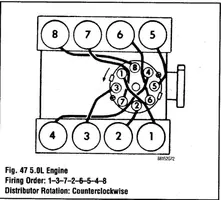
Backfiring out the intake is either a valve stuck open or a lean mixture or spark plug wire(s) connected to the wrong cylinder(s). Check compression on all cylinders and then look for vacuum hoses loose, cracked, misconnected. Check the line for the vapor recirculation system – it is easy to knock loose and not see it when you connect the air pump plumbing. If the vacuum line for the EGR valve and the air pump are cross connected, some very strange things can happen. Check the mass air flow electrical connection and see that it is tight, the same goes for the fuel injection wiring harness connectors up on top of the manifold near the firewall.
Sticking valves: If a intake valve is bent, has a bad spring or is misadjusted, the engine will sometimes backfire through the intake. Use a vacuum gauge connected to any convenient spot on the intake manifold. Run the engine at 1000 RPM & look for 18-21 inches of vacuum with a steady needle. A problem intake valve will make the vacuum gauge needle sweep 5-10 inches.
Lean fuel mixture breaks out into several sub categories:
A.). Vacuum leaks
B.) Air entering the intake without passing through the MAF.
C.) Failure of the MAF, BAP/MAP (Baro or Manifold Air Pressure, same sensor, different name), ACT (air charge temp), or ECT (engine coolant temp). These should set a code in the computer.
D.) Leaking exhaust gases from EGR valve at WOT or EGR opening when it should not be open.
E.) Poor fuel delivery due to bad fuel pump, clogged filter or bad fuel pump wiring. Look for low pressure or fluctuating pressure. Standard injector pressure is 39 PSI at idle, with the vacuum line disconnected from the regulator and capped.
F.) Clogged fuel injectors.- see the cylinder balance test below
H.) Fuel injector wiring problems causing injector not to deliver rated flow.
I.) Computer problems: (computer problems are not common like sensor problems)
J.). ROM has bad data in fuel or timing table. This should also set a code in the computer.
K.) Failure of one or more of the computer's driver transistors for the fuel injectors. No code set on this one. Use a noid test light to test the injector wiring & injector drivers,
L.) MAF calibration off or mismatched to injectors.
M.) ACT or ECT bad. Sometimes the sensors will be off calibration, but not bad enough to set a code. If they falsely read too high a temp, the engine will back off fuel delivery.
Cylinder balance test:
Warm the car's engine up to normal operating temperature. Use a jumper wire or paper clip to put the computer into test mode. Start the engine and let it go through the normal diagnostic tests, then quickly press the throttle to the floor. The engine RPM should exceed 2500 RPM's for a brief second. The engine RPM's will increase to about 1450-1600 RPM and hold steady. The engine will shut off power to each injector, one at a time. When it has sequenced through all 8 injectors, it will flash 9 for everything OK, or the number of the failing cylinder such as 2 for cylinder #2. Quickly pressing the throttle again up to 2500 RPM’s will cause the test to re-run with smaller qualifying figures. Do it a third time, and if the same cylinder shows up, the cylinder is weak and isn’t putting out power like it should. See the Chilton’s Shop manual for the complete test procedure
ump the codes and see what the computer says is wrong…Codes may be present in the computer even if the Check Engine light isn’t on.
Here's the link to dump the computer codes with only a jumper wire or paper clip and the check engine light, or test light or voltmeter. I’ve used it for years, and it works great.
See
http://www.troublecodes.net/Ford/
OR
See
http://www.mustangworks.com/articles/electronics/eec-iv_codes.html
IF your car is an 86-88 stang, you'll have to use the test lamp or voltmeter method. There is no functional check engine light on the 86-88's except possibly the Cali Mass Air cars.
Codes have different answers if the engine is running from the answers that it has when the engine isn't running. It helps a lot to know if you had the engine running when you ran the test.
Trouble codes are either 2 digit or 3 digit, there are no cars that use both 2 digit codes and 3 digit codes.
For those who are intimidated by all the wires & connections, see
http://www.actron.com/product_detail.php?pid=16153 for what a typical hand scanner looks like. Normal retail price is about $30 or so at AutoZone or Wal-Mart.
Or for a nicer scanner see
http://www.midwayautosupply.com/pc-7208-90-equus-digital-ford-code-reader-3145.aspx – It has a 3 digit LCD display so that you don’t have to count flashes or beeps.. Cost is $30.