
Just took the mustang out today and it hesitates really bad again. Always around 2k the rpm starts flickering around between 1.5 and 3 really fast. I thought it was fuel related so I pulled over and gave gas in neutral and it revved up just fine. Then the second I took off It started again.
You are using an out of date browser. It may not display this or other websites correctly.
You should upgrade or use an alternative browser.
You should upgrade or use an alternative browser.
Hesitation Problem Help
- Thread starter foxconv
- Start date
Ok I finaly ran another engine code test. On my koeo test I got code 81 and on my koer test I got 21, 44, and 94. I also ran a cylinder power test and got a code 9 which means all cylinders check out perfect. I need this problem fixed asap so I need your guys help fast. Thanks
I changed the fuel filter. Air filter looks new. I haven't cleaned the MAF sensor. And the rpm does go over 3000 but hesitates like crazy. It like the engine turns off and on really fast.Will the engine rev pas 3000 RPM while driving it?
Have you replaced the fuel and air filters?
Have you cleaned the MAF sensor element?

Also its a on and off problem. Most days it runs perfectly fine.
It sounds like you may have an electrical problem.
Is there any change in the voltmeter or loss or decrease in electrical power needed for lights, wipers or accessories?
What is the one thing in common all the times it happened?
Does the load on the engine (hills or change in altitude, steep grade) seem to cause the problem?
Does the problem seem to be more common with certain types of weather? Cold? Rain? Snow? Fog? ??
Last edited:
No it happens whenever. Never noticed a pattern but Im suspecting it might be the battery or alternator because it happens more often when I have many accessories like headlights and heater on. The voltage on my gauge drops dramatically especially with headlights on.It sounds like you have an electrical problem.
What is the one thing in common when it happens?
Does the problem seem to be more common with certain types of weather? Cold? Rain? Snow? Fog? ??
No it happens whenever. Never noticed a pattern but Im suspecting it might be the battery or alternator because it happens more often when I have many accessories like headlights and heater on. The voltage on my gauge drops dramatically especially with headlights on.
Reread my last post - I keep thinking of additional things that might be important to look at...
Yes I lose a lot of volts when I have my headlights on. That causes my windows and wipers to move very slow or not move at all. Then when I turn off the headlights(or heater...etc) the volts jump back up and my windows easily go up and down. That's what I noticed. Also it doesn't matter if I'm going up or down hill, or in rain and snow.It sounds like you may have an electrical problem.
Is there any change in the voltmeter or loss or decrease in electrical power needed for lights, wipers or accessories?
What is the one thing in common all the times it happened?
Does the load on the engine (hills or change in altitude, steep grade) seem to cause the problem?
Does the problem seem to be more common with certain types of weather? Cold? Rain? Snow? Fog? ??
Is that when the miss/hesitation shows up?Yes I lose a lot of volts when I have my headlights on. That causes my windows and wipers to move very slow or not move at all. Then when I turn off the headlights(or heater...etc) the volts jump back up and my windows easily go up and down. That's what I noticed. Also it doesn't matter if I'm going up or down hill, or in rain and snow.
Yes. Most of the time.Is that when the miss/hesitation shows up?
Yes?? I bought the car and haven't touched the alternator and stuff like that yet.Does it still have the stock alternator?
Last edited:
That is not good. I would suggest that you take the car to your local auto parts store and have them check the charging system. They will do it for free. Do a wiggle test of the alternator wiring and grounds while they are checking it.I checked the voltage with a volt-ohm meter and at idle with everything turned off the volt is around 14.5 and then when you turn everything from headlights to heater on, the volts drop down to 11.5-12.1volts.
One thing I would suggest replacing is the ignition switch. They are prone to all sorts of odd problems.
Recall on Ford Ignition switches:
Revised 7-June-2014 to add Torx bit picture and source. Also added replacement ignition switch wiring pigtail picture, part numbers and sources.
Some of the symptoms of ignition switch problems are things that don’t work or are intermittent like radio, turn signals, wipers or heater.
There was a FREE recall on Ford ignition switches. They overheat and sometimes catch fire. That burns up the steering column and sometimes the car interior. Since this is very old information, you may not be able to get the switch replaced for free anymore. The auto parts stores sell the switches for $13-$15.
While you are working on the switch, check the wiring and connector closely. A replacement connector with new wiring pigtails is available from most auto parts stores
AutoZone and Advanced Auto Parts have the same Part Number: 434 - may have to order, not always in stock
Advanced Auto Parts alternate part number: PT5534
Saleen0679 was nice enough to dig this up for us awhile back: Replace a 1979-1993 Ignition Switch Assembly
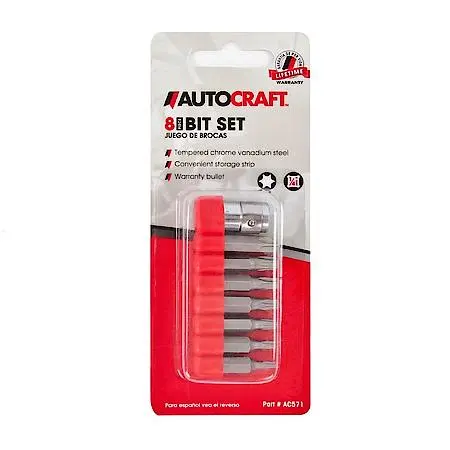
Torx bit set from Advance Auto Parts

Autocraft torx bit set – have small hole in tip for tamper proof screws.
Part No. AC571/W1386 Cost approx. $12 +tax
Diagrams courtesy of Tmoss & Stang&2birds
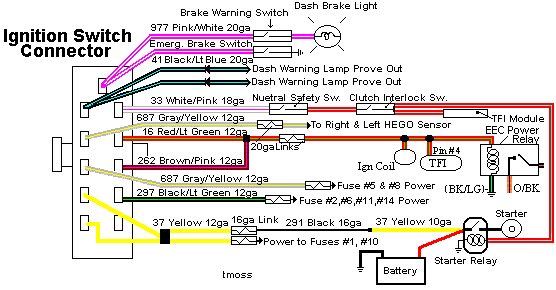
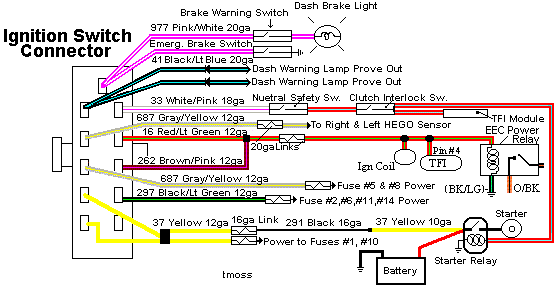
Ignition switch wiring
Fuel, alternator, A/C and ignition wiring
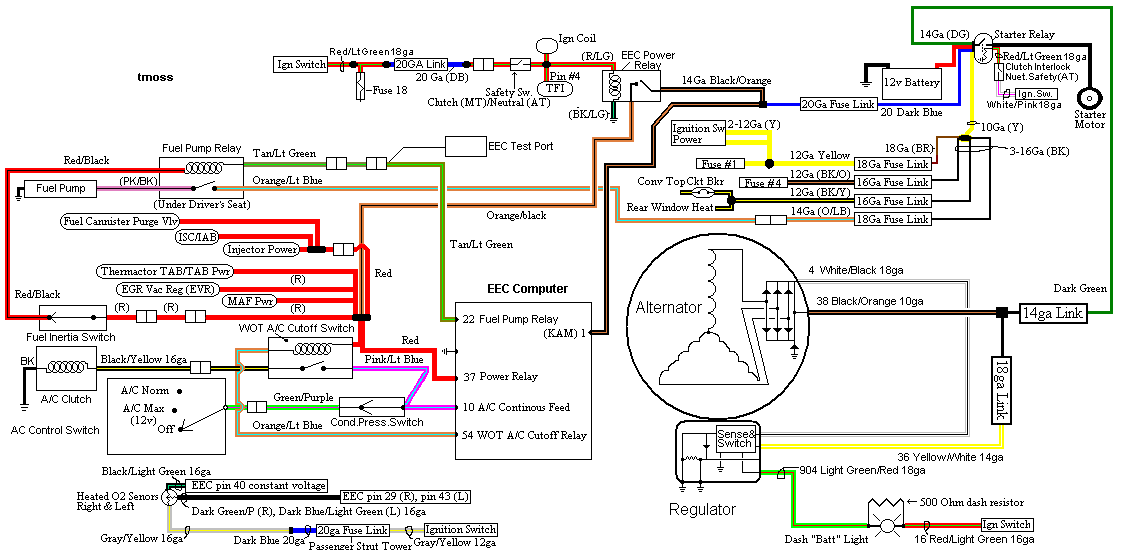
See the following website for some help from Tmoss (diagram designer) & Stang&2Birds (website host) for help on 88-95 wiring http://www.veryuseful.com/mustang/tech/engine/ Everyone should bookmark this site.
Complete computer, actuator & sensor wiring diagram for 91-93 Mass Air Mustangs
http://www.veryuseful.com/mustang/tech/engine/images/91-93_5.0_EEC_Wiring_Diagram.gif
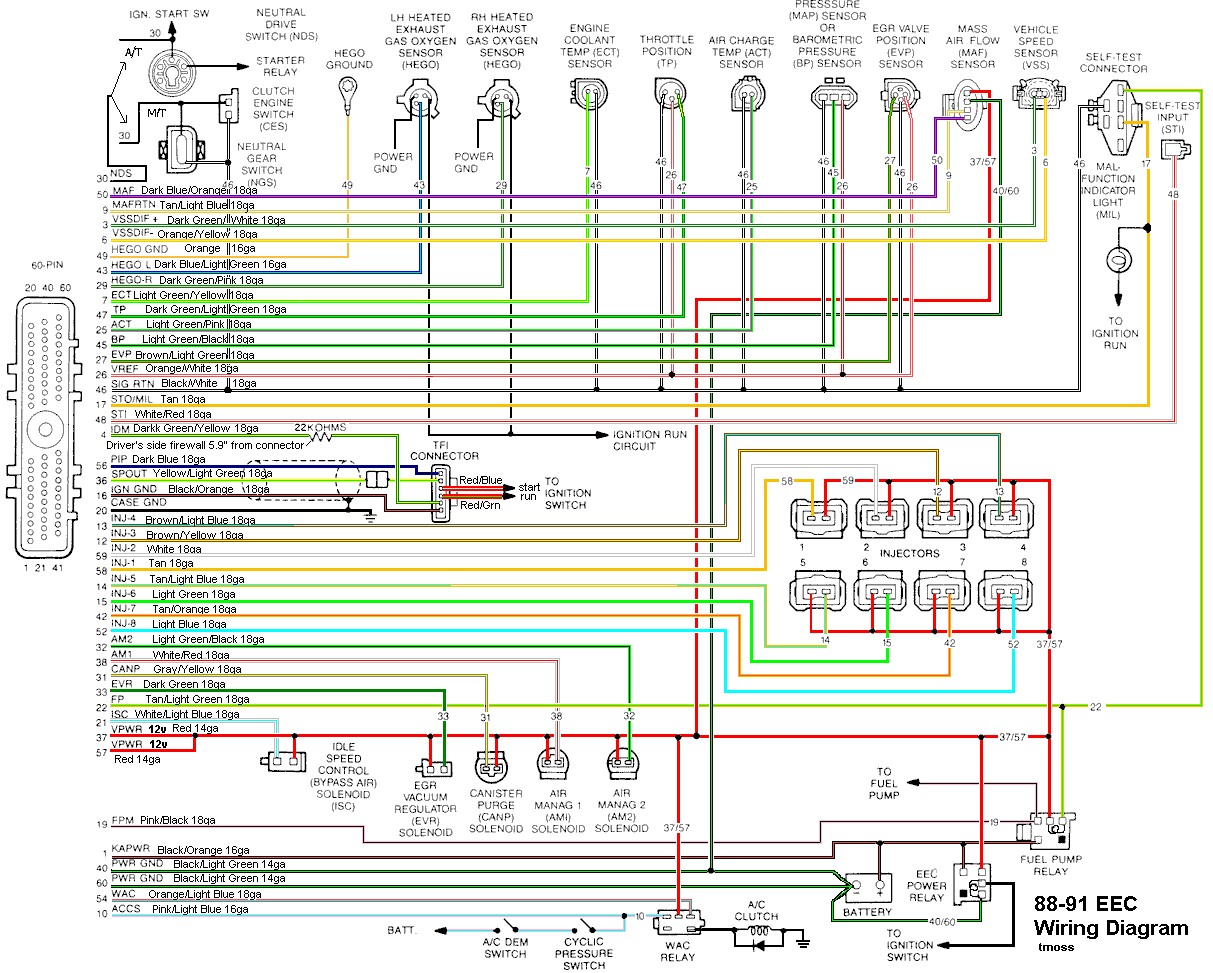
Complete computer, actuator & sensor wiring diagram for 88-91 Mass Air Mustangs
http://www.veryuseful.com/mustang/tech/engine/images/88-91_5.0_EEC_Wiring_Diagram.gif
Ignition switch wiring
http://www.veryuseful.com/mustang/tech/engine/images/IgnitionSwitchWiring.gif
Fuel, alternator, A/C and ignition wiring
http://www.veryuseful.com/mustang/tech/engine/images/fuel-alt-links-ign-ac.gif
O2 sensor wiring harness
http://www.veryuseful.com/mustang/tech/engine/images/mustangO2Harness.gif
Vacuum diagram 89-93 Mustangs
http://www.veryuseful.com/mustang/tech/engine/images/mustangFoxFordVacuumDiagram.jpg
HVAC vacuum diagram
http://www.veryuseful.com/mustang/tech/engine/images/Mustang_AC_heat_vacuum_controls.gif
TFI module differences & pin out
http://www.veryuseful.com/mustang/tech/engine/images/TFI_5.0_comparison.gif
Fuse box layout
http://www.veryuseful.com/mustang/tech/engine/images/MustangFuseBox.gif
87-92 power window wiring
http://www.veryuseful.com/mustang/tech/engine/images/mustang87-92 PowerWindowWiring.gif
93 power window wiring
http://www.veryuseful.com/mustang/tech/engine/images/mustang93PowerWindows.gif
Visual comparison of the Ford Fuel Injectors, picture by TMoss:
http://www.veryuseful.com/mustang/tech/engine/images/Ford_Injector_Guide.jpg
Thanks I will try to change that asap and see if it fixes the problem. Ill post back when I do.That is not good. I would suggest that you take the car to your local auto parts store and have them check the charging system. They will do it for free. Do a wiggle test of the alternator wiring and grounds while they are checking it.
One thing I would suggest replacing is the ignition switch. They are prone to all sorts of odd problems.
Recall on Ford Ignition switches:
Revised 7-June-2014 to add Torx bit picture and source. Also added replacement ignition switch wiring pigtail picture, part numbers and sources.
Some of the symptoms of ignition switch problems are things that don’t work or are intermittent like radio, turn signals, wipers or heater.
There was a FREE recall on Ford ignition switches. They overheat and sometimes catch fire. That burns up the steering column and sometimes the car interior. Since this is very old information, you may not be able to get the switch replaced for free anymore. The auto parts stores sell the switches for $13-$15.
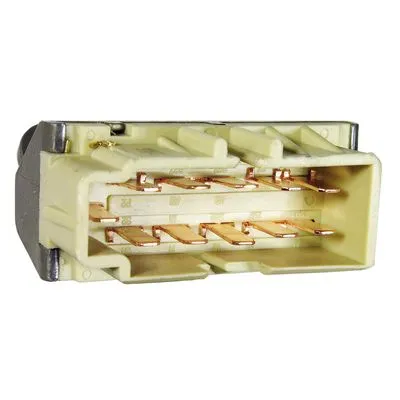
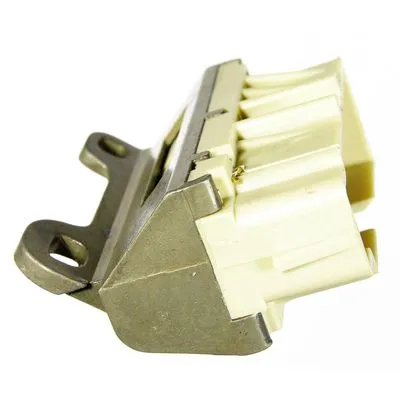
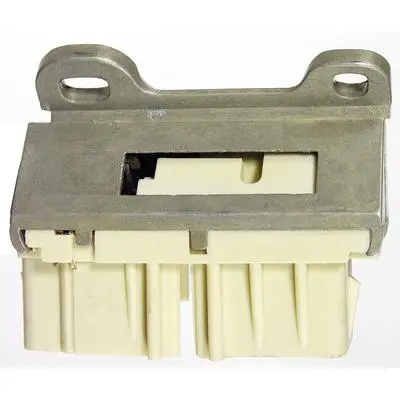
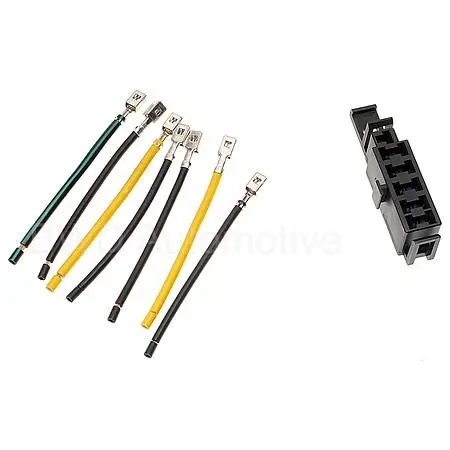
While you are working on the switch, check the wiring and connector closely. A replacement connector with new wiring pigtails is available from most auto parts stores
AutoZone and Advanced Auto Parts have the same Part Number: 434 - may have to order, not always in stock
Advanced Auto Parts alternate part number: PT5534
Saleen0679 was nice enough to dig this up for us awhile back: Replace a 1979-1993 Ignition Switch Assembly
Torx bit set from Advance Auto Parts
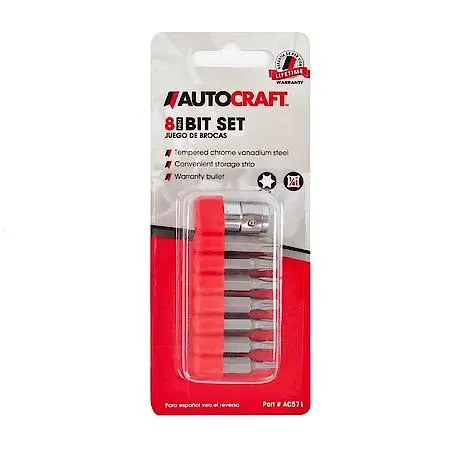
Autocraft torx bit set – have small hole in tip for tamper proof screws.
Part No. AC571/W1386 Cost approx. $12 +tax
Diagrams courtesy of Tmoss & Stang&2birds
Ignition switch wiring
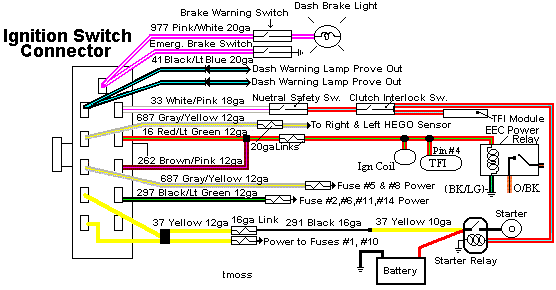
Fuel, alternator, A/C and ignition wiring
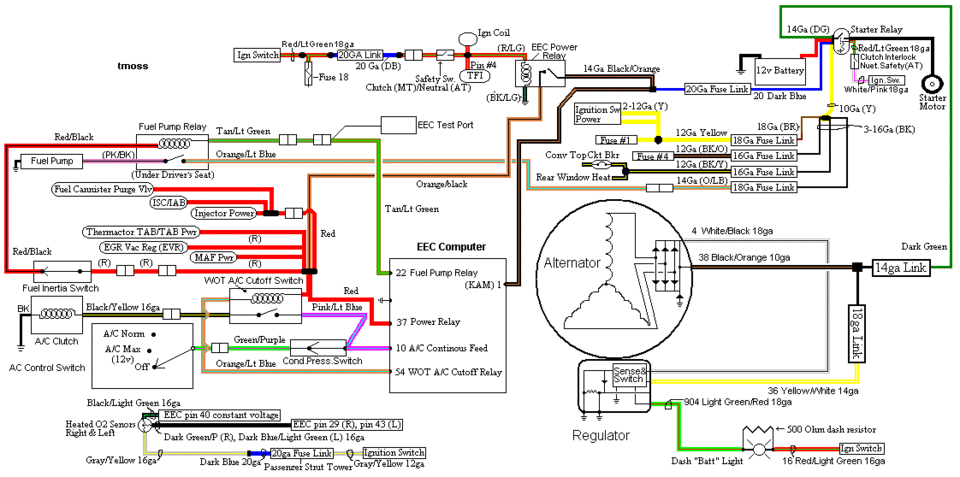
See the following website for some help from Tmoss (diagram designer) & Stang&2Birds (website host) for help on 88-95 wiring http://www.veryuseful.com/mustang/tech/engine/ Everyone should bookmark this site.
Complete computer, actuator & sensor wiring diagram for 91-93 Mass Air Mustangs
http://www.veryuseful.com/mustang/tech/engine/images/91-93_5.0_EEC_Wiring_Diagram.gif
Complete computer, actuator & sensor wiring diagram for 88-91 Mass Air Mustangs
http://www.veryuseful.com/mustang/tech/engine/images/88-91_5.0_EEC_Wiring_Diagram.gif
Ignition switch wiring
http://www.veryuseful.com/mustang/tech/engine/images/IgnitionSwitchWiring.gif
Fuel, alternator, A/C and ignition wiring
http://www.veryuseful.com/mustang/tech/engine/images/fuel-alt-links-ign-ac.gif
O2 sensor wiring harness
http://www.veryuseful.com/mustang/tech/engine/images/mustangO2Harness.gif
Vacuum diagram 89-93 Mustangs
http://www.veryuseful.com/mustang/tech/engine/images/mustangFoxFordVacuumDiagram.jpg
HVAC vacuum diagram
http://www.veryuseful.com/mustang/tech/engine/images/Mustang_AC_heat_vacuum_controls.gif
TFI module differences & pin out
http://www.veryuseful.com/mustang/tech/engine/images/TFI_5.0_comparison.gif
Fuse box layout
http://www.veryuseful.com/mustang/tech/engine/images/MustangFuseBox.gif
87-92 power window wiring
http://www.veryuseful.com/mustang/tech/engine/images/mustang87-92 PowerWindowWiring.gif
93 power window wiring
http://www.veryuseful.com/mustang/tech/engine/images/mustang93PowerWindows.gif
Visual comparison of the Ford Fuel Injectors, picture by TMoss:
http://www.veryuseful.com/mustang/tech/engine/images/Ford_Injector_Guide.jpg
By the way, what does the engine codes I provided mean?That is not good. I would suggest that you take the car to your local auto parts store and have them check the charging system. They will do it for free. Do a wiggle test of the alternator wiring and grounds while they are checking it.
One thing I would suggest replacing is the ignition switch. They are prone to all sorts of odd problems.
Recall on Ford Ignition switches:
Revised 7-June-2014 to add Torx bit picture and source. Also added replacement ignition switch wiring pigtail picture, part numbers and sources.
Some of the symptoms of ignition switch problems are things that don’t work or are intermittent like radio, turn signals, wipers or heater.
There was a FREE recall on Ford ignition switches. They overheat and sometimes catch fire. That burns up the steering column and sometimes the car interior. Since this is very old information, you may not be able to get the switch replaced for free anymore. The auto parts stores sell the switches for $13-$15.
While you are working on the switch, check the wiring and connector closely. A replacement connector with new wiring pigtails is available from most auto parts stores
AutoZone and Advanced Auto Parts have the same Part Number: 434 - may have to order, not always in stock
Advanced Auto Parts alternate part number: PT5534
Saleen0679 was nice enough to dig this up for us awhile back: Replace a 1979-1993 Ignition Switch Assembly
Torx bit set from Advance Auto Parts
Autocraft torx bit set – have small hole in tip for tamper proof screws.
Part No. AC571/W1386 Cost approx. $12 +tax
Diagrams courtesy of Tmoss & Stang&2birds
Ignition switch wiring
Fuel, alternator, A/C and ignition wiring
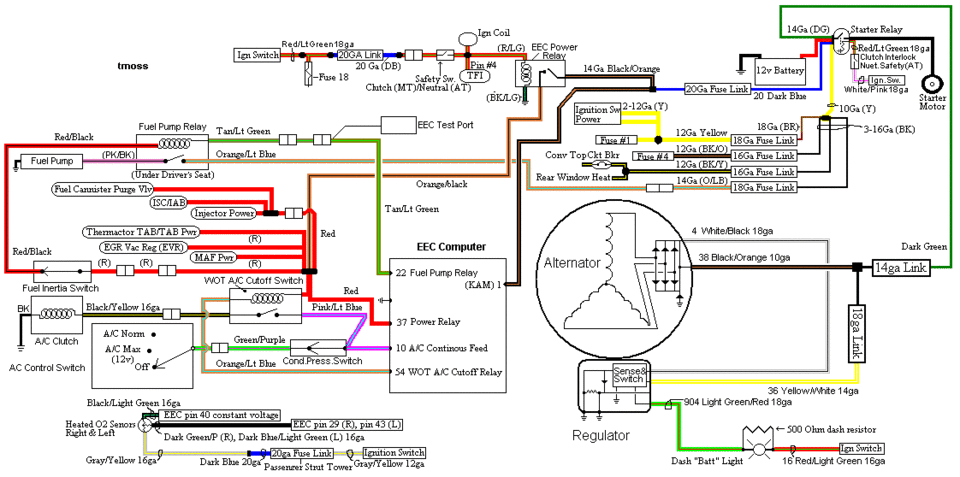
See the following website for some help from Tmoss (diagram designer) & Stang&2Birds (website host) for help on 88-95 wiring http://www.veryuseful.com/mustang/tech/engine/ Everyone should bookmark this site.
Complete computer, actuator & sensor wiring diagram for 91-93 Mass Air Mustangs
http://www.veryuseful.com/mustang/tech/engine/images/91-93_5.0_EEC_Wiring_Diagram.gif
Complete computer, actuator & sensor wiring diagram for 88-91 Mass Air Mustangs
http://www.veryuseful.com/mustang/tech/engine/images/88-91_5.0_EEC_Wiring_Diagram.gif
Ignition switch wiring
http://www.veryuseful.com/mustang/tech/engine/images/IgnitionSwitchWiring.gif
Fuel, alternator, A/C and ignition wiring
http://www.veryuseful.com/mustang/tech/engine/images/fuel-alt-links-ign-ac.gif
O2 sensor wiring harness
http://www.veryuseful.com/mustang/tech/engine/images/mustangO2Harness.gif
Vacuum diagram 89-93 Mustangs
http://www.veryuseful.com/mustang/tech/engine/images/mustangFoxFordVacuumDiagram.jpg
HVAC vacuum diagram
http://www.veryuseful.com/mustang/tech/engine/images/Mustang_AC_heat_vacuum_controls.gif
TFI module differences & pin out
http://www.veryuseful.com/mustang/tech/engine/images/TFI_5.0_comparison.gif
Fuse box layout
http://www.veryuseful.com/mustang/tech/engine/images/MustangFuseBox.gif
87-92 power window wiring
http://www.veryuseful.com/mustang/tech/engine/images/mustang87-92 PowerWindowWiring.gif
93 power window wiring
http://www.veryuseful.com/mustang/tech/engine/images/mustang93PowerWindows.gif
Visual comparison of the Ford Fuel Injectors, picture by TMoss:
http://www.veryuseful.com/mustang/tech/engine/images/Ford_Injector_Guide.jpg
By the way, what does the engine codes I provided mean?
Code 21 – ECT sensor out of range. Broken or damaged wiring, bad ECT sensor.
Note that that if the outside air temp is below 50 degrees F that the test for the ECT can be in error. Warm the engine up until you get good hot air from the heater and then dump the codes again.
The computer Engine Coolant Temerature sensor has absolutely nothing to do with the temperature gauge. They are different animals. The ECT sensor is normally located it the passenger side front of the engine in the water feed tubes for the heater. It has two wires that connect by a weathertight plastic connector.
The water temperature sender for the temp gauge is located in the driver's side lower intake manifold. It has a single wire that connects by a push on connector on the temp sender.
The ACT & ECT have the same thermistor, so the table values are the same
ACT & ECT test data:
Use Pin 46 on the computer for ground for both ECT & ACT to get most accurate readings.
Pin 7 on the computer - ECT signal in. At 176 degrees F it should be .80 volts
Pin 25 on the computer - ACT signal in. At 50 degrees F it should be 3.5 volts. It is a good number if the ACT is mounted in the inlet airbox. If it is mounted in the lower intake manifold, the voltage readings will be lower because of the heat transfer.
Voltages may be measured across the ECT/ACT by probing the connector from the rear. A pair of safety pins may be helpful in doing this. Use care in doing it so that you don't damage the wiring or connector.
Here's the table :
50 degrees F = 3.52 v
68 degrees F = 3.02 v
86 degrees F = 2.62 v
104 degrees F = 2.16 v
122 degrees F = 1.72 v
140 degrees F = 1.35 v
158 degrees F = 1.04 v
176 degrees F = .80 v
194 degrees F = .61
212 degrees F = .47 v
230 degrees F = .36 v
248 degrees F = .28 v
Ohms measures at the computer with the computer disconnected, or at the sensor with the sensor disconnected.
50 degrees F = 58.75 K ohms
68 degrees F = 37.30 K ohms
86 degrees F = 27.27 K ohms
104 degrees F = 16.15 K ohms
122 degrees F = 10.97 K ohms
140 degrees F = 7.60 K ohms
158 degrees F = 5.37 K ohms
176 degrees F = 3.84 K ohms
194 degrees F = 2.80 K ohms
212 degrees F = 2.07 K ohms
230 degrees F = 1.55 K ohms
248 degrees F = 1.18 k ohms
Diagram courtesy of Tmoss & Stang&2birds
Codes 44 & 94 - AIR system inoperative - Air Injection. Check vacuum lines for leaks, & cracks. Check for a clogged air crossover tube, where one or both sides of the tube clog with carbon.
Revised 21 Sep 2012 to correct the description of the process that sets the code and include Thermactor Air System diagram.
If you have a catalytic converter H pipe, you need to fix these codes. If you don't, then don't worry about them.
Code 44 RH side air not functioning.
Code 94 LH side air not functioning.
The TAD solenoid/TAD diverter valve directs smog pump output to either the crossover tube attached to the cylinder heads or to the catalytic converters.
The O2 sensors are placed before the catalytic converters, so they do not see the extra O2 when the smog pump's output is directed to the converters or the input just before the converter.
The 44/94 code uses the O2 sensors to detect a shift in the O2 level in the exhaust. The smog pump provides extra air to the exhaust which raises the O2 level in the exhaust when the smog pump output is directed through the crossover tube.
When there is an absence of increase in the O2 levels when the TAD solenoid/TAD diverter valve directs air through the crossover tube, it detects the lower O2 level and sets the code.
Failure mode is usually due to a clogged air crossover tube, where one or both sides of the tube clog with carbon. The air crossover tube mounts on the back of the cylinder heads and supplies air to each of the Thermactor air passages cast into the cylinder heads. When the heads do not get the proper air delivery, they set codes 44 & 94, depending on which passage is clogged. It is possible to get both 44 & 94, which would suggest that the air pump or control valves are not working correctly, or the crossover tube is full of carbon or missing.
Testing the system:
Note that the engine must be running to do the tests unless stated otherwise. For safety’s sake, do test preparation like loosening clamps, disconnecting hoses and connecting things to a vacuum source with the engine off.
Disconnect the big hose from smog pump: with the engine running you should feel air output. Reconnect the smog pump hose & apply vacuum to the first vacuum controlled valve: Its purpose is to either dump the pump's output to the atmosphere or pass it to the next valve.
The next vacuum controlled valve directs the air to either the cylinder heads when the engine is cold or to the catalytic converter when the engine is warm. Disconnect the big hoses from the back side of the vacuum controlled valve and start the engine. Apply vacuum to the valve and see if the airflow changes from one hose to the next.
The two electrical controlled vacuum valves mounted on the rear of the passenger side wheel well turn the vacuum on & off under computer control. Check to see that both valves have +12 volts on the red wire. Then ground the white/red wire and the first solenoid should open and pass vacuum. Do the same thing to the light green/black wire on the second solenoid and it should open and pass vacuum.
Remember that the computer does not source power for any actuator or relay, but provides the ground necessary to complete the circuit. That means one side of the circuit will always be hot, and the other side will go to ground or below 1 volt as the computer switches on that circuit.
The following computer tests are done with the engine not running.
The computer provides the ground to complete the circuit to power the solenoid valve that turns the
vacuum on or off. The computer is located under the passenger side kick panel. Remove the kick panel & the cover over the computer wiring connector pins. Check Pin 38 Solenoid valve #1 that provides vacuum to the first Thermactor control valve for a switch from 12-14 volts to 1 volt or less. Do the same with pin 32 solenoid valve #2 that provides vacuum to the second Thermactor control valve. Turning the ignition to Run with the computer jumpered to self-test mode will cause all the actuators to toggle on and off. If after doing this and you see no switching of the voltage on and off, you can start testing the wiring for shorts to ground and broken wiring. An Ohm check to ground with the computer connector disconnected & the solenoid valves disconnected should show open circuit between the pin 32 and ground and again on pin 38 and ground. In like manner, there should be less than 1 ohm between pin 32 and solenoid valve #2 and pin 38 & Solenoid valve #1.
The following computer tests are done with the engine running.
If after checking the resistance of the wiring & you are sure that there are no wiring faults, start looking at the solenoid valves. If you disconnect them, you can jumper power & ground to them to verify operation with the engine running. Power & ground supplied should turn on the vacuum flow, remove either one and the vacuum should stop flowing.
Typical resistance of the solenoid valves is in the range of 20-70 Ohms.
See the following website for some help from Tmoss (diagram designer) & Stang&2Birds (website host)
http://www.veryuseful.com/mustang/tech/engine/images/fuel-alt-links-ign-ac.gif
http://www.veryuseful.com/mustang/tech/engine/images/88-91eecPinout.gif
If you have a catalytic converter H pipe, you need to fix these codes. If you don't, then don't worry about them
Fix the TAD solenoid problem below and the codes 44 & 94 will probably go away.
Code 81 – Secondary Air Injection Diverter Solenoid failure AM2. The solenoid valve located on the back side of the passenger side wheel well is not functional. Possible bad wiring, bad connections, missing or defective solenoid valve. Check the solenoid valve for +12 volts at the Red wire and look for the Lt Green/Black wire to switch from +12 volts to 1 volt or less. The computer controls the valve by providing a ground path on the LT Green/Black wire for the solenoid valve.
With the with the ignition on, look for 12 volts on the red wire on the solenoid connector. No 12 volts and you have wiring problems.
With the engine running, stick a safety pin in the LT Green/Black wire for the solenoid valve & ground it. That should turn the solenoid on and cause air to flow out the port that goes to the pipe connected to the cats. If it doesn't, the valve is bad. If it does cause the airflow to switch, the computer or wiring going to the computer is not signaling the solenoid valve to open.
Putting the computer into self test mode will cause the solenoid valve to toggle. If you listen carefully, you may hear it change states.
See the following website for some help from Tmoss (diagram designer) & Stang&2Birds
(website host) for help on 88-95 wiring http://www.veryuseful.com/mustang/tech/engine/
Ignition switch wiring
http://www.veryuseful.com/mustang/tech/engine/images/IgnitionSwitchWiring.gif
Fuel, alternator, A/C and ignition wiring
http://www.veryuseful.com/mustang/tech/engine/images/fuel-alt-links-ign-ac.gif
Complete computer, actuator & sensor wiring diagram for 88-91 Mass Air Mustangs
http://www.veryuseful.com/mustang/tech/engine/images/88-91_5.0_EEC_Wiring_Diagram.gif
Vacuum diagram 89-93 Mustangs
http://www.veryuseful.com/mustang/tech/engine/images/mustangFoxFordVacuumDiagram.jpg
Similar threads
- Replies
- 4
- Views
- 1K
- Replies
- 8
- Views
- 364


- Replies
- 16
- Views
- 4K

- Replies
- 22
- Views
- 4K