DeVus1
Founding Member
FastDriver said:No way! Don't touch those heads before you swap or port that stocker intake.
Agreed. You should do mass air-->throttle body-->intake(upper and lower)-->heads.
FastDriver said:No way! Don't touch those heads before you swap or port that stocker intake.


DMAN302 said:I will give anyone who can show me 5HP gain with a CAI (anderson power pipe aside) over K&N panel filter....ain't gonna happen.

DeVus1 said:Agreed. You should do mass air-->throttle body-->intake(upper and lower)-->heads.


FastDriver said:TB size depends on the intake you choose. You don't want to run a TB that is bigger than the intake port or it will disturb airflow - you want a smooth transition from the TB into the intake. IMO, don't worry so much at air velocity at the TB.
You can increase air velocity there by running a smaller and smaller TB, but all you accomplish is choking the intake off. When that high velocity at the TB air moves into the upper plenum, it's going to slow way down because now the plenum is moving less air through the same cross-sectional area, i.e. a slower air velocity in the intake.
Where air velocity really counts is in the runners and most importantly in the heads' ports. That way, it helps to move air into the cylinder when the valve opens, and particularly, right before the valve closes.
ninety15.0 said:Thats really not true man. I do agree with you that intake runners and most importantly the heads are greatly affected by the velocity vs. volume....but the air comming into the intake makes a huge difference too. You mentioned that the air slows down as soon as it enters the intake manifold...but if its going slower when it gets there b/c your TB and MAF are too big...then its going to slow down even more as it travels thru the intake and heads. Its not like the air can be drastically sped up as it travels through the heads without reducing the volume...thats a basic airflow principle. Flow rate/Area = Velocity...so reducing the area increases velocity. Engine builders today have found that they can achieve the same velocity with smaller ports and valves by controling the ports' shape and the air flows' path. the smaller the ports...the higher the velocity and thus more power. Your exhaust follows the same principles bigger is not always better. Its all about matching everything to work together. Oversizing everything will make good top end power if its not too oversized, but throttle response, driveability, and low end torque are going to seriously suffer. So on a street car, i think velocity is more important than volume in most cases.
ninety15.0 said:You mentioned that the air slows down as soon as it enters the intake manifold...but if its going slower when it gets there b/c your TB and MAF are too big...then its going to slow down even more as it travels thru the intake and heads.
Its not like the air can be drastically sped up as it travels through the heads without reducing the volume...thats a basic airflow principle.
You're not reducing the area in the intake or heads... you're talking about the TB. You've got the right ideas, but you're applying them incorrectly.Flow rate/Area = Velocity...so reducing the area increases velocity.
Thanks for the lesson. Smaller ports and valves already have a higher velocity, but a lower flow rate, generally, than a larger port/valve. In the quote above replace "velocity" with "flow rate" and it makes more sense.Engine builders today have found that they can achieve the same velocity with smaller ports and valves by controling the ports' shape and the air flows' path.
No. Velocity is only one part of the equation. The other part is actual flow, i.e. CFM.the smaller the ports...the higher the velocity and thus more power.
Your exhaust follows the same principles bigger is not always better. Its all about matching everything to work together. Oversizing everything will make good top end power if its not too oversized, but throttle response, driveability, and low end torque are going to seriously suffer. So on a street car, i think velocity is more important than volume in most cases.


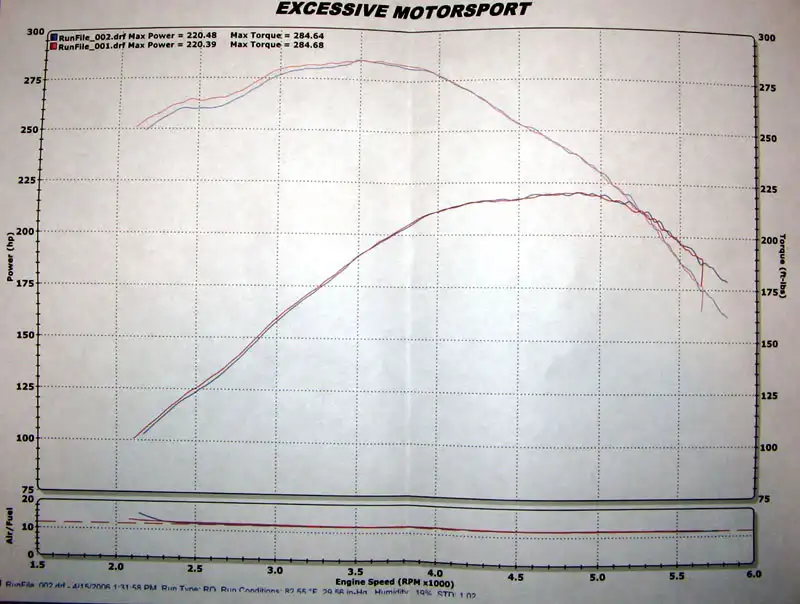
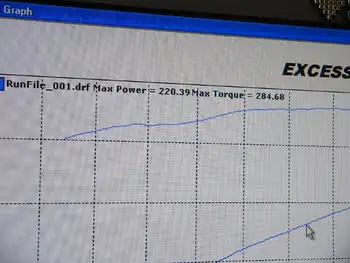
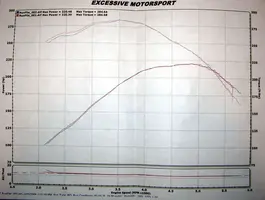
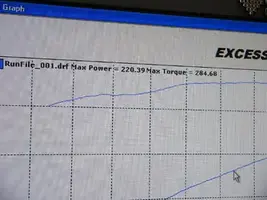
onefstsnake said:well my 93 put down 220rwhp and 284rwtq
With only the following:
-Crank/WP underdrive pulleys
-O/R H pipe (kinda smashed from speed bumps)
-Flowmaster 2 Chamber catback
-FRP 9mm wires
-MSD cap/rotor
Stock Timing, super dirty air filter, 87 octane gas, and leaky headers.