Computers very seldom fail. Many shops will tell you the computer is bad because they haven't got a clue how it really works.
[
Fuel injectors inoperative, one or more injectors either on all the time or will not squirt.
Tools needed: Noid light, Multimeter (volts & ohms), 10 MM socket &
extension, & ratchet.
Note: Do all of the steps and do them in order. The results of the
subsequent tests are based on the prior tests being successfully passed.
1.) Use an ohmmeter set on the low resistance scale and measure the resistance of
each injector across the two contacts inside the electrical connector. You should
see between 11-16 ohms. More or less than that is a bad injector. Next measure
between either one of the contacts and the metal on the injector body. You should
see greater than 100,000 ohms. Don’t hold the metal probe tips with your bare
hands when you make this measurement. It will give incorrect results if you do.
Some basics about the computer:
Remember that the computer does not supply power for any actuator or
relay. It provides the ground necessary to complete the circuit. That
means one side of the circuit will always be hot, and the other side will go
to ground or below 1 volt as the computer switches on that circuit.
2.) Get a noid light form AutoZone or other auto parts store, or even better
a set of them
This set is from
http://www.toolking.com/ProductInfo.aspx?productid=12492 and costs $12.
3.) Use the noid light to determine that the injector pulses and isn’t
stuck in the on position. It you have a set of them install all of them and
compare the pulse intensity. Install the noid lights, turn the ignition switch to
Run and crank the engine. A light that doesn’t pulse and stays on has a
short to ground in the computer side of the circuit. That can be either a
wiring fault or a failed computer. If this is the case, remove the passenger
side lick panel and disconnect the computer connector. There is one 10
MM bolt holding it in place. Pull the connector all the way out of the
computer so that you can see the computer side pins.
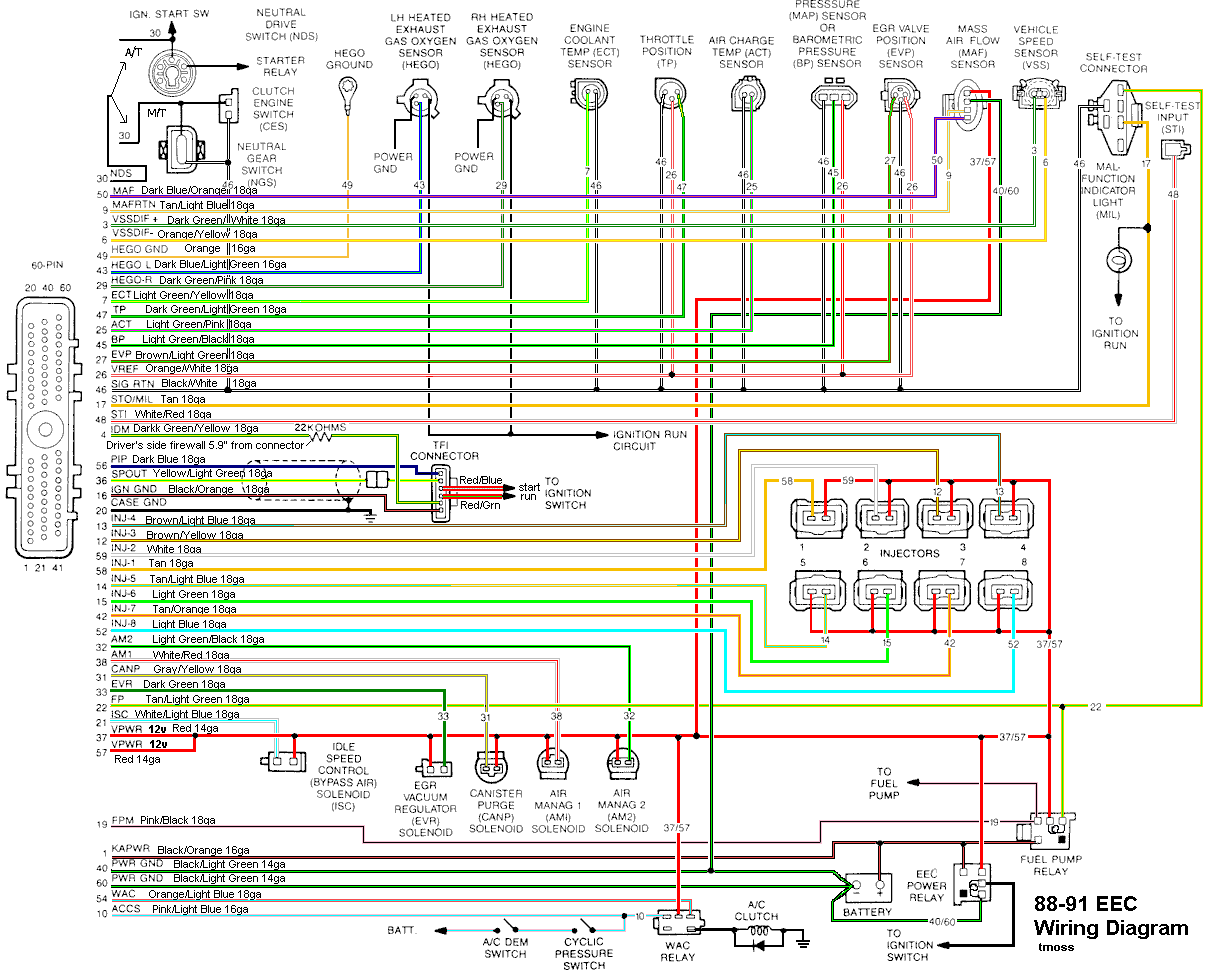
Use the list from the graphic below to find the fuel injector pins for the
injectors that didn’t turn the noid light off.
4.) Set the multimeter to low scale Ohms and measure between the
computer ground located below the computer and the suspect fuel injector
pins. You should see greater than 100 K Ohms resistance. If you see less
than 100 Ohms, the wiring between the injector and the computer has a
short to ground and needs service. Check the harness and look for damage,
kinks or frayed spots.
5.) A single noid light that never turns on is either a wiring fault, or a
failed computer. Either the injector has no DC power or the computer has
failed and cannot switch the injector circuit to ground. Determine if the
injector has power by using the multimeter to check for 12 volts on the red
wire on the suspect injector connector. No 12 volts and you have a wiring fault.
Check the harness and look for damage, kinks or frayed spots. Check the 10
pin salt & pepper shaker connectors for bent pins, corrosion and damage.
If none of the noid lights flash and you have 12 volts at each injector, check
to see that you have good spark. Before you even think about replacing the
computer, see step 6.
Next Check the fuel injector wiring end to end. Each fuel injector has a red
wire (power) and an non-read wire (computer controlled ground). Set the
multimeter to low ohms and measure each non red fuel injector wire from
the fuel injector connector to the matching pin on the computer connector.
You should see less than 2 Ohms. More than that means a bad connection
or bad wiring.
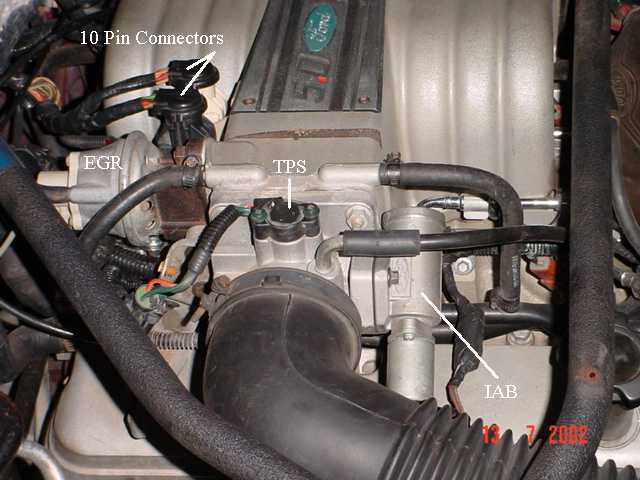
See the graphic for the location of the 10 pin connectors:
See the graphic for the 10 pin connector circuit layout.
Once you have determined that the suspect injectors have good power and
good wiring, the computer is the likely suspect, since a ground is required
to complete a circuit and make it function. The computer provides the
ground: if doesn’t, then the noid light will not flash.
6.) If you have gotten this far, then the problem is likely ignition
related. Remember the noid test using all of the noid lights? All of them
were supposed to be equally bright. Since you have already tested all the
electrical side of the fuel injector circuit, the one remaining common item is
the pip sensor inside the distributor. A failing pip sensor, damaged shutter
wheel or bent distributor shaft could all cause the pulse delivered to the
injectors to be faulty. A bad pip sensor will cause all the injectors not to fire
and you will have no spark. Dumping the codes will show a code 14.