Fuel pressure OK, the injectors are not firing, OR one or more injectors stuck
open
Isolate the leaking or failed injector:
Do a cylinder balance test: Warm the car's engine up to normal operating
temperature. With the Engine Off, Key OFF, use a jumper wire or paper clip to
put the computer into test mode. Start the engine and let it go through the
normal diagnostic tests, then quickly press the throttle to the floor. The
engine RPM should exceed 2500 RPM's for a brief second. The engine will shut
off power to each injector, one at a time. When it has sequenced through all
8 injectors, it will flash 99 or the number of the failing cylinder such as 22 for
cylinder #2. Quickly pressing the throttle again up to 2500 RPM’s will cause
the test to re-run with smaller qualifying figures. Do it a third time, and if the
same cylinder shows up, the cylinder is weak and isn’t putting out power like
it should. See the Chilton’s Shop manual for the complete test procedure
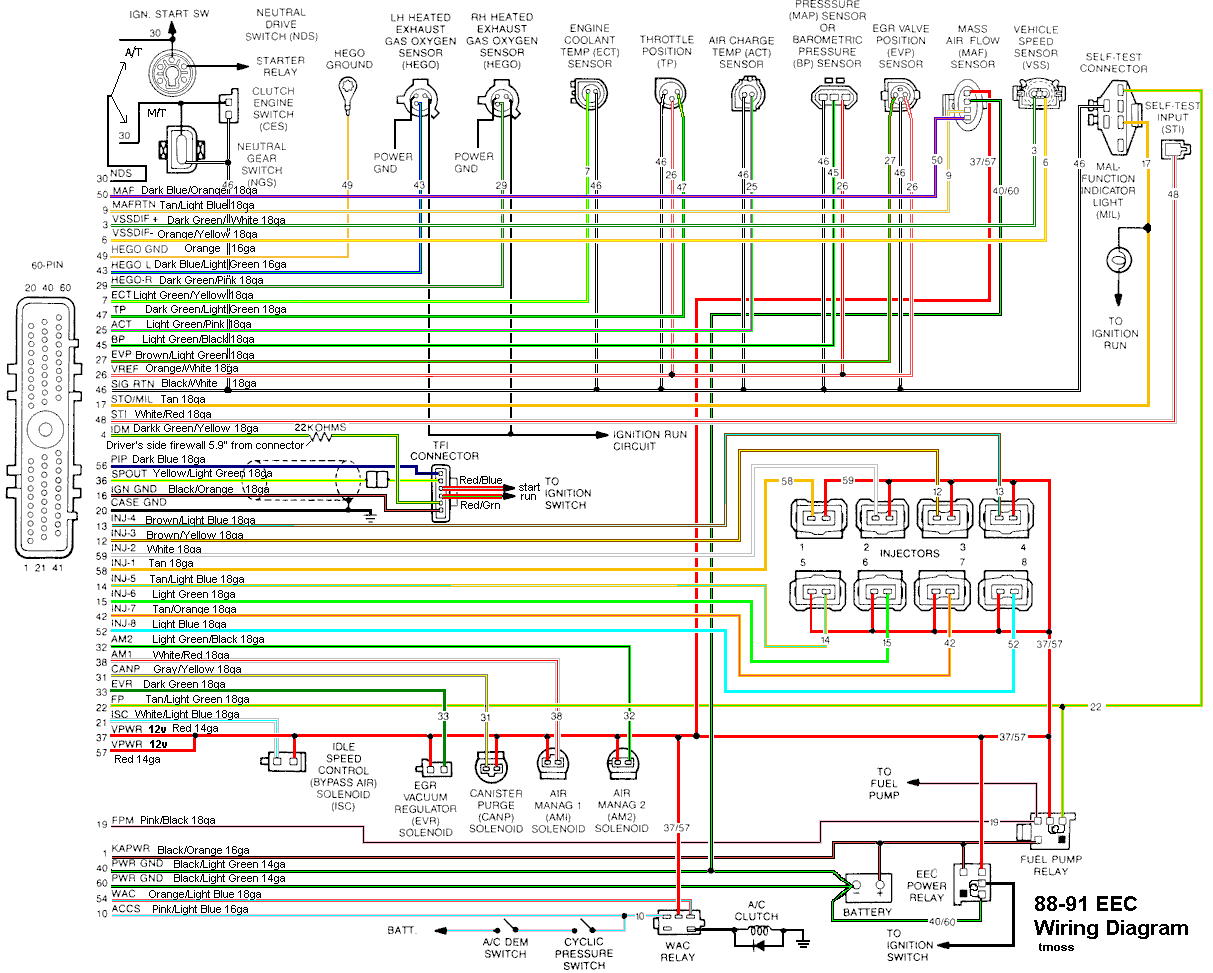
The red wire on each injector is powered up whenever the ignition switch is
in the Run position. The computer provides a ground to complete the circuit
and fire the injector. The injector
must have a ground to squirt fuel on
command. A short to ground in the injector return wiring can cause one or
more injectors to be continually open or triggered
A.) A Noid light available from Autozone, is one way to test
the injector wiring. If the light stays on constantly, either the wiring has a
short to ground or the computer has failed
B.) I like to use an old injector with compressed air applied to the
injector where the fuel rail would normally connect. I hook the whole thing
up, apply compressed air to the injector and stick it in a paper cup of soapy
water. When the engine cranks with the ignition switch on, if the injector
fires, it makes bubbles An injector stuck open will release a continual stream
of bubbles. Cheap if you have the stuff laying around, and works good too.
The same trick works great to find leaking injectors too.
The wiring for the injectors may have some bare spots in it causing the
injector to computer control wire to ground out. This would cause the
injector to remain on anytime the key was in the Run position. Remove the
injector wiring connectors from the injector. Note that each injector has one
red wire for power and a non red wire (wire some color other than red) for
computer controlled ground. With the key off, disconnect the computer
connector from the computer. Use an Ohmmeter between the non red wire
and ground. You should see more than 100000 (100K) ohms resistance.
See the following website for some help from Tmoss (diagram designer) &
Stang&2Birds (website host) for help wiring
Mustang FAQ - Engine Information
Diagram courtesy of Tmoss & Stang&2birds
Using the above diagram, check the resistance between the injector and the
computer. Clean and check the 10 pin connectors since they are a potential
trouble source. Any resistance greater than 1.5 ohm between the injector to
computer wire and the matching pin on the computer connector is a problem.
See
Ford Fuel Injection Wiring Harnesses for more help
Dump the codes and see what the computer says is wrong…Codes may be present in the computer even if the Check Engine light isn’t on.
Here's the link to dump the computer codes with only a jumper wire or paper clip and the check engine light, or test light or voltmeter. I’ve used it for years, and it works great. You watch the flashing test lamp or Check Engine Light and count the flashes.
See
http://www.troublecodes.net/Ford/
If your car is an 86-88 stang, you'll have to use the test lamp or voltmeter method. There is no functional check engine light on the 86-88's except possibly the Cali Mass Air cars.
The STI has a gray connector shell and a white/red wire. It comes from the same bundle of wires as the self test connector.
89 through 95 cars have a working Check Engine light. Watch it instead of using a test lamp.
The STI has a gray connector shell and a white/red wire. It comes from the same bundle of wires as the self test connector.
There is a single dark brown connector with a black/orange wire. It is the 12 volt power to the under the hood light. Do not jumper it to the computer test connector. If you do, you will damage the computer.
What to expect:
You should get a code 11 (two single flashes in succession). This says that the computer's internal workings are OK, and that the wiring to put the computer into diagnostic mode is good. No code 11 and you have some wiring problems.
Codes have different answers if the engine is running from the answers that it has when the engine isn't running. It helps a lot to know if you had the engine running when you ran the test.
Trouble codes are either 2 digit or 3 digit, there are no cars that use both 2 digit codes and 3 digit codes.
Alternate methods:
For those who are intimidated by all the wires & connections, see
http://www.actron.com/product_detail.php?pid=16153 for what a typical hand scanner looks like. Normal retail price is about $30 or so at AutoZone or Wal-Mart.
Or for a nicer scanner see
http://www.midwayautosupply.com/pc-7208-90-equus-digital-ford-code-reader-3145.aspx – It has a 3 digit LCD display so that you don’t have to count flashes or beeps.. Cost is $30.