NITROUS question

Trick98GT

New Member
Jan 9, 2003
246
0
0
Pensacola, FL
I've got an NX wet setup with a 41 nitrous jet and a 24 fuel.(75 hp kit) My question is:
I have the fuel solenoid pulling from the schreader(sp?) valve on the drivers side fuel rail. Will that be able to pull enough fuel/keep good pressure so I dont lean out?

I was told both that I would need to get an aftermarked FPR designed for a nitrous application or I could hook it up to that test valve.

Thanks.
 
It causes a VERY short drop in fuel pressure, but the EEC figures it out really quick and adjusts. On an a/f you wont even notice the blip, as long as you are at a 150 shot or under you wont have a problem.

I love my 75 shot. Make sure that you have a bottle gauge ($40). Bottle pressure can make a huge difference, ideal is in the 900-1000psi range. I reccomend a bottle warmer to keep pressure up.

With the 75 shot and 900psi I went from a 14.2@97 to a 13.1@107.

Make sure to get a dyno run in on the spray to check a/f ratio. Mine was in the 11s with the stock jettings. I had to go to a leaner fuel jet (22 for 75 shot) and now my a/f is in the low 12s. Every car is different though, you'll just have to have yours checked.
 
A wet kit has two solinoids that inject both fuel and nitrous through a nozzle in the intake tract about 4 inches in front of the throttlebody. It pulls fuel from the schrader valve on the fuel rail.

A dry kit only has one solinoid that injects nitrous only into the intake. It has a device to increase rail pressure and thus more fuel flows through your injectors and makes up for the extra oxygen in the chamber.

On a returnless system (99-up) a wet kit is the kit of preference. On a return style kit most run a dry kit because it is far easier to increase rail pressure.
 
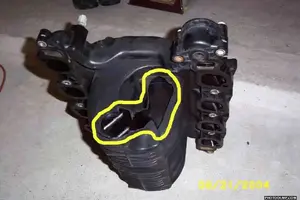
above post is not totally correct . Its just preference. I have a 00 gt and I run a NOS dry kit, I can send you pieces of intakes that were blown apart by the pooling of fuel from a wet kit. The intakes were never meant to have fuel flowing through the upper. Its much safer to have the fuel run through the injector for the best atomization. Best route is the NOS nozzle kit which is a wet kit but puts the fuel in at the injector port. otherwise I would stay with a dry kit. I use a 150 shot all the time w/ no problems. Any more and count on upping the fuel pump and larger injectors. Also either way I would reccomend getting a chip with a nitrous tune to make the most of it. Good luck....heres a pic of another wet kit backfire from Joe347R6 post.
 

Attachments

  • Backfire005.webp
    Backfire005.webp
    20.5 KB · Views: 131
I"ve run my NX wet system for 2 years with no problems.(except for the toasted spark plug that ended up burning a valve) I run an MSD rpm window switch set to only allow the nitrous to run from 2900 to 5600 rpm. THis eliminates the chance for fuel to puddle. If you look at the instructions with ANY nitrous kit they all say not to be used below 2500 rpm. It's for that exact reason. 99% of all problems related to nitrous of due to user defect.
 
realstreetgt said:
above post is not totally correct . Good luck....heres a pic of another wet kit backfire from Joe347R6 post.

I was at Joe's house picking up the pieces of his intake with him, but that was from a 200 shot!!!!! Joe and everyone running a wet kit realizes that over a 150 is just asking too much from the stock PI intake. I stand by my statement that a wet kit is safer and a better choice on a returnless system for the average nitrous user.

The person who posed the question doesn't have a returnless system like I though, so for a return system it's different all together. I just don't like taxing out my injectors and not having as much control over a/f ratio.

The more parts you have to fail in a chain, the more likely that chain is to break.
 
Red2000GT said:
I"ve run my NX wet system for 2 years with no problems.(except for the toasted spark plug that ended up burning a valve) I run an MSD rpm window switch set to only allow the nitrous to run from 2900 to 5600 rpm. THis eliminates the chance for fuel to puddle. If you look at the instructions with ANY nitrous kit they all say not to be used below 2500 rpm. It's for that exact reason. 99% of all problems related to nitrous of due to user defect.

The fuel dosnt puddle from an rpm window per say, the reason for running the engine at above 2800 or 3k is to avoid loading the engine up, not enough air. with the composite intakes the fuel cools too much in the intake which makes the velocity change (slows down (heavier than the nitrous)) which causes puddling and when you get the nitrous to the cylinder first before the fuel it goes nitrous rich (lean) and you get the backfire that ignites the fuel in the intake . Im sure rpm can help a little but the problem can still exist. Same with backing off on the timing, its just a band aid for the bigger problem. Again, many people have good results running them, but you will never see one on of any my cars that I have to pay if it breaks. I'll just stick with the dry kits.
I AGREE that 99% of problems are due to user inexperience or getting greedy looking for that extra tenth. But either way its the price you pay to play....