
You are using an out of date browser. It may not display this or other websites correctly.
You should upgrade or use an alternative browser.
You should upgrade or use an alternative browser.
No spark cylider 4
- Thread starter Mackers
- Start date

With a test lightHow are you confirming lack of spark on that cylinder?
No spark from the distributor, yes it is misfiring and i traced itNo spark ? Or are you saying you have a miss fire on Cyl 4 ?

Doesn’t make much sense if you checked all of the above . Unless the cap is burned off inside at that one specific cylinder why would only one not fire as the rotor turns under the cap.No spark from the distributor, yes it is misfiring and i traced it
Youchecked for spark right at the top of the cap ? If not did you check the wire resistance and make sure you don’t have a broken plug wire ?
Yes to all the above. It doesn't make sense to me either. I had someone tell me check pip sensor and reluctor wheel. Might as well try a new distributor at that point.Doesn’t make much sense if you checked all of the above . Unless the cap is burned off inside at that one specific cylinder why would only one not fire as the rotor turns under the cap.
Youchecked for spark right at the top of the cap ? If not did you check the wire resistance and make sure you don’t have a broken plug wire ?

- Mar 2, 2015
- 6,948
- 5,823
- 213
So with the wire off the spark plug on 4 and near ground you get no spark ?
Your car needs four things to fire a cylinder, those are, air, fuel, compression, and spark. You're missing something.
If you pull the wire off of the cap and place it near the cap point with a screw or bolt in the end you should see spark. If you don't it's the wire or plug. That is if the point isn't burned out inside the cap.
Your car needs four things to fire a cylinder, those are, air, fuel, compression, and spark. You're missing something.
If you pull the wire off of the cap and place it near the cap point with a screw or bolt in the end you should see spark. If you don't it's the wire or plug. That is if the point isn't burned out inside the cap.
Brand new cap and rotor, new wires and coil. I used a spark plug and a light tester and get no spark on number 4, all others no issues.So with the wire off the spark plug on 4 and near ground you get no spark ?
Your car needs four things to fire a cylinder, those are, air, fuel, compression, and spark. You're missing something.
If you pull the wire off of the cap and place it near the cap point with a screw or bolt in the end you should see spark. If you don't it's the wire or plug. That is if the point isn't burned out inside the cap.
If the car was N/A, I'd say switch two wires and see if the problem jumps to the other wire.
With it being a turbo, not sure if that's safe to do.
With it being a turbo, not sure if that's safe to do.

dgollem
20+ Year Stangneter 


Remove the offending spark plug wire from the engine. Carefully examine the length of the wire for burn marks, cuts, damaged insulation.
I'm going to make a dangerous assumption that you know who to use your meter to measure resistance.
Measure the end to end resistance of the spark plug wire and it should measure between 4K Ω (4,000 Ohms) and 10K Ω (10,000 Ohms). Less that that is OK, more than that suggests a bad spark plug wire.
Remove the suspect wire and swap it with another wire; then run the cylinder balance test below. See if the problem follows the wire or remains on the same cylinder.
Cylinder balance test: use this to find dead or weak cylinders:
Revised 09-Sep-2017 Added reminder to write down the stored codes and engine running codes.
The computer has a cylinder balance test that helps locate cylinders with low power output. You’ll need to dump the codes out of the computer and make sure that you have the A/C off, clutch depressed to the floor and the transmission in neutral. Fail to do this and you can’t do the engine running dump codes test that allows you to do the cylinder balance test.
Here's the way to dump the computer codes with only a jumper wire or paper clip and the check engine light, or test light or voltmeter. I’ve used it for years, and it works great. You watch the flashing test lamp or Check Engine Light and count the flashes.
Be sure to turn off the A/C, have the clutch depressed to the floor, and put the transmission in neutral when dumping the codes. Fail to do this and you will generate a code 67 and not be able to dump the Engine Running codes.
Here's how to dump the computer codes with only a jumper wire or paper clip and the check engine light, or test light or voltmeter. I’ve used it for years, and it works great. You watch the flashing test lamp or Check Engine Light and count the flashes.
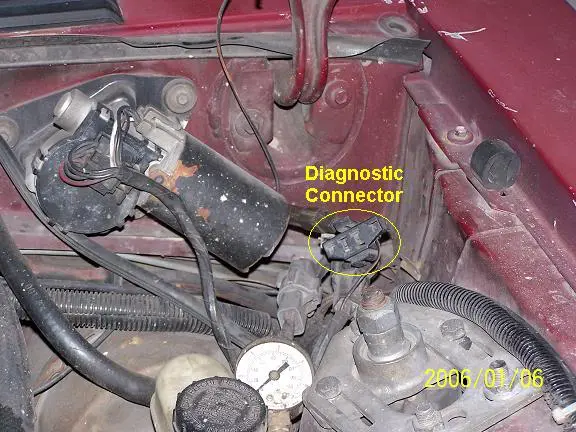
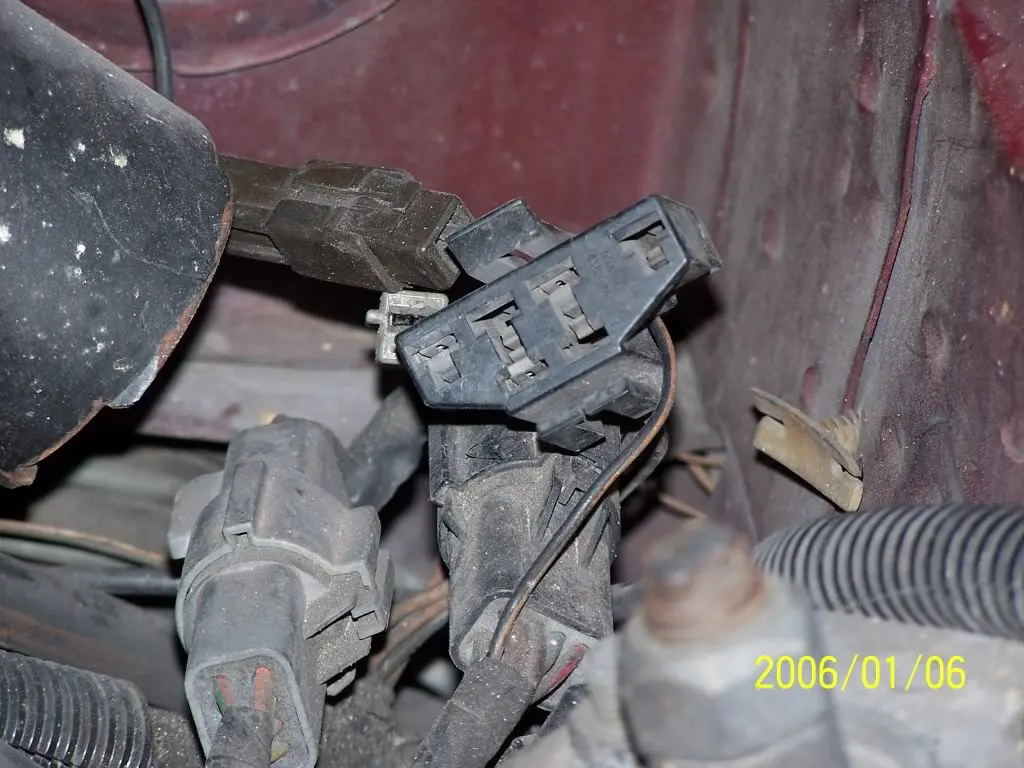
If your car is an 86-88 stang, you'll have to use the test lamp or voltmeter method. There is no functional check engine light on the 86-88's except possibly the Cali Mass Air cars.
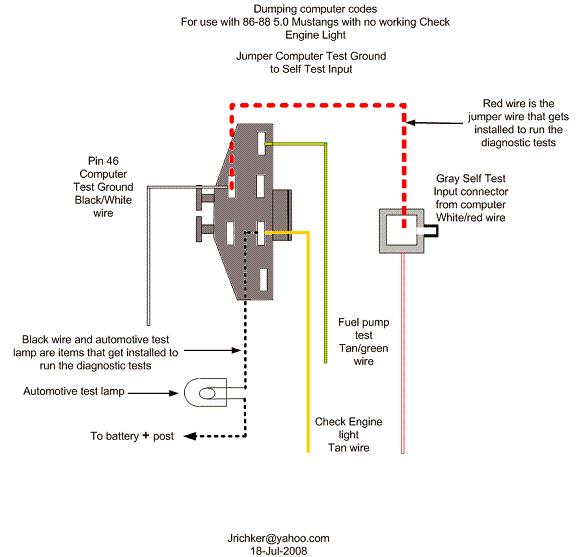
The STI has a gray connector shell and a white/red wire. It comes from the same bundle of wires as the self test connector.
89 through 95 cars have a working Check Engine light. Watch it instead of using a test lamp.
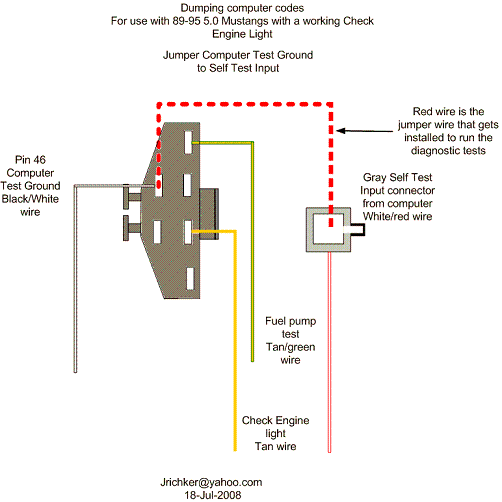
The STI has a gray connector shell and a white/red wire. It comes from the same bundle of wires as the self test connector.
WARNING!!! There is a single dark brown connector with a black/orange wire. It is the 12 volt power to the under the hood light. Do not jumper it to the computer test connector. If you do, you will damage the computer.
What to expect:
You should get a code 11 (two single flashes in succession). This says that the computer's internal workings are OK, and that the wiring to put the computer into diagnostic mode is good. No code 11 and you have some wiring problems.
This is crucial: the same wire that provides the ground to dump the codes provides signal ground for the TPS, EGR, ACT and Map/Baro sensors. If it fails, you will have poor performance, economy and drivability problems
Some codes have different answers if the engine is running from the answers that it has when the engine isn't running. It helps a lot to know if you had the engine running when you ran the test.
Dumping the Engine Running codes: The procedure is the same, you dump the codes and then you start the engine with the test jumper in place. Be sure the A/C is off, clutch depressed to the floor and the transmission is in neutral. You'll get an 11, then a 4 and the engine will speed up to do the EGR test. After the engine speed decreases back to idle, it will dump the engine running codes.
Trouble codes are either 2 digit or 3 digit, there are no cars that use both 2 digit codes and 3 digit codes.
Your 86-88 5.0 won't have a working Check Engine Light, so you'll need a test light.
See AutoZone Part Number: 25886 , $10
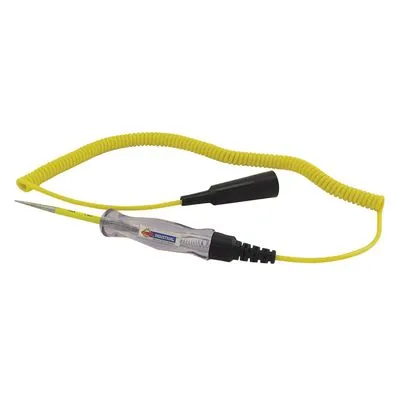
Alternate methods:
For those who are intimidated by all the wires & connections, see Actron® for what a typical hand scanner looks like. Normal retail price is about $30 or so at AutoZone or Wal-Mart.
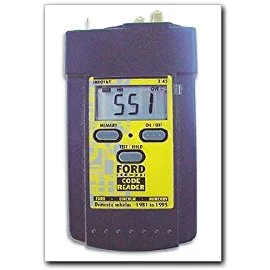
Or for a nicer scanner see www.midwayautosupply.com/Equus-Digital-Ford-Code-Reader/dp/B000EW0KHW Equus - Digital Ford Code Reader 3145.
It has a 3 digit LCD display so that you don’t have to count flashes or beeps.. Cost is $22-$36.
Order it at Walmart for a better price and free shipping
Write down the codes that the computer outputs since they will give you information on problems that are stored in the computer's memory
Cylinder balance test
If you have idle or IAC/IAB problems and the engine will not idle on its own without mechanically adjusting the base idle speed above 625-750 RPM, this test will fail with random cylinders pointed out every time it runs. The IAC/IAB must be capable of controlling the engine speed to run in the 1300-1500 RPM range. Playing with the base idle speed by adjusting it upwards will not work, the computer has to be able to control the engine speed using the IAC/IAB.
Warm the car's engine up to normal operating temperature. With the test jumper in test position, start the engine and let it stabilize. It should flash a 10 and then a 4 and maybe an 11. If no 11, then there are other codes that will be dumped.
Write down the codes that the computer outputs since they will give you information that the computer found when it is running. These are often different from the stored codes.
One of the first tests it does is to open the EGR all the way, this will cause the engine to stumble and almost die. If the engine dies here then you have EGR problems.
To start the cylinder balance test, briefly floor the accelerator past 2500 RPM and let off the accelerator. The engine will stabilize at about 1300-1450 RPM and the cut off the fuel injectors one at a time. The engine speed will drop briefly and the computer will turn the fuel injector for the cylinder under test back on. Then it starts the process for the next cylinder. When it has sequenced through all 8 injectors, it will flash 9 for everything OK, or the number of the failing cylinder such as 2 for cylinder #2. Quickly pressing the throttle again up to 2500 RPM’s will cause the test to re-run with smaller qualifying figures.
Do it a third time, and if the same cylinder shows up, the cylinder is weak and isn’t putting out power like it should. See the Chilton’s Shop manual for the complete test procedure
See
View: https://www.youtube.com/watch?v=HDXrkKS4jTE
for a visual tour through the process. There is no voice narration so you have to listen carefully for the engine sounds. I posted the link for the benefit of Stangnet members who had questions about how to do a cylinder balance test. I do not own that video and I am not the creator.
Do a compression test on all the cylinders.
Take special note of any cylinder that shows up as weak in the cylinder balance test. Low compression on one of these cylinders rules out the injectors as being the most likely cause of the problem. Look at cylinders that fail the cylinder balance test but have good compression. These cylinders either have a bad injector, bad spark plug or spark plug wire. Move the wire and then the spark plug to another cylinder and run the cylinder balance test again. If it follows the moved wire or spark plug, you have found the problem. If the same cylinder fails the test again, the injector is bad. If different cylinders fail the cylinder balance test, you have ignition problems or wiring problems in the 10 pin black & white electrical connectors located by the EGR.
How to do a compression test:
Only use a compression tester with a screw in adapter for the spark plug hole. The other type leaks too much to get an accurate reading. Your local auto parts store may have a compression tester to rent/loan. If you do mechanic work on your own car on a regular basis, it would be a good tool to add to your collection.
With the engine warmed up, remove all spark plugs and prop the throttle wide open with a plastic screwdriver handle between the throttle butterfly and the throttle housing. Crank the engine until it the gage reading stops increasing. On a cold engine, it will be hard to tell what's good & what's not. Some of the recent posts have numbers ranging from 140-170 PSI. If the compression is low, squirt some oil in the cylinder and do it again – if it comes up, the rings are worn. There should be no more than 10% difference between cylinders. Use a blow down leak test (puts compressed air inside cylinders) on cylinders that have more than 10% difference.
I generally use a big screwdriver handle stuck in the TB between the butterfly and the TB to prop the throttle open. The plastic is soft enough that it won't damage anything and won't get sucked down the intake either.
A battery charger (not the trickle type) is a good thing to have if you haven't driven the car lately or if you have any doubts about the battery's health. Connect it up while you are cranking the engine and it will help keep the starter cranking at a consistent speed from the first cylinder tested to the last cylinder.
I'm going to make a dangerous assumption that you know who to use your meter to measure resistance.
Measure the end to end resistance of the spark plug wire and it should measure between 4K Ω (4,000 Ohms) and 10K Ω (10,000 Ohms). Less that that is OK, more than that suggests a bad spark plug wire.
Remove the suspect wire and swap it with another wire; then run the cylinder balance test below. See if the problem follows the wire or remains on the same cylinder.
Cylinder balance test: use this to find dead or weak cylinders:
Revised 09-Sep-2017 Added reminder to write down the stored codes and engine running codes.
The computer has a cylinder balance test that helps locate cylinders with low power output. You’ll need to dump the codes out of the computer and make sure that you have the A/C off, clutch depressed to the floor and the transmission in neutral. Fail to do this and you can’t do the engine running dump codes test that allows you to do the cylinder balance test.
Here's the way to dump the computer codes with only a jumper wire or paper clip and the check engine light, or test light or voltmeter. I’ve used it for years, and it works great. You watch the flashing test lamp or Check Engine Light and count the flashes.
Be sure to turn off the A/C, have the clutch depressed to the floor, and put the transmission in neutral when dumping the codes. Fail to do this and you will generate a code 67 and not be able to dump the Engine Running codes.
Here's how to dump the computer codes with only a jumper wire or paper clip and the check engine light, or test light or voltmeter. I’ve used it for years, and it works great. You watch the flashing test lamp or Check Engine Light and count the flashes.
If your car is an 86-88 stang, you'll have to use the test lamp or voltmeter method. There is no functional check engine light on the 86-88's except possibly the Cali Mass Air cars.
The STI has a gray connector shell and a white/red wire. It comes from the same bundle of wires as the self test connector.
89 through 95 cars have a working Check Engine light. Watch it instead of using a test lamp.
The STI has a gray connector shell and a white/red wire. It comes from the same bundle of wires as the self test connector.
WARNING!!! There is a single dark brown connector with a black/orange wire. It is the 12 volt power to the under the hood light. Do not jumper it to the computer test connector. If you do, you will damage the computer.
What to expect:
You should get a code 11 (two single flashes in succession). This says that the computer's internal workings are OK, and that the wiring to put the computer into diagnostic mode is good. No code 11 and you have some wiring problems.
This is crucial: the same wire that provides the ground to dump the codes provides signal ground for the TPS, EGR, ACT and Map/Baro sensors. If it fails, you will have poor performance, economy and drivability problems
Some codes have different answers if the engine is running from the answers that it has when the engine isn't running. It helps a lot to know if you had the engine running when you ran the test.
Dumping the Engine Running codes: The procedure is the same, you dump the codes and then you start the engine with the test jumper in place. Be sure the A/C is off, clutch depressed to the floor and the transmission is in neutral. You'll get an 11, then a 4 and the engine will speed up to do the EGR test. After the engine speed decreases back to idle, it will dump the engine running codes.
Trouble codes are either 2 digit or 3 digit, there are no cars that use both 2 digit codes and 3 digit codes.
Your 86-88 5.0 won't have a working Check Engine Light, so you'll need a test light.
See AutoZone Part Number: 25886 , $10
Alternate methods:
For those who are intimidated by all the wires & connections, see Actron® for what a typical hand scanner looks like. Normal retail price is about $30 or so at AutoZone or Wal-Mart.
Or for a nicer scanner see www.midwayautosupply.com/Equus-Digital-Ford-Code-Reader/dp/B000EW0KHW Equus - Digital Ford Code Reader 3145.
It has a 3 digit LCD display so that you don’t have to count flashes or beeps.. Cost is $22-$36.
Order it at Walmart for a better price and free shipping
Write down the codes that the computer outputs since they will give you information on problems that are stored in the computer's memory
Cylinder balance test
If you have idle or IAC/IAB problems and the engine will not idle on its own without mechanically adjusting the base idle speed above 625-750 RPM, this test will fail with random cylinders pointed out every time it runs. The IAC/IAB must be capable of controlling the engine speed to run in the 1300-1500 RPM range. Playing with the base idle speed by adjusting it upwards will not work, the computer has to be able to control the engine speed using the IAC/IAB.
Warm the car's engine up to normal operating temperature. With the test jumper in test position, start the engine and let it stabilize. It should flash a 10 and then a 4 and maybe an 11. If no 11, then there are other codes that will be dumped.
Write down the codes that the computer outputs since they will give you information that the computer found when it is running. These are often different from the stored codes.
One of the first tests it does is to open the EGR all the way, this will cause the engine to stumble and almost die. If the engine dies here then you have EGR problems.
To start the cylinder balance test, briefly floor the accelerator past 2500 RPM and let off the accelerator. The engine will stabilize at about 1300-1450 RPM and the cut off the fuel injectors one at a time. The engine speed will drop briefly and the computer will turn the fuel injector for the cylinder under test back on. Then it starts the process for the next cylinder. When it has sequenced through all 8 injectors, it will flash 9 for everything OK, or the number of the failing cylinder such as 2 for cylinder #2. Quickly pressing the throttle again up to 2500 RPM’s will cause the test to re-run with smaller qualifying figures.
Do it a third time, and if the same cylinder shows up, the cylinder is weak and isn’t putting out power like it should. See the Chilton’s Shop manual for the complete test procedure
See
View: https://www.youtube.com/watch?v=HDXrkKS4jTE
for a visual tour through the process. There is no voice narration so you have to listen carefully for the engine sounds. I posted the link for the benefit of Stangnet members who had questions about how to do a cylinder balance test. I do not own that video and I am not the creator.
Do a compression test on all the cylinders.
Take special note of any cylinder that shows up as weak in the cylinder balance test. Low compression on one of these cylinders rules out the injectors as being the most likely cause of the problem. Look at cylinders that fail the cylinder balance test but have good compression. These cylinders either have a bad injector, bad spark plug or spark plug wire. Move the wire and then the spark plug to another cylinder and run the cylinder balance test again. If it follows the moved wire or spark plug, you have found the problem. If the same cylinder fails the test again, the injector is bad. If different cylinders fail the cylinder balance test, you have ignition problems or wiring problems in the 10 pin black & white electrical connectors located by the EGR.
How to do a compression test:
Only use a compression tester with a screw in adapter for the spark plug hole. The other type leaks too much to get an accurate reading. Your local auto parts store may have a compression tester to rent/loan. If you do mechanic work on your own car on a regular basis, it would be a good tool to add to your collection.
With the engine warmed up, remove all spark plugs and prop the throttle wide open with a plastic screwdriver handle between the throttle butterfly and the throttle housing. Crank the engine until it the gage reading stops increasing. On a cold engine, it will be hard to tell what's good & what's not. Some of the recent posts have numbers ranging from 140-170 PSI. If the compression is low, squirt some oil in the cylinder and do it again – if it comes up, the rings are worn. There should be no more than 10% difference between cylinders. Use a blow down leak test (puts compressed air inside cylinders) on cylinders that have more than 10% difference.
I generally use a big screwdriver handle stuck in the TB between the butterfly and the TB to prop the throttle open. The plastic is soft enough that it won't damage anything and won't get sucked down the intake either.
A battery charger (not the trickle type) is a good thing to have if you haven't driven the car lately or if you have any doubts about the battery's health. Connect it up while you are cranking the engine and it will help keep the starter cranking at a consistent speed from the first cylinder tested to the last cylinder.
I did all the wire tests and swapped known good ones and still dont have any luck. I will try to dump the codes this weekend, but i have hooked up my scanner and it wont tell any codes. The computer has a quarter horse chip in it for the turbo tune. Im assuming this is not letting me read codes for some reason.
- Mar 2, 2015
- 6,948
- 5,823
- 213
This is an impossible situation. You're telling us you have no spark. If you have no spark at the cap on only one cylinder then you have a different issue. No spark is one thing....a misfire is another diagnostic beast.
Well if number 4 doesn’t have spark then it can’t fire, hence a miss fire. I get no spark, if there is a difference I apologize for my wordingThis is an impossible situation. You're telling us you have no spark. If you have no spark at the cap on only one cylinder then you have a different issue. No spark is one thing....a misfire is another diagnostic beast.
Similar threads
- Replies
- 7
- Views
- 299

- Replies
- 2
- Views
- 117

- Replies
- 3
- Views
- 176

- Replies
- 10
- Views
- 473

- Replies
- 3
- Views
- 500
