
- Jan 3, 2006
- 14
- 0
- 0
I had my engine oil analyzed after the past several oil changes. No interesting story, the readings are all normal. Oil analysis is normally done for extended use vehicles, but can be helpful in picking up unusual bearing wear or water jacket leaks. I’m told that Main Bearing Wear would be indicated by high levels of Lead + Copper, with tin at +50% of raised levels. Antifreeze in the oil would be indicated by high levels of Sodium + Potassium, although Sodium is also used as an additive in some oils.
There are three columns on the right, showing readings taken at 10388, 8336 and 6200 miles (“Unit Age” is mileage). The color coded information is from the analysis done by WearCheck (www.wearcheck.com). I spoke with their lab about what the numbers mean.
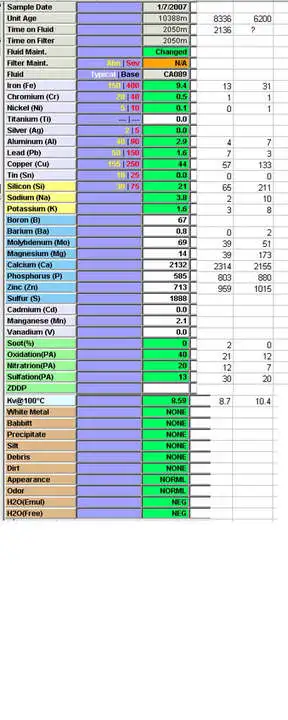
The present numbers only show "break in" (mileage is 10K). The high initial silicon levels are from silicon sealing material, for example, and the level comes down quickly, from 211 to 21. The high levels of Calcium and Sulfur are from Calcium Sulfanate, an oil additive used to soak up acids that build up over time. These levels are normal.
The Oxidation / Nitration / Sulfation levels are "oil wear" indications, shown as "percent of maximum" and used primarily for assessing oil quality to gauge mileage between oil changes. If you drive a lot of miles this would help gauge how long you could wait between oil changes.
I know, “snooze” it’s boring. This will spice it up maybe.
There are three columns on the right, showing readings taken at 10388, 8336 and 6200 miles (“Unit Age” is mileage). The color coded information is from the analysis done by WearCheck (www.wearcheck.com). I spoke with their lab about what the numbers mean.
The present numbers only show "break in" (mileage is 10K). The high initial silicon levels are from silicon sealing material, for example, and the level comes down quickly, from 211 to 21. The high levels of Calcium and Sulfur are from Calcium Sulfanate, an oil additive used to soak up acids that build up over time. These levels are normal.
The Oxidation / Nitration / Sulfation levels are "oil wear" indications, shown as "percent of maximum" and used primarily for assessing oil quality to gauge mileage between oil changes. If you drive a lot of miles this would help gauge how long you could wait between oil changes.
I know, “snooze” it’s boring. This will spice it up maybe.


