P1450 issue 2015 ecoboost pp

matthewt

New Member
Jul 30, 2024
13
0
1
georgia
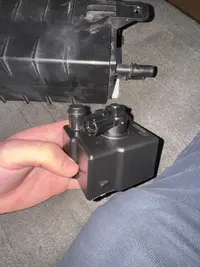
I've owned the car for almost 2 years, and it has had a problem when filling up at the gas pump. It always shuts off the pump because the gas builds up faster than it goes down into the tank. Last year, I had a problem after filling up the tank—it would die out if I tried to start it. I replaced the purge valve, and it fixed it. Now, for about two weeks, I've noticed that after filling up, it has started to almost die out, and when the car is under a load, it will start to almost freeze in power, then go back into power. I replaced the charcoal canister yesterday to see if that would solve it, although I didn't replace one piece of it because the sensor alignment was off. I'm lost and don't know what further steps to take.

The picture is of the piece I transferred from the old to the new due to the sensor plug in alignment was off.
 

Attachments

  • image.webp
    image.webp
    286.2 KB · Views: 161
2015 mustang ecoboost- So I have replaced the charcoal canister assembly and purge valve. Yet I’m still having trouble with the power when it reaches 5k rpm it will stop sending power and begin to jerk the car.

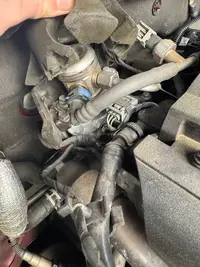
picture below- I’m not sure what piece this may be but I believe it’s the fuel sensor module. It has been making a loud noise almost like a ticking sound

Any suggestions
 

Attachments

  • IMG_5088.webp
    IMG_5088.webp
    354.6 KB · Views: 182
You're going to have to explain why you changed the 'charcoal canister assembly and purge valve' and why you think/thought it is/was your issue.

Is there an older thread someplace?

Edit:
Threads merged. You don't require a new thread for every line you type. That completely defeats the purpose of a "thread".
 
You're going to have to explain why you changed the 'charcoal canister assembly and purge valve' and why you think/thought it is/was your issue.

Is there an older thread someplace?

Edit:
Threads merged. You don't require a new thread for every line you type. That completely defeats the purpose of a "thread".
The reasoning for changing the pieces was because the p1450 engine code, the continuous shut off the gas pump when filling up, and the loss of all power when getting to 5k rpm.
 
I reset, drove and experienced the same engine power issue, but have not got any new codes.

Pull them again when you can. It might tip us off on what to look at next.


In the meantime, read through the following and see if what you've encountered so far has anything to do with these suggestions:


Base Idle Reset Procedure for 2015 Ford Mustang EcoBoost​

  1. Ensure Proper Conditions:
    • Park the vehicle in a safe, well-ventilated area with the transmission in Park (automatic) or Neutral (manual).
    • Ensure the engine is at normal operating temperature (drive the vehicle for 10–15 minutes if needed).
    • Turn off all accessories (radio, A/C, lights, etc.) to minimize load on the engine.
  2. Battery Reset (Optional, if KAM Reset is Needed):
    • Disconnect the negative battery terminal to clear the PCM’s Keep Alive Memory (KAM), which stores idle and fuel trim data.
    • Leave the battery disconnected for 5–10 minutes (some sources suggest touching the positive and negative cables together briefly, away from the battery, to discharge residual voltage, but this is not always necessary).
    • Reconnect the battery (negative last) and proceed. Note: This step may require resetting clock, radio presets, and power windows.
  3. Idle Relearn Process:
    • Start the engine and let it idle without touching the accelerator pedal.
    • Allow the engine to idle for 10–15 minutes at normal operating temperature with all accessories off. This helps the PCM relearn base idle settings.
    • After the initial idle period, turn on accessories (A/C, headlights, etc.) and let the engine idle for an additional 2–3 minutes to adapt to load conditions.
    • If equipped with an automatic transmission, place the vehicle in Drive (with the brake pedal pressed) for 1–2 minutes to allow the PCM to adjust for in-gear idle.
  4. Driving Relearn:
    • Drive the vehicle for at least 10 miles at varying speeds (normal driving conditions, not aggressive) to allow the PCM to fully relearn fuel trims, throttle response, and shift points (if automatic).
    • Avoid abrupt throttle inputs during this period to ensure proper adaptation.
  5. Battery Management System (BMS) Reset (if Battery Was Disconnected):
    • The 2015 Mustang EcoBoost has a BMS that monitors battery state. After battery reconnection, reset the BMS to prevent electrical issues:
      • Press the start button (without pressing the brake pedal) to enter accessory mode.
      • Within 10 seconds, flash the high beams 5 times, then press and release the brake pedal 3 times.
      • The battery warning light should flash 3 times to confirm the reset.
      • If the BMS reset fails, lock the car with the fob and let it sit for at least 8 hours.
    • Alternatively, letting the car sit for 8 hours after battery reconnection allows the BMS to recalibrate automatically.
  6. Verify Idle Stability:
    • After the relearn process, check for smooth idle at approximately 650–850 RPM (exact RPM depends on modifications and tune).
    • If idle remains rough or erratic, inspect for vacuum leaks, dirty throttle body, or faulty sensors (e.g., MAF, TPS).

Additional Notes​

  • Electronic Throttle Body (ETB) Calibration: The 2015 EcoBoost uses an ETB, which is controlled by the PCM and does not have a manually adjustable idle screw or traditional IAC valve. If idle issues persist, the ETB may need cleaning or calibration. A Ford-specific procedure (often outlined in service manuals or by FordTechMakuloco on YouTube) involves cycling the key and accelerator pedal to recalibrate the ETB:
    • Key on (engine off), slowly press the accelerator to the floor, release quickly, and turn the key off. Repeat 2–3 times, then start the engine.
  • Common Issues: Rough idle after relearn could indicate a dirty ETB, faulty fuel vapor hose (part #FR3Z-9G297-H, a known EcoBoost issue), or tune-related problems. If the vehicle is tuned, consult the tuner (e.g., MPT, BAMA) for specific relearn steps, as custom tunes may alter idle parameters.
  • TSB 15-0192: Some 2015 EcoBoost Mustangs (pre-May 2015 build) may experience smoking at idle due to a faulty crankcase vent oil separator. If this occurs, check if TSB 15-0192 applies and consider installing an oil catch can or the updated part.
  • Tools Needed: No special tools are required for the basic relearn, but a scan tool (e.g., FORScan) can help monitor idle RPM and fuel trims. A TPMS reset tool may be needed if tire sensors are affected after battery disconnection.


Personally, I suspect the ETB needs cleaning but I have never owned an Eco-Boost.
 
Something needs cleaning or it needs a turbo or a fuel pump
I'd check the codes and the fuel pressure
I'd also check the boost pressure manually and the exhaust for a restriction
When operating at 5 grand to the 6500 redline, everything needs to be working just right
 
The part you didnt change looks like the vent valve. The purge valve supplies vacuum to the fuel tank...the vent valve allows fresh air into the canister and to the tank. Theres a fuel tank pressure sensor that reads the pressure in the tank. If either of those 3 are bad it could result in the p1450. The purge valve should have come with a bunch of hoses attached to it. All of them need to be replaced with the purge valve. Usually, the pressure sensor being bad would not cause a driveability concern.

If the vent valve does not open the purge valve can allow enough vacuum too much vacuum on the tank. That would squeeze the tank like a crushed milk carton. Also would hear a release when fueling up. When the flap opens it would suck in air. Another common issue with a bad vent valve is difficulty adding fuel. It will cause the gas pump to keep clicking off like tge car is full.

A bad purge valve will stay open allowing vacuum to be consantly pulled from the tank. This will cause the engine to run rough ( sometimes ) because of the added fumes. With line bunch of hoses there are check valves all over that thing. On a boosted car it could cause boost to be lost through a bad check valve.