
I was getting a rough idle on my 90 GT and I realized that the TPS was showing low voltage at idle. I decided to buy a new TPS thinking that the old one was bad. Now, with the new TPS, If I set it above .9 I get surging idle. I have searched through the threads on this topic and have read that the TPS voltage should be set around .98. It is at about .85 right now and the car runs fine and the idle is fine. Is this an issue that it is not in the .9 range, or does it not matter as long as the car runs fine. I know all cars are different but I just want to make sure I set it at the correct voltage. Thanks for the help.
You are using an out of date browser. It may not display this or other websites correctly.
You should upgrade or use an alternative browser.
You should upgrade or use an alternative browser.
TP Sensor voltage
- Thread starter habiv
- Start date

Setting the TPS: you'll need a good Digital Voltmeter (DVM) to do the job. Set the TPS voltage at .5- 1.1 range. Because of the variables involved with the tolerances of both computer and DVM, I would shoot for somewhere between .6 and 1.0 volts. Unless you have a Fluke or other high grade DVM, the second digit past the decimal point on cheap DVM’s is probably fantasy.
Since the computer zeros out the TPS voltage every time it powers up, playing with the settings isn't an effective aid to performance or drivability. The main purpose of checking the TPS is to make sure it isn't way out of range and causing problems.
The Orange/White wire is the VREF 5 volts from the computer. You use the Dark Green/Lt green wire (TPS signal) and the Black/White wire (TPS ground) to set the TPS. Use a pair of safety pins to probe the TPS connector from the rear of the connector. You may find it a little difficult to make a good connection, but keep trying. Put the safety pins in the Dark Green/Lt green wire and Black/White wire. Make sure the ignition switch is in the Run position but the engine isn't running.
Here’s a TPS tip I got from NoGo50
When you installed the sensor make sure you place it on the peg right and then tighten it down properly. Loosen the back screw a tiny bit so the sensor can pivot and loosen the front screw enough so you can move it just a little in very small increments. I wouldn’t try to adjust it using marks.
(copied from MustangMax, Glendale AZ)
A.) Always adjust the TPS and Idle with the engine at operating temp. Dive it around for a bit if you can and get it nice and warm.
B.) When you probe the leads of the TPS, do not use an engine ground, put the ground probe into the lead of the TPS. You should be connecting both meter probes to the TPS and not one to the TPS and the other to ground.
C.) Always reset the computer whenever you adjust the TPS or clean/change any sensors. I just pull the battery lead for 10 minutes.
D.) The key is to adjust the TPS voltage and reset the computer whenever the idle screw is changed.
The TPS is a variable resistor, must like the volume control knob on a cheap radio. We have all heard them crackle and pop when the volume is adjusted. The TPS sensor has the same problem: wear on the resistor element makes places that create electrical noise. This electrical noise confuses the computer, because it expects to see a smooth increase or decrease as the throttle is opened or closed.
TPS testing: most of the time a failed TPS will set code 23 or 63, but not always. Use either an analog meter or a DVM with an analog bar graph and connect the leads as instructed above. Turn the ignition switch to the Run position, but do not start the engine. Note the voltage with the throttle closed. Slowly open the throttle and watch the voltage increase smoothly, slowly close the throttle and watch the voltage decrease smoothly. If the voltage jumps around and isn’t smooth, the TPS has some worn places in the resistor element. When the throttle is closed, make sure that the voltage is the same as what it was when you started. If it varies more than 10%, the TPS is suspect of being worn in the idle range of its travel.
Since the computer zeros out the TPS voltage every time it powers up, playing with the settings isn't an effective aid to performance or drivability. The main purpose of checking the TPS is to make sure it isn't way out of range and causing problems.
The Orange/White wire is the VREF 5 volts from the computer. You use the Dark Green/Lt green wire (TPS signal) and the Black/White wire (TPS ground) to set the TPS. Use a pair of safety pins to probe the TPS connector from the rear of the connector. You may find it a little difficult to make a good connection, but keep trying. Put the safety pins in the Dark Green/Lt green wire and Black/White wire. Make sure the ignition switch is in the Run position but the engine isn't running.
Here’s a TPS tip I got from NoGo50
When you installed the sensor make sure you place it on the peg right and then tighten it down properly. Loosen the back screw a tiny bit so the sensor can pivot and loosen the front screw enough so you can move it just a little in very small increments. I wouldn’t try to adjust it using marks.
(copied from MustangMax, Glendale AZ)
A.) Always adjust the TPS and Idle with the engine at operating temp. Dive it around for a bit if you can and get it nice and warm.
B.) When you probe the leads of the TPS, do not use an engine ground, put the ground probe into the lead of the TPS. You should be connecting both meter probes to the TPS and not one to the TPS and the other to ground.
C.) Always reset the computer whenever you adjust the TPS or clean/change any sensors. I just pull the battery lead for 10 minutes.
D.) The key is to adjust the TPS voltage and reset the computer whenever the idle screw is changed.
The TPS is a variable resistor, must like the volume control knob on a cheap radio. We have all heard them crackle and pop when the volume is adjusted. The TPS sensor has the same problem: wear on the resistor element makes places that create electrical noise. This electrical noise confuses the computer, because it expects to see a smooth increase or decrease as the throttle is opened or closed.
TPS testing: most of the time a failed TPS will set code 23 or 63, but not always. Use either an analog meter or a DVM with an analog bar graph and connect the leads as instructed above. Turn the ignition switch to the Run position, but do not start the engine. Note the voltage with the throttle closed. Slowly open the throttle and watch the voltage increase smoothly, slowly close the throttle and watch the voltage decrease smoothly. If the voltage jumps around and isn’t smooth, the TPS has some worn places in the resistor element. When the throttle is closed, make sure that the voltage is the same as what it was when you started. If it varies more than 10%, the TPS is suspect of being worn in the idle range of its travel.
The main purpose of checking the TPS is to make sure it isn't way out of range and causing problems.
Because of the variables involved with the tolerances of both computer and DVM, I would shoot for somewhere between .6 and 1.0 volts.
.85 is within the range you specified and it doesn't seem to be causing any problems with the car...so I guess I'm good! Thanks for the help.
I just went out and drove the car again and it runs fine. I have the TPS voltage set at .85. I ran the EEC test and I am now getting codes 124 (TP voltage was higher than expected) and 191 (fuel system was rich at idle - left front HO2S). Any idea what's going on with this?
TPS Troubleshooting:
The TPS sensor is a variable resistor like the volume control on most cheap radios. We have all heard them make scratchy noises as you turn them up or down. The carbon element can wear and cause a drop out spot in the output voltage. This confuses the computer because it expects to see a steady TPS voltage increase as the Throttle opens up.
Wire colors & functions:
Orange/white = 5 volt VREF from the computer
Dark Green/lt green = TPS output to computer
Black/white = Signal ground from computer
TPS troubleshooting steps:
1.) Use the Orange/white & Black white wires to verify the TPS has the correct 5 volts source from the computer.
Use the Dark Green/lt green & Black/white wires to set the TPS base voltage. Setting the TPS: you'll need a good Digital Voltmeter (DVM) to do the job. Set the TPS voltage at .5- 1.1 range. Because of the variables involved with the tolerances of both computer and DVM, I would shoot for somewhere between .6 and 1.0 volts. Unless you have a Fluke or other high grade DVM, the second digit past the decimal point on cheap DVM’s is probably fantasy. Since the computer zeros out the TPS voltage every time it powers up, playing with the settings isn't an effective aid to performance or drivability. The main purpose of checking the TPS is to make sure it isn't way out of range and causing problems.
2.) Use an analog voltmeter to check the voltage on the Dark Green/lt green & Black/white wires to make sure that it increases smoothly and doesn’t drop out or increase suddenly.
Some basic checks you can make to be sure that the sensor is getting power & ground:
Note that all resistance tests must be done with power off. Measuring resistance with a circuit powered on will give false readings and possibly damage the meter.
Check the resistance between the black/white wire on the MAP/BARO sensor and then the black/white wire on the EGR and the same wire on the TPS. It should be less than 1 ohm. Next check the resistance between the black/white wire and the negative battery cable. It should be less than 1.5 ohm.
The following power on check requires you to turn the ignition switch to the Run position.
Use a DVM to check for 5 volts on the orange/white wire. If it is missing, look for +5 volts at the orange/white wire on the TPS or EGR sensors. Use the black/white wire for the ground for the DVM.
The TPS sensor is a variable resistor like the volume control on most cheap radios. We have all heard them make scratchy noises as you turn them up or down. The carbon element can wear and cause a drop out spot in the output voltage. This confuses the computer because it expects to see a steady TPS voltage increase as the Throttle opens up.
Wire colors & functions:
Orange/white = 5 volt VREF from the computer
Dark Green/lt green = TPS output to computer
Black/white = Signal ground from computer
TPS troubleshooting steps:
1.) Use the Orange/white & Black white wires to verify the TPS has the correct 5 volts source from the computer.
Use the Dark Green/lt green & Black/white wires to set the TPS base voltage. Setting the TPS: you'll need a good Digital Voltmeter (DVM) to do the job. Set the TPS voltage at .5- 1.1 range. Because of the variables involved with the tolerances of both computer and DVM, I would shoot for somewhere between .6 and 1.0 volts. Unless you have a Fluke or other high grade DVM, the second digit past the decimal point on cheap DVM’s is probably fantasy. Since the computer zeros out the TPS voltage every time it powers up, playing with the settings isn't an effective aid to performance or drivability. The main purpose of checking the TPS is to make sure it isn't way out of range and causing problems.
2.) Use an analog voltmeter to check the voltage on the Dark Green/lt green & Black/white wires to make sure that it increases smoothly and doesn’t drop out or increase suddenly.
Some basic checks you can make to be sure that the sensor is getting power & ground:
Note that all resistance tests must be done with power off. Measuring resistance with a circuit powered on will give false readings and possibly damage the meter.
Check the resistance between the black/white wire on the MAP/BARO sensor and then the black/white wire on the EGR and the same wire on the TPS. It should be less than 1 ohm. Next check the resistance between the black/white wire and the negative battery cable. It should be less than 1.5 ohm.
The following power on check requires you to turn the ignition switch to the Run position.
Use a DVM to check for 5 volts on the orange/white wire. If it is missing, look for +5 volts at the orange/white wire on the TPS or EGR sensors. Use the black/white wire for the ground for the DVM.

Check codes again....
Your ecu will give 2 digit codes... not 3 digit....
2 digits are engine off, on demand/coninuous memory codes (for this set I got code 11-system ok). 3 digits are engine on codes. The codes I got (124 and 191) are while the engine is on.

2 digits are engine off, on demand/coninuous memory codes (for this set I got code 11-system ok). 3 digits are engine on codes. The codes I got (124 and 191) are while the engine is on.
Not quite. Later Mustang EEC-IV processors use 3 digit (and only 3 digit) codes. Aero's use 2 digit codes. Period.
As Jason said, pull codes again or use a reader with an LCD display. Chasing the wrong codes can really slow down repair time.
Good luck.
Later Mustang EEC-IV processors use 3 digit (and only 3 digit) codes.
What do you mean by later EEC-IV? My car is a 1990. I always thought that the engine on were 3 digit codes. After the light flashes for cylinder indication, I press the brake and turn the steering wheel, the motor revs a bit and then the car goes right into giving me the codes. When I did it last time the code was, blink - blink, blink - blink, blink, blink, blink, then a pause and another code begins. I am reading this as 124. Is this incorrect? To me, this is clearly in segments of 3. If I am reading these codes incorrectly please let me know how it should be read. Thanks.
Okay, so I disconnected the battery and started all over with the test. I think I realize what I was doing wrong. I was not tapping the gas pedal to WOT when it was doing the dynamic responce test. So, maybe the 3 digit codes that were coming out were just error messages. I am now getting code 44 during the KOER test, and this is a code that I got 8 years ago when I bought the car. I fixed this issue but the code still comes up. Anyway, thanks for the help with this.
On another note, now that i have your attention, I am having another issue with the car, and this issue has been evident ever since i bought the car, it has just gotten worse over the years. When I first bought the car, like once a year the engine would break up during WOT around 4k RPM. As I modded the car over the years (new intake manifold, air intake, mass air meter, TB, headers, full exhaust, gears) the problem has gotten worse and it happens pretty much every time I have the car at WOT. It also seems to be more evident during warmer temperatures. It usually starts to break up at around 3k. It also did it once when i put it in 5th gear and bogged it down. The engine broke up very low in the RPM's when I did this.
I was told to try maybe going to a colder spark plug, so i went 2 degrees colder from 25 to 23. I also bumped the timing to 15 degrees and am now running 93 octane. The car now breaks up a bit, still at around 3 - 4K, but not quit as bad as it did before. Any ideas on what could be causing this issue? Any help would be greatly appreciated.
On another note, now that i have your attention, I am having another issue with the car, and this issue has been evident ever since i bought the car, it has just gotten worse over the years. When I first bought the car, like once a year the engine would break up during WOT around 4k RPM. As I modded the car over the years (new intake manifold, air intake, mass air meter, TB, headers, full exhaust, gears) the problem has gotten worse and it happens pretty much every time I have the car at WOT. It also seems to be more evident during warmer temperatures. It usually starts to break up at around 3k. It also did it once when i put it in 5th gear and bogged it down. The engine broke up very low in the RPM's when I did this.
I was told to try maybe going to a colder spark plug, so i went 2 degrees colder from 25 to 23. I also bumped the timing to 15 degrees and am now running 93 octane. The car now breaks up a bit, still at around 3 - 4K, but not quit as bad as it did before. Any ideas on what could be causing this issue? Any help would be greatly appreciated.
A high RPM miss on a warm engine is usually a TFI problem. The TFI modules on the distributor are famous for causing this type of thing.
Thanks, I will try that and see if it works.
Which one of these modules should I buy? There are a bunch of different kinds. Here are the choices I have found.
Jegs module (grey) - $45.00 - says it will fit original equipment, 82-91 ford.
JEGS 40605
Here is a list of what Summit has. ACCEL (Grey - $47 - says it fits MOST stock applications.)
ACDelco ($90 - says replacement OEM). Mallory (Black - $70 - says OE replacement.)
I thought there was some issue between grey and black depending on the year of the car. Maybe the Mallory is just black and it fits all applications?
GT, 5.0L/302, MUSTANG, 1990, FORD - summitracing.com
Thanks for the help.
Jegs module (grey) - $45.00 - says it will fit original equipment, 82-91 ford.
JEGS 40605
Here is a list of what Summit has. ACCEL (Grey - $47 - says it fits MOST stock applications.)
ACDelco ($90 - says replacement OEM). Mallory (Black - $70 - says OE replacement.)
I thought there was some issue between grey and black depending on the year of the car. Maybe the Mallory is just black and it fits all applications?
GT, 5.0L/302, MUSTANG, 1990, FORD - summitracing.com
Thanks for the help.
You want a gray module.
Diagram courtesy of Tmoss & Stang&2birds
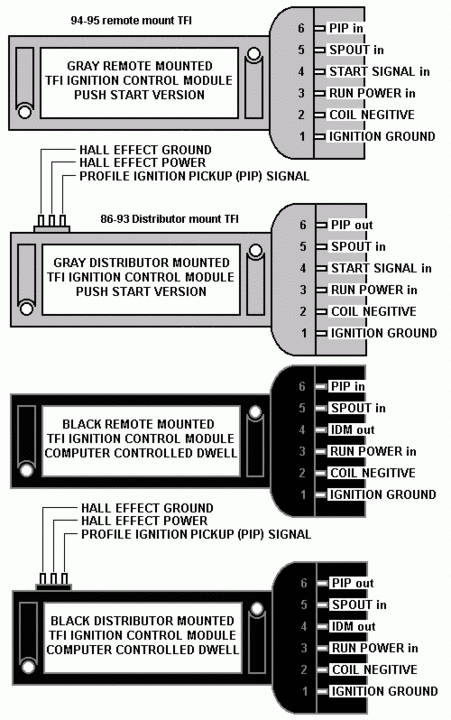
See the following website for some help from Tmoss (diagram designer) & Stang&2Birds (website host) for help on 88-95 wiring Mustang FAQ - Engine Information Everyone should bookmark this site.
Ignition switch wiring
http://www.veryuseful.com/mustang/tech/engine/images/IgnitionSwitchWiring.gif
Fuel, alternator, A/C and ignition wiring
http://www.veryuseful.com/mustang/tech/engine/images/fuel-alt-links-ign-ac.gif
Complete computer, actuator & sensor wiring diagram for 88-91 Mass Air Mustangs
http://www.veryuseful.com/mustang/tech/engine/images/88-91_5.0_EEC_Wiring_Diagram.gif
Complete computer, actuator & sensor wiring diagram for 91-93 Mass Air Mustangs
http://www.veryuseful.com/mustang/tech/engine/images/91-93_5.0_EEC_Wiring_Diagram.gif
Complete computer, actuator & sensor wiring diagram for94-95 Mass Air Mustangs
http://www.veryuseful.com/mustang/tech/engine/images/94-95_5.0_EEC_Wiring_Diagram.gif
Vacuum diagram 89-93 Mustangs
http://www.veryuseful.com/mustang/tech/engine/images/mustangFoxFordVacuumDiagram.jpg
HVAC vacuum diagram
http://www.veryuseful.com/mustang/tech/engine/images/Mustang_AC_heat_vacuum_controls.gif
TFI module differences & pinout
http://www.veryuseful.com/mustang/tech/engine/images/TFI_5.0_comparison.gif
Fuse box layout
http://www.veryuseful.com/mustang/tech/engine/images/MustangFuseBox.gif
Diagram courtesy of Tmoss & Stang&2birds
See the following website for some help from Tmoss (diagram designer) & Stang&2Birds (website host) for help on 88-95 wiring Mustang FAQ - Engine Information Everyone should bookmark this site.
Ignition switch wiring
http://www.veryuseful.com/mustang/tech/engine/images/IgnitionSwitchWiring.gif
Fuel, alternator, A/C and ignition wiring
http://www.veryuseful.com/mustang/tech/engine/images/fuel-alt-links-ign-ac.gif
Complete computer, actuator & sensor wiring diagram for 88-91 Mass Air Mustangs
http://www.veryuseful.com/mustang/tech/engine/images/88-91_5.0_EEC_Wiring_Diagram.gif
Complete computer, actuator & sensor wiring diagram for 91-93 Mass Air Mustangs
http://www.veryuseful.com/mustang/tech/engine/images/91-93_5.0_EEC_Wiring_Diagram.gif
Complete computer, actuator & sensor wiring diagram for94-95 Mass Air Mustangs
http://www.veryuseful.com/mustang/tech/engine/images/94-95_5.0_EEC_Wiring_Diagram.gif
Vacuum diagram 89-93 Mustangs
http://www.veryuseful.com/mustang/tech/engine/images/mustangFoxFordVacuumDiagram.jpg
HVAC vacuum diagram
http://www.veryuseful.com/mustang/tech/engine/images/Mustang_AC_heat_vacuum_controls.gif
TFI module differences & pinout
http://www.veryuseful.com/mustang/tech/engine/images/TFI_5.0_comparison.gif
Fuse box layout
http://www.veryuseful.com/mustang/tech/engine/images/MustangFuseBox.gif
Similar threads
- Replies
- 9
- Views
- 724
- Replies
- 7
- Views
- 220


- Replies
- 4
- Views
- 153
- Replies
- 0
- Views
- 123
