Idle / TPS Adjustment
This article is intended to teach the basics of adjusting the idle and the Throttle Position Sensor on the 2.3 liter Turbo Coupe Thunderbird. It is recommended that your engine have a good tune up before you attempt to make any changes.
Tools Required
· Voltmeter with a DC voltage scale.
· Short Phillips screwdriver.
· Small adjustable wrench.
Components Involved
· Idle Air Control (IAC).
· Throttle Position Sensor (TPS).
· Throttle Body.
· Accelerator Linkage.
Adjustment Procedure
· First bring the engine up to normal operating temperature
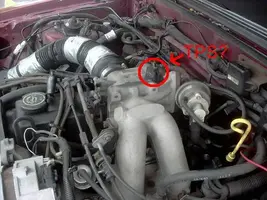
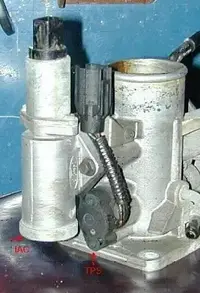
· Turn the engine off and unplug the Idle Air Control connector from the IAC. This is located on the backside of the Throttle Body near the firewall. This device is a round cylinder approximately 5 inches long with a (2) bolt flange and 3 wire male / female plug connector. (see picture)
· Start Engine. Using the small adjustable wrench on the idle adjustment screw, adjust the base idle to 700 – 800 RPM. (The idle adjustment screw is #1 in the picture below)
View attachment 448296
· Locate the Throttle Position Sensor (TPS) on the Throttle Body. This is also located on the backside of the Throttle Body near the firewall. This is a black plastic device with (2) screws that allow adjustment and (3) wire male / female connector. (see picture)
· Back probe the back of the TPS connector to connect the meter... The + (positive) side of the meter connects to the green wire. The – (negative) side connects to the black wire (SIGNAL RETURN). NOTE: you must connect the negative side of the meter to the black wire (SIGNAL RETURN). Do not just ground it to the chassis; it’s not the same thing. Back probing means sticking pins down the back side of the harness side of the connector for the appropriate wires. It can be tricky but is better than sticking pins through the wire insulation. The connector is left attached to the TPS.
· Using the small Phillips screwdriver to loosen the two hold down screws slightly, then rotate the TPS to change the voltage setting. Adjust the TPS output voltage to just under 1.0 volt. Most turbo tuners find that setting TPS voltage to around .90 - .95 volts works best. I set mine around .94 volts. When set, tighten the screws and recheck the reading.
· Turn off the engine.
· With the engine off, but key ON and the voltmeter still connected move the throttle linkage slowly from idle position to wide open and back to idle, looking for a steady increase and then decrease in voltage without any voids or dead spots. Any voids or dead spots would indicate a faulty TPS.
· Plug in the Idle Air Control.
· Start the engine. The engine’s idle speed should settle in around 1000 RPM.
· Take the Turbo Coupe for a drive and see how she runs.
This information is provided to you as a courtesy from the North American Turbo Coupe Organization (NATO). The user(s) of this information bare sole responsibility for its use and their own actions. The Author, NATO, or its members assume no liability.