Help with O2 sensor cable for Air/Fuel gauge?

Before I attempt it next week I was curious where you guys ran the O2 sensor cable to get it under the car?

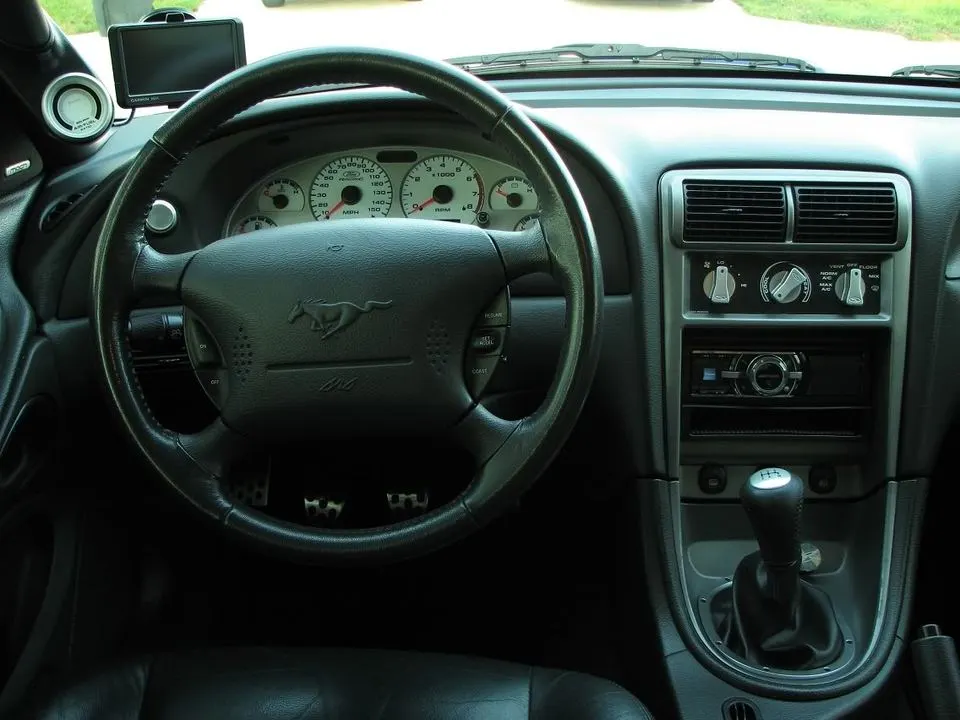
I have an Innovate MTX-L, and the gauge will be in a pillar pod.
IMG_3289.webp


I noticed the connector that goes into the O2 sensor pigtail is HUGE so I'll have to run the small end of it from the outside into the car and then connect them inside.
 
Although I haven't done it yet (haven't finished building my LCD display unit yet) my plan is to run the wiring under the dash to the center console and down through the shift boot area.

Failing that I'd find a hole in the firewall by the clutch cable (or make one) and run the wiring out there.
 
Although I haven't done it yet (haven't finished building my LCD display unit yet) my plan is to run the wiring under the dash to the center console and down through the shift boot area.

Failing that I'd find a hole in the firewall by the clutch cable (or make one) and run the wiring out there.

I just heard this from someone else. Didn't think of that and is probably the easiest way.

Heat from the tranny going to be an issue?
 
Heat from the tranny going to be an issue?

Nah. Chafing and rubbing risks may require sheathing of some sort (e.g. corrugated split loom). Be sure to manage the wiring well in the vicinity of the cats and/or exhaust piping.

If you want extra assurance use PVC-insulated wiring which should be good to 105oC (221oF).
 
Hey what's your plan for the exhaust bung? I assume it's not a good idea to drive the car home with a hole in the exhaust?

I figured I would wire up the gauge and run the O2 sensor cable near the header collector, tying the end of it off temporarily. Then I guess I could go ahead and connect the sensor, calibrate it in clean air as instructed, then disconnect the sensor and head down to the exhaust shop.

That way all they have to do is weld the bung, connect the sensor to the existing harness I just ran, and screw it in to the bung.

Make sense?
 
Hey what's your plan for the exhaust bung? I assume it's not a good idea to drive the car home with a hole in the exhaust?

My current plan involves buying an Innovate LC-1 controller and running the WB sensor in the factory bung. The LC-1 has an output that can simulate the appearance of a NB sensor to the PCM so I would "adjust" the wiring so that the PCM thinks the NB sensor is there and send the WB data to my display unit.

That'd be nice because it involves no drilling or welding. I'd just have to modify the wiring of an existing O2 sensor a bit (to retain the heater and to feed the LC-1 simulated NB signal to the PCM harness.) I'm running the factory midpipe for emissions right now and I really don't think there's room there for another bung.

If there were I might consider something like AEM's "weldless bung":

30-2355-250.jpg


So I'd just have to drill a hole in my garage and clamp this baby over it.

My MRT pipe already has a bung for dyno tuning so if I go back to that I'll just spin the WB into that one.

I figured I would wire up the gauge and run the O2 sensor cable near the header collector, tying the end of it off temporarily. Then I guess I could go ahead and connect the sensor, calibrate it in clean air as instructed, then disconnect the sensor and head down to the exhaust shop.

That way all they have to do is weld the bung, connect the sensor to the existing harness I just ran, and screw it in to the bung.

Make sense?

You could get the bung installed ahead of time and have them install a plug:

RPS-o2plug-1.jpg


Then remove it when you're ready. The plug is nice in case you need to remove the sensor for an extended period of time...
 
I was curious about a plug, thanks for clarifying that! Think I can find one at the regular auto parts store? That would make my life easier to just go ahead and get the bung installed ahead of time. Just put some anti-sieze on and screw it in? The MTX-L comes with a bung so I'm just going to go that route rather than what you mentioned, since you know more about what you're doing than I do haha That clamp is a pretty cool idea though.

What's the best place to weld the bung? Passenger or driver's side? Doesn't matter? I assume it should be as close to the header collector as possible, at the 10 to 2 position?

IMG_0642.webp
 
I was curious about a plug, thanks for clarifying that! Think I can find one at the regular auto parts store? That would make my life easier to just go ahead and get the bung installed ahead of time. Just put some anti-sieze on and screw it in?

You can try a parts store. They're available on-line if you can't find one at a jobber.

What's the best place to weld the bung? Passenger or driver's side? Doesn't matter? I assume it should be as close to the header collector as possible, at the 10 to 2 position?

I like the driver's side and here's why:

The fuel line comes into the engine bay on the passenger side and feeds that bank directly. A small, thin connecting tube runs across to feed the driver's side fuel rail. I figure if the driver's side bank (B2) is reading "healthy" in terms of the AFR then the passenger side (B1) is a given.

The bungs should be "clocked" so that the sensors end up pointing "downward"...as you say, 10-2 position. The idea is that if water condensed in the exhaust it doesn't pool in or on the sensor or sensing element.

Other than that, placing it where the sensor and wiring won't chaff or be knocked into something by engine movement and where it won't likely be damaged if the exhaust hits a speedbump or something would be a good plan.
 
You can try a parts store. They're available on-line if you can't find one at a jobber.


I like the driver's side and here's why:

The fuel line comes into the engine bay on the passenger side and feeds that bank directly. A small, thin connecting tube runs across to feed the driver's side fuel rail. I figure if the driver's side bank (B2) is reading "healthy" in terms of the AFR then the passenger side (B1) is a given.

The bungs should be "clocked" so that the sensors end up pointing "downward"...as you say, 10-2 position. The idea is that if water condensed in the exhaust it doesn't pool in or on the sensor or sensing element.

Other than that, placing it where the sensor and wiring won't chaff or be knocked into something by engine movement and where it won't likely be damaged if the exhaust hits a speedbump or something would be a good plan.

You info is always helpful. Thanks again. I'll get under the car when I can and take a look, then just mark the spot for them to drill and weld. I'll probably put it right downstream from the header/midpipe flange, at the 1-2 positition facing inside the H.