Engine 93 Lx - Pop When Cold - Under Load

93 Calypso

New Member
Jun 3, 2014
5
0
1
Hello all:

I am new to your board. I hope you can help me with a recent issue with my 93 LX.

It has begun to pop when the engine is cold when placing initial load on the engine. It only pops 1-2 times and runs fine. No issues once the car has warmed

There are tons of existing internet posts with similar issues, however, the cars described are almost always modified. My car is basically stock. The facts I have are:

*93 LX 5 spd - 99K miles, I have owned for the last 20K
*Only mods are Ford shorty headers, new duals w/o cats, cold air kit (purchased that way - never an issue
* after popping began -I replaced rotor, cap, wires, plugs, set initial timing at 10 degrees
*problem persisted
*Used the Actron scan tool, noting only code 67 - I think I had the car in gear so I likely I caused that
*Cylinder balance test passed
*adjusted throttle position sensor to read initial voltage of 1.1V
* nothing has helped so far,

The car has always run well until this season. The only thing I have done lately was to replace the clutch and flywheel.

Any insight you can provide is appreciated.

David from Chicagoland
 
does it sound like its coming from the intake?...mine was popping once also and it was the maf,only did every one in a while....it was the connections to the maf...
 
does it sound like its coming from the intake?...mine was popping once also and it was the maf,only did every one in a while....it was the connections to the maf...
Its either from the intake or the passenger exhaust collector. it is not an intense sound at the tail pipe.

Wouldn't a bad MAF throw a code?
 
ya it should,mine i think gave a code low voltage to maf or somthing like that...?., it would kinda pop pop pop and hesitate a little and i could hear it through the intake.....cant hurt to try and clean it anyway with some maf cleaner maybe....also had a bad bbk one also that gave me a similar issue on my other engine....iust a thought..
 
Backfiring out the intake is either a valve stuck open or a lean mixture or spark plug wire(s) connected to the wrong cylinder(s). Check compression on all cylinders and then look for vacuum hoses loose, cracked, or misconnected. Check the line for the vapor recirculation system – it is easy to knock loose and not see it when you connect the air pump plumbing. If the vacuum line for the EGR valve and the air pump are cross connected, some very strange things can happen. Check the mass air flow electrical connection and see that it is tight, the same goes for the fuel injection wiring harness connectors up on top of the manifold near the firewall.

A cold engine needs more fuel than a warm engine. The fact that you are experiencing the problem when the engine is cold points to a lean mixture. That means looking at things like the ECT, O2 sensors, MAF output and TPS (TPS should be between .5 and1.0 volts)

Sticking valves: If a intake valve is bent, has a bad spring or is misadjusted, the engine will sometimes backfire through the intake. Use a vacuum gauge connected to any convenient spot on the intake manifold. Run the engine at 1000 RPM & look for 18-21 inches of vacuum with a steady needle. A problem intake valve will make the vacuum gauge needle sweep 5-10 inches.

Lean fuel mixture breaks out into several sub categories:
A.). Vacuum leaks
B.) Air entering the intake without passing through the MAF on Mass Air cars (89-95 models).
C.) Failure of the MAF, BAP/MAP (Baro or Manifold Air Pressure, same sensor, different name), ACT (air charge temp), or ECT (engine coolant temp). These should set a code in the computer.
D.) O2 sensor problems: one or both O2 sensors with low output or bad O2 sensor heater ground. This should set codes 41/91. The O2 sensor heater ground is an Orange wire in the engine mounted fuel injector harness. Ground it to the back of the head or intake manifold.
E.) Leaking exhaust gases from EGR valve at WOT or EGR opening when it should not be open.
F.) Poor fuel delivery due to bad fuel pump, clogged filter or bad fuel pump wiring. Look for low pressure or fluctuating pressure. Standard injector pressure is 39 PSI at idle, with the vacuum line disconnected from the regulator and capped.
G.) Clogged fuel injectors.- see the cylinder balance test below
H.) Fuel injector wiring problems causing injector not to deliver rated flow (dirty or stuck shut injectors).
I.) Computer problems: (computer problems are not common like sensor problems)
J.). ROM has bad data in fuel or timing table. This should also set a code in the computer.
K.) Failure of one or more of the computer's driver transistors for the fuel injectors. No code set on this one. Use a noid test light to test the injector wiring & injector drivers,
L.) MAF calibration off or mismatched to injectors.
M.) ACT or ECT bad. Sometimes the sensors will be off calibration, but not bad enough to set a code. If they falsely read too high a temp, the engine will back off fuel delivery.

The HO firing order is 1-3-7-2-6-5-4-8.
Non HO firing order is 1-5-4-2-6-3-7-8

attachment.php


Cylinder balance test:
See the procedure below to dump the codes and place the computer into diagnostic mode.

Warm the car's engine up to normal operating temperature. Use a jumper wire or paper clip to put the computer into test mode. Start the engine and let it go through the normal diagnostic tests, then quickly press the throttle to the floor. The engine RPM should exceed 2500 RPM's for a brief second. The engine RPM's will increase to about 1450-1600 RPM and hold steady. The engine will shut off power to each injector, one at a time. When it has sequenced through all 8 injectors, it will flash 9 for everything OK, or the number of the failing cylinder such as 2 for cylinder #2. Quickly pressing the throttle again up to 2500 RPM’s will cause the test to re-run with smaller qualifying figures. Do it a third time, and if the same cylinder shows up, the cylinder is weak and isn’t putting out power like it should. See the Chilton’s Shop manual for the complete test procedure

Dump the codes: Codes may be present even if the Check Engine Light (CEL) isn't on.

Dumping the computer diagnostic codes on 86-95 Mustangs

Revised 26-July-2011. Added need to make sure the clutch is pressed when dumping codes.

Codes may be present even if the check engine light hasn’t come on, so be sure to check for them.

Here's the way to dump the computer codes with only a jumper wire or paper clip and the check engine light, or test light or voltmeter. I’ve used it for years, and it works great. You watch the flashing test lamp or Check Engine Light and count the flashes.

Post the codes you get and I will post 86-93 model 5.0 Mustang specific code definitions and fixes. I do not have a complete listing for 94-95 model 5.0 Mustangs at this time.

Be sure to turn off the A/C, and put the transmission in neutral when dumping the codes. On a manual transmission car, be sure to press the clutch to the floor.
Fail to do this and you will generate a code 67 and not be able to dump the Engine Running codes.

Underhoodpictures007-01.jpg


Underhoodpictures010.jpg


If your car is an 86-88 stang, you'll have to use the test lamp or voltmeter method. There is no functional check engine light on the 86-88's except possibly the Cali Mass Air cars.

attachment.php


The STI has a gray connector shell and a white/red wire. It comes from the same bundle of wires as the self test connector.

89 through 95 cars have a working Check Engine light. Watch it instead of using a test lamp.

attachment.php


The STI has a gray connector shell and a white/red wire. It comes from the same bundle of wires as the self test connector.


WARNING!!! There is a single dark brown connector with a black/orange wire. It is the 12 volt power to the under the hood light. Do not jumper it to the computer test connector. If you do, you will damage the computer.

What to expect:
You should get a code 11 (two single flashes in succession). This says that the computer's internal workings are OK, and that the wiring to put the computer into diagnostic mode is good. No code 11 and you have some wiring problems. This is crucial: the same wire that provides the ground to dump the codes provides signal ground for the TPS, EGR, ACT and Map/Baro sensors. If it fails, you will have poor performance, economy and driveablity problems

Some codes have different answers if the engine is running from the answers that it has when the engine isn't running. It helps a lot to know if you had the engine running when you ran the test.

Dumping the Engine Running codes: The procedure is the same, you start the engine with the test jumper in place. Be sure the A/C is off, and clutch (if present) is pressed to the floor, and the transmission is in neutral. You'll get an 11, then a 4 and the engine will speed up to do the EGR test. After the engine speed decreases back to idle, it will dump the engine running codes.

Trouble codes are either 2 digit or 3 digit, there are no cars that use both 2 digit codes and 3 digit codes.

Alternate methods:
For those who are intimidated by all the wires & connections, see Actron® for what a typical hand scanner looks like. Normal retail price is about $30 or so at AutoZone or Wal-Mart.

Or for a nicer scanner see Equus - Digital Ford Code Reader (3145) – It has a 3 digit LCD display so that you don’t have to count flashes or beeps.. Cost is $30.
 
Last edited:
Thanks very much for your replies!

I did damage the long, black, slender vacuum line leading to the canister in the picture below.

I used two layers of electrical shrink wrap to join it back together. I forgot I did that. Could that be the culprit?

upload_2014-6-4_14-35-9.webp
 
Thanks very much for your replies!

I did damage the long, black, slender vacuum line leading to the canister in the picture below.

I used two layers of electrical shrink wrap to join it back together. I forgot I did that. Could that be the culprit?

upload_2014-6-4_14-35-9.webp
That is a very good place to start. Check the rest of the vacuum tubing while you are at it...
 
Time and heat cycling takes its toll on plastic tubing used in the vacuum plumbing.

The device shown in your picture is the smog pump bypass valve. See the tech description for it function and how it works.

NAPA or one of the major auto parts chain stores should have what you need. Ordinary automotive vacuum and fuel line is a suitable substitute for the odd sizes and pieces you can't find locally. The carbon canister hoses should be fuel line type hose since they carry fuel vapor.


Thermactor Air System
Some review of how it works...

Revised 17-Sept-2011 to add testing procedure.

The Thermactor air pump (smog pump) supplies air to the heads or catalytic converters. This air helps break down the excess HC (hydrocarbons) and CO (carbon monoxide). The air supplied to the catalytic converters helps create the catalytic reaction that changes the HC & CO into CO2 and water vapor. Catalytic converters on 5.0 Mustangs are designed to use the extra air provided by the smog pump. Without the extra air, the catalytic converters will clog and fail.

The Thermactor air pump draws air from an inlet filter in the front of the pump. The smog pump puts air into the heads when the engine is cold and then into the catalytic converters when it is warm. The Thermactor control valves serve to direct the flow. The first valve, TAB (Thermactor Air Bypass) or AM1 valve) either dumps air to the atmosphere or passes it on to the second valve. The second valve, TAD (Thermactor Air Diverter valve or AM2 valve) directs it to the heads or the catalytic converters. Check valves located after the TAB & TAD solenoids prevent hot exhaust gases from damaging the control valves or pump in case of a backfire. The air serves to help consume any unburned hydrocarbons by supplying extra oxygen to the catalytic process. The computer tells the Thermactor Air System to open the Bypass valve at WOT (wide open throttle) minimizing engine drag. This dumps the pump's output to the atmosphere, and reduces the parasitic drag caused by the smog pump to about 2-4 HP at WOT. The Bypass valve also opens during deceleration to reduce or prevent backfires.

Code 44 RH side air not functioning.
Code 94 LH side air not functioning.

The computer uses the change in the O2 sensor readings to detect operation of the Thermactor control valves. When the dump valve opens, it reduces the O2 readings in the exhaust system. Then it closes the dump valve and the O2 readings increase. By toggling the dump valve (TAB), the computer tests for the 44/94 codes.

Failure mode is usually due to a clogged air crossover tube, where one or both sides of the tube clog with carbon. The air crossover tube mounts on the back of the cylinder heads and supplies air to each of the Thermactor air passages cast into the cylinder heads. When the heads do not get the proper air delivery, they set codes 44 & 94, depending on which passage is clogged. It is possible to get both 44 & 94, which would suggest that the air pump or control valves are not working correctly, or the crossover tube is full of carbon or missing.


thermactor-air-system-65-gif.50636


Computer operation & control for the Thermactor Air System
Automobile computers use current sink technology. They do not source power to any relay, solenoid or actuator like the IAC, fuel pump relay, or fuel injectors. Instead the computer provides a ground path for the positive battery voltage to get back to the battery negative terminal. That flow of power from positive to negative is what provides the energy to make the IAC, fuel pump relay, or fuel injectors work. No ground provided by the computer, then the actuators and relays don't operate.

One side of the any relay/actuator/solenoid in the engine compartment will be connected to a red wire that has 12-14 volts anytime the ignition switch is in the run position. The other side will have 12-14 volts when the relay/actuator/solenoid isn't turned on. Once the computer turns on the clamp side, the voltage on the computer side of the wire will drop down to 1 volt or less.

In order to test the TAD/TAB solenoids, you need to ground the white/red wire on the TAB solenoid or the light green/black wire on the TAD solenoid.

For 94-95 cars: the colors are different. The White/Red wire (TAB control) is White/Orange (Pin 31 on the PCM). The Green/Black wire (TAD control) should be Brown (pin 34 at the PCM). Thanks to HISSIN50 for this tip.

Testing the system:

To test the computer, you can use a test light across the TAB or TAD wiring connectors and dump the codes. When you dump the codes, the computer does a self test that toggles every relay/actuator/solenoid on and off. When this happens, the test light will flicker.

Disconnect the big hose from smog pump: with the engine running you should feel air output. Reconnect the smog pump hose & apply vacuum to the first vacuum controlled valve: Its purpose is to either dump the pump's output to the atmosphere or pass it to the next valve.

The next vacuum controlled valve directs the air to either the cylinder heads when the engine is cold or to the catalytic converter when the engine is warm. Disconnect the big hoses from the back side of the vacuum controlled valve and start the engine. Apply vacuum to the valve and see if the airflow changes from one hose to the next.

The two electrical controlled vacuum valves mounted on the rear of the passenger side wheel well turn the vacuum on & off under computer control. Check to see that both valves have +12 volts on the red wire. Then ground the white/red wire and the first solenoid should open and pass vacuum. Do the same thing to the light green/black wire on the second solenoid and it should open and pass vacuum.

Remember that the computer does not source power for any actuator or relay, but provides the ground necessary to complete the circuit. That means one side of the circuit will always be hot, and the other side will go to ground or below 1 volt as the computer switches on that circuit.

The computer provides the ground to complete the circuit to power the solenoid valve that turns the
vacuum on or off. The computer is located under the passenger side kick panel. Remove the kick panel & the cover over the computer wiring connector pins. Check Pin 38 Solenoid valve #1 that provides vacuum to the first Thermactor control valve for a switch from 12-14 volts to 1 volt or less. Do the same with pin 32 solenoid valve #2 that provides vacuum to the second Thermactor control valve. Starting the engine with the computer jumpered to self test mode will cause all the actuators to toggle on and off. If after doing this and you see no switching of the voltage on and off, you can start testing the wiring for shorts to ground and broken wiring. An Ohm check to ground with the computer connector disconnected & the solenoid valves disconnected should show open circuit between the pin 32 and ground and again on pin 38 and ground. In like manner, there should be less than 1 ohm between pin 32 and solenoid valve #2 and pin 38 & Solenoid valve #1.

If after checking the resistance of the wiring & you are sure that there are no wiring faults, start looking at the solenoid valves. If you disconnect them, you can jumper power & ground to them to verify operation. Power & ground supplied should turn on the vacuum flow, remove either one and the vacuum should stop flowing.

Typical resistance of the solenoid valves is in the range of 20-70 Ohms.

Theory of operation:
Catalytic converters consist of two different types of catalysts: Reduction and Oxidation.
The Reduction catalyst is the first converter in a 5.0 Mustang, and the Oxidation converter is the second converter. The Oxidation converter uses the extra air from the smog pump to burn the excess HC. Aftermarket converters that use the smog pump often combine both types of catalysts in one housing. Since all catalytic reactions depend on heat to happen, catalytic converters do not work as efficiently with long tube headers. The extra length of the long tubes reduces the heat available to operate the O2 sensors and the catalytic converters. That will cause emissions problems, and reduce the chances of passing an actual smog test.


Now for the Chemistry...
"The reduction catalyst is the first stage of the catalytic converter. It uses platinum and rhodium to help reduce the NOx emissions. When an NO or NO2 molecule contacts the catalyst, the catalyst rips the nitrogen atom out of the molecule and holds on to it, freeing the oxygen in the form of O2. The nitrogen atoms bond with other nitrogen atoms that are also stuck to the catalyst, forming N2. For example:

2NO => N2 + O2 or 2NO2 => N2 + 2O2

The oxidation catalyst is the second stage of the catalytic converter. It reduces the unburned hydrocarbons and carbon monoxide by burning (oxidizing) them over a platinum and palladium catalyst. This catalyst aids the reaction of the CO and hydrocarbons with the remaining oxygen in the exhaust gas. For example:

2CO + O2 => 2CO2

There are two main types of structures used in catalytic converters -- honeycomb and ceramic beads. Most cars today use a honeycomb structure." Quote courtesy of How Stuff Works (HowStuffWorks "Catalysts")

What happens when there is no extra air from the smog pump...
As engines age, the quality of tune decreases and wear causes them to burn oil. We have all seem cars that go down the road puffing blue or black smoke from the tailpipe. Oil consumption and poor tune increase the amount of HC the oxidation catalyst has to deal with. The excess HC that the converters cannot oxidize due to lack of extra air becomes a crusty coating inside the honeycomb structure. This effectively reduces the size of the honeycomb passageways and builds up thicker over time and mileage. Continuous usage under such conditions will cause the converter to fail and clog. The extra air provided by the Thermactor Air System (smog pump) is essential for the oxidation process. It oxidizes the added HC from oil consumption and poor tune and keeps the HC levels within acceptable limits.

Newer catalytic converters do not use the Thermactor Air System (smog pump) because they are designed to work with an improved computer system that runs leaner and cleaner
They add an extra set of O2 sensors after the catalytic converters to monitor the oxygen and HC levels. Using this additional information, the improved computer system adjusts the air/fuel mixture for cleaner combustion and reduced emissions. If the computer cannot compensate for the added load of emissions due to wear and poor tune, the catalytic converters will eventually fail and clog. The periodic checks (smog inspections) are supposed to help owners keep track of problems and get them repaired. Use them on an 86-95 Mustang and you will slowly kill them with the pollutants that they are not designed to deal with.
 
Last edited:
Thanks again for all your help. I really appreciate it.

I was able to replace the broken vacuum line (noted above) and the MAF module with known good used pieces. I added so dielectric grease to the MAF connector before reconnecting it.

I drove the car and again used the Actron scan tool. After perfoming the scan tool process twice, it seemed we got error code 12 each time. However, the car runs great!

It is possible we confused error code 12 with code 1 1 1, code all clear; but I don't think so.
 
Code 12 -Idle Air Bypass motor not controlling idle properly (generally idle too low) - IAB dirty or not working. Clean the electrical contacts with non flammable brake parts cleaner at the same time.

IAC doesn't work: look for +12 volts at the IAC red wire. Then check for continuity between the white/lt blue wire and pin 21 on the computer. The IAC connector contacts will sometimes corrode and make the IAC not work. The red wire on the IAC is always hot with the engine in run mode. The computer provides a ground for the current for the IAC. It switches the ground on and off, making a square wave with a varying duty cycle. A normal square wave would be on for 50% of the time and off for 50% of the time. When the idle speed is low, the duty cycle increases more than 50% to open the IAC more. When the engine speed is high, it decreases the duty cycle to less than 50% to close the IAC. An old-fashioned dwell meter can be used to check the change: I haven’t tried it personally, but it should work. In theory, it should read ½ scale of whatever range you set it on with a 50% duty cycle. An Oscilloscope is even better if you can find someone who has one and will help.

attachment.php


Recommended procedure for cleaning the IAC/IAB:
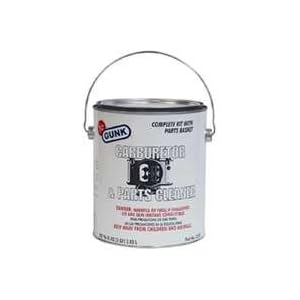
Conventional cleaning methods like throttle body cleaner aren’t very effective. The best method is a soak type cleaner used for carburetors. If you are into fixing motorcycles, jet skis, snowmobiles or anything else with a small carburetor, you probably have used the one gallon soak cleaners like Gunk or Berryman. One of the two should be available at your local auto parts store for $22-$29. Take the solenoid off the body and set it aside: the carb cleaner will damage some types of plastic parts. Soak the metal body in the carb cleaner overnight. There is a basket to set the parts in while they are soaking. When you finish soaking overnight, twist the stem of the IAB/IAC that sticks out while the blocker valve is seated. This removes any leftover deposits from the blocker valve seat. Rinse the part off with water and blow it dry with compressed air. The IAC/IAB should seal up nicely now. Once it has dried, try blowing through the bottom hole and it should block the air flow. Reassemble and reinstall to check it out.

Gunk Dip type carb & parts soaker:
21hb0QWbOeL._SL500_AA300_.jpg


Setting the base idle speed:
First of all, the idle needs to be adjusted to where the speed is at or below 600 RPM with the IAC disconnected. If you have a wild cam, you may have to raise this figure 100-150 RPM or so. Then the electrical signal through the IAC can vary the airflow through it under computer control. Remember that the IAC can only add air to increase the base idle speed set by the mechanical adjustment. The 600 RPM base idle speed is what you have after the mechanical adjustment. The IAC increases that speed by supplying more air under computer control to raise the RPM’s to 650-725 RPM’s. This figure will increase if you have a wild cam, and may end up between 800-950 RPM

Remember that changing the mechanical idle speed adjustment changes the TPS setting too.