
Ok so here we go...just installed a brand new FRPP GT40 intake, mac 70mm tb and egr spacer, brand new iac, act, egr valve and whatever the the other piece that goes with it, plugged the canister purge vaccum line, new tps... with all that said and done, and all set and tuned to the best i could, my idle still isnt doing so well... it'll be runnning fine, and my idle will hang when letting off the throttle for a few seconds and drop to regular idle as usual. Then all of the sudden it seems like my engine wants to bog down n the idle drops to 500 and come up to reg. idle and back down n a few times and then cut off. I have no idea what else to look at, with everything be new i'm at a loss. HELP PLZ
You are using an out of date browser. It may not display this or other websites correctly.
You should upgrade or use an alternative browser.
You should upgrade or use an alternative browser.
And once again an idle problem!!!
- Thread starter nxb88
- Start date


and CAPT. Obvious strikes again...i did read it, and already knew most of it...i was only asking so that maybe it would narrow down my search

DMAN302
My mom says thanks for the pearl necklace.
It will be one of the factors found in the sticky. Like with my vac leak...I checked...checked, checked...got mad when people said check again. Finally after the 7th time I found it. Did you get both ground straps back by the firewall secured (strap ground and hego or orange wire ground). Did you inspect EVRey inch of vac line, did you pull the codes?? could be ANYTHING. I had to set my idle likely 10 times by the whole proceedure before the computer and cam began to talk friendly.

Use the list in the sticky and start at the beginning and work your way through it. Good troubleshooting is an organized process that starts at A and ends at Z. Unless there is something so oblivious that you recognize it at first glance, you get to work your way through the process a step at a time.nxb88 said:and CAPT. Obvious strikes again...i did read it, and already knew most of it...i was only asking so that maybe it would narrow down my search
If you find something in the list that helps or you need more information on, make your post in the sticky. That way, in the future everyone will have the benefit of your experience.
ss93cobra
Founding Member
i was just out trying to set my tps and it wouldnt adjust...i drilled the holes n all n i couldnt get it down to .98, i wanted to stay anywhere between 1.18-1.25....so i tried adjusting my idle screw after i had just reset my idle for the 20th time...i checked every vaccum line over and over, and even used my other 88GT to reference it and it was exactly the same and lines were in same condition...and as for pulling codes, i did a maf conversion and as soon as it always spit codes @ me, but yet the car would be fineso there's no real way for me to check that way
Dump the codes and post them. They may have the exact information needed to fix your problem.nxb88 said:i was just out trying to set my tps and it wouldnt adjust...i drilled the holes n all n i couldnt get it down to .98, i wanted to stay anywhere between 1.18-1.25....so i tried adjusting my idle screw after i had just reset my idle for the 20th time...i checked every vaccum line over and over, and even used my other 88GT to reference it and it was exactly the same and lines were in same condition...and as for pulling codes, i did a maf conversion and as soon as it always spit codes @ me, but yet the car would be fineso there's no real way for me to check that way
A properly wired Mass Air conversion will not cause the computer to spit codes. Something must have gotten miswired in your car's conversion to Mass Air.
and the codes are...old codes 22, 95...fresh codes 22, 35, 51, 53, 54, 63, 95....and as for the maf conv., your right, i had forgotten i had wired wrong and was having a problem with codes then, but then went back n checked the wires and realized the problems
nxb88 said:and CAPT. Obvious strikes again...i did read it, and already knew most of it...i was only asking so that maybe it would narrow down my search
thne you should have posted this in THAT thread just like I have and tons of other people have.
nxb88 said:and the codes are...old codes 22, 95...fresh codes 22, 35, 51, 53, 54, 63, 95....and as for the maf conv., your right, i had forgotten i had wired wrong and was having a problem with codes then, but then went back n checked the wires and realized the problems
Code 22 MAP (vacuum) or BARO signal out of range. The MAP or BARO sensor is pretty much the same sensor for both Mass Air & Speed Density cars. The main difference is where it is connected. Mass Air cars vent it to the atmosphere, while Speed Density cars connect it to the intake manifold vacuum. Its purpose is to help set a baseline for the air/fuel mixture and changes in barometric pressure. The MAP or BAP sensor puts out a 5 volt square wave that changes frequency with variations in atmospheric pressure. The base is 154 HZ at 29.92" of mercury - dry sunny day at sea level, about 68-72 degrees. You need an oscilloscope or frequency meter to measure it.
Baro or MAP test using frequency meter - run the test key on engine off. The noise from the ignition system will likely upset the frequency meter. I used a 10 x oscilloscope probe connected from the frequency meter to the MAP/BAP to reduce the jitter in the meter's readout.
If it is defective, your air/fuel ratio will be off and the car’s performance & emissions will suffer
Code 35 EVR - EVP sensor signal is/was high – Bad sensor, or possible missing ground for EVR circuit. With the power off, measure the resistance between the black wire and battery ground. You should see less than 1 ohm. Check the same black wire on the EGR and MAP sensor. More than 1 ohm there and the wire is probably broken in the harness between the engine and the computer. The 10 pin connectors pass the black wire back to the computer, and can cause problems.
See the following website for some help from Tmoss (diagram designer) & Stang&2Birds (website host)
http://www.veryuseful.com/mustang/tech/engine/images/88-91eecPinout.gif
See http://fordfuelinjection.com/index.php?p=6 for more wiring help & 10 pin connector diagrams
Code 51 Engine Coolant Temperature (ECT) sensor signal is/was too high - Possible bad ECT sensor, or wiring.
Use Pin 46 on the computer for ground for both ECT & ACT to get most accurate readings.
Pin 7 on the computer - ECT signal in. at 176 degrees F it should be .80 volts
Voltages may be measured across the ECT by probing the connector from the rear. Use care in doing it so that you don't damage the wiring or connector.
Here's the table :
68 degrees F = 3.02 v
86 degrees F = 2.62 v
104 degrees F = 2.16 v
122 degrees F = 1.72 v
140 degrees F = 1.35 v
158 degrees F = 1.04 v
176 degrees F = .80 v
194 degrees F = .61
Note that all resistance tests must be done with power off. Measuring resistance with a circuit powered on will give false readings and possibly damage the meter.
Ohms measures at the computer with the computer disconnected, or at the sensor with the sensor disconnected.
50 degrees F = 58.75 K ohms
68 degrees F = 37.30 K ohms
86 degrees F = 27.27 K ohms
104 degrees F = 16.15 K ohms
122 degrees F = 10.97 K ohms
140 degrees F = 7.60 K ohms
158 degrees F = 5.37 K ohms
176 degrees F = 3.84 K ohms
194 degrees F = 2.80 K ohms
Code 53 - Throttle Position sensor too high – TPS – TPS out of adjustment, bad connections, missing signal ground, bad sensor.
Here’s a TPS tip I got from NoGo50…
When you installed the sensor make sure you place it on the peg right and then tighten it down properly. Loosen the back screw a tiny bit so the sensor can pivot and loosen the front screw enough so you can move it just a little in very small increments. I wouldn’t try to adjust it using marks. Set it at .97v-.99v, the closer to .99v the better. Just don’t go over .99, or you upset the fuel calibration and idle quality will suffer.
(copied from MustangMax, Glendale AZ)
1. Always adjust the TPS and Idle with the engine at operating temp. Dive it around for a bit if you can and get it nice and warm.
2. When you probe the leads of the TPS, do not use an engine ground, put the ground probe into the lead of the TPS. You should be connecting both meter probes to the TPS and not one to the TPS and the other to ground.
3. Always reset the computer whenever you adjust the TPS or clean/change any sensors. I just pull the battery lead for 10 minutes.
4. Check the procedure for your year, on my 90 I have to turn the idle screw until it just touches the tab, then insert a .010 feeler gauge and give it about one more turn. Then you adjust the TPS voltage to .98v, reset the computer. Start it up, if the idle is to low then turn the screw in until it is just right, then readjust the TPS voltage to .98v and reset the computer and start it up. The key is to adjust the TPS voltage and reset the computer whenever the idle screw is changed.
Check the black/white wire resistance. Connect one ohmmeter lead to the black/white wire on the TPS and one lead to the negative post on the battery. You should see less than .5 ohm, more than that indicates a problem. Always take resistance measurements with the circuit powered off.
Clean the 10 pin salt & pepper shaker connectors.

Code 54 – ACT sensor out of range. Broken or damaged wiring, bad ACT sensor. Note that that if the outside air temp is below 50 degrees F that the test for the ACT can be in error.
Check the resistance of the black/white wire to battery ground. If it is less than 1 ohm, it is good. If it is more than 1 ohm, the black/white wire has bad connections or a broken wire. Always take resistance measurements with the circuit powered off.
Then check the resistance of the ACT sender located in the #5 intake runner on most 5.0 stangs.
ACT & ECT test data:
The ACT & ECT have the same thermistor, so the table values are the same
Pin 7 on the computer - ECT signal in. at 176 degrees F it should be .80 volts
Pin 25 on the computer - ACT signal in. at 50 degrees F it should be 3.5 volts. It is a good number if the ACT is mounted in the inlet airbox. If it is mounted in the lower intake manifold, the voltage readings will be lower because of the heat transfer. Here's the table :
68 degrees F = 3.02 v
86 degrees F = 2.62 v
104 degrees F = 2.16 v
122 degrees F = 1.72 v
140 degrees F = 1.35 v
158 degrees F = 1.04 v
176 degrees F = .80 v
194 degrees F = .61
Ohms measures at the computer with the computer disconnected, or at the sensor with the sensor disconnected.
50 degrees F = 58.75 K ohms
68 degrees F = 37.30 K ohms
86 degrees F = 27.27 K ohms
104 degrees F = 16.15 K ohms
122 degrees F = 10.97 K ohms
140 degrees F = 7.60 K ohms
158 degrees F = 5.37 K ohms
176 degrees F = 3.84 K ohms
194 degrees F = 2.80 K ohms
Code 63 - Throttle Position Sensor (TPS) signal too low TPS. Vref missing (5 volt reference voltage supplied by the computer), bad connections or damaged wiring, TPS sensor failed, TPS sensor way out of adjustment. Use a DVM to check for 5 volts on the Orange wire. If it is missing, look for +5 volts at the Orange wire on the EGR or MAP sensor located on the firewall near the center of the car.
Here’s a TPS tip I got from NoGo50…
When you installed the sensor make sure you place it on the peg right and then tighten it down properly. Loosen the back screw a tiny bit so the sensor can pivot and loosen the front screw enough so you can move it just a little in very small increments. I wouldn’t try to adjust it using marks. Set it at .97v-.99v, the closer to .99v the better. Just don’t go over .99, or you upset the fuel calibration and idle quality will suffer.
(copied from MustangMax, Glendale AZ)
1. Always adjust the TPS and Idle with the engine at operating temp. Dive it around for a bit if you can and get it nice and warm.
2. When you probe the leads of the TPS, do not use an engine ground, put the ground probe into the lead of the TPS. You should be connecting both meter probes to the TPS and not one to the TPS and the other to ground.
3. Always reset the computer whenever you adjust the TPS or clean/change any sensors. I just pull the battery lead for 10 minutes.
4. Check the procedure for your year, on my 90 I have to turn the idle screw until it just touches the tab, then insert a .010 feeler gauge and give it about one more turn. Then you adjust the TPS voltage to .98v, reset the computer. Start it up, if the idle is to low then turn the screw in until it is just right, then readjust the TPS voltage to .98v and reset the computer and start it up. The key is to adjust the TPS voltage and reset the computer whenever the idle screw is changed.
Code 95 - the 95 code is because at one time or another the fuel pump relay hiccupped and didn't provide power the pump when the computer told it to run. Sometimes this is a one time thing, other times it is a no run or runs poorly condition.
To help troubleshoot the 95 code, follow this link for a wiring diagram http://www.autozone.com/images/cds/gif/large/0900823d80167162.gif
Using the diagram, check the red/black wire from the fuel pump relay: you should see 12 volts or so. If not, check the inertia switch: on a hatch it is on the drivers side by the taillight. Look for a black rubber plug that pops out: if you don't find it, then loosen up the plastic trim. Check for voltage on both sides of the switch. If there is voltage on both sides, then check the Pink/black wire on the fuel pump relay: it is the power feed to the fuel pump. No voltage there, check the Orange/lt blue wire, it is the power feed to the fuel pump relay & has a fuse link in it. Good voltage there & at the Pink/black wire, swap the relay.
Your primary problem is a missing signal ground for the sensors. The black/white wire is signal ground for all the sensors listed above. Read ALL the test paths and check the signal ground on all the sensors.
Diagram courtsey of Tmoss (diagram designer) & Stang&2Birds (website host)
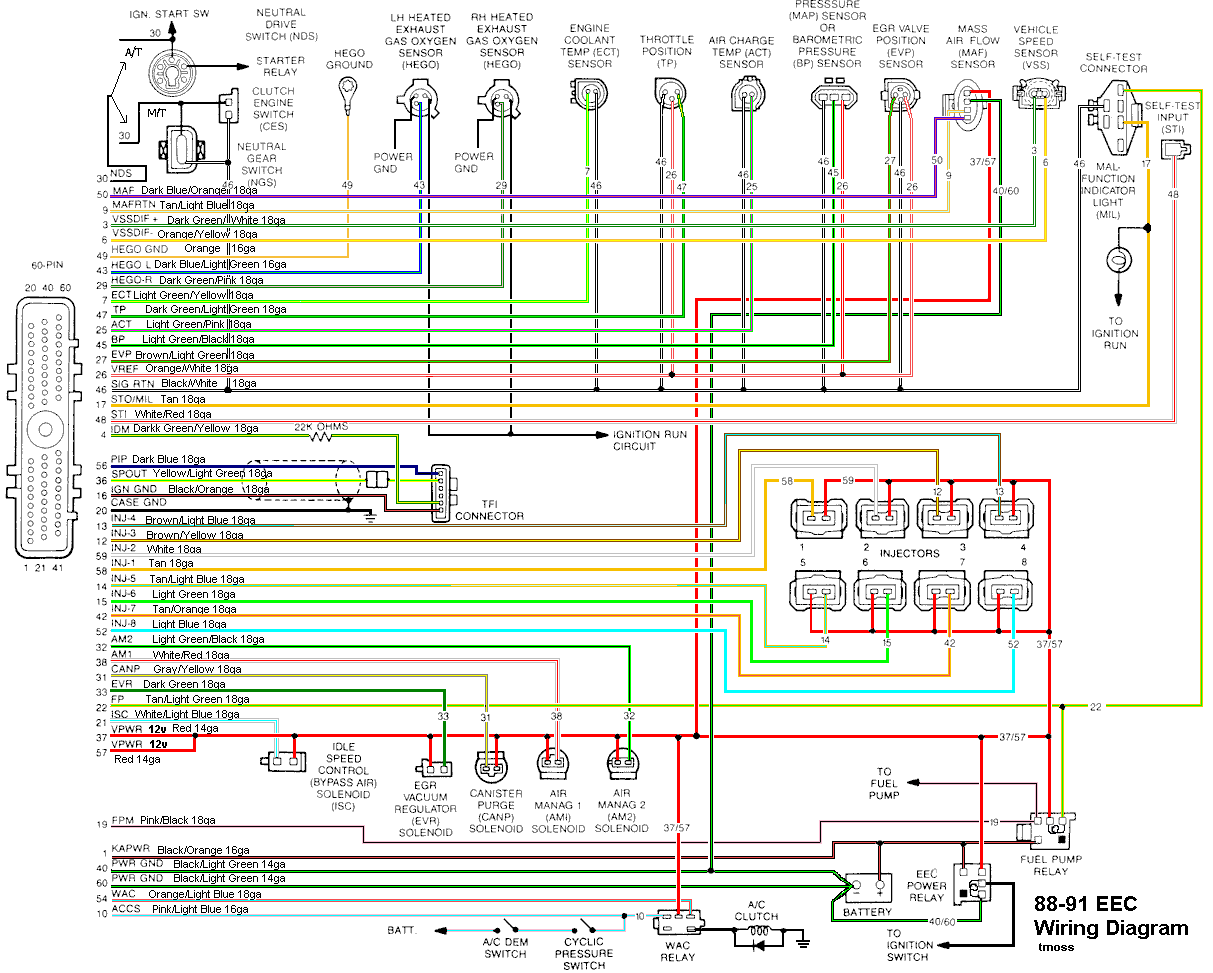
See the following website for some help from Tmoss (diagram designer) & Stang&2Birds (website host) for help on 88-90 wiring
http://www.veryuseful.com/mustang/tech/engine/images/IgnitionSwitchWiring.gif
http://www.veryuseful.com/mustang/tech/engine/images/fuel-alt-links-ign-ac.gif
http://www.veryuseful.com/mustang/tech/engine/images/88-91eecPinout.gif
ok so i finally got the tps adjusted, and pulled codes again. It stopped giving me code 63, but its now giving me 29 and 41 and still 53 which i figured would've been fixed since i finally got the tps adjusted.
Check the resistance between the black/white wire on the TPS and battery ground.nxb88 said:ok so i finally got the tps adjusted, and pulled codes again. It stopped giving me code 63, but its now giving me 29 and 41 and still 53 which i figured would've been fixed since i finally got the tps adjusted.
You should have less than 1 ohm. The missing signal ground will cause code 53.
Note that all resistance tests must be done with power off.
Measuring resistance with a circuit powered on will give false readings
and possibly damage the meter.
Code 29 - Vehicle Speed Sensor (VSS) is an electronic sender mounted on the speedo pickup gear on the trans. It works the cruse control for both 5 speed and auto trans cars. The VSS is used to tell the computer to speed up the idle as you slow to a stop. This helps keep the engine from stalling when you slow down for a stop sign or stop light.
Check to see if the electrical connector is plugged into it. Clean the connector & contacts with non flammable brake parts cleaner prior to replacing the sensor, as that may fix the problem. The sensor cost is under $30 and it is easy to replace.
Code 41 or 91 - O2 indicates system lean. Look for a vacuum leak or failing O2 sensor.
The computer sees a lean mixture signal coming from the O2 sensors and tries to compensate by adding more fuel.
In your attempts to fix things, you may have created a vacuum leak. The vacuum tubing is old and prone to leaks, so look closely at all of it.
The following is a Quote from Charles O. Probst, Ford fuel Injection & Electronic Engine control:
"When the mixture is lean, the exhaust gas has oxygen, about the same amount as the ambient air. So the sensor will generate less than 400 Millivolts. Remember lean = less voltage.
When the mixture is rich, there's less oxygen in the exhaust than in the ambient air , so voltage is generated between the two sides of the tip. The voltage is greater than 600 millivolts. Remember rich = more voltage.
Here's a tip: the newer the sensor, the more the voltage changes, swinging from as low as 0.1 volt to as much as 0.9 volt. As an oxygen sensor ages, the voltage changes get smaller and slower - the voltage change lags behind the change in exhaust gas oxygen.
Because the oxygen sensor generates its own voltage, never apply voltage and never measure resistance of the sensor circuit. To measure voltage signals, use an analog voltmeter with a high input impedance, at least 10 megohms. Remember, a digital voltmeter will average a changing voltage." End Quote
Measuring the O2 sensor voltage at the computer will give you a good idea of how well they are working. You'll have to pull the passenger side kick panel off to gain access to the computer connector. Remove the plastic wiring cover to get to the back side of the wiring. Use a safety pin or paper clip to probe the connections from the rear. The computer pins are 29 (LH O2 with a dark green/pink wire) and 43 (RH O2 with a dark blue/pink wire). Use the ground next to the computer to ground the voltmeter.
Most of the common multimeters have a resistance scale. Be sure the O2 sensors are disconnected and measure the resistance from the O2 sensor body harness to the pins on the computer.
Note that all resistance tests must be done with power off. Measuring resistance with a circuit powered on will give false readings and possibly damage the meter. Do not attempt to measure the resistance of the O2 sensors, it may damage them
The O2 sensor ground (orange wire with a ring terminal on it) is in the wiring harness for the fuel injection wiring. I grounded mine to one of the intake manifold bolts
ok so i was out testing and repulling codes and what not and realized that the vaccum line to my egr is broken...unfortunately i can't run to the store to get a new line obviously since my cars running like a pos, so before i get my hopes up when i can go, and as stupid of a question as this is, could this be the cause of my code 35?
Not likely...
Code 35 EVR - EVP sensor signal is/was high – Bad sensor, or possible missing ground for EVR circuit. With the power off, measure the resistance between the black/white wire and battery ground. You should see less than 1 ohm. Check the same black /white wire on the TPS and MAP sensor. More than 1 ohm there and the wire is probably broken in the harness between the engine and the computer. The 10 pin connectors pass the black/white wire back to the computer, and can cause problems.
See the following website for some help from Tmoss (diagram designer) & Stang&2Birds (website host)
http://www.veryuseful.com/mustang/tech/engine/images/88-91eecPinout.gif
See http://fordfuelinjection.com/index.php?p=6 for more wiring help & 10 pin connector diagrams
Code 35 EVR - EVP sensor signal is/was high – Bad sensor, or possible missing ground for EVR circuit. With the power off, measure the resistance between the black/white wire and battery ground. You should see less than 1 ohm. Check the same black /white wire on the TPS and MAP sensor. More than 1 ohm there and the wire is probably broken in the harness between the engine and the computer. The 10 pin connectors pass the black/white wire back to the computer, and can cause problems.
See the following website for some help from Tmoss (diagram designer) & Stang&2Birds (website host)
http://www.veryuseful.com/mustang/tech/engine/images/88-91eecPinout.gif
See http://fordfuelinjection.com/index.php?p=6 for more wiring help & 10 pin connector diagrams

Black1987Stang
Active Member
Similar threads
- Replies
- 9
- Views
- 427
- Replies
- 4
- Views
- 1K
- Replies
- 17
- Views
- 798

- Replies
- 11
- Views
- 641

- Replies
- 2
- Views
- 418