
Guys my next mod for my car is gonna be cams. I have what is done in my SIG and I would still like to pass smog with cams in my car. Is there any cams you guys would suggest. I tried contacting MPH but i never received an email back from them. let me know what you guys think and please make suggestions on what I should get.
You are using an out of date browser. It may not display this or other websites correctly.
You should upgrade or use an alternative browser.
You should upgrade or use an alternative browser.
Cams for Vortech in CA
- Thread starter TropicMustang
- Start date
blubullett
Member
I saw the smog printout for a 2002 gt with comp cams stage ones and they passed with flying colors. All the numbers were in the bottom ten percent of the readings. The only thing is your tune is going to have to be pretty good so go to a good tuner. Mine was as clean as can be with the procharger and I went to speedfreaks in tracy and am very happy with my tune.
With stage one cams will i even notice a big difference? Like idle and lope will u be able to tell it's cammed and how much power would i gain. The idle dosent need to be drastic i just want people to know its cammed but not so much to an extent to where it wont pass numbers.
blubullett
Member
Im not too sure how much different it is going to sound cause my buddy that has them has long tubes with 2 cats and no mufflers so it sounds nuts already. He doesnt smog it anymore but passed with the cams in the past. I would think it is worth thirty or forty hp because of the blower. Do you have a smog hookup? Ususlly like 300 bucks for a fake certificate (only have to pay every two years) and then you can get the stage twos and have a nice lope and a bunch of power.
I would have to try and find a place to hook me up. I personally don't know of any but one of my buddies may. That would be a big player in what cams i would get then.

I saw the smog printout for a 2002 gt with comp cams stage ones and they passed with flying colors. All the numbers were in the bottom ten percent of the readings. The only thing is your tune is going to have to be pretty good so go to a good tuner. Mine was as clean as can be with the procharger and I went to speedfreaks in tracy and am very happy with my tune.
What did they charge for the tune and dyno time? Tracy isn't too far away. It would be worth the drive for me if they had good prices.
blubullett
Member
It was a couple years ago so Im not sure what they charged. But Im not rich, just a poor electrician, so it probably wasnt too bad. Their number is 209-609-0355 and they are pretty cool. The shop was full of stangs when I last went. You could probably pm darkside03gt or something like that on stangnet, he has a friend named Will at Vindicatedtuning who could probably hook you up. He also knows a smog guy.

CobraRed_96_GT
Active Member
I got basically a stage 2.25 blower cam and I live in Cali, plan to smog with em in.
Stage 1 cams are for N/A - not worth it. They have more overlap in N/A cams anyways which makes the hydrocarbons go up. I'd suggest CMS stage 2.5 blower cams or crower stage 2's. I've seen both personally with a centri blower and they are quite nice. I passed with my stage 1 N/A's cleaner than a civic. Just bolt the stock H on and worse comes to worse borrow a 96-98 guy's who have 6 cats.
If you're thinking about a cam and you can find info on it like lobe centerline or cam advance i can give you an idea of how hard it'd be to smog based on overlap and exhaust valve seat timing.
Stage 1 cams are for N/A - not worth it. They have more overlap in N/A cams anyways which makes the hydrocarbons go up. I'd suggest CMS stage 2.5 blower cams or crower stage 2's. I've seen both personally with a centri blower and they are quite nice. I passed with my stage 1 N/A's cleaner than a civic. Just bolt the stock H on and worse comes to worse borrow a 96-98 guy's who have 6 cats.
If you're thinking about a cam and you can find info on it like lobe centerline or cam advance i can give you an idea of how hard it'd be to smog based on overlap and exhaust valve seat timing.
blubullett
Member
I am also trying to stay with my stock springs as i do still have the stock short block and don't plan on reving the thing super high. Thats why im kinda stuck in between and don't know what to get. I really don't want something that's gonna put my motor at risk.
Midnight2V
Member
Not trying to rain on your parade, but you have a pypes offroad mid-pipe listed in your mods. To my knowledge that means no catalytic converters. I don't know if the addition of those cams (or any cams for that matter) won't cause a smog test failure. Have you already had it smog tested with that mid-pipe? Also, I thought that under CA law, all road vehicles produced after 1977 had to have catalytic converters equipped at all times to be legal. I am a former resident of CA, but it's been a while. If any of those statements are no longer true I apologize in advance. I just don't want you to get your mods done and then your car fails regardless of what cam you have paid to put in it. If you still have your stock mid-pipe, i would re-install it for your inspection and then put the pypes unit back in place. A little switcheroo if you will
I hope this helps.
I hope this helps.
I already know about the mid-pipe. Ive had to swap the stock one in and out once to get the smog done on it, and yes you are supposed to have cats on a car in CA. . I dont mind swapping it in and out every other year. Just gives me another reason to replace something under the car when i have it up on the stands.
. I dont mind swapping it in and out every other year. Just gives me another reason to replace something under the car when i have it up on the stands.Midnight2V
Member
Ok, now that I understand that, I went and looked up the overlaps. I have plenty of base knowledge, but I will keep it simple for everyone who decides to view.
First, LSA doesn't tell the whole story as far as overlaps are concerned, you also have to look at duration profiles, and the advance built into the cam as well. This will allow you to look at specific valve events, specifically where IN THE CRANK CYCLE, (not the camshaft cycle) the exhaust valve closes compared to where the intake valve opens. Fortunately, Comp makes this very easy as they list valve events right on the technical specifications page for each cam....kudos to them.
So here you go:
The xe262ah has only 2* of total overlap between exhaust and intake. Intake opens at 4*BTDC and the exhaust closes at 2*BTDC.
For comparison, the xe270ah has 10* of total overlap. intake opens at 8* BTDC, and ehaust closes at 2*ATDC.
What this means is that for an increase in overlap, there is the opportunity for more of your intake charge to go out the exhaust before the exhaust valve closes. This is more prevalent in boosted applications than NA. However, lots of guys pass smog with the 270 setup when they have an otherwise stock setup. You will have a very apparent lope at idle, I don't know if that could get you busted or not.
The thing to remember is that the heat in the cats is what will burn off your excess emissions. Those 6 converters go a long way, on top of that the 4.6 has always been a stellar low emissions platform. The downside is any exhaust components that bleed heat prior to the cats like headers will reduce the cats ability to burn off your pollutants. Stock manifolds are designed primarily to retain heat for the cats. If you have uncoated headers, you can wrap them but you shorten their lifespan.
It should be noted the 270's will make significantly more power above 5300 RPM and lose very little lower in the band. In combination with that Vortech on your car, it will probably continue building power to 7000 and beyond.
If you are torn between the different profiles, I would call Comp tech support and ask them about emissions. Their service is top notch and they field these kind of questions all the time. One stellar mark for Comp is tech support can also design a custom grind for your setup at no additional cost.
By all means, don't restrict yourself to Comp as possibilities, it may be that there is a better cam for your needs. There are plenty of quality companies out there, I just happen to have been a supporter of Comp since I was a newbie.
That said, with that vortech unit, I am hoping you have a built bottom end....if not I would leave the power levels where they are at until you can build the bottom end. If you already do, I would take advantage of it, use the 270's (or a similar stage 2 cam) and spin it to at least 6500.
I hope this helps you out with your decision. Let me know if you need any more info.
First, LSA doesn't tell the whole story as far as overlaps are concerned, you also have to look at duration profiles, and the advance built into the cam as well. This will allow you to look at specific valve events, specifically where IN THE CRANK CYCLE, (not the camshaft cycle) the exhaust valve closes compared to where the intake valve opens. Fortunately, Comp makes this very easy as they list valve events right on the technical specifications page for each cam....kudos to them.
So here you go:
The xe262ah has only 2* of total overlap between exhaust and intake. Intake opens at 4*BTDC and the exhaust closes at 2*BTDC.
For comparison, the xe270ah has 10* of total overlap. intake opens at 8* BTDC, and ehaust closes at 2*ATDC.
What this means is that for an increase in overlap, there is the opportunity for more of your intake charge to go out the exhaust before the exhaust valve closes. This is more prevalent in boosted applications than NA. However, lots of guys pass smog with the 270 setup when they have an otherwise stock setup. You will have a very apparent lope at idle, I don't know if that could get you busted or not.
The thing to remember is that the heat in the cats is what will burn off your excess emissions. Those 6 converters go a long way, on top of that the 4.6 has always been a stellar low emissions platform. The downside is any exhaust components that bleed heat prior to the cats like headers will reduce the cats ability to burn off your pollutants. Stock manifolds are designed primarily to retain heat for the cats. If you have uncoated headers, you can wrap them but you shorten their lifespan.
It should be noted the 270's will make significantly more power above 5300 RPM and lose very little lower in the band. In combination with that Vortech on your car, it will probably continue building power to 7000 and beyond.
If you are torn between the different profiles, I would call Comp tech support and ask them about emissions. Their service is top notch and they field these kind of questions all the time. One stellar mark for Comp is tech support can also design a custom grind for your setup at no additional cost.
By all means, don't restrict yourself to Comp as possibilities, it may be that there is a better cam for your needs. There are plenty of quality companies out there, I just happen to have been a supporter of Comp since I was a newbie.
That said, with that vortech unit, I am hoping you have a built bottom end....if not I would leave the power levels where they are at until you can build the bottom end. If you already do, I would take advantage of it, use the 270's (or a similar stage 2 cam) and spin it to at least 6500.
I hope this helps you out with your decision. Let me know if you need any more info.

Green&GoldGT
Member
You'd be fine with even a CMS stage 1 N/A cam. Even though you have a blower, wider lsa's aren't recommended until you have high boost levels, that's when it becomes a difference. There was a guy on here a while back that made about 440hp to the wheels with a blower, CMS stage 1 specd cams, and bolt ons. I think it was even only at 8 psi.
CobraRed_96_GT
Active Member
Agreed, overlap is more important for high boost levels. And it varies on what's preferred based on what type of FI you're using. But if you're going to get cams, get blower cams otherwise stick with stock for now. You don't need cams to make good boost power, but if you do - get some blower cams and turn up the boost. Blower cams should theoretically be easier to smog than N/A cam anyways.
You don't need to go to a cam makers website and try to find schedules, just need cam advance or intake centerline - this is what I do:
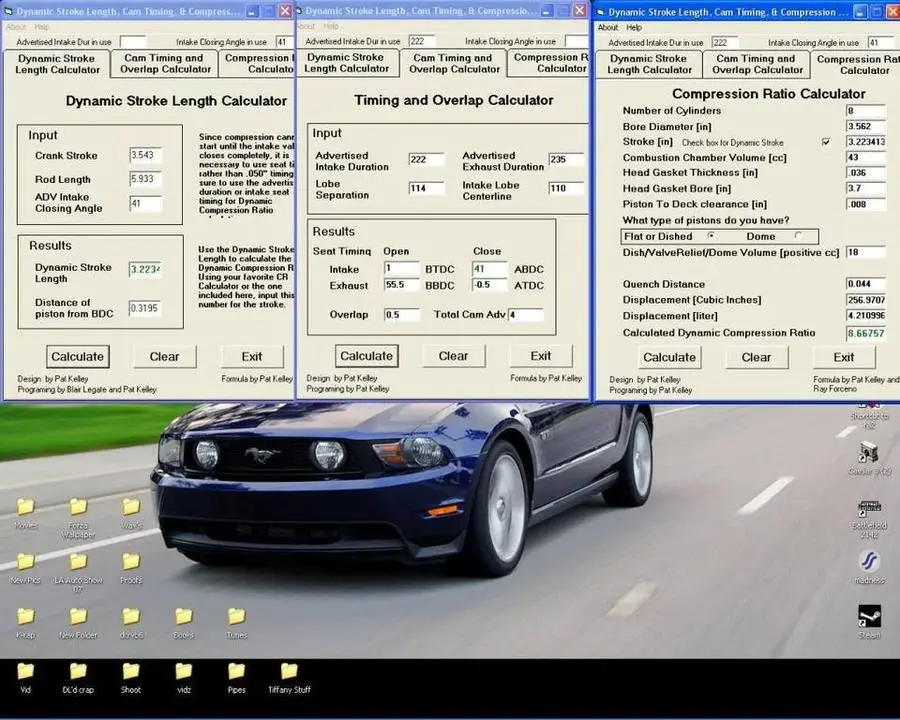
I don't have to smog for quite awhile, so we wont be seeing how they do anytime soon. But like I said, my stage 1's passed insanely clean.
You don't need to go to a cam makers website and try to find schedules, just need cam advance or intake centerline - this is what I do:
I don't have to smog for quite awhile, so we wont be seeing how they do anytime soon. But like I said, my stage 1's passed insanely clean.
So does anyone have blower cams that don't require a spring upgrade? I thought I have seen CMS stage one blower cams but im not sure. Also i don't have a built bottom end. If i still do, do blower cams will i still gain power without reving it higher since it's the stock bottom end? I will probably give comp cams a call tomorrow.
CobraRed_96_GT
Active Member
Springs will be needed with any blower cam. And honestly even a stage 1 n/a cam with boost should have springs, springs are a good idea with psi.So does anyone have blower cams that don't require a spring upgrade? I thought I have seen CMS stage one blower cams but im not sure. Also i don't have a built bottom end. If i still do, do blower cams will i still gain power without reving it higher since it's the stock bottom end? I will probably give comp cams a call tomorrow.
Blower cams will actually help you make boost lower in the rpms depending on what you get.
So basically I will be getting springs and stage two blower cams. One last question. Can i still get the stage II blower cams and not rev it past stock redline, and will i still gain power. Im only asking this because I have seen people with stock bottom ends have blower cams and they don't rev it past redline but they still gain a lot of power because they are not forged.. Thank you for all the insight everyone.
Midnight2V
Member
Save your money. By the time you buy your cams and springs, pay for the install, and then the tune, you have nearly spent the same amount as purchasing a forged crank, rods, pistons, and rings.
Cost for CAMS:
$599 ie $600 for cams
$199 ie $200 for springs
$300 for the install
$300 for dynotime plus tuner fee
Total - $1400
Cost for Forged rotating assembly components:
$600 for a new Cobra Crankshaft <$400 at online auctions
$500 for Pistons
$500 for rods
$200 for rings
Total - $1600-1800
Build it safe and build it right...Please, be patient - if you go forged first, just turn up the boost a few pounds and you will have the power the cams would have given you at the cost of a pulley. If you put those cams in with how you are now, it makes you that much more likely to have something bad happen. Throwing a rod through the block will set you back a lot more than taking your time to build it right.
As to a set of blower cams increasing boost down low being a positive selling point, that is just ridiculous. A good set of cams should actually give you a boost DECREASE across the entire RPM range. Boost does not mean power, it is more an expression of how much work the supercharger is doing. CFM does not necessarily mean power, but is a factor in potential power. This applies to heads, intake, throttlebody, etc. Even increasing exhaust flow will lower boost. The only things that will increase boost at any given RPM are an increase in blower speed compared to engine speed, increasing one of the many efficiencies of the supercharger, or introducing a restriction into the inlet system after the supercharger.
A supercharger is a linear speed pump whether it is centrifugal or positive displacement. This means, barring belt slip, it is spinning at some mathmatical ratio of engine speed. All superchargers and turbos, negating leakage, are designed to move a set amount of air through their casing per revolution of their impeller. Different designs have different characteristics of leakage. This affects just one of the many different efficiencies associated with a particular design.
If the supercharger is flowing X amount of air and the engine injests Y amount at atmospheric pressure then the manifold pressure will be X/Y and is easily expressed in BARs (that is how they measure boost in europe). If you increase the air flow capacity of the engine - then Y goes up. So boost will actually go DOWN even though you may be flowing more air with less work done by the supercharger. Strange but true. You can see it very easily if you compare two sets of cylinder heads that have different flow numbers. The higher flowing set will nearly always register less boost, all other things being equal.
Sorry about the rant, just trying to look out for enthusiasts and help fix concept errors. Anybody trying to sell an item other than a supercharger pulley or a different supercharger, on the basis that it raises boost with everything else being the same, is taking you for a ride.
Hope this helps.
Cost for CAMS:
$599 ie $600 for cams
$199 ie $200 for springs
$300 for the install
$300 for dynotime plus tuner fee
Total - $1400
Cost for Forged rotating assembly components:
$600 for a new Cobra Crankshaft <$400 at online auctions
$500 for Pistons
$500 for rods
$200 for rings
Total - $1600-1800
Build it safe and build it right...Please, be patient - if you go forged first, just turn up the boost a few pounds and you will have the power the cams would have given you at the cost of a pulley. If you put those cams in with how you are now, it makes you that much more likely to have something bad happen. Throwing a rod through the block will set you back a lot more than taking your time to build it right.
As to a set of blower cams increasing boost down low being a positive selling point, that is just ridiculous. A good set of cams should actually give you a boost DECREASE across the entire RPM range. Boost does not mean power, it is more an expression of how much work the supercharger is doing. CFM does not necessarily mean power, but is a factor in potential power. This applies to heads, intake, throttlebody, etc. Even increasing exhaust flow will lower boost. The only things that will increase boost at any given RPM are an increase in blower speed compared to engine speed, increasing one of the many efficiencies of the supercharger, or introducing a restriction into the inlet system after the supercharger.
A supercharger is a linear speed pump whether it is centrifugal or positive displacement. This means, barring belt slip, it is spinning at some mathmatical ratio of engine speed. All superchargers and turbos, negating leakage, are designed to move a set amount of air through their casing per revolution of their impeller. Different designs have different characteristics of leakage. This affects just one of the many different efficiencies associated with a particular design.
If the supercharger is flowing X amount of air and the engine injests Y amount at atmospheric pressure then the manifold pressure will be X/Y and is easily expressed in BARs (that is how they measure boost in europe). If you increase the air flow capacity of the engine - then Y goes up. So boost will actually go DOWN even though you may be flowing more air with less work done by the supercharger. Strange but true. You can see it very easily if you compare two sets of cylinder heads that have different flow numbers. The higher flowing set will nearly always register less boost, all other things being equal.
Sorry about the rant, just trying to look out for enthusiasts and help fix concept errors. Anybody trying to sell an item other than a supercharger pulley or a different supercharger, on the basis that it raises boost with everything else being the same, is taking you for a ride.
Hope this helps.
CobraRed_96_GT
Active Member
Wow, sounds like you're just spouting off a bunch of obvious stuff to make you argument sound articulate. I never said it'd make more boost, i said it can help make boost lower in the rpm's depending on the cam. Seriously, re-read my post. If my cam has a low duration and large overlap like my current stage 1's do and i switch to a blower cam with more duration but less overlap it'll help build boost down low but im not saying it'll make more peak boost. And, given, most blower cams (especially for centri's) push power up higher - that's why I said depending on the cam.Save your money. By the time you buy your cams and springs, pay for the install, and then the tune, you have nearly spent the same amount as purchasing a forged crank, rods, pistons, and rings.
Cost for CAMS:
$599 ie $600 for cams
$199 ie $200 for springs
$300 for the install
$300 for dynotime plus tuner fee
Total - $1400
Cost for Forged rotating assembly components:
$600 for a new Cobra Crankshaft <$400 at online auctions
$500 for Pistons
$500 for rods
$200 for rings
Total - $1600-1800
Build it safe and build it right...Please, be patient - if you go forged first, just turn up the boost a few pounds and you will have the power the cams would have given you at the cost of a pulley. If you put those cams in with how you are now, it makes you that much more likely to have something bad happen. Throwing a rod through the block will set you back a lot more than taking your time to build it right.
As to a set of blower cams increasing boost down low being a positive selling point, that is just ridiculous. A good set of cams should actually give you a boost DECREASE across the entire RPM range. Boost does not mean power, it is more an expression of how much work the supercharger is doing. CFM does not necessarily mean power, but is a factor in potential power. This applies to heads, intake, throttlebody, etc. Even increasing exhaust flow will lower boost. The only things that will increase boost at any given RPM are an increase in blower speed compared to engine speed, increasing one of the many efficiencies of the supercharger, or introducing a restriction into the inlet system after the supercharger.
A supercharger is a linear speed pump whether it is centrifugal or positive displacement. This means, barring belt slip, it is spinning at some mathmatical ratio of engine speed. All superchargers and turbos, negating leakage, are designed to move a set amount of air through their casing per revolution of their impeller. Different designs have different characteristics of leakage. This affects just one of the many different efficiencies associated with a particular design.
If the supercharger is flowing X amount of air and the engine injests Y amount at atmospheric pressure then the manifold pressure will be X/Y and is easily expressed in BARs (that is how they measure boost in europe). If you increase the air flow capacity of the engine - then Y goes up. So boost will actually go DOWN even though you may be flowing more air with less work done by the supercharger. Strange but true. You can see it very easily if you compare two sets of cylinder heads that have different flow numbers. The higher flowing set will nearly always register less boost, all other things being equal.
Sorry about the rant, just trying to look out for enthusiasts and help fix concept errors. Anybody trying to sell an item other than a supercharger pulley or a different supercharger, on the basis that it raises boost with everything else being the same, is taking you for a ride.
Hope this helps.
I don't know why you're bringing up CFM and boost I wasn't even referring to any of that.
I can tell you've done a lot of reading, but no need to try to lecture someone who's bought N/A cams, bought superhcarger cams, and installed them/tuned them about what they do.
Coming from someone who built their own shortblock as well, I can tell you your math might be a bit off too.
You left out a few things, like how you added labor on the cam install but left it out for the shortblock when that's the most expensive part being that you're doing more work than an engine swap since you need to swap + dissasemble and assemble.
"Cost for Forged rotating assembly components:
$600 for a new Cobra Crankshaft <$400 at online auctions
$500 for Pistons
$500 for rods
$200 for rings
Total - $1600-1800"
is more like:
$600 for a new Cobra Crankshaft <$400 at online auctions
$500-600 for Pistons
$430-550 for rods
$140 for rings
$95 for main bearings
$90 for rod bearings
$150 for balancing assembly
$50 for new sidebolts or MMR sidebolts
$45-110 for new main bolts or ARP mains
$120-250 for New headgasket and head install kit or + ARP headstuds
$400-650 For professional assembly of shortblock
$900-1600 for professional to do the engine swap
= $2890 (if you're lucky) or $3885 with more realistic prices and labor plus some wise extras.
Then if you have some miles on your block it's $300 for a bore/torque plate hone. If you tell someone a forged shortblock build is similar in prices to cams, their going to be pretty pissed off half way through doing the build.
And let me say I'm not implying you don't have any experience or have useful info, just that you're aguing against a straw man fallacy you created - not anything I brought up.
Similar threads
- Replies
- 0
- Views
- 83
- Replies
- 41
- Views
- 1K
- Replies
- 6
- Views
- 218

- Replies
- 17
- Views
- 500
