Car Jerking/losing Power After First Starting To Drive

plantmeister

Active Member
Dec 17, 2016
87
6
28
FL
When I first start the car, its good and gets going fine. I drive it for about a minute, whether it's cold or warm already, and then it starts shuddering and jerking and losing power, like it's going to stall. If I gas it, it hesitates and eventually pulls itself out of it. It does this for about 30 seconds and then stops after I continue to drive it. I haven't noticed anything unusual happening on the gauges while this goes on.

Herein lies a self diagnosing problem; the piece on the bottom right corner of my gauge cluster that would display a check engine light on my 88 LX dash was gone when I got this car. So if it's throwing codes, I have no idea.

My car has been in the shop for almost 2 months and I just now got it back. I've had this problem before, but the mechanic discovered my ignition switch was bad and replaced it. I thought that would fix the problem. I replaced the throttle position sensor, and the egr valve and its components. The fuel system is very new, also. I'm stumped because it seems intermittent and has a very specific period where it does this. Does anyone have any ideas?
 
When I first start the car, its good and gets going fine. I drive it for about a minute, whether it's cold or warm already, and then it starts shuddering and jerking and losing power, like it's going to stall. If I gas it, it hesitates and eventually pulls itself out of it. It does this for about 30 seconds and then stops after I continue to drive it. I haven't noticed anything unusual happening on the gauges while this goes on.

Herein lies a self diagnosing problem; the piece on the bottom right corner of my gauge cluster that would display a check engine light on my 88 LX dash was gone when I got this car. So if it's throwing codes, I have no idea.

My car has been in the shop for almost 2 months and I just now got it back. I've had this problem before, but the mechanic discovered my ignition switch was bad and replaced it. I thought that would fix the problem. I replaced the throttle position sensor, and the egr valve and its components. The fuel system is very new, also. I'm stumped because it seems intermittent and has a very specific period where it does this. Does anyone have any ideas?
Dump codes sticky

Look at the top of the 5.0 Tech forum where the sticky threads are posted. One of them is how to dump the computer codes. Codes may be present even if the CEL (Check Engine Light) isn’t on. You don’t need a code reader or scanner – all you need is a paper clip, or if your lady friend has a hair pin, that will do the job.
I highly suggest that you read it and follow the instructions to dump the codes. http://www.stangnet.com/mustang-forums/threads/how-to-pull-codes-from-eec4.889006/
 
Okay, I got a friend with a computer to run the codes and it pulled these two:
34 - EGr valve not open
42 - fuel system rich more than 10 seconds

I just replaced my EGR valve, so I don't understand why it's getting stuck. Is there something else around it that could be causing this problem?
 
Correct definitions for the codes you have are the first step in resolving your problems...


Code 34 Or 334 - EGR voltage above closed limit –

Revised 26-Sep-2011 to add EGR cleaning and movement test for pintle when vacuum is applied to diaphragm

Failed sensor, carbon between EGR pintle valve and seat holding the valve off its seat. Remove the EGR valve and clean it with carbon remover. Prior to re-installing see if you can blow air through the flange side of the EGR by mouth. If it leaks, there is carbon stuck on the pintle valve seat clean or, replace the EGR valve ($85-$95).

Recommended procedure for cleaning the EGR:
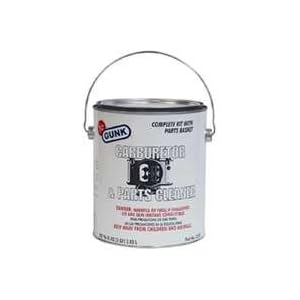
Conventional cleaning methods like throttle body cleaner aren’t very effective. The best method is a soak type cleaner used for carburetors. If you are into fixing motorcycles, jet skis, snowmobiles or anything else with a small carburetor, you probably have used the one gallon soak cleaners like Gunk or Berryman. One of the two should be available at your local auto parts store for $22-$29. There is a basket to set the parts in while they are soaking. Soak the metal body in the carb cleaner overnight. Don’t immerse the diaphragm side, since the carb cleaner may damage the diaphragm. If you get any of the carb cleaner on the diaphragm, rinse it off with water immediately. Rinse the part off with water and blow it dry with compressed air. Once it has dried, try blowing through the either hole and it should block the air flow. Do not put parts with water on them or in them in the carb cleaner. If you do, it will weaken the carb cleaner and it won’t clean as effectively.

Gunk Dip type carb & parts soaker:
21hb0QWbOeL._SL500_AA300_.jpg


If you have a handy vacuum source, apply it to the diaphragm and watch to see if the pintle moves freely. Try blowing air through either side and make sure it flows when the pintle retracts and blocks when the pintle is seated. If it does not, replace the EGR.


If the blow by test passes, and you have replaced the sensor, then you have electrical ground problems. Check the resistance between the black/white wire on the MAP/BARO sensor and then the black/white wire on the EGR and the same wire on the TPS. It should be less than 1.5 ohm. Next check the resistance between the black/white wire and the negative battery post. It should be less than 1.5 ohm.

Note that all resistance tests must be done with power off. Measuring resistance with a circuit powered on will give false readings and possibly damage the meter.

Let’s put on our Inspector Gadget propeller head beanies and think about how this works:
The EGR sensor is a variable resistor with ground on one leg and Vref (5 volts) on the other. Its’ resistance ranges from 4000 to 5500 Ohms measured between Vref & ground, depending on the sensor. The center connection of the variable resistor is the slider that moves in response to the amount of vacuum applied. The slider has some minimum value of resistance greater than 100 ohms so that the computer always sees a voltage present at its’ input. If the value was 0 ohms, there would be no voltage output. Then the computer would not be able to distinguish between a properly functioning sensor and one that had a broken wire or bad connection. The EGR I have in hand reads 700 Ohms between the slider (EPV) and ground (SIG RTN) at rest with no vacuum applied. The EGR valve or sensor may cause the voltage to be above closed limits due to the manufacturing tolerances that cause the EGR sensor to rest at a higher position than it should.

The following sensors are connected to the white 10 pin connector (salt & pepper engine harness connectors)
attachment.php


This will affect idle quality by diluting the intake air charge


Code 42 & 92 (engine running) System rich - Fuel control or (memory) System was rich for 15 seconds or more (no HO2S switching) - Fuel control. Look for leaking injectors, fuel pressure too high, cylinder(s) not firing due to bad ignition.

Code 42 passenger side sensor, as viewed from the driver's seat
Code 92 is the driver side sensor, as viewed from the driver's seat..

The following is a Quote from Charles O. Probst, Ford fuel Injection & Electronic Engine control:
"When the mixture is lean, the exhaust gas has oxygen, about the same amount as the ambient air. So the sensor will generate less than 400 Millivolts. Remember lean = less voltage.

When the mixture is rich, there's less oxygen in the exhaust than in the ambient air , so voltage is generated between the two sides of the tip. The voltage is greater than 600 millivolts. Remember rich = more voltage.

Here's a tip: the newer the sensor, the more the voltage changes, swinging from as low as 0.1 volt to as much as 0.9 volt. As an oxygen sensor ages, the voltage changes get smaller and slower - the voltage change lags behind the change in exhaust gas oxygen.

Because the oxygen sensor generates its own voltage, never apply voltage and never measure resistance of the sensor circuit. To measure voltage signals, use an analog voltmeter with a high input impedance, at least 10 megohms. Remember, a digital voltmeter will average a changing voltage." End Quote

Testing the O2 sensors 87-93 5.0 Mustangs
Measuring the O2 sensor voltage at the computer will give you a good idea of how well they are working. You'll have to pull the passenger side kick panel off to gain access to the computer connector. Remove the plastic wiring cover to get to the back side of the wiring. Use a safety pin or paper clip to probe the connections from the rear.


Backside view of the computer wiring connector:
a9x-series-computer-connector-wire-side-view-gif.71316


87-90 5.0 Mustangs:
Computer pin 43 Dark blue/Lt green – LH O2 sensor
Computer pin 29 Dark Green/Pink – RH O2 sensor
The computer pins are 29 (LH O2 with a dark green/pink wire) and 43 (RH O2 with a dark blue/pink wire). Use the ground next to the computer to ground the voltmeter. The O2 sensor voltage should switch between .2-.9 volt at idle.

91-93 5.0 Mustangs:
Computer pin 43 Red/Black – LH O2 sensor
Computer pin 29 Gray/Lt blue – RH O2 sensor
The computer pins are 29 (LH O2 with a Gray/Lt blue wire) and 43 (RH O2 with a Red/Black wire). Use the ground next to the computer to ground the voltmeter. The O2 sensor voltage should switch between .2-.9 volt at idle.


Testing the O2 sensors 94-95 5.0 Mustangs
Measuring the O2 sensor voltage at the computer will give you a good idea of how well they are working. You'll have to pull the passenger side kick panel off to gain access to the computer connector. Remove the plastic wiring cover to get to the back side of the wiring. Use a safety pin or paper clip to probe the connections from the rear. The computer pins are 29 (LH O2 with a red/black wire) and 27 (RH O2 with a gray/lt blue wire). Use pin 32 (gray/red wire) to ground the voltmeter. The O2 sensor voltage should switch between .2-.9 volt at idle.


There is a fuse link for the O2 sensor heater power. According to Ranchero50, it is in the wiring near the passenger side hood hinge. Measuring the voltages will give a clue if it has shorted to the O2 sensor signal lead. The O2 sensor voltage should switch between .2-.9 volt at idle.
 
Your code 42 could be just a O2 sensor. If they haven't been replaced in a while, they could probably use it. Rockauto.com has them for $25 each.
 
Late response; but I did replace the O2 sensors, and that corrected the jerking problem, but my power has not come back.
The car seems to be struggling to go. It's lost its pep.
It's missing despite the fact we just timed it back to 10 past dead center, and I can't imagine that could be the problem. When we ran codes, we didn't get anything else. I can't get this car to run right.
 
Could be your timing, fuel pressure or a vacuum leak.
Too tall tires, not enough air in tires or your shoes are too lite to push the gas peddle down :stick:, seriously, lets ask some questions:
V8, auto or stick, any mods done to the car, miles and has it had a recent tune up?
Vacuum lines hooked up and in good shape, did you 'reset' the computer after installing the egr valve and the tps, did you follow directions when you adjusted the timing by removing the spout,
There is a lot of good info in the tech/how to section including the jrichker's post above that shows procedures for troubleshooting but they are dependent on tuneup parts that are in good shape, plugs, wires, cap and rotor just to name a few, if you follow the step by step instructions you'll be:burnout: in no time
 
Haha, alright, I'll give some specs and maybe we can narrow it down.
Automatic, V8. No mods other than a bigger radiator. 108k miles, tune up about 2k miles ago, all new plugs, wires, rotor button and dist cap. Tranny filter and flush, power steering flush, new brake fluid done about the same time.
Tires are slightly wider, but not taller. 235 instead of 225, but I've always had that size on it. I've replaced several vacuum hoses on it and have looked at the rest, but that doesn't mean they're okay. The car did sit for 10 years.
I did not reset the computer after EGR valve install. I didn't realize I had to.
My friend timed it yesterday and mentioned the spout connector but I'm not even sure he removed it when he timed it.
 
If he didn't remove the spout then he retarded the timing to far. You could be running around 4-6* of base timing.

Another possibility is that your cats are clogged.
 
That's very possible. And forgive my ignorance but I didn't know the car would even run below 10!

And on that note, I just had flowmasters installed and didn't have them mess with the cats. I was told at the time that these mustangs have 4 cats on them...is this true? Because $$
 
Yes, 4 cats, doubt they are clogged, recheck your timing with spout pulled, I'd set it at 12° , then disconnect the negative battery cable and turn headlights on for 10 minutes, turn lights off, connect cable, drive it around to bring it up to temperature then run the codes, remember that the computer will have to 'relearn' so just drive it around some stop and go traffic and a good 50 mph junt for a few miles too. Post what happens.
 
Well, I discovered this on accident as I was trying to unclog the ac drain hose that flooded my passenger side.

This is on the side of my distributor.
Looks like something is shorting out in here. Car doesn't overheat, and has a thermostat that keeps it at 160F. Might explain a few things
IMG_2393.webp
 
That TFI definitely got hot. It's hard to say if it did that to itself ( I doubt) or if something around it did that. I would definitely replace it with a new Motorcraft one.

Also replace that 160* thermostat with a factory 192*. Your computer expects the engine to run around 190*. The 160* will prevent the engine from reaching that temp and do more harm than good.
 
The problem you see is because of bad connections. When a connection starts to develop resistance, it makes heat when current flows through it. The heat makes more corrosion and the resistance increases and more corrosion makes more resistance and more heat. It is a vicious circle that keeps on going until there is either a fire or there is so much resistance that the circuit doesn't pass enough current and it quits getting hot. About that time, whatever is device, be it a motor, ignition coil, or TFI module that is drawing the current quits working.
 
  • Like
Reactions: General karthief