
You are using an out of date browser. It may not display this or other websites correctly.
You should upgrade or use an alternative browser.
You should upgrade or use an alternative browser.
charging problems
- Thread starter SMOKEDYA
- Start date


well my buddys coupe has alot maybe 6 +'s running to the + of the battery. He has a beand new 130amp PA alt and brand new battery. They both were tested and they are both fine!If he takes the car out and drives it it will slowly loose volts and will eventually die.It wont start till he gets a jump start.Then he has to take it back home and recharge the battery up again.Any ideas? peace
john
john

I fully charge the battery before I take off for a drive, so the multimeter reads about 12.4 volts, the alts says it's putting out the same, and does so on the gauge in the cluster. I watch the gauge and can see it drop to about 10 volts, car starts to sputter and has no power or throttle response, then it shows 8 volts then dead. I have not tested the alt to see what it is putting out at this point cause the car is dead and will not crank over.
The Alt and Battery were tested cold. Not sure what you mean by dynamic test. And since I don't know what that means I would have to say no.
I have been told I need to install a distribution block (power block, power relay?) and put all the extra power feed lines that are on the + side of the battery to this distribution block.
Thanks,
Ben
The Alt and Battery were tested cold. Not sure what you mean by dynamic test. And since I don't know what that means I would have to say no.
I have been told I need to install a distribution block (power block, power relay?) and put all the extra power feed lines that are on the + side of the battery to this distribution block.
Thanks,
Ben
The hot side of the solenoid is a distribution block of sorts.
It sounds like you're just running off your battery (12.4V is partially discharged for even a battery).
A dynamic test is where a charging system is tested with all the components in the car. Unlike a bench test, it takes wiring and ancillary components into consideration.
IF you're sure the alternator and battery tested ok, there's probably a wiring issue. Be sure the stud on the back of the 3G reads battery voltage (and that the circuit protection did not blow). Test the regulator.
A = battery voltage.
S= 1/2 battery voltage.
I = some nominal voltage value.
It sounds like you're just running off your battery (12.4V is partially discharged for even a battery).
A dynamic test is where a charging system is tested with all the components in the car. Unlike a bench test, it takes wiring and ancillary components into consideration.
IF you're sure the alternator and battery tested ok, there's probably a wiring issue. Be sure the stud on the back of the 3G reads battery voltage (and that the circuit protection did not blow). Test the regulator.
A = battery voltage.
S= 1/2 battery voltage.
I = some nominal voltage value.
The hot side of the solenoid is a distribution block of sorts.
It sounds like you're just running off your battery (12.4V is partially discharged for even a battery).
A dynamic test is where a charging system is tested with all the components in the car. Unlike a bench test, it takes wiring and ancillary components into consideration.
IF you're sure the alternator and battery tested ok, there's probably a wiring issue. Be sure the stud on the back of the 3G reads battery voltage (and that the circuit protection did not blow). Test the regulator.
A = battery voltage.
S= 1/2 battery voltage.
I = some nominal voltage value.
Where is the circuit protection you talk about?And where and how do you test the regulator. peace
john
Where is the circuit protection you talk about?And where and how do you test the regulator. peace
john
Ask your friend. He's the one who installed the new charge cable for his 130 amp alternator. He will know where and how it's protected.
gotcha now. i had to reread it. I installed the 3G with him. We tested all the above today cleaned all the grounds and still the same! Another buddy suggested that we remove all the power wires thats hooked to the battery terminal and run 1 big wire to a block under the hood then run all the acc terminals off that. He says a guy he knows did this in his race car and no problem. He said that way it dosent pull such a load off the battery. But i feel weather you have this "block" or have them hooked stright to the battery it's pulling the same draw.Heres whats hooked stright to the battery. water pump,fan,thermo for fan,fuel pumps,MSD box. They all have either relays or fuse's and are hooked up 100% correct and with everything thats supplied with them.Should we maybe run a 2 ga wire to the battery from the alt instead of the 4 ga one that came with the kit? Man i'm stumped!!!!!!!!!!!! peace
john
john
You're correct about the draw - it's the same at the battery or a distrbution point. The difference is just packaging and logistics.
It still just sounds like the alt isnt charging properly. He runs off the battery (or with minimal alt input, as when a diode bridge is compromised) till it craps out. A 3G should almost never drop below 13.6V at 2000 RPM.
It still just sounds like the alt isnt charging properly. He runs off the battery (or with minimal alt input, as when a diode bridge is compromised) till it craps out. A 3G should almost never drop below 13.6V at 2000 RPM.

Never, never disconnect an alternator from the battery with the engine running. The resulting voltage spike can
damage the car's electronics including the alternator.
Do all of these tests in sequence. Do not skip around. The results of each test depend on the results of the previous
tests for correct interpretation.
Changes in wiring for a 3G alternator are in red
Alternator troubleshooting for 86-95 5.0 Mustangs:
Engine off, ignition off, battery fully charged.
1.) Look for 12 volts at the alternator output. No 12 volts and the dark green fuse link between the orange/black
wires and the battery side of the starter solenoid has open circuited.
3G alternator: Look for 12 volts at the stud on the back of the alternator where the 4 gauge power feed wire is bolted.
No voltage and the fuse for the 4 gauge power feed wire is open or there are some loose connections.
2.) Look for 12 volts on the yellow/white wire that is the power feed to the regulator. No 12 volts, and the fuse link
for the yellow/white wire has open circuited.
Engine not running, ignition on, battery fully charged.
1.) Alternator warning light should glow. No glow, bulb has burned out or there is a break in the wiring between the
regulator plug and the dash. The warning light supplies an exciter voltage that tells the regulator to
turn on. There is a 500
ohm resistor in parallel with the warning light so that if the bulb burns out, the regulator still gets
the exciter voltage.
Disconnect the D connector with the 3 wires (yellow/white, white/black and green/red) from the voltage regulator.
Measure the voltage on the lt green/red wire. It should be 12 volts. No 12 volts and the wire is broken, or the 500 ohm
resistor and dash indicator lamp are bad. If the 12 volts is missing, replace the warning lamp. If after replacing the warning lamp,
the test fails again, the wiring between the warning lamp and the alternator is faulty. The warning lamp circuit is part of
the instrument panel and contains some connectors that may cause problems.
2.) Reconnect the D plug to the alternator
Probe the green/red wire from the rear of the connector and use the battery negative post as a ground. You should see
2.4-2.6 volts. No voltage and the previous tests passed, you have a failed regulator. This is an actual measurement taken
from a car with a working electrical system.
Engine running, Ignition on, battery fully charged:
Probe the green/red wire from the rear of the connector and use the battery negative post as a ground. You should see
battery voltage minus .25 to 1.0 volt. If the battery voltage measured across the battery is 15.25 volts, you should see 14.50 volts
Diagram courtesy of Tmoss & Stang&2birds
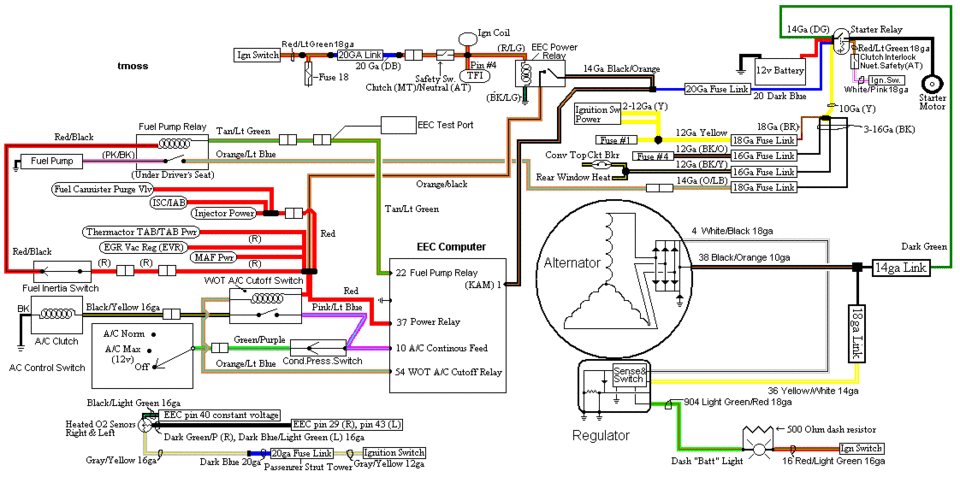
See the following website for some help from Tmoss (diagram designer) & Stang&2Birds (website host) for help on 88-95 wiring Mustang FAQ - Engine Information Everyone should bookmark this site.
Ignition switch wiring
http://www.veryuseful.com/mustang/tech/engine/images/IgnitionSwitchWiring.gif
Fuel, alternator, A/C and ignition wiring
http://www.veryuseful.com/mustang/tech/engine/images/fuel-alt-links-ign-ac.gif
Complete computer, actuator & sensor wiring diagram for 88-91 Mass Air Mustangs
http://www.veryuseful.com/mustang/tech/engine/images/88-91_5.0_EEC_Wiring_Diagram.gif
Vacuum diagram 89-93 Mustangs
http://www.veryuseful.com/mustang/tech/engine/images/mustangFoxFordVacuumDiagram.jpg
HVAC vacuum diagram
http://www.veryuseful.com/mustang/tech/engine/images/Mustang_AC_heat_vacuum_controls.gif
TFI module differences & pinout
http://www.veryuseful.com/mustang/tech/engine/images/TFI_5.0_comparison.gif
Fuse box layout
http://www.veryuseful.com/mustang/tech/engine/images/MustangFuseBox.gif
damage the car's electronics including the alternator.
Do all of these tests in sequence. Do not skip around. The results of each test depend on the results of the previous
tests for correct interpretation.
Changes in wiring for a 3G alternator are in red
Alternator troubleshooting for 86-95 5.0 Mustangs:
Engine off, ignition off, battery fully charged.
1.) Look for 12 volts at the alternator output. No 12 volts and the dark green fuse link between the orange/black
wires and the battery side of the starter solenoid has open circuited.
3G alternator: Look for 12 volts at the stud on the back of the alternator where the 4 gauge power feed wire is bolted.
No voltage and the fuse for the 4 gauge power feed wire is open or there are some loose connections.
2.) Look for 12 volts on the yellow/white wire that is the power feed to the regulator. No 12 volts, and the fuse link
for the yellow/white wire has open circuited.
Engine not running, ignition on, battery fully charged.
1.) Alternator warning light should glow. No glow, bulb has burned out or there is a break in the wiring between the
regulator plug and the dash. The warning light supplies an exciter voltage that tells the regulator to
turn on. There is a 500
ohm resistor in parallel with the warning light so that if the bulb burns out, the regulator still gets
the exciter voltage.
Disconnect the D connector with the 3 wires (yellow/white, white/black and green/red) from the voltage regulator.
Measure the voltage on the lt green/red wire. It should be 12 volts. No 12 volts and the wire is broken, or the 500 ohm
resistor and dash indicator lamp are bad. If the 12 volts is missing, replace the warning lamp. If after replacing the warning lamp,
the test fails again, the wiring between the warning lamp and the alternator is faulty. The warning lamp circuit is part of
the instrument panel and contains some connectors that may cause problems.
2.) Reconnect the D plug to the alternator
Probe the green/red wire from the rear of the connector and use the battery negative post as a ground. You should see
2.4-2.6 volts. No voltage and the previous tests passed, you have a failed regulator. This is an actual measurement taken
from a car with a working electrical system.
Engine running, Ignition on, battery fully charged:
Probe the green/red wire from the rear of the connector and use the battery negative post as a ground. You should see
battery voltage minus .25 to 1.0 volt. If the battery voltage measured across the battery is 15.25 volts, you should see 14.50 volts
Diagram courtesy of Tmoss & Stang&2birds
See the following website for some help from Tmoss (diagram designer) & Stang&2Birds (website host) for help on 88-95 wiring Mustang FAQ - Engine Information Everyone should bookmark this site.
Ignition switch wiring
http://www.veryuseful.com/mustang/tech/engine/images/IgnitionSwitchWiring.gif
Fuel, alternator, A/C and ignition wiring
http://www.veryuseful.com/mustang/tech/engine/images/fuel-alt-links-ign-ac.gif
Complete computer, actuator & sensor wiring diagram for 88-91 Mass Air Mustangs
http://www.veryuseful.com/mustang/tech/engine/images/88-91_5.0_EEC_Wiring_Diagram.gif
Vacuum diagram 89-93 Mustangs
http://www.veryuseful.com/mustang/tech/engine/images/mustangFoxFordVacuumDiagram.jpg
HVAC vacuum diagram
http://www.veryuseful.com/mustang/tech/engine/images/Mustang_AC_heat_vacuum_controls.gif
TFI module differences & pinout
http://www.veryuseful.com/mustang/tech/engine/images/TFI_5.0_comparison.gif
Fuse box layout
http://www.veryuseful.com/mustang/tech/engine/images/MustangFuseBox.gif
Similar threads

- Replies
- 41
- Views
- 1K


- Replies
- 2
- Views
- 147
- Replies
- 3
- Views
- 404
- Replies
- 2
- Views
- 316


- Replies
- 0
- Views
- 262