Progress Thread finally tuning (and more)

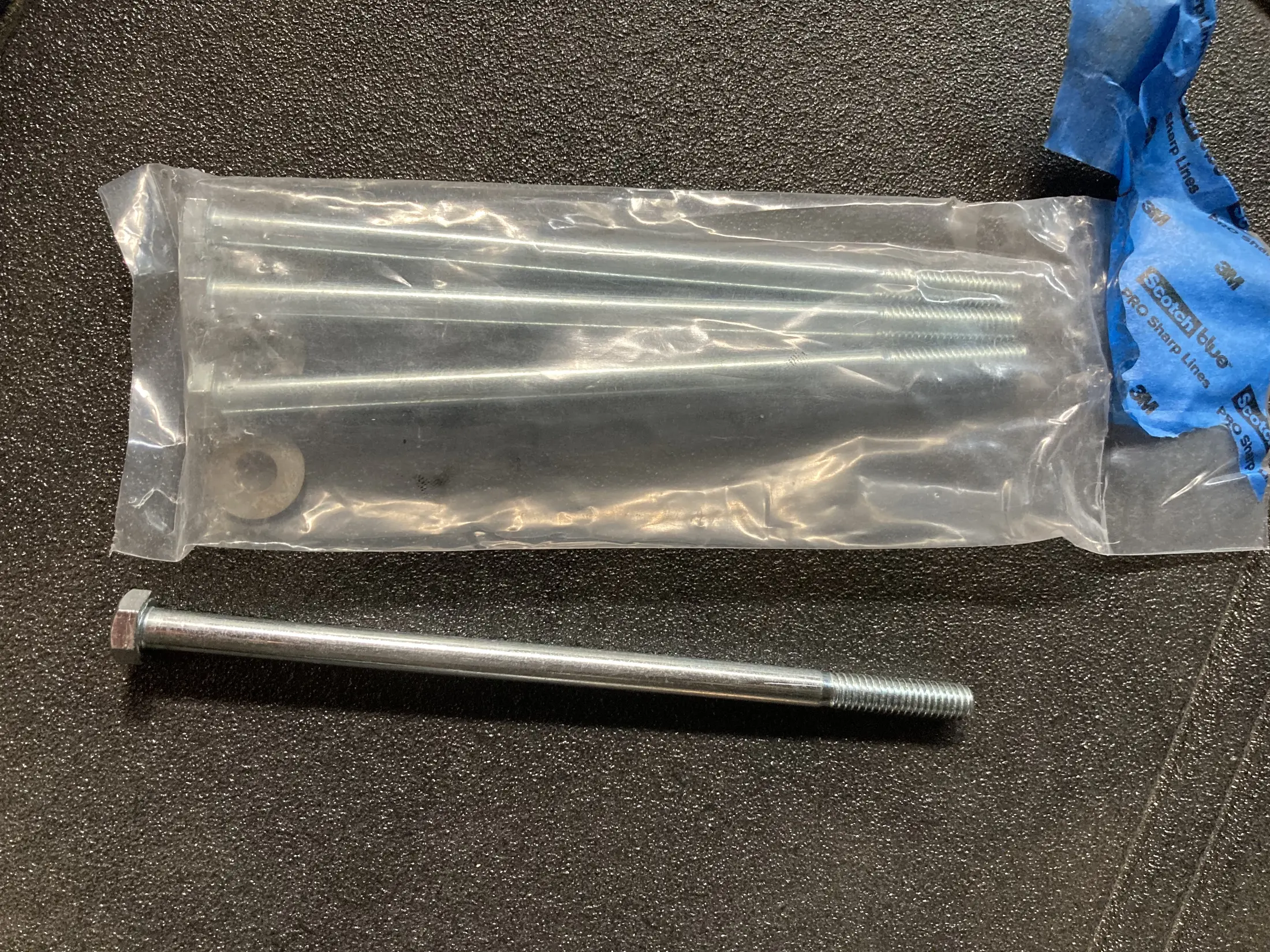
Forgot to add this pic of the longer upper intake bolts I got from Amazon

IMG_7846.webp
 
  • Like
Reactions: DadLife0724
I’m finally getting under way with Quarterhorse tuning. It’s about time!

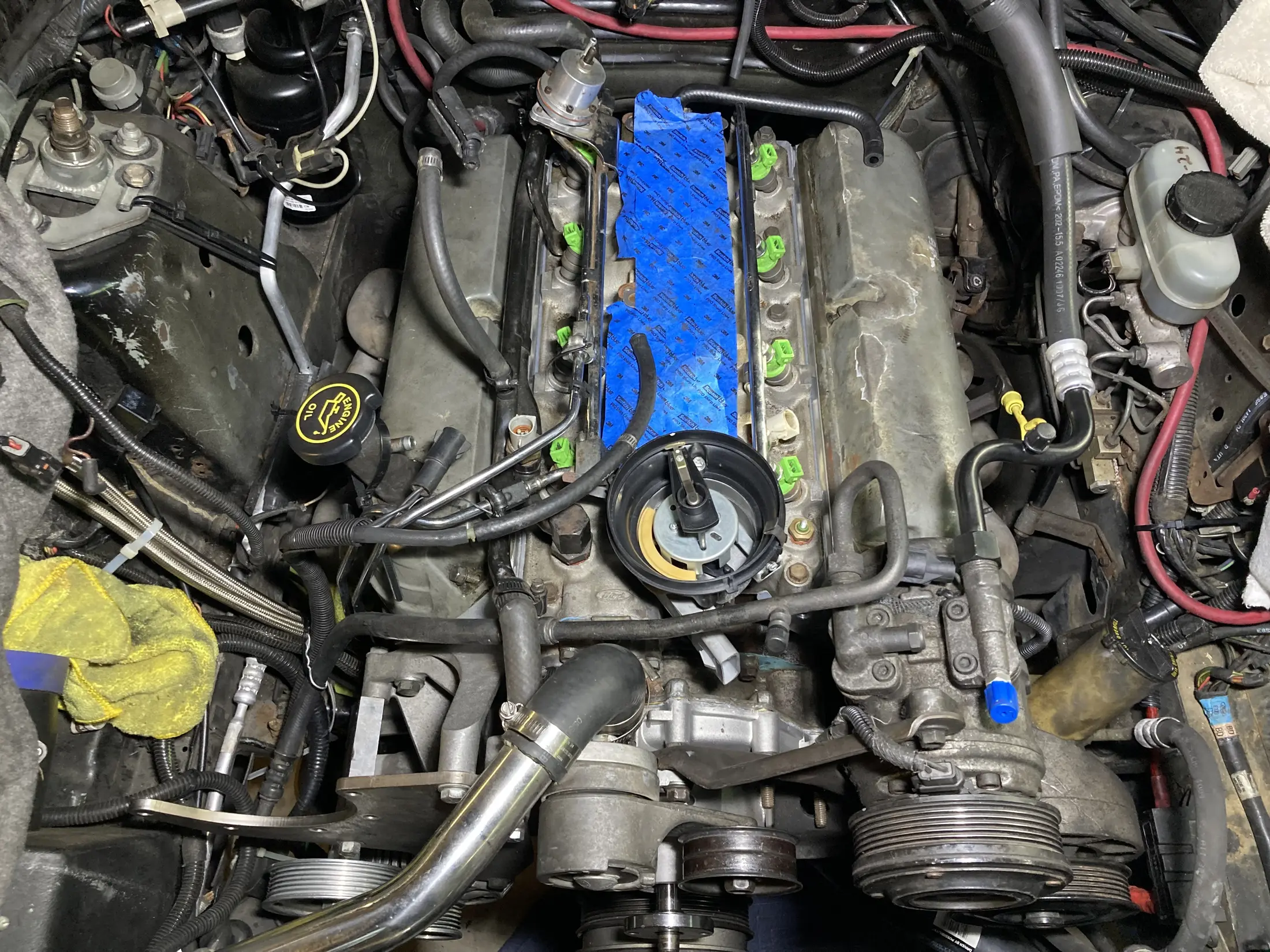
I’ve got my first a9L base loaded on the chip. Before I put it in the ECU and in the car I need to remove the FMU and associated adapter fuel lines, verify base timing, set back to factory fuel pressure (39psi) and reset my base idle and related TPS voltage.

I’m going to tune NA first to familiarize myself then once I’m confident with everything I’ll put the blower back in and tune some more.

IMG_8019.webp


IMG_8020.webp
 
I finished doing the mechanical adjustments and check and everything is good. Test drive, normal traffic driving its behaving good. Did not get on it too much because its crowded streets with schools in the area at the time of the test drive. Got on it a little and its looking lean under heavy load. I'm sure we'll sort that out. Before this reset the top end lean condition was being addressed with cranked up FP.

Now I'm ready to put the chip in. It will be interesting if I notice any changes with the base bin
 
This thing looks like it’s had a chip on it before. Pins are clean, resistors are already bent over on the chip area and the ECU body is already enlarged

IMG_8024.webp
 
  • Like
Reactions: gkomo
Bulky data cable guard. Gotta cut more of the case away. I’m waiting for a new coin cell battery for the Quarterhorse. Wanna start fresh with that. Should be here tomorrow.

IMG_8027.webp
 
Last edited:
My PLX wideband has output for data logging. I can bring that into the Binary Editor logging but I have to connect it through a pin in the ECU. Quick search tells me many people use the EGR circuit pin but my EGR is functional and I want to keep it that way. What might be an alternate pin at the ECU I could use? My EVAP canister is still functional and I prefer keeping it. How about the smog pump circuit? Is there a pinout for the smog pump I could use to pipe in the wideband data?
 
I didnt want any potential lean conditions of deleting EGR but I guess if I turn it off in the editor that concern will be gone? Is that correct? Then I could use the EGR input pin 27 for datalogging wideband.
 
I'm having trouble with the Quarterhorse chip which I bought used. It may be corrupted. I can get it recognized by BE, clear the ram and load a base tune. All that acts normal initially. When I put the chip in the car I get constant fuel pump prime, check engine light and the car runs pig rich and can barely keep it running. I can't attempt to drive it like that. Pull the chip and it runs normal with proper 2 second pump prime and no check engine lights. I can also put my old SCT chip in which has a previous base tune and it runs fine with normal prime event, no check engine light although it's lean under load which I would expect anyway.

After first trying the qhorse I went to clear and reload the base tune again but at that point it wont even connect to Binary Editor. With some tinkering I can get it to reconnect to BE but only after I delete and reload the FTDI driver. Clear ram and reload, put back in car, same thing. Same thing again when going back the BE. Cant get the Qhorse to connect unless I delete and reload the FTDI driver.

So the ECU is fine and runs drivable by itself and runs drivable with older SCT chip installed.

Coin battery in the Qhorse is new and at 3.16v. Connector pins on everything are spotless clean with no damage.

I'm thinking corrupted firmware on the Qhorse. I've reached out to Moates and waithing a response to see is they can reflash the firmware.

I'll post back with what I learn.
 
I think I have a corrupt Quarterhorse chip. Im in touch with Moates.net and they’re going check the hardware out and correct if needed. Great company and their communication has been good over the years.

Here’s what happens. I can load a tune onto the chip and verify its there. Then, as soon as I put the chip in the car and connect the battery, the tune immediately becomes corrupted and the car will barely run. I get the same result on two known good A9L’s that I have and both of those run the car normally on their own. I’ve been through all kinds of checks for errors in the software and my process and I have not found anything wrong that I can identify.

I’ll post back when I hear what Moates finds
 
About setting base fuel pressure prior to tuning. You have one tuner recommending setting at the factory 39psi. Another tuner recommends setting the base fuel pressure to 65psi.

Why such a difference? In other words, can anyone here explain different strategies that would make each of these recommendations valid?
 
Cranking it up to 65 psi will get more flow rate out of the injectors. If you take the square root of the ratio (new/old flow rate), that would be the correction factor for the increased flow rate. This will give you more fuel flow for the same pulse width, effectively increasing the HP potential of a specific set of injectors.

However, there's more to it. The two down-sides: 1) increasing the pressure will change the battery voltage offset / dead time / opening delay of the injectors. and 2) More flow at idle is not always a good thing because it can push the pulse width down low into the non-linear zone.

There are usually two or three items you need for calibrating a set of injectors. 1) the static flow rate or slope, 2) the battery voltage offset curve, and sometimes the 3) a low PW slope and it's max PW threshold. These are all specified at fixed a gauge pressure. If you change the system pressure, they need to be adjusted. The flow rates are easy because it's the simple fluids equation from above. The battery voltage offset curve is not as easy to adjust from the pressure change alone - they will get bigger with increased pressure since the injector needle opens against the fuel pressure (but by how much?). If the injector supplier doesn't provide new data for the higher pressure set point, the battery offset curve will need to be derived in the car. This can sometimes be done based on the change in fuel trim at low pulse width conditions (like idle) since the offset has the most significant impact in this zone. But this is tricky because it's a curve over battery / system voltage, and it's not easy to control the voltage to hit the array of break points in the curve.

If you have the injector specifications described above for the factory pressure setting, and the flow rate is adequate for the HP range you'll be running, then it would be a lot easier to keep the factory pressure setting that matches the specs.

If you do need to squeeze bit more out of the injectors to make sure you have enough fuel flow for high boost or high rpm operation, then it's worth bumping up the pressure and dealing with the hassle of empirically deriving what you need to make the injectors work - it just takes a bit more skill to sort that out without the proper flow bench data at the higher pressure set point.
 
Thanks for the explanation. Since im a beginner at tuning with QH and BE I think I will stay with stock pressure to simplify things. Also, considering I have all the correct specs for my injectors that should be fairly easy to input. They are the green top SVT injectors used in the Lightning trucks. 42lb and a calibrated 75mm ProM MAF with a complete data sheet too. So, scaling the MAF should be straight forward. The 42’s should be more than enough for my expected hp (400 at the wheels) at the stock fuel pressure I’m thinking.