Fuel Pressure Regulator or something else?

SuperStang83

Founding Member
Mar 21, 2001
1,693
0
49
Boyertown, Pa
My daily driven Mustang has been falling on it's face over the last couple of weeks when I going WOT. The last few days the car has had a pretty bad stumble and hesitation when cold, but once warm the normal driving is decent. The car seems to run pretty decent and normally as long as I stay out of the throttle. Once warm though even when I go WOT it just feels like it's governed and hitting a wall where the car has a slight backfire through the exhaust and it sounds like it wants to go fast but the RPMs barely move and the car is just stupid slow.

I put a fuel pressure test gauge on the car and at idle it is 30psi with the car running. Taking the FPR vacuum line off it goes up to 40psi whether I am plugging the vacuum line or not. As soon as I turn the car off the gauge reads 0psi.

Getting codes 67 & 85. I realize I have to bypass 67 but wasn't exactly sure how or very comfortable attempting to.

Anyone have any ideas if this is how the FPR is supposed to act? I thought it was supposed to hold pressure even after turning the car off.
 
So you obviously ran the KOEO test but a 67 code typically indicates the clutch was not depressed (manual) or the trans was not in park (auto) or in neutral (auto or manual) when trying to run the KOER test.

With that did did you complete the KOEO test and not get the KOER test?

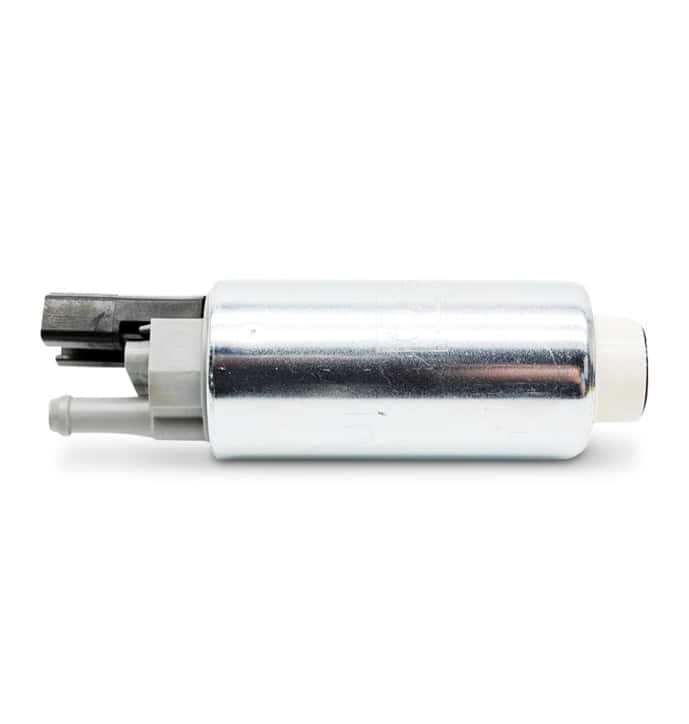
Typically when the vacuum is not connected you get 39ish psi and connected around 32ish psi. It dropping to zero when you shut it off could be the k eternal check valve in the pump failing. All that does is make it take a second or two longer to start.

You need to be able to monitor fuel pressure when you are driving it to know if the pressure is dropping under acceleration. It should climb to the pressure you get at idle with the vacuum disconnected.

Have you checked the plugs or the ignition system?
 
  • Useful
Reactions: General karthief
All I did was the KOEO test and got the same (67, 85) each time. I did not do the KOER test. I have not looked into plugs or the ignition system yet, but will give them a look tonight.

Any good ideas what to start looking at for the ignition system?
 
So for me when a motor does not want to rev when loaded I check fuel and spark to make sure it’s not something easy. You have the fuel part pretty much looked over. Spark would be:
1) Check for a nice blue spark from the end of the coil wire to a chassis ground
2) Check the plugs to make sure they are gapped right, have no cracks in the porcelain, and are not fouled
3) Check the plug wires visually for cuts or burns and then start the car in the dark and look under the hood for any stray sparks
4) Check the rotor and cap for wear and tear

If all of those things seem good then report back.
 
  • Like
Reactions: SuperStang83
Just went and completed that list @AeroCoupe and everything except number 1 looked good which shouldn't be too big of a surprise since I replaced cap, rotor, plugs and wires within the last year.

Not sure that I'm checking the coil wire correctly though because the car has plenty of spark to run. This is the method I used:

1.) Remove push on connector (small red/blue wire) from starter solenoid and turn ignition switch to the Run position. Place car in neutral or Park and set the parking brake. Remove the coil wire from distributor & and hold it 3/8” away from the engine block. Jumper the screw to the big bolt on the starter solenoid that has the battery wire connected to it. You should get a nice fat blue spark.
 
I did just use the same method to test my coil spark except I put a spark plug on the coil wire and laid it on top of my intake and there was some white sparks going from the spark plug to the intake. Not sure if this would provide the same result.
 
I put a fuel pressure test gauge on the car and at idle it is 30psi with the car running. Taking the FPR vacuum line off it goes up to 40psi whether I am plugging the vacuum line or not. As soon as I turn the car off the gauge reads 0psi.

This does sound like a bad FPR. IIRC the needle should drop gradually, not like a stone.
 
I know Kirban FPR’s have an anti-siphon valve (I have one and noticed it on the diaphragm when I rebuilt the FPR). I don’t think Aeromotive or BBK FPR’s have it based on what I have read. Fuel pumps are hit and miss as well but I am certain Walbro (TI Automotove) pumps have an internal check valve.


Another thing that can happen as the rubber hose between the pump and the hanger ages is it cracks and lets fuel go back into the tank. This gets worse over time.
 
  • Like
Reactions: SuperStang83
Sorry it took me a while to get a hold of a Fuel pressure kit long enough that I could view while driving. I just did a drive with the pressure Kit and at idle it showed around 28psi and when I go WOT pressure gets to about 38 and backs off to 35psi before I shift probably around 4500-5k rpm.

Tried uploading a video but when I converted it, it just came across as audio.
 
This is the procedure from Pro M Racing for checking fuel pressure:
Next, check the fuel pressure. Note: If your fuel pressure gauge is mounted in the
engine compartment, you must check the fuel pressure while the gauge is cold. If
the engine has been running with the hood closed and the gauge has warmed up,
the pressure reading will be inaccurate. Fuel pressure should be 39-40 PSI with the
vacuum line removed. While the vacuum line is removed, connect it to a vacuum
gauge and record the vacuum at idle. With the vacuum line still removed, snap the
throttle and make sure the fuel pressure remains constant. Any drop in fuel pressure
is a clear indication of inadequate fuel supply. Also have a look at the fuel pressure
gauge at idle and make sure the needle is rock steady. Any fluctuation at all is a
clear indicator of fuel pump cavitation. Reconnect the vacuum line. The fuel pressure
should drop half of whatever your vacuum reading was.