Fox Xtremely high fuel consumption

Anyone use those china wall silicone gaskets? I remember the Infamous Project used them on one of his builds and didn't have an issue, at least if i recall correctly from a YouTube video.
Yeah I always use those they work great for me. The Felpro ones I get look kinda weird once they're installed because of the color though.
 
The refineries in Texas have all kinds of variants of gasoline so if Mexico get their gasoline from the US then who knows what they require as the refineries make to their specs. I live in this world and work for an operator that ships refined petroleum products.

1/4" to 3/8" bead of oil resistant TRV, let skin up, and install the intake. I do not smear it around or anything.

You can run an A9P in a manual trans car that has the O2 harness pinned for a manual transmission. I have run both in mine with zero issues.
 
  • Like
Reactions: PonyGTrider
The refineries in Texas have all kinds of variants of gasoline so if Mexico get their gasoline from the US then who knows what they require as the refineries make to their specs. I live in this world and work for an operator that ships refined petroleum products.

1/4" to 3/8" bead of oil resistant TRV, let skin up, and install the intake. I do not smear it around or anything.

You can run an A9P in a manual trans car that has the O2 harness pinned for a manual transmission. I have run both in mine with zero issues.
Good Information!
 
Folks this is a never ending process!
Here is another question:
As stated I have preference for the Felpro 1250S-3 which is laminated much stronger than the regular 1250’s. In the past I wanted to delete the EGR at least physically but when installing those 1250S-3 but since they don’t have EGR passage previsions I had to open the hole for the exhaust bypass out of the passenger side head, so what do you think? Should I just install those gaskets and leave the bypass hole shut??? If I want to disable the EGR valve and stop the Hot exhaust fumes from traveling all the way to the throttle body instead of installing a delete plate and even after you install that plate the throttle body and upper intake manifold gets hotter?
I heard the combustion chambers will get hotter but did there a way to deal with that like backing off timing??
 
Yeah cables are routed normally and static ignition timing (Spout connector out) is set to 14* BTDC IMG_5584.webp
I am missing what your gas mileage is, and the specs on the car. When I had a car with the electronic fuel economy thing, I noticed my gas mileage was suddenly not nearly as impressive when going down a steep hill - then it was wheel bearings, which for some reason, this time did not make the characteristic squealing sound they normally would make when bad - just had greatly increased rolling resistance. Also noticed at one point that my car engine would run COLD when going down a steep grade - thermostat was bad, not closing off again when less cooling was needed. Maybe drive with windows down at low speed, do you hear anything? Scotty Kilmer has video's also on how he uses wired microphones for car diagnosis, sits in passenger seat while someone drives, and has these microphones placed around various parts under the car, so he can hear from different parts when driving - helps to pinpoint sounds -
 
  • Like
Reactions: PonyGTrider
I am missing what your gas mileage is, and the specs on the car. When I had a car with the electronic fuel economy thing, I noticed my gas mileage was suddenly not nearly as impressive when going down a steep hill - then it was wheel bearings, which for some reason, this time did not make the characteristic squealing sound they normally would make when bad - just had greatly increased rolling resistance. Also noticed at one point that my car engine would run COLD when going down a steep grade - thermostat was bad, not closing off again when less cooling was needed. Maybe drive with windows down at low speed, do you hear anything? Scotty Kilmer has video's also on how he uses wired microphones for car diagnosis, sits in passenger seat while someone drives, and has these microphones placed around various parts under the car, so he can hear from different parts when driving - helps to pinpoint sounds -
I’m getting 9.5 miles to the gallon.
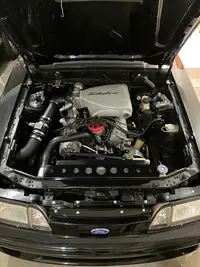
And the key components of my engine are 306 block, 170cc twisted wedge heads, stage 1 cam, flat top pistons,
65mm TB and 19lb injectors and MAF.

My brakes aren’t rubbing and the bearings are all good.
I started believing my problem has to be in poor vacuum and higher than usual fuel pressure.
My fuel
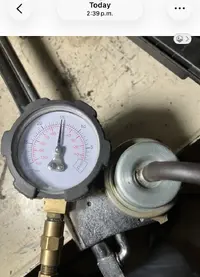
Pressure without vacuum is about 40-41 psi and the fuel pressure with vacuum only drops the pressure about 1 psi to 39psi
 
And this is when driving around town, on the highway? In CA, with the CA gas - on my six, auto, 1999 - I bet about 20, maybe 23 on the hwy (with the a/c on) and maybe 18 or a bit less in town. I do have one size wider tires on original 15" wheels, but I have heard the reduction in gas mileage for that is about 1/8 of a mpg or less - the alcohol in our gas means we get a bit less gas mileage -
 
  • Like
Reactions: PonyGTrider
I agree the fuel pressure irregularities needs to be addressed and something clicked when you posted the engine specs and I'm not an engine builder but I watched a LOT of Engine Masters and now I'm wondering how the air flow numbers work between the overbore, heads, intake and throttle body, without doing some 'flow searches' on the kindle, it's just an air pump after all, something to think about.
 
And this is when driving around town, on the highway? In CA, with the CA gas - on my six, auto, 1999 - I bet about 20, maybe 23 on the hwy (with the a/c on) and maybe 18 or a bit less in town. I do have one size wider tires on original 15" wheels, but I have heard the reduction in gas mileage for that is about 1/8 of a mpg or less - the alcohol in our gas means we get a bit less gas mileage -
I truly envy your fuel economy. In my case there are a few factors that are affecting my miles to the gallon like México’s fuel and altitude over sea level
 
Another quick update:
After verifying that the pressure regulator wasn’t losing any vacuum I put everything back together. I fire it up but one thing started hovering in my tired brain, what if I manually apply vacuum to the regulator? I should see the pressure going down correct? Well I decided to do that and found that the regulator wasn’t losing any vacuum but it was a junk!!!
The fuel pressure points at 40.5-41 psi with vacuum off, then I applied 5 inches of vac the needle stood there. Then I applied 12 inches of vac which is what the stage 1 cam is giving me and the needle just moves a little. Then wen to 15 inches of vac and the pressure came down to 39 psi. And finally I applied 20 inches of vac and the pressure got stuck at 38 psi, So I was running at high fuel pressure all the time!
The pressure regulator diaphragm probably was crystallized and stiff not flexible as it should be, but not leaking so I replaced the regulator.

Another issue I found was that I disconnected the vacuum hose going to the reservoir, dash accessories, and TAD/TAB/EVR solenoids and measured the vacuum at the intake giving me 12 inches of total vacuum at idle of 850-900 rpm, but then I placed a T fitting in between the intake and the reservoir, dash accessories and so forth and the vacuum dropped to about 5 inches of vacuum!!!! So I found a massive leak at the EVR or EGR regulator and probably was not activating the EGR valve at partial throttle, so I replaced the EVR solenoid and I saw no more vac leaks.

Now do you guys think that was the whole problem causing my pathetic fuel economy?

I’m running another fuel economy study and hope to see some good results, just wanted to ask for your opinion. Oh and by the way I backed down my timing from 14 deg to 12 deg and the engine still feels strong.

Thank you all for all your opinions on this subject throughout this posting. I really appreciate it
 
Great detective skills, I am following this, a bit over my head, but interesting to see what affects the fuel economy -
These new findings are something i didn’t pay attention before.
I called my pressure regulator goo based one single fact it didn’t lose vacuum and the diaphragm was not ripped off ignoring that the diaphragm was that stiff affecting the fuel pressure adjustability.

And as far as the leaky EVR solenoid well I isolated the booster and cruise control areas but I forgot isolate the circuit that includes the EVR,TAD, TAB, dash accessories and the vacuum reservoir.

I will update if my fuel economy improves stays as it is, or gets worse

Thank you all
 
  • Like
Reactions: FastDriver