There is no code 1, you will get a code 11, two single flashes in a row. This means the computer's internal
self tests have passed and it is ready to dump the rest of the codes.
Code 29 - Vehicle Speed Sensor (VSS) is an electronic sender mounted on the speedo pickup gear
on the trans. It works the cruse control for both 5 speed and auto trans cars. The VSS is used to tell the
computer to speed up the idle as you slow to a stop. This helps keep the engine from stalling when you
slow down for a stop sign or stop light.
Check to see if the electrical connector is plugged into it. Clean the connector & contacts with non
flammable brake parts cleaner prior to replacing the sensor, as that may fix the problem. The sensor cost is
under $30 and it is easy to replace.
CODE: 31 (KOEO) - EVP circuit below minimum voltage. Vref (5 volt reference voltage supplied by
the computer) missing or broken wire or bad connection in circuit. Use a DVM to check for 5 volts on the
orange/white wire. If it is missing, look for +5 volts at the orange/white wire on the TPS or MAP sensor
located on the firewall near the center of the car. Use the black/white wire for the ground for the DVM.
With the sensor removed from the EGR and still connected, press the plunger and watch the voltage
change on the brown/lt green wire. Pull the passenger side kick panel and measure the voltage at the
computer. You will need to remove the plastic cover over the wires and probe them from the backside.
A safety pin may prove very useful for this task. Use pin 27, EVR input (brown/lt green wire) and pin 46,
signal ground (black/white wire) to measure the voltage. The orange/white wire is Vref and should always
be 5 volts -/+ .25 volt. Be sure to measure Vref at the EGR sensor to rule out any broken wires or bad
connections.
Measuring the voltage at the computer helps you spot broken wiring and intermittent connections.
Code 51 Engine Coolant Temperature (ECT) sensor signal is/was too high -
Possible bad ECT sensor, or wiring. Possible missing signal ground –
black/wire wire broken or bad connection. With the power off, measure the
resistance between the black/white wire and battery ground. You should see
less than 1 ohm. Check the same black /white wire on the TPS and MAP
sensor. More than 1 ohm there and the wire is probably broken in the harness
between the engine and the computer. The 10 pin connectors pass the
black/white wire back to the computer, and can cause problems.
Pin 7 on the computer - ECT signal in. at 176 degrees F it should be .80 volts
Voltages may be measured across the ECT by probing the connector from the rear.
Use care in doing it so that you don't damage the wiring or connector.
50 degrees F = 3.52 v
68 degrees F = 3.02 v
86 degrees F = 2.62 v
104 degrees F = 2.16 v
122 degrees F = 1.72 v
140 degrees F = 1.35 v
158 degrees F = 1.04 v
176 degrees F = .80 v
194 degrees F = .61
212 degrees F = .47 v
230 degrees F = .36 v
248 degrees F = .28 v
Ohms measures at the computer with the computer disconnected, or at the sensor with the sensor disconnected.
50 degrees F = 58.75 K ohms
68 degrees F = 37.30 K ohms
86 degrees F = 27.27 K ohms
104 degrees F = 16.15 K ohms
122 degrees F = 10.97 K ohms
140 degrees F = 7.60 K ohms
158 degrees F = 5.37 K ohms
176 degrees F = 3.84 K ohms
194 degrees F = 2.80 K ohms
212 degrees F = 2.07 K ohms
230 degrees F = 1.55 K ohms
248 degrees F = 1.18 k ohms
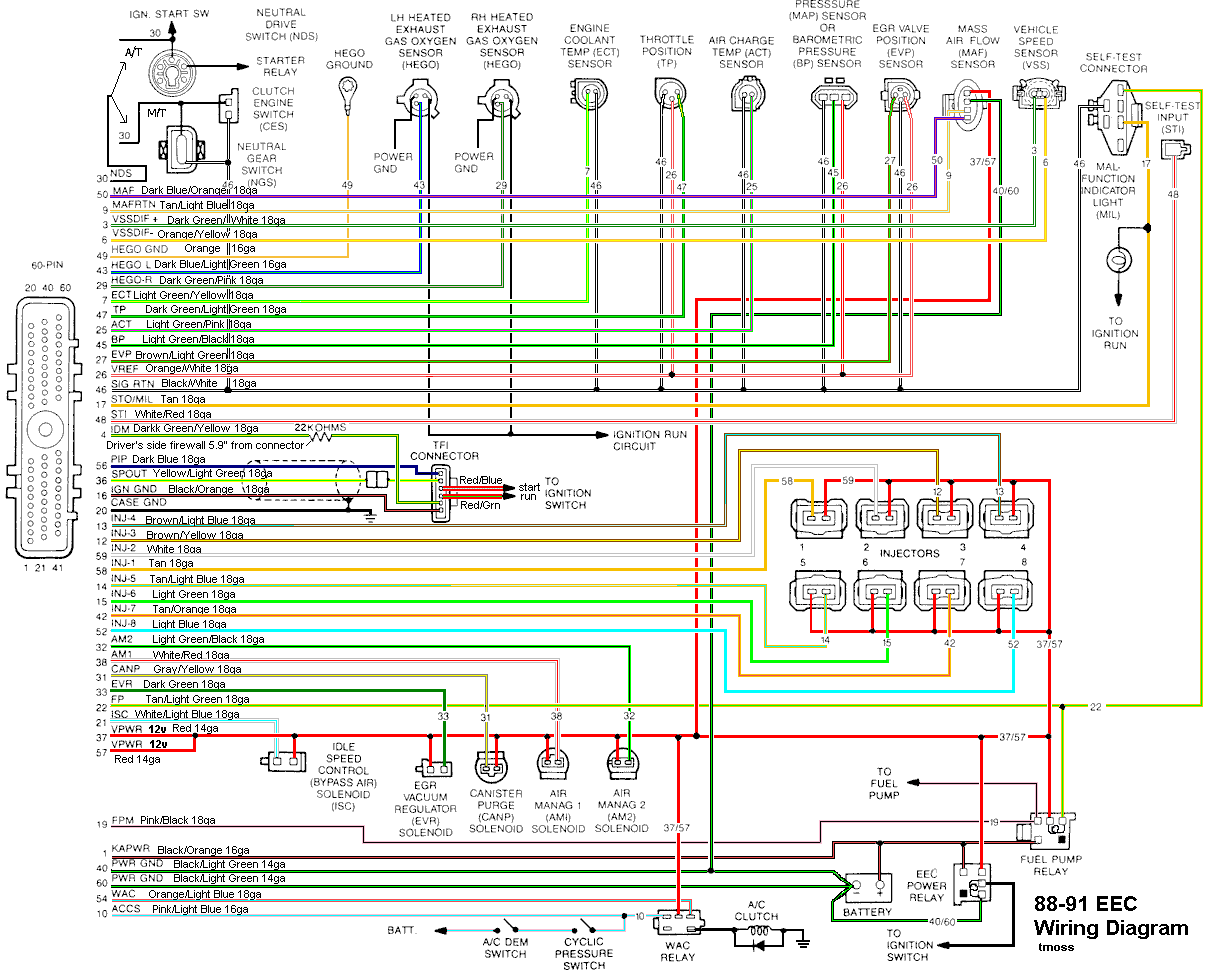
Diagram courtesy of Tmoss & Stang&2birds
See the following website for some help from Tmoss (diagram designer) & Stang&2Birds (website host) for help on 88-95 wiring
http://www.veryuseful.com/mustang/tech/engine/
http://www.veryuseful.com/mustang/tech/engine/images/IgnitionSwitchWiring.gif
http://www.veryuseful.com/mustang/tech/engine/images/fuel-alt-links-ign-ac.gif
http://www.veryuseful.com/mustang/tech/engine/images/88-91_5.0_EEC_Wiring_Diagram.gif
Code 53 - Throttle Position sensor too high – TPS – TPS out of adjustment, bad connections, missing signal ground, bad sensor.
Try this... Currently there is some dispute about setting it at .99 volts being worth the effort, but anything
less is probably OK. All you need is less than 1.0 volt at idle and more than 4.25 at Wide Open Throttle
(WOT). You'll need a Digital Voltmeter (DVM) to do the job.
Wire colors & functions:
Orange/white = 5 volt VREF from the computer
Dark Green/lt green = TPS output to computer
Black/white = Signal ground from computer
Always use the Dark green/lt green & Black/white wires to set the TPS base voltage.
Do the test with the ignition switch in the Run position without the engine running.
Use the Orange/white & Black white wires to verify the TPS has the correct 5 volts source from the computer.
Here’s a TPS tip I got from NoGo50…
When you installed the sensor make sure you place it on the peg right and then tighten it down properly.
Loosen the back screw a tiny bit so the sensor can pivot and loosen the front screw enough so you can
move it just a little in very small increments. I wouldn’t try to adjust it using marks. Set it at .97v-.99v, the
closer to .99v the better. Just don’t go over .99, or you upset the fuel calibration and idle quality will suffer.
(copied from MustangMax, Glendale AZ)
1. Always adjust the TPS and Idle with the engine at operating temp. Dive it around for a bit if you
can and get it nice and warm.
2. When you probe the leads of the TPS, do not use an engine ground, put the ground probe into the lead
of the TPS. You should be connecting both meter probes to the TPS and not one to the TPS and the other
to ground.
3. Always reset the computer whenever you adjust the TPS or clean/change any sensors. I just pull the
battery lead for 10 minutes.
4. Check the procedure for your year, on my 90 I have to turn the idle screw until it just touches the tab,
then insert a .010 feeler gauge and give it about one more turn. Then you adjust the TPS voltage to .98v,
reset the computer. Start it up, if the idle is to low then turn the screw in until it is just right, then readjust
the TPS voltage to .98v and reset the computer and start it up. The key is to adjust the TPS voltage and
reset the computer whenever the idle screw is changed.
Adjusting the TPS fails to resolve the problem:
Check the black/white wire resistance. Connect one ohmmeter lead to the black/white wire on the TPS and
one lead to the negative post on the battery. You should see less than 1.5 ohm, more than that indicates a
problem.
Always take resistance measurements with the circuit powered off.
Clean the 10 pin salt & pepper shaker connectors.
.
See
http://fordfuelinjection.com/index.php?p=85 for more help
Code 54 – ACT sensor out of range. Broken or damaged wiring, bad ACT sensor. Note that that if the
outside air temp is below 50 degrees F that the test for the ACT can be in error.
Check the resistance of the black/white wire to battery ground. If it is less than 1.5 ohm, it is good. If it is
more than 1.5 ohm, the black/white wire has bad connections or a broken wire. Always take resistance
measurements with the circuit powered off.
Then check the resistance of the ACT sender located in the #5 intake runner on most 5.0 stangs.
ACT & ECT test data:
The ACT & ECT have the same thermistor, so the table values are the same
Pin 7 on the computer - ECT signal in. at 176 degrees F it should be .80 volts
Pin 25 on the computer - ACT signal in. at 50 degrees F it should be 3.5 volts. It is a good number if the
ACT is mounted in the inlet airbox. If it is mounted in the lower intake manifold, the voltage readings will be
lower because of the heat transfer. Here's the table :
68 degrees F = 3.02 v
86 degrees F = 2.62 v
104 degrees F = 2.16 v
122 degrees F = 1.72 v
140 degrees F = 1.35 v
158 degrees F = 1.04 v
176 degrees F = .80 v
194 degrees F = .61
Ohms measures at the computer with the computer disconnected, or at the sensor with the sensor isconnected:
50 degrees F = 58.75 K ohms
68 degrees F = 37.30 K ohms
86 degrees F = 27.27 K ohms
104 degrees F = 16.15 K ohms
122 degrees F = 10.97 K ohms
140 degrees F = 7.60 K ohms
158 degrees F = 5.37 K ohms
176 degrees F = 3.84 K ohms
194 degrees F = 2.80 K ohms
Code 82 – Secondary Air Injection Diverter Solenoid failure AM1. Possible bad wiring, bad
connections, missing or defective solenoid valve. Check the solenoid valve for +12 volts at the Red wire
and look for the Red/White wire to switch from +12 volts to 1 volt or less. The computer controls the
valve by providing a ground path on the Red/White wire for the solenoid valve
With the engine running, stick a safety pin in the Red/White wire for the solenoid valve & ground it.
That should turn the solenoid on and cause air to flow out the port that goes to the pipe connected to the
heads. If it doesn't, the valve is bad. If it does cause the airflow to switch, the computer or wiring going to
the computer is not signaling the solenoid valve to open.
Both 81 & 82 codes usually mean that some uneducated person removed the solenoid control valves for
the Thermactor Air system in an attempt to make the car faster. It doesn't work that way: no working
control valves can cause the cat converters to choke and clog.