o2 sensors

ryan218

In just 10 years, I'll be old enough to drive!!!!
Dec 28, 2005
0
1
38
columbus ohio
quick question...on my 88 LX i have gone though everything fuel related...

pump, filter, lines, injectors, fuel rail.. and plugs, wires, cap, rotor, coil, IAC(idels better after warms up) and i still has a miss...i was wondering if bad O2 sensors could cause a very bad miss when you go to rev it along with it loading up...like i will go to rev it..1/2 throttle and you can hear it suck air and start to die let off and it will stay running..idles perfect after it warms up for a few mins along with getting better about revving..REALLY have to lean into it very slowly to get them up there though...

and the timing is set at 10*

only thing i can think of is..02 sensors(?) dis(?) computer(????)


i know i need to try and pull codes and im in the process of doing that but...i plug the scanner in and it wont light up..works fine on the other 5.0
 
Check for vacuum leaks, check grounds, and borrow the MAP sensor off your dads car just to see if it makes it run any better.

I would put new O2s on it. Chances are, if they aren't bad, they switch very slowly and are on their way out anyway.
 
This may be a repeat, but here it is anyway...

Computer will not go into diagnostic mode

How it is supposed to work:
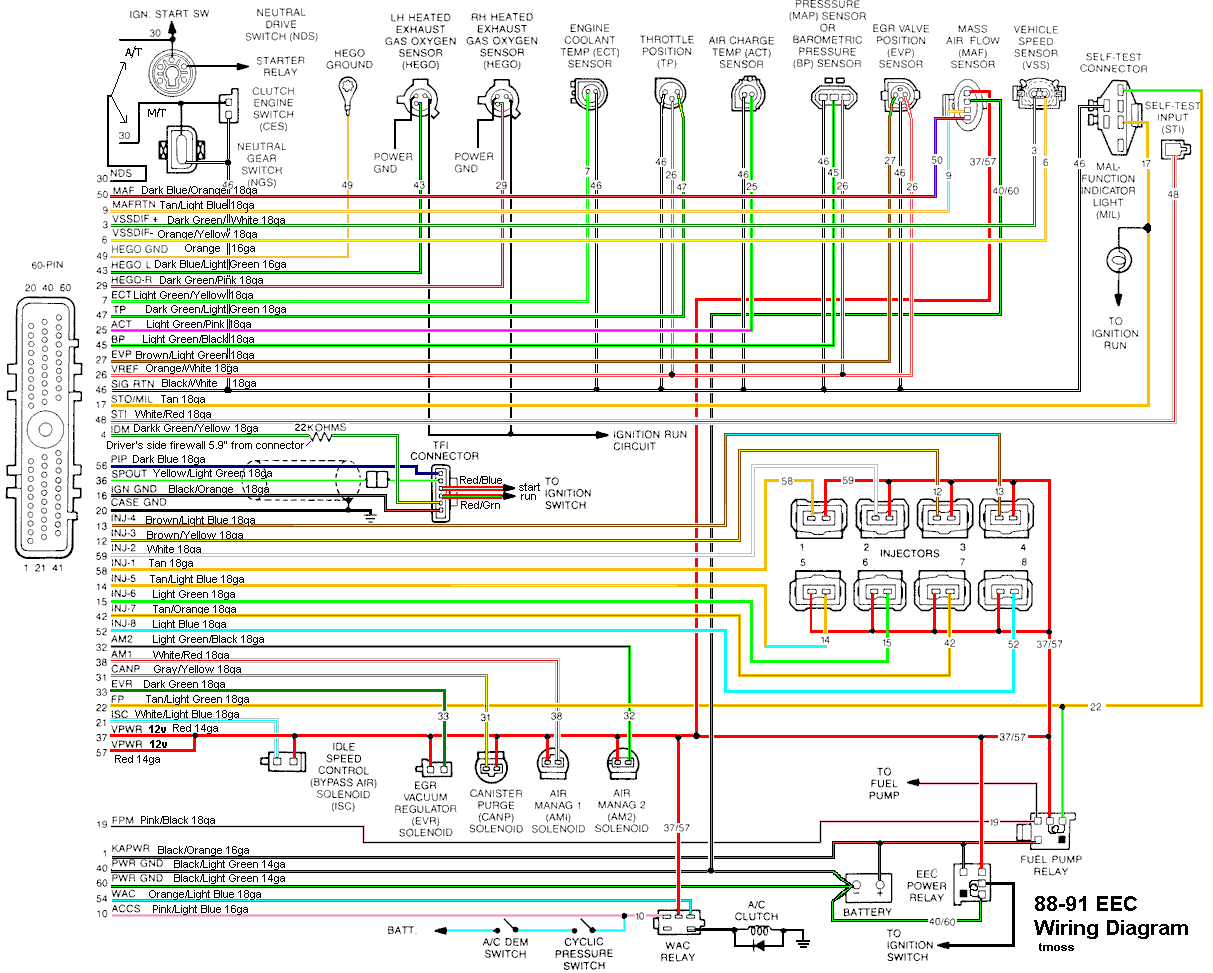
The black/white wire (pin 46) is signal ground for the computer. It provides a dedicated
ground for the EGR, Baro, ACT, ECT, & TPS sensors as well as the ground to put the
computer into self test mode. Since it is a dedicated ground, it passes through the computer
on its way to the computer main power ground that terminates at the battery pigtail ground.
It should read less than 1.5 ohms when measured from anyplace on the engine harness with
the battery pigtail ground as the other reference point for the ohmmeter probe. What sometimes
happens is that it gets jumpered to power which either burns up the wiring or burns the trace
off the pc board inside the computer. That trace connects pins 46 to pins 40 & 60. Only an
experienced electronics technician can open the computer up & repair the trace if it burns
up and creates an open circuit.

The STI (Self Test Input ) is jumpered to ground to put the computer into test mode. Jumpering
it to power can produce unknown results, including damage to the computer. The ohm test
simply verifies that there are no breaks in the wiring between the test connector and the computer input.

How to test the wiring :
With the power off, measure the resistance between the computer test ground
(black/white wire) on the self test connector and battery ground. You should see less than
1.5 ohms.

attachment.php


If that check fails, remove the passenger side kick panel and disconnect the computer
connector. There is a 10 MM bolt that holds it in place. Measure the resistance between
the black/white wire and pin 46: it should be less than 1.5 ohms. More that 1.5 ohms is a
wiring problem. If it reads 1.5 ohms or less, then the computer is suspect. On the
computer, measure the resistance between pin 46 and pins 40 & 60: it should be less than
1.5 ohms. More that that and the computer’s internal ground has failed, and the computer
needs to be replaced.

If the first ground check was good, there are other wires to check. Measure the
resistance between the STI computer self test connector (red/white wire) and pin 48 on
the computer main connector: it should be less than 1.5 ohms. More that 1.5 ohms is a
wiring problem

The following is a view from the computer side of the computer connector.
eec04.gif


Diagram courtesy of Tmoss & Stang&2birds

88-91_5.0_EEC_Wiring_Diagram.gif


See the following website for some help from Tmoss (diagram designer) & Stang&2Birds
(website host) for help on 88-95 wiring http://www.veryuseful.com/mustang/tech/engine

harness02.gif