
You are using an out of date browser. It may not display this or other websites correctly.
You should upgrade or use an alternative browser.
You should upgrade or use an alternative browser.
Progress Thread severe97's Project Thread!
- Thread starter severe97
- Start date
Correction, it’s a mass air system. My mistake.Code 22: Manifold Absolute Pressure (MAP) Sensor Out of Range
This needs to be addressed. Are you Speed Density or Mass Air?
Code 84: EGR Vacuum Regulator (EVR) Solenoid Circuit Failure
This also needs to be addressed. Checked the connectors and wires. Check the solenoid for resistance. Anywhere between 30ish and 70ish ohms is good. It may need to be replaced.

Correction, it’s a mass air system. My mistake.
Copy that. The MAP sensor should be [open] then. There should be [no] vacuum line running to the MAP sensor. Verify that this is correct.

It’s open -Copy that. The MAP sensor should be [open] then. There should be [no] vacuum line running to the MAP sensor. Verify that this is correct.
Attachments
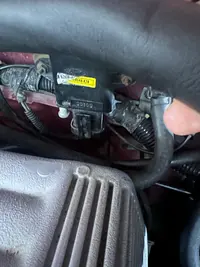
It’s open -
If the EEC says it's out of range then it's probably true. It's only job in mass air is to measure ambient pressure at startup.
Clear that code and see if it returns.
ThanksIf the EEC says it's out of range then it's probably true. It's only job in mass air is to measure ambient pressure at startup.
Clear that code and see if it returns.
Do I clear that code by unplugging the battery? Or would the MAP need to be replaced?
This is the [best] way:
Amazon.com: INNOVA 3145 Ford Digital OBD1 Code Reader : Automotive
Buy INNOVA 3145 Ford Digital OBD1 Code Reader: Code Readers & Scan Tools - Amazon.com ✓ FREE DELIVERY possible on eligible purchases
www.amazon.com
Oh I have that, that’s what I used to pull codes. I didn’t know I can clear them with it. lol thanksThis is the [best] way:
Amazon.com: INNOVA 3145 Ford Digital OBD1 Code Reader : Automotive
Buy INNOVA 3145 Ford Digital OBD1 Code Reader: Code Readers & Scan Tools - Amazon.com ✓ FREE DELIVERY possible on eligible purchaseswww.amazon.com
Oh I have that, that’s what I used to pull codes. I didn’t know I can clear them with it. lol thanks
You should have a pretty fat book with that too. If not, holler. I have it in .pdf form too.

gkomo
now i can hopefully expect to receive the shaft
This is the one I have and it makes checking codes super easy.This is the [best] way:
Amazon.com: INNOVA 3145 Ford Digital OBD1 Code Reader : Automotive
Buy INNOVA 3145 Ford Digital OBD1 Code Reader: Code Readers & Scan Tools - Amazon.com ✓ FREE DELIVERY possible on eligible purchaseswww.amazon.com

Whenever I bleed the air from the cooling system, I don't jack up the front, just be on level ground. I start the car with the rad cap off, rad full and let it idle. I watch for when the coolant level starts to go down in rad (t-stat is open when this happens). I watch for coolant to flow out of the rad tubes back into the tank. At this point the fluid level will drop a bunch. I watch and slowly add coolant so as to not empty the rad tank - but not too full. Let the coolant continue to circulate and flow from the tubes for at least 5 minutes. When a steady level in the rad tank is achieved I will top up the rad and install the cap. You can turn off the car now. As the engine and coolant cool, coolant will transfer into the overflow tank. A couple hours later you can top up the overflow tank to the correct level. Job done.
I have used this method on many cars, trucks and SUVs over the years and never had trapped air in the system.
I have used this method on many cars, trucks and SUVs over the years and never had trapped air in the system.

Greatly appreciate the tip, I’ll work on the car this weekend and report back.Whenever I bleed the air from the cooling system, I don't jack up the front, just be on level ground. I start the car with the rad cap off, rad full and let it idle. I watch for when the coolant level starts to go down in rad (t-stat is open when this happens). I watch for coolant to flow out of the rad tubes back into the tank. At this point the fluid level will drop a bunch. I watch and slowly add coolant so as to not empty the rad tank - but not too full. Let the coolant continue to circulate and flow from the tubes for at least 5 minutes. When a steady level in the rad tank is achieved I will top up the rad and install the cap. You can turn off the car now. As the engine and coolant cool, coolant will transfer into the overflow tank. A couple hours later you can top up the overflow tank to the correct level. Job done.
I have used this method on many cars, trucks and SUVs over the years and never had trapped air in the system.

A suggestion I always give folks with these or any models with 'stock' gauges for that matter, would be to install a mechanical gauge, even a cheap, er, I mean 'inexpensive ' gauge, most electronic gauges are pretty good now too, you can hide it like I did at the bottom of the dash, or hang one on the pillar for the world to see if you like.

Mcmahst
5 Year Member
Just another idea for gauge placement. I put an oil pressure and engine temp gauge under the hood, in a well ventilated engine area (in front of the core support) since I was still in the build stage, and wasn’t sure where in the passenger compartment I would mount them. They worked great, for an engine I had no history with, to build confidence in it. I’ve since removed them, but it took a lot of worry about the idiot lights away. Just my 2 cents.
It really brings peace of mind. I’m going to install gauges I was just debating on either installing a gauge pod on the pillar or under the radio.Just another idea for gauge placement. I put an oil pressure and engine temp gauge under the hood, in a well ventilated engine area (in front of the core support) since I was still in the build stage, and wasn’t sure where in the passenger compartment I would mount them. They worked great, for an engine I had no history with, to build confidence in it. I’ve since removed them, but it took a lot of worry about the idiot lights away. Just my 2 cents.
Just another idea for gauge placement. I put an oil pressure and engine temp gauge under the hood, in a well ventilated engine area (in front of the core support) since I was still in the build stage, and wasn’t sure where in the passenger compartment I would mount them. They worked great, for an engine I had no history with, to build confidence in it. I’ve since removed them, but it took a lot of worry about the idiot lights away. Just my 2 cents.

For gauge locations,
Not the pillar, they look ridiculous.
Not in the vents, block too much air.
I've done both and consider both mistakes.
Under the radio is the cleanest look. With that said, when I get up the courage to drop $1500+extras on the rtx factory style Dakota digital cluster, I'll be removing the ones under the radio too.
I'll also agree with karthief, electronic gauges with senders used to be crap, now they are much better.
Not the pillar, they look ridiculous.
Not in the vents, block too much air.
I've done both and consider both mistakes.
Under the radio is the cleanest look. With that said, when I get up the courage to drop $1500+extras on the rtx factory style Dakota digital cluster, I'll be removing the ones under the radio too.
I'll also agree with karthief, electronic gauges with senders used to be crap, now they are much better.
Attachments
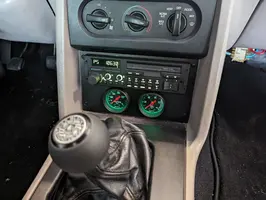


And 'RACECAR'I feel insulted...I have three on the pillar and a pretty big tach with a pin shift light mounted to the right side of the instrument cluster. I like the critical things to be in my line of sight so that was my reasoning.

Is the tach face as big as a baby's head?

My comment wasn't really meant to insult. I had a big tach with a shift light, which I found pointless, shrunk it to a big shift light that took a pill, then I got a smaller one and realized I'm not driving on a race track or even racing anyone. I can shift drive by sound and feel. And the reality is that even if the stock tach is not accurate as long it's consistent and you know the redline rpm I'm not sure it matters.
Now and then I glance under the radio, it's plenty for me.
Besides at full throttle with 500hp on the street where there are people, deer, cars, trees etc I'm not sure sure I should be looking anywhere but the road.
Now on a race car, people should do what they feel necessary.
Now and then I glance under the radio, it's plenty for me.
Besides at full throttle with 500hp on the street where there are people, deer, cars, trees etc I'm not sure sure I should be looking anywhere but the road.
Now on a race car, people should do what they feel necessary.
Similar threads
- Replies
- 16
- Views
- 536
- Replies
- 8
- Views
- 356
- Replies
- 2
- Views
- 173

- Replies
- 11
- Views
- 449
