Progress Thread slow&fast's 2000 GT - Suspension Upgrades

Thank you Warhorse for answering my question. Moving forward, I will keep this thread as my go to and hope other will benefit from the questions I have. I been studying the recipe for set up closely.

Question
In the past front suspension youtube video you recommended b and r tubular front control arms with sprung perch but found the poly bushings to fail but the feeling was direct with rigidity. In the 2026 recipe you recommend del a lum bushings into the stock a arms. Considering a 2nd set of ball joints were pressed into the stock a arm( longevity unknown) and the del a lum bushings appear to be a one and done. Needing a new bushing set when u get new a arms. What would u recommend? The money spent is almost the same.

1. 2 new moog control arms with del a lum.bushings installed. $109 x2 =$218 + $183 total $401.
2. B and R control arms. $399
3. Is there are better option you would suggest.

Also, do you use dust covers on your stock/strut to prolong the life of the shocks/struts? I found that the camber plates may prevent shock dust covers.
If your existing A-arms are in good shape, you can get a set of MOOG replacement ball joints ($30 each). Prices can vary, but it shouldn’t be much more to have the shop press out the old ball joints and press in the new ones when they’re doing the Del-A-Lum bushings.

The BMR A-arms with the custom Delrin bushings have performed well for me over the years. It’s hard for me to recommend the BMR A-arms over the OEM A-arm/Del-A-Lum combo if you plan to use the poly bushings that come with the BMR A-arms. That is solely based on my negative experience with the BMR poly bushings. Other people might have had a positive experience with the BMR poly bushings. For a budget build, I would take the benefits of the forward-offset Del-A-Lum bushings over the benefits of the tubular A-arms with poly bushings.

I do use the OEM dust covers (with poly upper strut mount bases) on my struts with the Steeda 3-bolt C/C plates.
I watch a YouTube video from the guy from upr. About 8 min into this video is where my question is from. UPR has a bolt package that uses nylon nuts. They claim not to follow the factory torque spec and just snug the bolt. This allows for movement needed to prevent binding and allows arma to work with the poly bushings. What are your thoughts. This makes sense to me but I question if the nylon nut really does not back out. Is this something people are already doing?
I have never personally used UPR rear control arms or their bolt kit. I’ve used Steeda rear control arms on 3 cars, and I’ve always followed the instructions to torque the bolts to the factory specs. I’ve never had an issue with bind. I always follow the manufacturer’s instructions when it comes to torque specs.
 
My question is, if using 3 piece poly bushing rear control arms that warhorse suggested. Does adding a bolt kit with nylon nuts and snuggin the bolt create a better outcome? Allowing better movement and control. If 2 piece bushing control arm companies are needing to use this technique to improve handling outcomes.
 
My question is, if using 3 piece poly bushing rear control arms that warhorse suggested. Does adding a bolt kit with nylon nuts and snuggin the bolt create a better outcome? Allowing better movement and control. If 2 piece bushing control arm companies are needing to use this technique to improve handling outcomes.
The best way I can try to answer your question is to say that since I never had an issue with the control arms being torqued to the factory specs, I don't think there will be a better outcome using the UPR bolt kit and just making the bolts snug.
 
  • Like
Reactions: slow&fast
Its been a few years since I installed my Metco rear control arms,and I just torqued the bolts down and they are fine all these years later.
 
Moved this to the appropriate forum being its more of a progress thread. As you move on to other things just update the title of the thread to reflect what you are currently working on or towards.
 
Update: the sales for parts are finally here and steeda has a lot of great deals. I have decided to go with steeda uca and lca since warhorse had great experience. The steeda camber plates are also on sale so I will buy them too. Below are the my main questions.

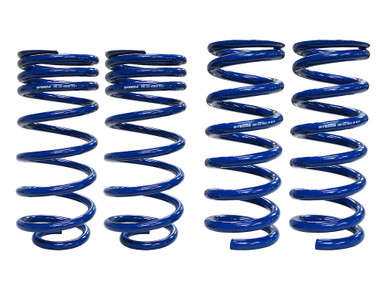
1. I was looking to buy ford c springs but...... with steeda sale on sport springs at 230 dollars makes me wonder if this is a better buy vs 325 for the ford c springs. What are your thoughts? Does the higher rate in the rear and higher ride height of ford c spring handle better during autocross? They appear to be identical except for rear height. Please share thoughts as autocross and back road driving will be the purpose of this car.

2. Kyb agx at 495 at Rock auto is an amazing deal but steeda has pro action kit is 595. Is the 100 dollar difference worth if quality difference. Koni is out of budget. So it will be between these to. Which us a better product.

3. Rear 1inch steeda bar is cheaper than the sve version. Just to confirm that keeping the oem front sway bar and just replacing the rear keeps the car neutral? Or do I need to get the front and rear set.

Please advise. Thank you
I think you'll be very happy with the Steeda control arms & C/C plates.

1. The Steeda Sport rear springs are linear rate. The Ford Performance rear springs are progressive rate. I prefer to use progressive-rate lowering springs in the rear of my autocross cars. The initial softness helps with rear grip in certain situations. Based on my experience with the C springs, I would still recommend them even though they cost more.

2. Because there isn't a lot of data out there about how the KYB AGX and Steeda Pro-Action shocks & struts perform and hold up under autocross conditions, I would base my decision on what is known about them:

The KYB AGX shocks & struts adjust by numbers; the Pro-Action shocks & struts adjust by turns. There's a little more nuance to the adjustment with the Steeda kit. That can be a good & bad thing. When I first started autocrossing my Mustangs, setting up the shocks & struts by numbers made it easier to learn, remember, and adjust settings. It's not hard to get used to adjusting via turns of a knob, it's just easier to go down the "adjustment rabbit hole" when you're learning.

The KYB AGX shocks & struts adjust compression & rebound with one adjustment; the Pro-Action shocks & struts have fixed compression and adjustable rebound. I chose to go with the KYB AGX kit for a future project because I've had a good experience with shocks & struts that adjust compression & rebound with one adjustment. Full transparency, there are plenty of autocrossers out there using shocks & struts with fixed compression and adjustable rebound.

I am concerned about the fact that the KYB AGX front struts only have 4 settings (especially when it comes to choosing a front sway bar). But my recipe includes other mods that help reduce understeer.

Because I haven't personally used either kit on one of my cars, I can't say which product is better. I will say that both kits look like a good option for a budget autocross build.

3. The sway bar conversation is complicated. I try to simplify it as much as possible to help people make the right choices. I apologize if some of this is redundant, but I want to make sure people following this thread are getting balanced information:

An SN95 GT with an OEM suspension setup left the factory with a tendency to understeer. Installing a stiffer rear sway bar adds oversteer (reducing understeer) to get the handling closer to neutral. Because the stiffness of aftermarket rear sway bars can vary, the impact on understeer will vary. Sway bars are generally used for fine-tuning of the suspension; it's just become a common practice to install a stiffer rear sway bar on 79-04 SRA Mustangs as one of your first few mods because it's an easy way to address the understeer issue on these cars. You will have a lot of adjustability in your setup: C/C plates, shocks & struts, and air pressure settings. With those adjustments, you will be able to dial-in your suspension to get the car neutral. And having the ability to adjust your suspension might mean that you can install a stiffer front sway bar (if it will benefit your setup). But installing a stiffer front sway bar is always the last suspension mod I make. That's because it's possible to install a front sway bar that is so stiff it forces you to soften up your front struts to the point where you run out of adjustment (and, if your KYB AGX struts only have 4 settings, you have less room for error). Getting the car to handle well with room for adjustment allows you to adapt to different courses (I have "standard" and "tight" course settings).

I hope that helps. If you have more questions, please ask.
 
Going back to the spring question. The steeda spring are list to be linear in front and progressive in rear on many forums and using google AI. If this is true. What would be your thoughts? Link is below for springs I am referring to.

 
Going back to the spring question. The steeda spring are list to be linear in front and progressive in rear on many forums and using google AI. If this is true. What would be your thoughts? Link is below for springs I am referring to.

The rear spring rate is listed as "250 lb" on Steeda's website. That tells me they are linear. An example of a progressive spring rate would be "200-300" or "200/300" (like the C rear springs).
 
Thank u for the spring recommendation. I will purchase the ford c springs. I am wondering if bump stops or tie rods need to be replaced due to the change of springs?
I'm always happy to help. When I installed the Ford C springs on my cars with poly spring isolators, I reused the OEM bump stops on the struts. If your OEM bump stops are in good condition, they should work fine. But, given the age of these cars, it's a good idea to inspect the OEM bump stops to see if they need replacing. I also recommend following any instructions that come with the struts. With the C springs & poly isolators, I didn't need to use a bump steer kit. If you have the OEM inner & outer tie rods on the car, it's worth checking them out thoroughly before putting the car back together and getting it aligned. I didn't need to use a shorter pinion snubber with the C springs, but I did check to make sure the OEM pinion snubber was in good shape.