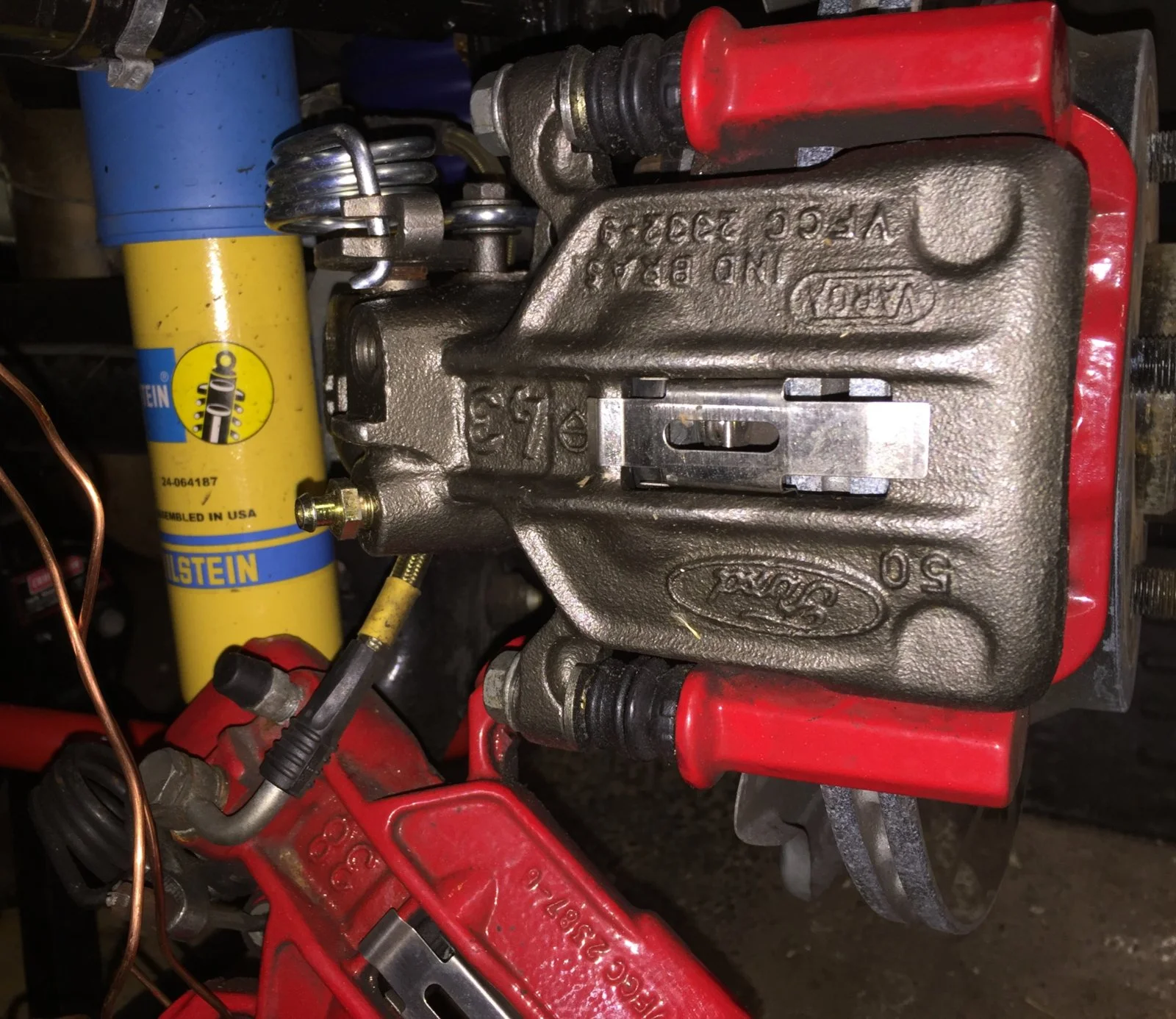
4 Eye SN-95 Cobra Brake Conversion (as performed on my ’86)
79 TO 86 GUYS, THIS ONE IS FOR YOU!
Parts required-
Front:
>94-95 Mustang spindles and hub assemblies (either ABS or regular will work)
>SN-95 ball joints, or a stack of washers to compensate for the long thread section on Fox ball joints *(1)
>13” SN-95 front Cobra brake rotors
>SN-95 rear Cobra calipers, loaded *(2)
>Left/right front brake soft lines for Cobra calipers
>Adapter for passenger side soft to hard brake line *(3)
Rear:
>Fox length 5-lug axles, I used 28 spline Yukon (these are disc brake specific and are hub-centric)
>NRC caliper brackets *(4)
>SN-95 rear Cobra calipers, loaded *(2)
>11.65" rear Cobra brake rotors
>94-95 Mustang rear soft brake lines *(5)
>Hard line to soft line adapter *(3)
>NRC emergency brake cables
Under hood:
>94-95 V6 brake booster *(6)
>85 Lincoln Towncar master cylinder *(7)
>Adapters and hard lines for master cylinder *(3)
>Adjustable brake proportioning valve *(8)
>Stock proportioning valve plug *(8)
Keep in mind that miscellaneous bolts and nuts, like every project, will need replaced or modified as you see fit. Don't use cheap stuff on your brake system, I like to use Grade-8.
Notes:
*(1) Fox ball joints can be reused but have a taller boss that will need to be compensated for with a stack of washers about .250-.375 inch thick so the nut can provide clamping force on the spindle. Get the smallest outer diameter washers you can for clearance with the bottom of the strut. The inner diameter needs to be about 5/8".
*(2) "Loaded" means complete with pads, caliper bracket, pins, etc. Make sure you get the correct banjo bolts that connect the soft lines to the caliper, as some new calipers do not come with new banjo bolts, and these are surprisingly hard to find. I had to buy a set off of discbrakesrus.com. Notice that banjo bolt threads changed over the years so make SURE you have the right set for your calipers.
*(3) I found that the "one size fits all" brake adapters that they sell on various websites often do NOT work for a specific application. Don't buy these blind, take your brake lines into the auto parts store and test fit to find the right adapters for you. With that said, having custom brake lines made at a GOOD brake service station is your best bet over just buying adapters for everything. Cutting, bending, and flaring is better off left to someone who is good at it and gets paid to do it, and most reputable places will do it very cheaply -if not free- so long as you supply the parts and know exactly how the lines need to be shaped.
*(4) Rear NRC (North Race Cars) brackets are very good quality, however you may want to find a set of OE Ford "anti-moan" braces to avoid the inevitable rear brake moan, though these are not needed.
*(5) 94-95 Rear soft lines have a built-in bracket that you can use to mount to your axle with a self-tapping screw.
*(6) You need a larger booster when you use a larger master cylinder to compensate for the bigger brakes. Many different boosters can be used, but find the smallest you possibly can (almost anything is larger than the stock Fox booster), because strut-tower clearance is VERY tight. I found that 4-eye cars have less clearance than aero cars, and the strut tower will need EXTREME clearancing to fit the bigger booster. This was probably the most difficult part of the swap. The mounting holes in the firewall will also need elongated to fit the newer booster. I've heard of people cutting and welding the 4-eye strut tower to fit the booster; I used a hammer to "massage" both the booster and strut tower in my car, and so far I've had no problems with brake assist.
*(7) The 4-eye cars use an SAE thread, double line-style master cylinder. The large-bore '85 Towncar MC is supposed to be the best fit for this style brake swap. Keep in mind that you will likely have to make custom lines to fit between the MC and factory proportioning valve, as there are a few different SAE threads at all the junctions.
*(8) Once the swap is complete, you'll need an adjustable proportioning valve (installed in the brake-line junction on the passenger side firewall) to play with the brake bias between the front and rear wheels. To gut and plug the factory proportioning valve, you can buy one of the specific plugs from FRPP, or you can modify the original cap to act like a plug. I drilled, tapped, and used a screw and nut with brass washers to seal the hole in the original cap because I'm a cheap ass. I've had no leaks so far, but I wouldn't recommend this method to more novice fabricators, because safety is definitely at risk. I'll probably "upgrade" to a real plug in the future, but I thought this was worth mentioning.
*** I'll update this post with more information and pictures in the future. If anyone has any questions or comments, please feel free to PM me. Please also feel free to correct me if I've forgotten anything. ***