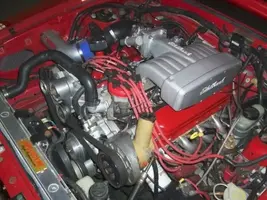
Who has had a Fel-Pro 1250 get a vacuum leak?

Jason 302

10 Year Member
Aug 9, 2003
685
71
68
Newark, Ohio
My stanger appears to have a pretty bad vacuum leak. This engine was built approx 5-6 years ago by me. (306 w/AFR 165's - TFS #1 cam - Edelbrock Performer 5.0 intake - Pro/M 75mm MAF - Accufab 70mm TV - FRPP 24lbers - BBK ceramic LT's - Crane roller rockers - etc)

Upon start up she revs to the moon for a second or two, then dies. This could happen several times unless I feather the throttle to keep it alive. After it warms up, it will idle on it's own but will hunt every once in while. I can feel the car lurching while trying to cruise steady at very low speeds (1st gear 10-15mph). I can also hear the hissing sound under the hood but can't seem to locate it. I thought about using the carb cleaner method but the idle is so unpredictable I don't know if it would work or not.

I have taken the upper intake off several times. Checked hoses and made sure they were clamped, replaced the upper to lower gasket & plenum cover. All the fittings are either RTV'ed or teflon taped. I put the EGR spacer back on to make the check engine light go out. Ran a check on the EEC-IV and it ran an "11" (system pass). Idle control valve is brand new. TPS is properly set. Timing is 17* advanced.

So....the only thing I can think of is the lower intake gasket is leaking. Anybody ever have a 1250 leak? I thought it was unlikely but it's just about the only option I have left.
 
There is a gap between the block deck and the heads when using aftermarket aluminum heads. It requires a little extra attention when applying sealant. It's also the source of a pretty good oil leak when not sealed properly. Do you have any oil leaking out of the back of the lower intake and down the bell housing?

I would still go through and use a can of engine start to try and pinpoint the problem.
 
Too much timing will cause idle stall and surge problems. The max timing should be about 14*. Timing is set with the SPOUT out, so don't forget to remove it and reinstall it when you set the timing.

See the "Surging Idle Checklist” for help with all your idle/stall problems. You can guess at the problem and throw parts at it, or you can use the checklist to help you find the problem quickly and inexpensively.

The quick and easy way to dump the codes is in there too, and all you need to do it is a paper clip! The first two posts contain all the fixes & updates. At last count there were 24 possible causes and fixes for surging idle/stall problems. I continue to update it as more people post fixes or ask questions.
 
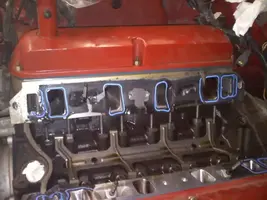
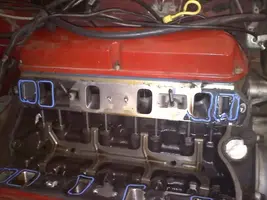
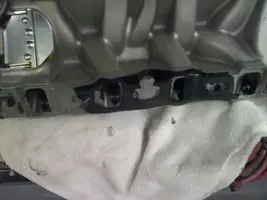
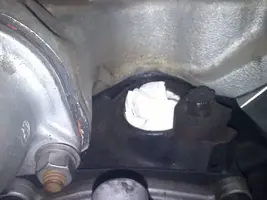
Found it. The lower intake gasket has gone all crazy on me, I think I need to have some milling done on the intake. Basically, when I set the intake on there (without any gaskets), it comes in contact with the block before the heads. I believe it should contact the heads first, and then have a small gap between the block and intake. I should have caught this when I first built the motor. I used some rubber gaskets instead of RTV for the front and rear, and these might have prevented the actual intake gasket from being compressed properly. You can see my #3 and #6 intake ports were partially blocked because the gasket moved on me.

You can see a vacuum leak on #4 and #5

20111211174218.webp

20111211174230.webp

20111211174309.webp


20111211180006.webp
 

Attachments

  • 20111211174218.webp
    20111211174218.webp
    33 KB · Views: 730
  • 20111211174230.webp
    20111211174230.webp
    37.4 KB · Views: 506
  • 20111211174309.webp
    20111211174309.webp
    25.5 KB · Views: 263
  • 20111211180006.webp
    20111211180006.webp
    34.5 KB · Views: 278
Turns out my spacing is okay. I found some reading on Edelbrocks website saying there should be at least a .060" gap between the intake and block when the intake gasket is laying in-between and that's almost exactly what I have. I'm starting to think the rubber front and rear gaskets were causing a problem, not allowing the intake to settle down enough. Using RTV this time ;)
 
That's close...

Vacuum leak due to slipped lower intake manifold gasket...

Ask Nicoleb3x3 about the intake gasket that slipped out of place and caused idle and vacuum leak problems that could not be seen or found by external examination. Spray everything with anything you have, and you won't find the leak...


photodisplay.webp


My favorite trick that saves time and effort is the stay in place gasket. Be sure that you scrape (don't use a wire brush) all the old gasket material off, then clean all the surfaces with acetone or MEK.

When the surfaces are clean, use weather strip adhesive on the head to manifold surface, and on the side of the gasket that mates to the head. Follow the instructions on the tube or can and when it gets tacky, press the gasket down on the head.

Clean the area where the rubber rails mount to the block in front and in the rear with more acetone or MEK and do the same trick with the weather strip adhesive that you did to the heads.

Coat the rubber seals and the gasket area around the water passages with lots of Blue Silicone gasket sealer and put it together. Wala! no leaks, and no gaskets that shifted out of place.
 
  • Like
Reactions: Jason 302
I keep an old stock lower intake around JUST for intake installs. I use the black RTV (in the cheese whiz can) and go around all the head ports with a thin line. I put the gaskets on and position them then let the sealant tack up for 30 or so minutes. I put the CLEAN OEM lower intake on it and barely snug down 4 bolts just to put pressure on the RTV (there are no end pieces at this point). The next day, install the front and rear pieces, a dab of sealant in the corners, and torque to spec.
 
  • Like
Reactions: Jason 302
It would be nice if there was an adhesive spray you could just spray a nice coat onto the gasket and keep it from moving. There's headliner adhesive spray but I doubt it would hold up to the heat.

Thanks for the help guys. I've been away for a long time, nice to now there's still some hardcore stangers on here ;)
 
Does anybody make a 1.2" x 2.0" intake gasket that actually has a backbone to it?
the 1250-s3 has a steel core, supposed to seal a lot better and not rip up like the normal 1250.

theres also the explorer/cobra stock replacement set qms95952, dont know the port size on it, but it's also a steel-core and a different coating.
 
It would be nice if there was an adhesive spray you could just spray a nice coat onto the gasket and keep it from moving. There's headliner adhesive spray but I doubt it would hold up to the heat.

Thanks for the help guys. I've been away for a long time, nice to now there's still some hardcore stangers on here ;)
Re-read my post...weather strip adhesive works just fine, I have used it successfully many times.

When surfaces are clean and correctly aligned, the gasket does the sealing, not what you spray or smear on it. At the factory, most parts are assembled dry with no gasket goo or spray. They evidently do a better job than I do getting it aligned :)
 
Very true jrichker. I decided not to go that route (adhesive). I ended up putting a Fel-Pro MS93334 on there and so far have been happy with the decision. Car runs 10 times better now...more power, smooth idle, and smooth cruising. Now it just needs a re-torque after a couple heat cycles and hopefully it will hold for a while.
n511517890_6857_8919.webp
 

Attachments

  • n511517890_6857_8919.webp
    n511517890_6857_8919.webp
    43.1 KB · Views: 227
Why do people insist upon using non reinforced paper gaskets? And then when they do use a reinforced gasket they don't take steps to insure that it doesn't move around during installation and block the ports.

If people insist upon using the gaskets as a port matcher :nonono: then they must insure that the gasket will NOT move during assembly. This is extremely critical.
 
Great thread. It will be very useful when I set my intake tonight. Do you think the High tack spray a gasket sealant (Permatex 80064) will do the job of holding the gaskets in place or should I hold off until tomorrow and get something else to hold them?