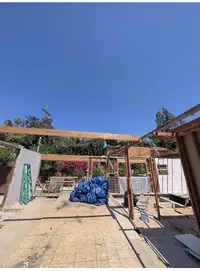
Since we are all invested now:
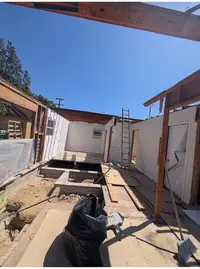
Roof is officially off.
Roof is officially off.


I've always wanted a convertible house.Since we are all invested now:
Roof is officially off.


Well, what do you mean? Damage occurred?Yeah, that #7 plug wire would keep me awake at night too ...

1)Was the plug wire on but not all the way? If that's the case it probably was firing. You were just hearing the snapping of the spark jumping from the plug wire end to the spark plug.Also, this happened yesterday when I changed/cleaned my #7 cylinder plug, but I forgot to actually connect my plug wire back on the new plug when i was done, doh! I drove the car like 1/10th of a mile before realizing what I did. Car was making a ticking noise, but ran 'fine'? Pulled over on the side of the road and popped the plug wire back on and car instantly felt better and no ticking.
This wouldn't cause any damage would it? Fuel not being burnt off in the cylinder? Fuel dilution in the oil?
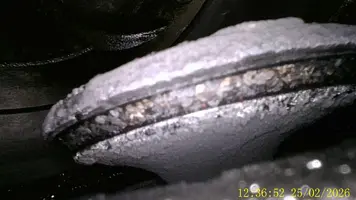

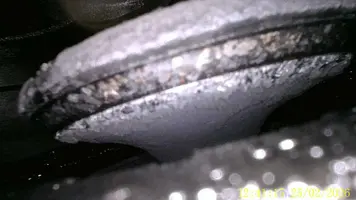
I don’t know which valve this is though.


I wouldn't worry about it too much. You didn't go far. You could certainly wash down the cylinder and thin out your oil if you continuously ran it like that, I think you're in the clear though.Also, this happened yesterday when I changed/cleaned my #7 cylinder plug, but I forgot to actually connect my plug wire back on the new plug when i was done, doh! I drove the car like 1/10th of a mile before realizing what I did. Car was making a ticking noise, but ran 'fine'? Pulled over on the side of the road and popped the plug wire back on and car instantly felt better and no ticking.
This wouldn't cause any damage would it? Fuel not being burnt off in the cylinder? Fuel dilution in the oil?

Nope.Also, this happened yesterday when I changed/cleaned my #7 cylinder plug, but I forgot to actually connect my plug wire back on the new plug when i was done, doh! I drove the car like 1/10th of a mile before realizing what I did. Car was making a ticking noise, but ran 'fine'? Pulled over on the side of the road and popped the plug wire back on and car instantly felt better and no ticking.
This wouldn't cause any damage would it? Fuel not being burnt off in the cylinder? Fuel dilution in the oil?
#2, when i took the plug wire off i tucked it out of the way behind the clutch cable. So maybe it was arcing against the inner fender area over there under the brake booster. Car drove 'fine' but did feel off. There was significant improvement once i plugged it back onto the plug.1)Was the plug wire on but not all the way? If that's the case it probably was firing. You were just hearing the snapping of the spark jumping from the plug wire end to the spark plug.
2)If it wasn't on at all, then the snapping you heard was the spark jumping to the block or whatever was close to the dangling wire end. If this is the case it should have felt like a dead miss.
Either way I doubt anything was damaged. Possible a fouled plug. Pull your dip stick and smell it. If it smells like fuel change it.
But if 2) is what happened I'd be concerned as to why it felt the same as always.
I'd focus on the #7 plug issue and tackle that before doing anything else. Unless I missed more tests (I might have) you just did a compression test on the one cylinder?
What i would do is pull all the plugs to do your test. The engine spins faster that way becasue it has almost no resistance. Your results will be consistent then for all of them. Looking at a single data point with all the other plugs in doesn't really tell much. Do a thorough work up of the tests and results and get to the bottom of it.
Try this, charge the battery well. Pull all plugs. Pull FP relay. Block throttle open.
-photo all plugs on a peice of paper w/ cylinder #'s by them for future refrence like you did earlier.
-compression test all cylinders. Get a remote starter button to make it easier. It goes on the starter solenoid https://shop.advanceautoparts.com/remote-starter-switch-
-Do the dry test. Count how many times it pulses and try to do the same for all of them. Remember your not trying to get the highest number for each cylinder. You want to see how consistent they are across the board. So if you do 6 pulses for one, do 6 for all. Pay attention to how they build on the guage. A big jump on the first pulse is a good sign. If one has equal numbers but jumps up in small increments that can spot a problem too. So compare the numbers, as well as how they got there. So mentally track the first pulse for each and write that down as well the final number.
-go right into the wet compression test for all cylinders and write that number down. This will answer the second question helpers will have if one is low. A 5ml syringe and a length of tubing work well. Use the syringe to measure 5ml, then put the tubing on and stick it in the spark plug hole to squirt it in.
*you don't necessarily have to do the wet test for all of them. I would, but thats just me. At least do any that look 10% lower than the highest dry test number.
My suggestion is to do the dry test on all cylinders first. You may want to come back and retest a few. If you do a dry / wet test cylinder by cylinder then you really can't go back and get a good dry test again.
Now we have some info to work with.
I remember you posted some images from a borescope. This valve looks suspect to me. Images form those things can sometimes be deceiving, but I'd grab some more. What does the group think of this valve? Looks like a hamburger. Maybe its just a weird reflection though.
Best case for you is a valve problem becasue you just happen to have a nice new shiny set of heads on the shelf
I mean, i'm no engine expert, but i can't imagine that valve making a good seal with all those crusty's around the edge where it should seat into the head. I also don't know if thats the exhaust or intake valve, i was never able to confirm that based on the 'dot' on the piston for orientation.Yeah, life gets busy. When you get time dive in. That house "remodel" looks more like a new house build lol. It will be worth it when its done, the house and the car.
Still curious what others think about your valve picture.
Looks funky for sure.I mean, i'm no engine expert, but i can't imagine that valve making a good seal with all those crusty's around the edge where it should seat into the head. I also don't know if thats the exhaust or intake valve, i was never able to confirm that based on the 'dot' on the piston for orientation.
I’ve been reading up a lot on valve stem seal leaks and bad rings and their symptoms. I get no smoke at startup nor driving under load. However it does seem to burn a little bit of oil so maybe I just can’t see the smoke.Looks funky for sure.
The dots on the pistons face to the front. If it's cyl7 its on the passenger side. On the passenger side the exhaust ports are to the front. In the picture it looks like it's the valve over the dots to the front. So to the best of my knowledge its an exhaust valve.
Does it puff out blue-ish smoke when you cold start it? Usually a bad valve seal will smoke more at startup.

 including my own build so feel free to invest a few minutes and compare the cable size and wiring specs to what's on your stang, a word on the corrosion at the battery connection, in my experience with my personal junk when there is the yellow ish corrosion on the terminal this is the battery acid seeping from A) broken seal around the post B) a defective/damaged cell that is boiling the acid excessively,
Battery is dated 08/2022 so it’s probably coming up to its lifespan. I’ve been researching Group 65 AGM batteries, seems like an ‘upgrade’ that will still fit in the tray without issue. Any cons to going to one of those?On the battery cable/corrosion issue, now this is not an 'don't drive it' issue but the 3G alt update needs updated cables, I built my own so the cable specs and other info are all over
This is what rots battery tray and the area underneath so pay attention.
So the PO did the 3G upgrade so I’m just going off how he ran the cabling.3G alternator needs a 4 ga wire to the starter solenoid or battery so dealer’s choice. I went to the battery and the 4 ha from the battery to the solenoid. I also installed a 4 ha ground wire from the battery to the k-member and then k-member to the block. Be sure to install a 125A fuse on the cable from the alternator to the battery.
Building the cables isn’t hard. I used a lug crimper like this:
You put the stripped cable into the lug put that assembly into the crimper and strike it with a hammer. Cave mannish but works well.
I use two layers of heat shrink so that the second one is longer and shrinks over the second one.
You can get 4 ga copper lugs with 1/4”, 5/16”, and 3/8” holes at most parts stores. If you have time you can order them online and it will be cheaper.
I use welding lead cable as its fine strand and the outer sheath is thick and meant for outdoor use and abuse. You can get it in red and black.