

You are using an out of date browser. It may not display this or other websites correctly.
You should upgrade or use an alternative browser.
You should upgrade or use an alternative browser.
Brakes Brakes drag when warm. How to diagnose?
- Thread starter FastDriver
- Start date


Almost sounds like the booster is malfunctioning.
Or maybe the pressure relief for the pedal?
Thought: What if you restricted the vacuum line going to the booster as an experiment?


I forgot who was the author on this, you ain't a newbe, now get it fixed !!I think it's at all 4 corners. Definitely the front 2. Had to beat the calipers off when I swapped pads and rotors last weekend.
put the keyboard down and pickup a wrench


Does restricted equal disconnected? Also how would I go about testing that pressure relief valve on the brake pedal? Isn't that the way the cruise control knows to let go? If so, I can say that the cruise control shuts itself off when any breaks are applied.Or maybe the pressure relief for the pedal?
Thought: What if you restricted the vacuum line going to the booster as an experiment?
Does restricted equal disconnected? Also how would I go about testing that pressure relief valve on the brake pedal? Isn't that the way the cruise control knows to let go? If so, I can say that the cruise control shuts itself off when any breaks are applied.
I got a little ahead of myself. On our cars, the "dump valve" (as I've named it) is part of the booster.
So... On the booster itself, check for:
Check Valve: A failed check valve could cause vacuum loss, making the pedal harder to press.
Booster Diaphragm: A torn diaphragm might prevent proper pressure differential, mimicking a "failure to relieve" issue.
Vacuum Hose: Cracks or leaks could disrupt vacuum delivery.
I am starting to think that your issue may be related to the MC vs. the diaphragm.
Caveat up front: I have twice convinced myself that I did something that eliminated the brake dragging problem only to realize after more driving that it was still there. Anyways, I've disconnected the booster from the vacuum tree and plugged the tree and the hose. It obviously takes a lot of pedal effort now, but I did not get any brake drag on the 30 min drive to work, this morning. I think we're on to something...
So, absolutely no drag on the way home. Then, I talked to Northracecars.com about it, and he suspected the prop rod needed more adjustment, but after listening more thought maybe booster issue or MC sticking. lol... I get it... it's very confusing, especially with the intermittent-ness.
Clues:
1. Typically drags somewhere between 5-15 min into a drive and clears up on the highway
2. Can be reset or cleared up with a heavy linelock brake release
3. Does not happen when booster is disconnected
New clue:
Turned the booster rod in a lot (maybe another turn) & reconnected vacuum. Didn't make it half a block before noticing drag. Pulled MC out from booster to turn the rod all the way in, i.e. no adjustment is left, and noticed this grease squeezing past the inner part of the rod. hmmm
On the next test drive, I noticed absolutely no difference in where the pedal engages. How is that mechanically possible? If there's more of a gap between booster rod and MC plunger, there has to be more pedal before engagement, but there simply is not. But... I couldn't say for sure if there was any drag.
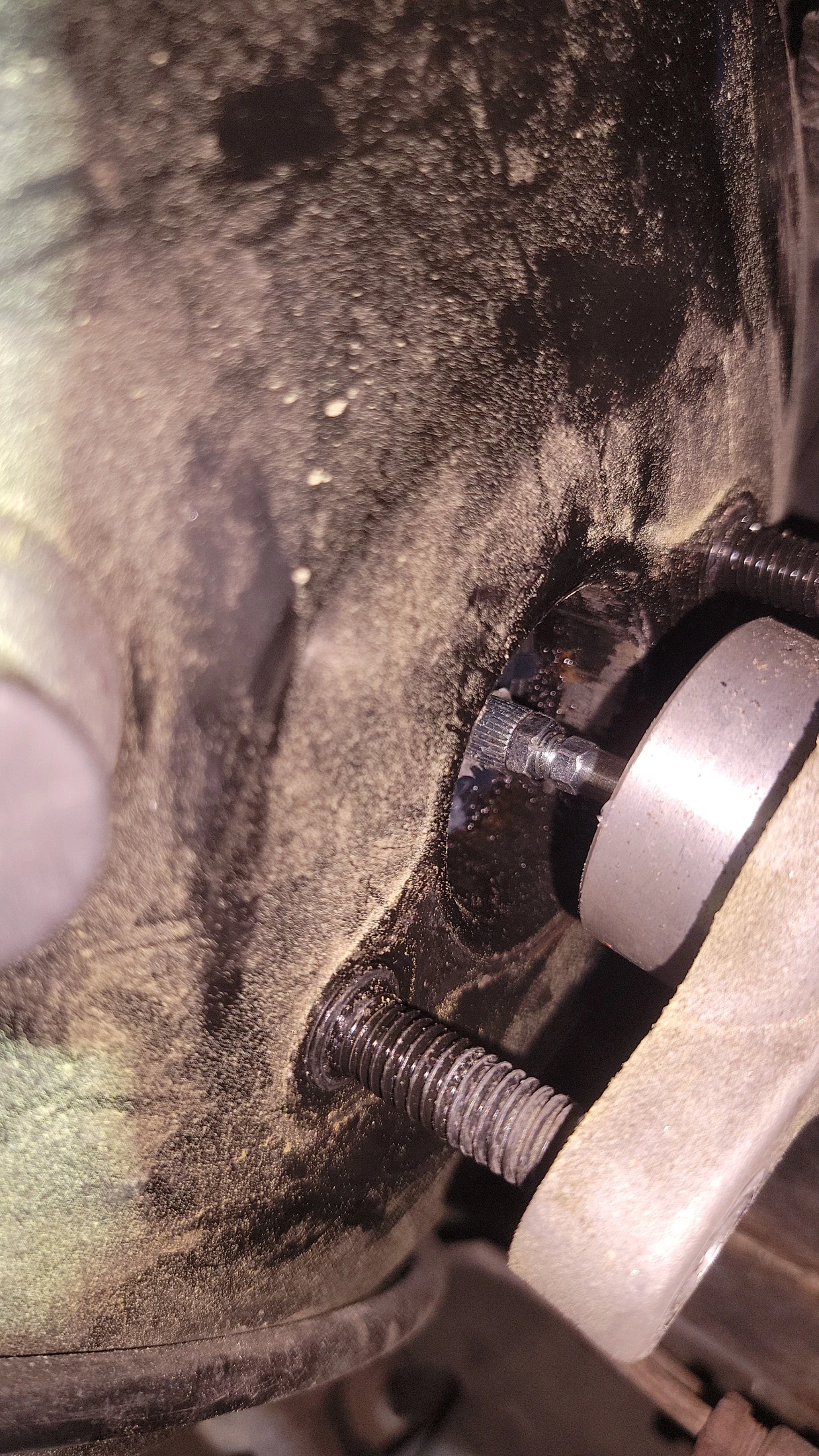
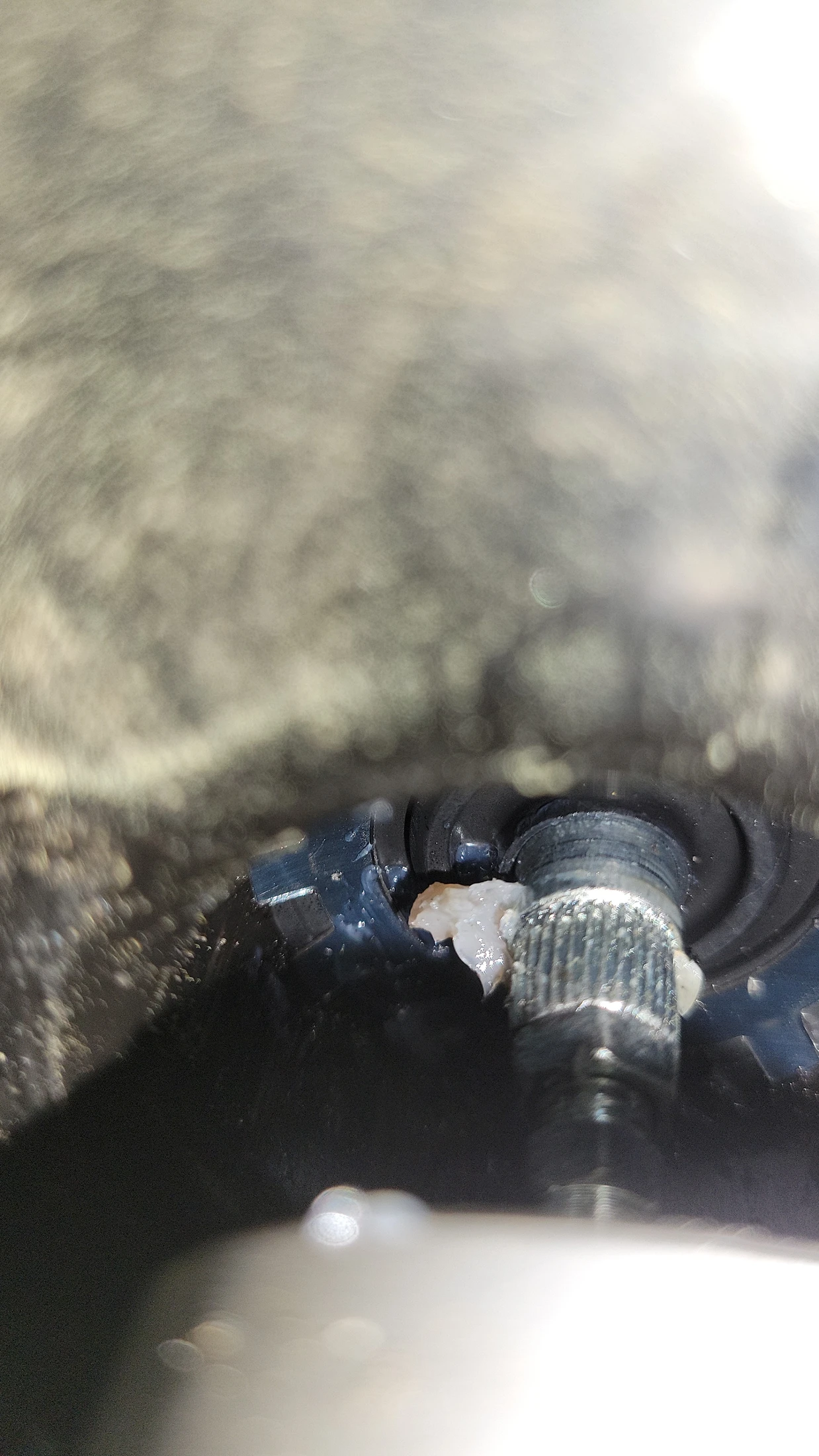
I'm getting ititis, at this point. I have a spare 93 Cobra booster on the shelf. If I also have another 93 Cobra MC, I'm gonna replace both this weekend, and if not then I'll order and replace both soon.
Black Jack has consistently been a car that likes to come up with some tricky ones for me (compound drivetrain vibration I had to go through absolutely everything to fix, intermittent spark issues that turned out to be a dying MSD box I couldn't easily bypass, thanks to the then-recent wire tuck, to name the two big things). It is just the fox I needed to challenge myself and learn new things, I guess. At least it has been reliable and held together with an old high mileage powertrain on a 150-shot to this point. *Knocks on wood*
Clues:
1. Typically drags somewhere between 5-15 min into a drive and clears up on the highway
2. Can be reset or cleared up with a heavy linelock brake release
3. Does not happen when booster is disconnected
New clue:
Turned the booster rod in a lot (maybe another turn) & reconnected vacuum. Didn't make it half a block before noticing drag. Pulled MC out from booster to turn the rod all the way in, i.e. no adjustment is left, and noticed this grease squeezing past the inner part of the rod. hmmm
On the next test drive, I noticed absolutely no difference in where the pedal engages. How is that mechanically possible? If there's more of a gap between booster rod and MC plunger, there has to be more pedal before engagement, but there simply is not. But... I couldn't say for sure if there was any drag.
I'm getting
ititis, at this point. I have a spare 93 Cobra booster on the shelf. If I also have another 93 Cobra MC, I'm gonna replace both this weekend, and if not then I'll order and replace both soon.Black Jack has consistently been a car that likes to come up with some tricky ones for me (compound drivetrain vibration I had to go through absolutely everything to fix, intermittent spark issues that turned out to be a dying MSD box I couldn't easily bypass, thanks to the then-recent wire tuck, to name the two big things). It is just the fox I needed to challenge myself and learn new things, I guess. At least it has been reliable and held together with an old high mileage powertrain on a 150-shot to this point. *Knocks on wood*
Last edited:
Still had definite brake drag this morning, despite the rod being turned all the way in to the booster as far as it could go. The booster's services are no longer required, and it is disconnected permanently until I replace it with another one. Hopefully I'll get around to it this weekend.
I think most of us understand that the only thing an adjustable booster rod allows us to do is move the booster rod further into or out of the master cylinder. What we are trying to achieve is a slight gap between the rod and the MC piston so we do not have brake drag and we decrease the pedal effort by getting the rod to engage early when pressing the brake pedal. Again, I think most of us understand all of this.
The booster works by having vacuum on both sides of the diaphragm until the brake pedal is depressed and then magic happens and the vacuum on the brake pedal rod side goes to atmospheric pressure. This gives the mechanical advantage of positive pressure on the brake pedal rod side and negative pressure on the MC side. When the brake pedal is released then negative pressure is put back on the brake pedal side and the booster rod retracts with the aid of the spring on that side of the diaphragm. You can make it more complicated but that in a nutshell is how it works.
If you remove the vacuum off the MC side then the pedal pressure is only what your leg can put on the MC piston. If the drag goes away when you do this then I would say the booster has an issue either mechanically or there is a vacuum issue. If the drag does not go away then it could still be the booster or it could be the MC if all the brakes are having a drag issue.
This is a pretty good video on how it all works and how to diagnose a bad one:
View: https://youtu.be/YT8ySllYqDE?si=jPyiz7EAgQY6h9Wy
The booster works by having vacuum on both sides of the diaphragm until the brake pedal is depressed and then magic happens and the vacuum on the brake pedal rod side goes to atmospheric pressure. This gives the mechanical advantage of positive pressure on the brake pedal rod side and negative pressure on the MC side. When the brake pedal is released then negative pressure is put back on the brake pedal side and the booster rod retracts with the aid of the spring on that side of the diaphragm. You can make it more complicated but that in a nutshell is how it works.
If you remove the vacuum off the MC side then the pedal pressure is only what your leg can put on the MC piston. If the drag goes away when you do this then I would say the booster has an issue either mechanically or there is a vacuum issue. If the drag does not go away then it could still be the booster or it could be the MC if all the brakes are having a drag issue.
This is a pretty good video on how it all works and how to diagnose a bad one:
View: https://youtu.be/YT8ySllYqDE?si=jPyiz7EAgQY6h9Wy

gkomo
now i can hopefully expect to receive the shaft
I think most of us understand that the only thing an adjustable booster rod allows us to do is move the booster rod further into or out of the master cylinder. What we are trying to achieve is a slight gap between the rod and the MC piston so we do not have brake drag and we decrease the pedal effort by getting the rod to engage early when pressing the brake pedal. Again, I think most of us understand all of this.
The booster works by having vacuum on both sides of the diaphragm until the brake pedal is depressed and then magic happens and the vacuum on the brake pedal rod side goes to atmospheric pressure. This gives the mechanical advantage of positive pressure on the brake pedal rod side and negative pressure on the MC side. When the brake pedal is released then negative pressure is put back on the brake pedal side and the booster rod retracts with the aid of the spring on that side of the diaphragm. You can make it more complicated but that in a nutshell is how it works.
If you remove the vacuum off the MC side then the pedal pressure is only what your leg can put on the MC piston. If the drag goes away when you do this then I would say the booster has an issue either mechanically or there is a vacuum issue. If the drag does not go away then it could still be the booster or it could be the MC if all the brakes are having a drag issue.
This is a pretty good video on how it all works and how to diagnose a bad one:
View: https://youtu.be/YT8ySllYqDE?si=jPyiz7EAgQY6h9Wy
Kinda sounds like the booster rod isn’t retracting fast enough and that’s why it clears up on the highway because he’s not constantly pressing on the brake Pedal… that and he said some grease oozed out when adjusting the rod all the way inwards. Maybe that spring you mentioned failed or this grease is preventing the rod to retract quickly?
Yeah, I can't say I understand it. I'll watch the video after work, and hopefully something will make some sense. But, I know I'd rather drive with mechanical brakes indefinitely than drive with them dragging like they have been. After I disconnected it about 5 minutes into my drive, it didn't drag the rest of the 25 minutes into work.
Similar threads

- Replies
- 5
- Views
- 189
- Replies
- 10
- Views
- 483

- Replies
- 22
- Views
- 715
- Replies
- 6
- Views
- 499

