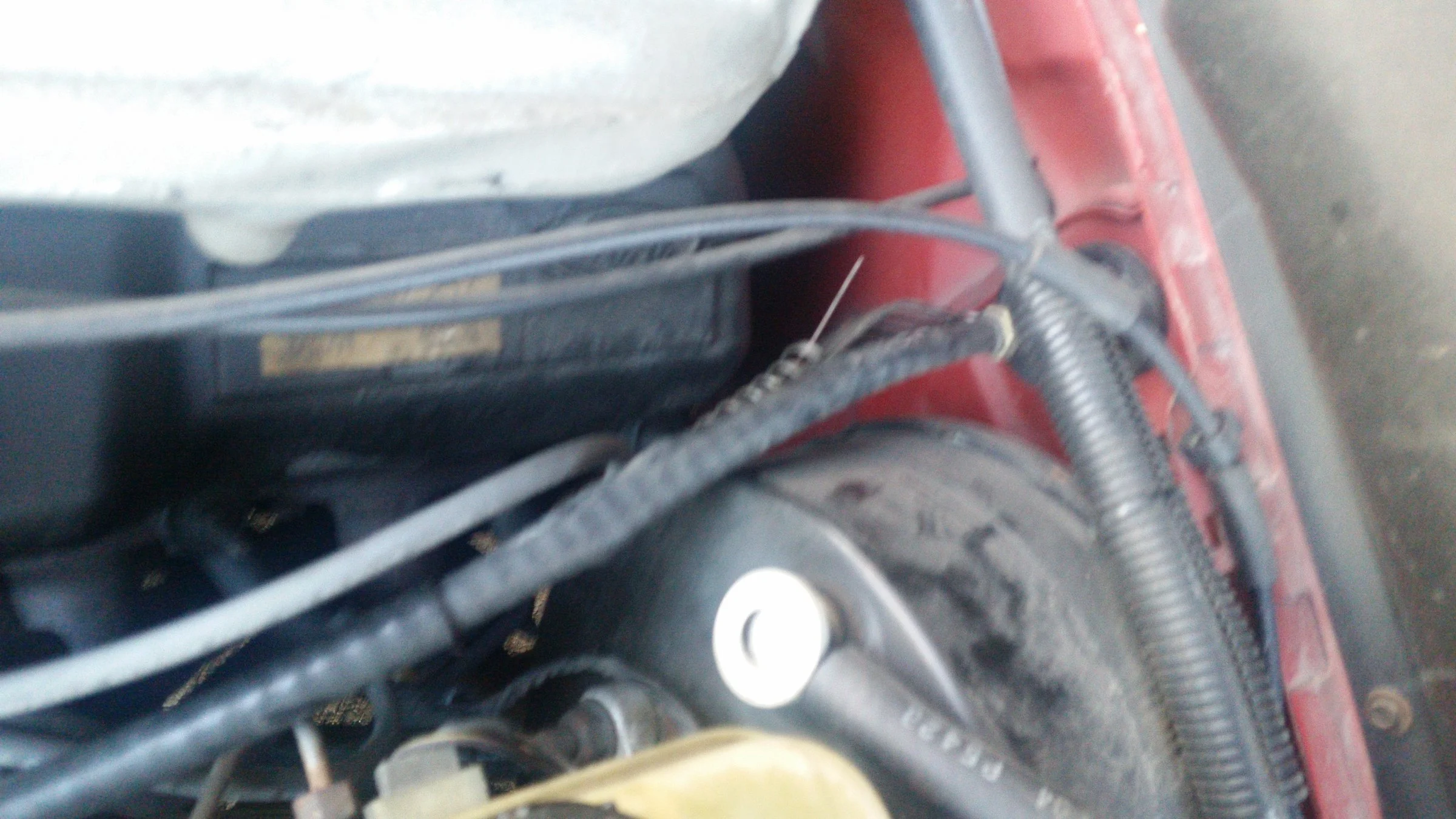
Clutch Adjustment for stock and aftermarket setups
Revised 28-Apr-2016 to include need for longer cable with single hook quadrant
Clutch adjustment
Do the clutch adjustment first before considering any other problems. With the stock plastic quadrant and cable, pull up on the clutch pedal until it comes upward toward you. It will make a ratcheting sound as the self adjuster works. To release to tension of the stock quadrant, use a screwdriver to lift the ratchet paw up and out of engagement with the quadrant teeth.
Binding clutch cable
A binding clutch cable will make the clutch very stiff. If the cable is misrouted or has gotten too close to the exhaust, it will definitely bind. The binding common to adjustable cables is often due to misplacement of the adjusting nuts on the fork end of the cable. This will also cause the cable to wear and fray. Both nuts should be on the back side of the fork so that the domed nut faces the fork and the other nut serves as jam or locknut to the domed nut.
Clutch pedal adjustment
Clutch pedal adjustment with aftermarket quadrant and cable: I like to have the clutch completely disengaged and still have about 1.5” travel left before the pedal hits the floor. This means that I have only about 1” of free play at the top before the pedal starts to disengage the clutch. Keep in mind that these figures are all approximate. When properly adjusted, there will not be any slack in the clutch cable. You will have 4-15 lbs preload on the clutch cable. With a non adjustable cable and a firewall adjuster, the cable needs to go in the second hook of the quadrant. Single hook quadrants used with a firewall adjuster may make the clutch too tight, causing it to slip. The possible exception to this is the Maximum Motorsports cable which is a bit longer to make it work with a single hook quadrant.
Adjustable clutch cable tips:
Loosening the cable adjustment nut (throwout bearing arm moves to the rear of the car) moves the disengagement point towards the floor.
Tightening the cable adjustment nut (throwout bearing arm moves to the front of the car) moves the disengagement point towards the top of the pedal.
Firewall adjuster tips
Turning the firewall adjuster IN makes the engagement point closer to the floor since it loosens the cable. You have to push the pedal to the floor to disengage the clutch. Too loose a cable and the clutch won't completely disengage and shifting will be difficult. Gears will grind and you may have difficulty getting the transmission in first gear when stopped.
Turning the firewall adjuster OUT makes the engagement point farther from the floor since it tightens the cable. You push a short distance to disengage the clutch. Too tight a cable will cause clutch slippage.
Aftermarket solutions to the problem:
The quadrant needs to be replaced if you use any type of aftermarket cable or adjuster. My preference is a Ford Racing quadrant, adjustable cable and Steeda firewall adjuster. The adjustable Ford Racing cable is just as good as the stock OEM cable. It allows a greater range of adjustment than a stock cable with a aftermarket quadrant and firewall adjuster. Combined with the Steeda adjuster, it lets you set the initial cable preload and then fine tune the clutch engagement point to your liking without getting under the car.
Using a stock OEM cable, firewall adjuster and a single hook quadrant may result in not having any free pedal travel before the clutch starts to disengage. I found this out the hard way.
See
Summit Racing - High Performance Car and Truck Parts l 800-230-3030 for the following parts.
Ford Racing M-7553-B302 - Ford Racing V-8 Mustang Adjustable Clutch Linkage Kits - Overview - SummitRacing.com Cable and quadrant assembly $90
The Ford Racing Adjustable cable is available as a separate part:
Clutch Cable, Adjustable, Ford, Mercury, 5.0L, Kit

[url=http://www.summitracing.com/parts/SDA-555-7021/]Steeda Autosports 555-7021 - Steeda Autosports Firewall Cable Adjusters - Overview - SummitRacing.com Steeda firewall adjuster. $40
Fix for the quadrant end of the cable popping out of the quadrant when installing a replacement cable courtesy of
Grabbin' Asphalt
[/url]