Computer will not go into diagnostic mode on 86-90 model 5.0 Mustangs
Disconnect the battery positive terminal before making any resistance checks.
The small voltage drop in the battery cables will cause incorrect resistance readings.
Computer diagnostic connector:
How it is supposed to work:
The black/white wire (pin 46) is signal ground for the computer. It provides a dedicated
ground for the EGR, Baro, ACT, ECT, & TPS sensors as well as the ground to put the
computer into self test mode.
If this ground is bad, none of the sensors mentioned will work
properly. That will severely affect the car's performance. You will have hard starting, low power
and drivability problems. Since it is a dedicated ground, it passes through the computer on its
way to the computer main power ground that terminates at the battery pigtail ground. It should
read less than 1.5 ohms when measured from anyplace on the engine harness with the battery
pigtail ground as the other reference point for the ohmmeter probe.
What sometimes happens is that the test connector black/white wire gets jumpered to power.
There is a dark brown connector with a black/orange wire near the diagnostic connector. It is
the 12 volt power to the under the hood light. If this happens, it either burns up the wiring or
burns the trace off the pc board inside the computer. That trace connects pins 46 to pins 40 &
60. Only an experienced electronics technician can open the computer up & repair the trace if
it burns up and creates an open circuit.
The STI (Self Test Input ) is jumpered to ground to put the computer into test mode. The STI
has a gray connector shell and a white/red wire Jumpering it to power can produce unknown
results, including damage to the computer. The ohm test simply verifies that there are no breaks
in the wiring between the test connector and the computer input.
How to test the wiring :
With the power off, measure the resistance between the computer test ground
(black/white wire) on the self test connector and battery ground. You should see less than
1.5 ohms.
If that check fails, remove the passenger side kick panel and disconnect the computer
connector. There is a 10 MM bolt that holds it in place. Measure the resistance between
the black/white wire and pin 46 on the computer wiring connector: it should be less than
1.5 ohms. More that 1.5 ohms is a wiring problem. If it reads 1.5 ohms or less, then the
computer is suspect. On the computer, measure the resistance between pin 46 and pins
40 & 60: it should be less than 1.5 ohms. More that that and the computer’s internal
ground has failed, and the computer needs to be replaced.
If the first ground check was good, there are other wires to check. Measure the
resistance between the STI computer self test connector (red/white wire) and pin 48 on
the computer main connector: it should be less than 1.5 ohms. More that 1.5 ohms is a
wiring problem
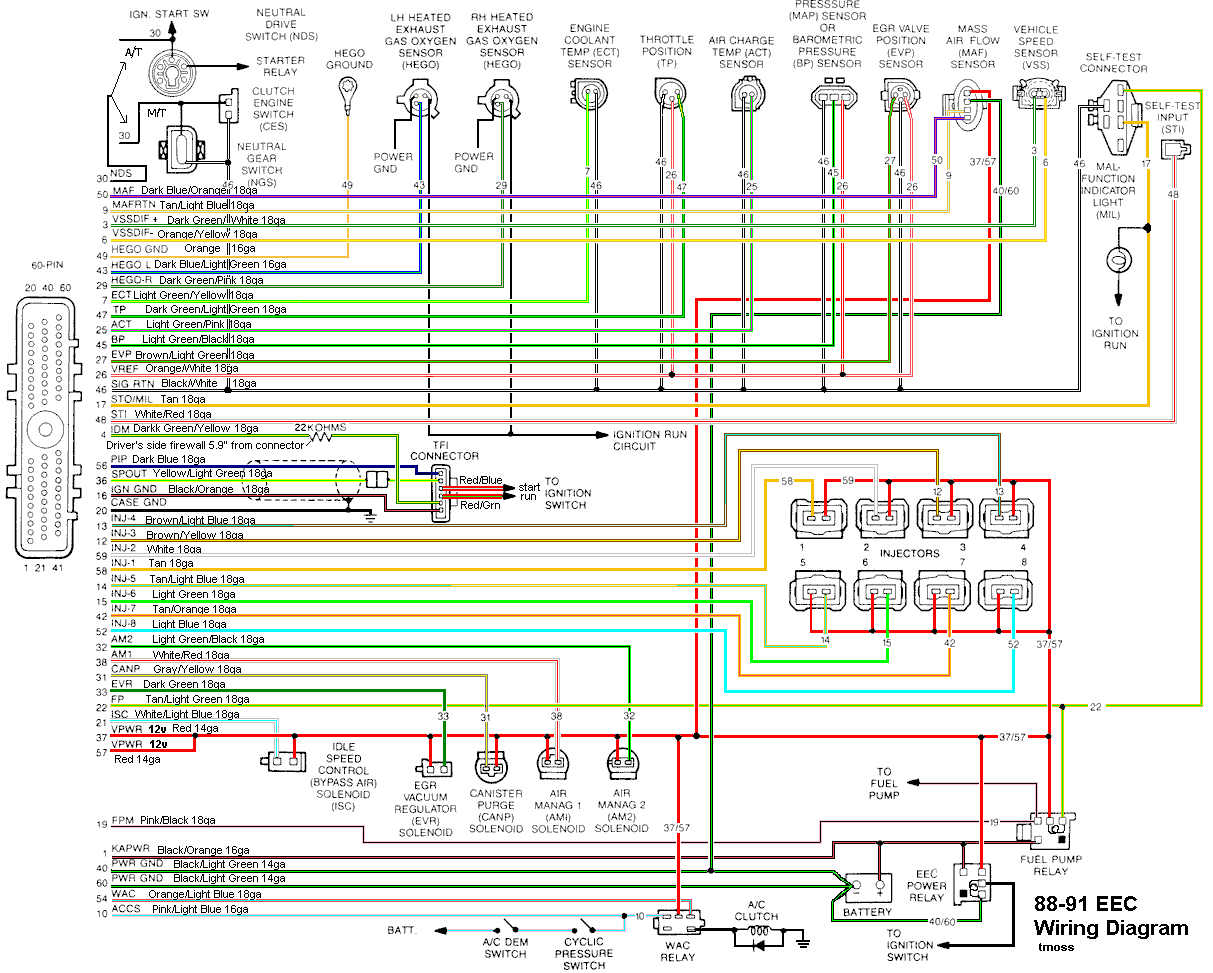
The following is a view from the computer side of the computer wiring connector.
Diagram courtesy of Tmoss & Stang&2birds
Check out the diagram and notice all the places the black/white wire goes. Almost every
sensor on the engine except the MAF is connected to it.
See the following website for some help from Tmoss (diagram designer) & Stang&2Birds
(website host) for help on 88-95 wiring
Mustang FAQ - Engine Information
See
http://forums.stangnet.com/749974-computer-issue.html for more help on fixing the computer innards.