Electrical In theory what ELECTRICALLY kills TFI modules?

IN2DEEP

New Member
Jan 1, 2004
26
1
3
1978 Jeep CJ5, fiberglass body, 1990 Ford 5.0 EFI engine.

I've been chasing a TFI killer for 10 years. It hasn't been a constant. Frustration leads to the vehicle (Jeep) being pushed into the garage and ignored.

In the spring I get excited, find a new solution or a mechanic to "fix" it and I'm ready to give it another try. But once again it has kicked my butt.

The modules aren't lasting long enough for it to be a heat issue. This latest one probably had 10 hours of run time at BEST. I've remote mounted them in the past with no new benefit. New module works for a short period, then quits.

I've replaced the wiring in the engine bay with a Ron Francis plug-n-play "kit" (last years fix). All the wiring is new. I've swapped distributors (new and used). I've swapped ECMs hoping that would provide some answers. Nothing changes. The body harness was new in 2000 and it hasn't been butchered. The Jeep is garage kept, so there's not rodents or weather to deteriorate the wires. For over ten years this Jeep was my "nationwide" cruiser, up and down the East coast. Now I can barely drive it home from the mechanics before it fails.

So in a very general sense....... what causes TFI failures ELECTRICALLY? Too much power? Too little power?

If this was your vehicle and you suspected an electrical gremlin is in there reeking havoc, how would you diagnosis it?

On a side note, how much gasoline does it take to burn down a Jeep CJ5?......UGH!
 
The last question first- if you have an electric fuel pump, and a leak in the high pressure line that sprays near the exhaust manifold, four Oz. should be enough to get the process started. Any more will speed it up.
 
  • Haha
Reactions: IN2DEEP
If you are burning them up in 10hours, I don’t think heat is the issue.

I’d be checking the wiring to make sure the correct wires are routed to the correct pins and one isn’t receiving more voltage than it should.

I can provide a wiring diagram for the factory setup, but you’ll need to trace it out to your aftermarket setup to see if it all matches out.
 
  • Like
Reactions: IN2DEEP
A couple of things can consistently kill electronics. Over voltage or voltage spike or surges, I don't know what the TFI likes to see for an input voltage but if you are hitting it with more than called for it, it will cause a problem. Under voltage usually won't harm the electronics but can cause all sorts of weird and intermittent problems. Shorts will usually cause an over voltage or surge. Heat can kill electronics and it does not always take a lot of time. Can also very be inconsistent, electronics are speced at certain operating temperatures, exceed those specs and who knows what will happen, it may last minutes or months. Your problems seem to be in summer when temps are higher so I would not rule that out. If you can find out what the max input voltage is for the TFI you could add a voltage meter and or voltage regulator in-line to monitor or protect. You could also add a fuse in line if the input is shorting out, the fuse should blow before the TFI takes the hit. As for the heat they make a relocation kit for the 94-95 5.0 that moved the TFI from the distributor to the fender because of heat issues. Has something to do with the different airflow getting to the distributor in the SN 95 cars vice the foxes. Your jeep may have a similar problem because of the differences in the engine compartment, etc. How to diagnose, if it’s not heat or over voltage then it’s got to be a short or intermittent connection causing a voltage spike, painstaking wire by wire, connector by connector, with some good schematics and a good multimeter. Anyway a few thoughts hopefully they help.
 
  • Like
Reactions: IN2DEEP
Part of the tfi wiring is supposed to be shielded. Not sure which ones because I'm away from the car. Over time the thin aluminum foil type shielding breaks down on factory harnesses and could cause electrical noise that may cause one to fail. Some aftermarket harnesses aren't shielded.

Have you ever taken a tfi module to advance auto to be checked. They have the tool and it's free. ( I worked there for years a long time ago ) Last time I had one checked was about 5 years ago. It's an ignition module tester. You want to make sure your grounds are good and clean. The paste that comes with a bunch of new modules is the wrong stuff. It'll cause the module to fail. The last few I bought came with a clear type dielectric grease....it should be a white heat paste.

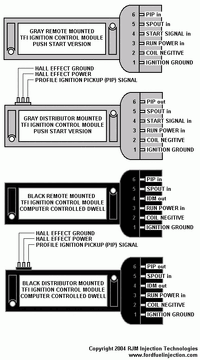
There are two types of tfi modules. One is used on the older fox and trucks. The other one was used on 94 - 95 mustangs. Ones gray and ones black. The wiring is different. They aren't interchangeable.

Your problem could be electrical interference. I'd start by making sure the voltage is correct. Make sure wires are going to correct places. Check the ground continuity. Use an oscilloscope and read the signal from the PIP wire. Make sure the pick up assembly is clean and tight in the distributor below the rotor button. Put shielding on the wires to isolate the circuit. If it keeps blowing it would have to be a computer issue and not the harness or tfi.

New TFI parts are junk. I'd rather go to the JY and buy a few and get them tested. Keep a spare and ride on if it makes you feel better.

Hope you find the solution man.

JRichker no start list has a test using a noid light for the PIP signal
 
Last edited:
If you are burning them up in 10hours, I don’t think heat is the issue.

I’d be checking the wiring to make sure the correct wires are routed to the correct pins and one isn’t receiving more voltage than it should.

I can provide a wiring diagram for the factory setup, but you’ll need to trace it out to your aftermarket setup to see if it all matches out.
Hey Mike, Let's see that wiring diagram. thanks!
 
Here you go. This is the 1990 wiring diagram

TFI in the bottom right quadrant
F0C91A13-8FD0-4EB8-A384-8DCFE9D27662.jpeg


wire 16 off the TFI is also referenced here
0B4D77CA-78C2-4575-830B-4CE620658E36.jpeg
BE404DF8-E5C2-4FEC-81DB-A23F867D027F.jpeg
 
Last edited:
Ugh....... Looking over my posts/history, I realized I have been fighting this electrical issue for almost 10 years! When it began the TFI module would go out, I'd replace it and it would last a year or more then die. It's gotten progressively worse. And the last time it was "fixed" the Jeep ran for about a week before failing to start again. I've fixed it a bunch of times myself, and I've paid two garages decent money to do the same thing I did.....

I'm about to attempt to replace the TFI module AGAIN..... but I'm curious. If your 5.0 was spitting out TFI modules within a week, what would be your next step in diagnosis?

I can run the test once the module fails, and yep the module is cooked again. But replacing it, is just sending another module to its death.

I swear this isn't some hoopty! The body harness is an aftermarket (newer) harness, and it hasn't been hacked. The engine harness is a Ron Francis harness that has very little mileage on it as the TFI module keeps dying and the Jeep gets shoved into the corner of the garage. I'm almost ready to rewire the body and engine again, just to eliminate this gremlin. But everything up to this point has failed to exorcise it.

The 302/5.0 swap was awesome for the first 10 years...... but the last has killed me....... I NEED this Jeep fixed. PLEASE HELP!

Thanks,
Drew
 
Still??? Dang! Before I ponder to far about electrical gremlins, (see avatar), it sounds like something is pulling much too much current. What is the primary resistance on your coil, and are you absolutely positive you have no shorts to ground?
What brands of TFI have you fried?
 
Wow.

If it was me I’d suspect wiring. Something is drawing too much current, or voltage is being sent on the wrong wire.


Run through these checks. There are some resistance checks (test#5) you can run on your failed module that might give a clue as to which wires are causing the internal failure. There is also some wiring checks.


At this point I’d try everything on this list
 
  • Useful
Reactions: General karthief
I like things stock
That said check condition of battery and if it is sulphated
You have no super caps inline with the battery right?
DuraSpark is a much more robust ignition system
Jeeps ran Duraspark for years but never a TFI system
Some of the early aftermarket TFI modules (Standard comes to mind)
Had no IC's and just resistors and diodes inside and were more robust than the Ford design
Try one of those and make yourself a tester like I posted on tech forum
You mentioned remote mount
Is the back of the TFI grounded good?
 
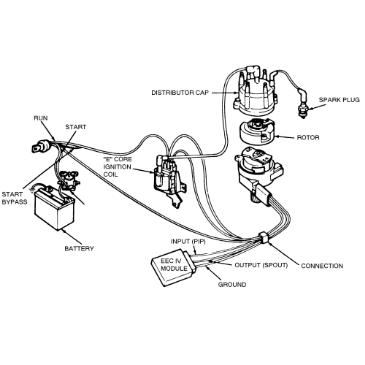
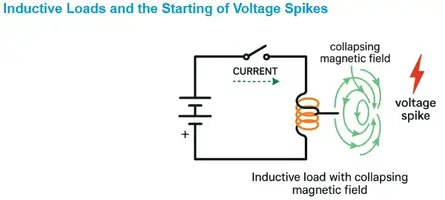
Don't think that the TFI is not being subjected to high amounts of transient voltages... it grounds the negative side of the coil causing the field to collapse and discharge across the secondary of (what is basically a step up transformer).
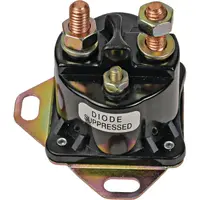
We install flywheel or freewheeling diodes across all solenoids (basically a coil with the same magnetic principles) because this collapsing field will build a negative voltage that can quickly exceed 100s of volts until discharged. This along with heat has to be controlled for the TFI...
Where is the TFI grounded?
 
I know the older Duraspark systems run a resistance wire for the coil in the dash harness, 12 volts in start and approx. 6 volts running. Does the TFI system still use this resistance wire? I see in the diagram there is called out "Ignition Suppression Resistor". I am a little rusty on this system.....

Just a thought.
 
Check your alternator. If there a bunch of electrical noise it can cause issues. I'm sure you've checked the pick up inside the distributor. There was a thread a while ago that showed a difference in some aftermarket shutter wheels.
 
  • Like
Reactions: manicmechanic007
I believe the E coils run at 12v constantly and there is no more 3rd wire on the fender apron starter solenoid to bypass the resistor wire in start
Check your alternator. If there a bunch of electrical noise it can cause issues. I'm sure you've checked the pick up inside the distributor. There was a thread a while ago that showed a difference in some aftermarket shutter wheels.
For some reason on early Escorts 1981- 82 -83. The TFI modules would fail again if you did not replace the stator too
 
The Ford motto
Replace Replace Replace (the stator in your case)(Motorcraft DU-30C)
Repeat
I agree with sicfox
It sure would be worth the effort to occilliscope test the alternator for a bad diode or noise
The coil? Is it grounded? They do not need to be grounded to work but they are grounded
Same with the TFI module (grounded)
 
Can you check your resistance values on your failed TFI(s)? It would be great if you had more than 1 failed unit. Curious to see if there is a trend in terms of where your resistance values are in spec, and where they are out of spec or open

1639073639769.webp
 
  • Useful
Reactions: 7991LXnSHO
Heres the facts that are way better than the "Theory" you ask for..

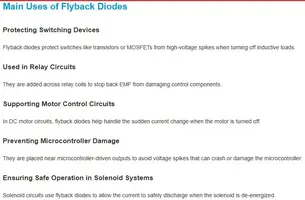
The number one killer of TFI modules that start its downward spiral is "FLYBACK" and flyback comes from deenergized electromechanical devices called relays and solenoids.

Screenshot 2026-04-28 225201.webp
Screenshot 2026-04-28 225033.webp

When you look at the diagram below of the TFI module youll see a wire labeled "Start". This wire is hooked into the start circuit of your keyswitch and everytime you release the key and collapse the circuit on the starter solenoid the reverse voltage which is between 50-400v hits the TFI module like a stungun.This also happens to the relays for the ECU and the fuelpump and guess what even the "Fuel Injectors" are compromised from "FLYBACK" but theres a fix called "Transient Voltage Spike Diodes"..One diode at each injector cap alows the fuel injector to shutoff alot sooner giving the ECU way better control of the flow without mondo corrections but thats for another time.

compare_TFIs.gif

Just as a teaser you can see the diode needed.....I put a Vishay brand 15v 1500 watts unidirectional TVS Diodes at each injector cap and the difference is phenemonenal...I also put one on my ISC solenoid and its behaving and working like a champ...
Screenshot 2026-04-28 223935.webp

To fix the 'FLYBACK ISSUE" they ignored Ford added diodes to the starter solenoids and the ECU/Fuelpump relays in 1994/5 but still dropped the ball in electrical etiquette too and it will all be explained in detail but another thing to add is that the horn wipers and blinkers are all afflicted with Flyback issues and te main reason why most TFI modules fail on rainny days when the vehicle is under a high load of voltage stress...
240-14004_1_z__49882.webp

In addition to being zapped the module gets heated up which thermally takes its toll on the already tormented TFI module but theres a hidden killer thats just as sinister as "FlyBack" and that is " Ground Loops"..Ground Loops conduct both EMI and RF interferrence and actully RF is a "SUB' of EMI but they dont act the same way at the same time and that bombardment of these "Noisy Signals" to the TFI module and the ECU hinder performance and confuse the ECU which heats up the ECU aswell.


View: https://www.youtube.com/watch?v=Ow-QWA6VGFE&t=37s


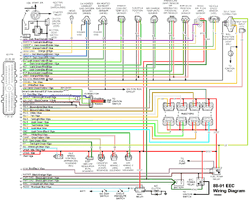
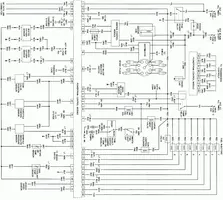
When you look at the EEC-IV schematic for the 1989 Ford Mstang GT 5.0 you'll see that Pin #16 is the "IGNITION GROUND" and should be the sole ground for the Ignition system but its not...

88-91_5.0_EEC_Wiring_Diagram1.gif

The other most overlooked item is the "Noise Suppression Capacitor" aka "Radio Capacitor"most dont know the amount of noise in the system the device has to filter out but when the wire breaks off most say forget tgat it does nothing and from that day on the troubles and the quirks begin as Pin #4 on the TFI module labeled "Run" i the wire affected..

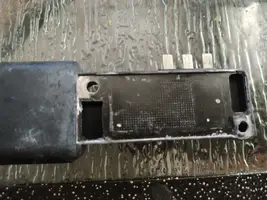
If you take a multimeter and proce the most rearward top pin of the TFI module and do a continuity test you'll see that theyre connected but take the probe and put it on the top rearward pin and touch the plate on the back of the TFI module you'll find that the TFI module gets grounded to a noisy distributor body where lots of EMI events are taking place and melding that noise into a clean signal of PIN #16making it staticy and harder for the ECU to get an accurtae read..

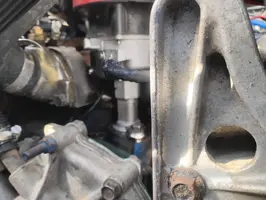
The two metal inserts in this module are a part of the TFI module grounds and the other TFI relocation kits arent engineered by Electrical engineers because the TFI module maybe relocated but the "Ground Loops" are still hardboiled into the modification..

IMG_20240618_160358.webp

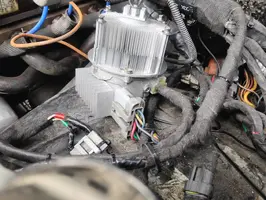
Ever since I did the TFI module relocation DIY mod and eliminated the "Ground Loop" by mounting my unit to the plastic fender it forces the TFI module and the HALLS EFFECT Sensor to share the same clean ground and if you know about electronics lots of systems should share the same power and the same ground especially in High powered Stereo Systems with Eq's and amplifiers where you get that whine, pop and hum from an improperly installed system same noise is being backfec into the ignition system.

IMG_20260426_134131566_HDR.webp

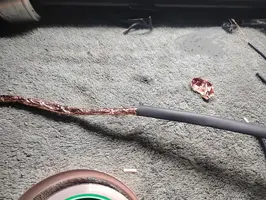
When I made my adapter that mounts to the distributor I eliminated the back plate and also eliminated the metal inserts plus I shielded the cabling.
IMG_20260224_151319475_HDR.webp


IMG_20260218_175345826.webp

IMG_20260219_172025258_HDR.webp

Now that my TFI module is operating at under 100 degrees farenheit with the flyback and the ground loop eliminated my EEC-IV system feels like Im driving a lot newer vehicle...LOL

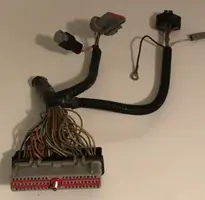
When Ford did their rendition of a TFI relocation they botched it up Horribly by givig the Halls Effect and TFI module seperate power in's and even enhanced the "Ground Loop" by only grounding the Halls Effect Sensor to pin #16 and grounding the TFI module in with pin #40/60 plus when the TFI module heat sink got mounted to the nner fender it created another grounding point so the newer systems actually have a "Triple Ground Loop"..............LOL

I was fortunate bto get my hands on a ECU plug with the TFI module relocation and broke it down.......

Screenshot 2026-04-23 191823.webp 10+ 1994 Ford F150 Engine Wiring Diagram.webp

So there you have it .........................
 
Last edited: