low compression

Guled22 said:
anyone have any ideas?

Go to the local auto parts store and pick up a compression tester. They are pretty cheap. Get one that is a "screw in" type. Do a compression test and let us know what the reading is, once we know wether the compression is good or not, we can advise from there.
 
You should have changed the contaminated oil out before you started driving around.. I know it don't make that much sense but we get this all the time form cars that sit in the yard.. they will foul plugs out untill you get that oil out of there.

wiping the plug down will not work it's fouled out now. you can use one of those little spark plug sandblasters or a lot of brake clean and let it dry off.

this is the order you need to do thing in and it might fix this car.

1. change oil and filter.. even if it's a week old it's contminated now.

2. remove all the plugs and clean them off with LOTS of brake clean..

3. reinstall plugs and drop a few drops of oil in the misfiring cylinder...

4. run the car..

BTW you also have to make sure you got good spark comming from the coil.

why don't you do all those steps and then swap the two coil packs and see if the misfire goes to another cylinder..

It's really hard to come up with tests you can do without the propper diag tools. at work I woul do all the above steps but I would also be using MY IDS scan tool ignition test. I can put a lead on each wire and watch the ign of each cylinder.. this will tell you if you have a bad coil or even a bad PCM driver.


Now remember When you have a ignition related misfire you will wash the rings down in that cylinder and it will read low on a compression test.. This is what throws a lot of people off..

But to tell if this is a base engine problem or just a ignition problem you have to KNOW if you are getting good spark.. Once you bring up the compression with a bit of oil and you have spark it should run fine.

But the problem we have here is

1. I have no way of knowing if you are getting good spark to #4 ( if I know there is good spark I can tell you what is wrong)

2. you need to follow every step I say there is a reason for all of them
 
Just thought I'd mention that unless the #4 cylinder is really really low or it has no compression at all, it will still fire. Also putting oil in the cylinder will improve the compression reading even on a worn out engine, at least temporarily. If one cylinder is low b/c of fuel wash, it won't be much lower than the others, it certainly won't read low enough to make a person think it's not firing.
 
CanadaStang said:
Just thought I'd mention that unless the #4 cylinder is really really low or it has no compression at all, it will still fire. Also putting oil in the cylinder will improve the compression reading even on a worn out engine, at least temporarily. If one cylinder is low b/c of fuel wash, it won't be much lower than the others, it certainly won't read low enough to make a person think it's not firing.


it certainly will... I have seen it myself several times.. It may or may not be his problem, but I have seen it go as much at -40 on the relative compression test from fuel wash.

I used to work at a dealer right near the rail yard that had the contract for new fords that had problems.. We used to get the cars before they got to the other dealers and we would get 5-6 of them a day with fuel wash, just because the guys at the rail yard start them and floor them across the lot and shut them off.. they messed up MANY cars this way. and these were brand new engines we would have to do this on.. these cars were fouled out so bad they would not start, or would run very poor.

we would

1. fix the misfire ( 99 times out of 100 it was just a flooding problem, clean the plugs)

2. change the oil

3. drop a tiny bit of oil down the washed cylinder..

we had to do this to several brand new cars a day, not all of them suffered the compression drop but many of them did and after you run it for awhile it would come back..
if you did not do this the misfiring cylinder would re foul out again.

Sure maybe he DOES have worn rings or a bad valve but as long as he knows he has good ignition this is something he can check that cost next to nothing. I am just highly skeptical of most techs.. 10 + years in large shops I have seen people flat out ROB the customers blind.. sometimes on purpose other times it's because of incompetance.. out of the 30 techs at my shop I would only let maybe 2 of them touch my car..

many techs don't even think of this, they run a relative compression on the IDS/WDS and they see a -40 on one hole and they go" yep that der needs a motor" without even testing anything else. hell it's not there money.

But he need to verify he has good ignition to that cylinder. he needs to check the coil packs and make sure the PCM driver is good.

He can swap the coils and see if the misfire moves, but I am not sure how he can test the driver without a scan tool.
 
CanadaStang said:
Go to the local auto parts store and pick up a compression tester. They are pretty cheap. Get one that is a "screw in" type. Do a compression test and let us know what the reading is, once we know wether the compression is good or not, we can advise from there.

Out of curiosity, how do you use the compression tester? Remove the plug, then put that into the plug well to see how much compression each cylinder holds?

Also, what would be the best way to get those couple of drops into the cylinder? I know that is something I would struggle with and probably end up just having the drops sticking to the well walls and not going down into the cylinder.
 
svttech76 said:
yeah it will.. I have seen it myself several times.. It may or may not be his problem, but I have seen it go as much at -40 on the relitive compression test from fuel wash.
In all the years I've been in the engine rebuilding business I've never seen it happen :shrug: unless the cylinder in question is under 50psi and the rest are more or less normal it will still run on all cylinders. I get alot of vehicles in here with compression readings as low as 60-75 on all cylinders and it will still run without missing on any of the cylinders, they'll be smoking blue but will still run.
In other words, if all cylinders are reading 150 and one cylinder is 110, 110 is still enough compression that it will still fire and run on that cylinder. Fuel wash, as you say will make it appear as though the cylinder is low but not low enough to make one think that low compression is the cause of the miss, unless of course the other cylinders are really really low and that having one cylinder with fuel wash will give that cylinder a reading of less than 50. Hope that makes sense.
 
CanadaStang said:
In all the years I've been in the engine rebuilding business I've never seen it happen :shrug: unless the cylinder in question is under 50psi and the rest are more or less normal it will still run on all cylinders. I get alot of vehicles in here with compression readings as low as 60-75 on all cylinders and it will still run without missing on any of the cylinders, they'll be smoking blue but will still run.
In other words, if all cylinders are reading 150 and one cylinder is 110, 110 is still enough compression that it will still fire and run on that cylinder. Fuel wash, as you say will make it appear as though the cylinder is low but not low enough to make one think that low compression is the cause of the miss, unless of course the other cylinders are really really low and that having one cylinder with fuel wash will give that cylinder a reading of less than 50. Hope that makes sense.


a reading of -40 ( this is on a scan tool test. not -40 PSI -40 percent) means you have 60 percent of compression left so it should fire.. but when they have been washed like this they refoul the plug right away.. This is a problem I have only noticed with the 3.0 4v motor, 4.0 sohc and the modulars.. I think it's more of a ignition problem than a lack of compression problem.. these motors foul plugs very easy. we have brand new ones on the lot that foul out during the winter months when the salesmen move them back and forth for plowing..

I understand what I am telling him to do will raise the compression temporarly.... thats what I am trying to get it too do, so it will run for awile and not foul the plug.. once it gets warm and runs for awile it will be fine IF this is what the problem is.

The idea behind this is trying to improve the conditions in that cylinder just to get it to clear up the washed condition. Once they wash down on these motors I mentioned it's HARD to get them to stop fouling plugs.

Before he spends 1500 bucks on having the engine torn down and then god knows how much to have it fixed and put back in I think he should continue to look at a possibile ignition problem..

another example of a problem simmilar to this is the postal trucks we have come in.. these have 4.0 sohc motors in them.. I know it's different motor but they have a serious problem fouling out plugs.. Only on the postal trucks? I can't explain it either.. Ford has updated the calibration several times and they still foul out and come in for a no start or runnign like crap.. you can put new plugs in them and they still won't run.. they will foul them out instantly.
 
svttech76 said:
a reading of -40 ( this is on a scan tool test. not -40 PSI -40 percent) means you have 60 percent of compression left so it should fire.. but when they have been washed like this they refoul the plug right away.. This is a problem I have only noticed with the 3.0 4v motor, 4.0 sohc and the modulars.. I think it's more of a ignition problem than a lack of compression problem.. these motors foul plugs very easy. we have brand new ones on the lot that foul out during the winter months when the salesmen move them back and forth for plowing..

I understand what I am telling him to do will raise the compression temporarly.... thats what I am trying to get it too do, so it will run for awile and not foul the plug.. once it gets warm and runs for awile it will be fine IF this is what the problem is.

The idea behind this is trying to improve the conditions in that cylinder just to get it to clear up the washed condition. Once they wash down on these motors I mentioned it's HARD to get them to stop fouling plugs.

Before he spends 1500 bucks on having the engine torn down and then god knows how much to have it fixed and put back in I think he should continue to look at a possibile ignition problem..

another example of a problem simmilar to this is the postal trucks we have come in.. these have 4.0 sohc motors in them.. I know it's different motor but they have a serious problem fouling out plugs.. Only on the postal trucks? I can't explain it either.. Ford has updated the calibration several times and they still foul out and come in for a no start or runnign like crap.. you can put new plugs in them and they still won't run.. they will foul them out instantly.
Gotcha! :nice:
While I still get a few high mileage engines, most of our business nowadays is rebuilding engines that are still relatively low mileage but have been neglected or abused [I do alot of these for dealers] and a few "built" engines for performance cars. I do get alot of high mileage deisels but not too many people bother to get high mileage gas engines rebuilt anymore except for the odd sports cars.
 
stangGT97 said:
Out of curiosity, how do you use the compression tester? Remove the plug, then put that into the plug well to see how much compression each cylinder holds?

Also, what would be the best way to get those couple of drops into the cylinder? I know that is something I would struggle with and probably end up just having the drops sticking to the well walls and not going down into the cylinder.
Just remove the sparkplug wire from the plug, then remove the sparkplug, screw the tester into the plug hole and spin the engine over. There should be directions with the tester.

As for the oil, just use a small squeeze bottle or an eye dropper. You could also just use a drinking straw,put it into the oil container then put your finger over the end and then poke it down into the plug hole. Then just remove your finger from the end of the straw.
 
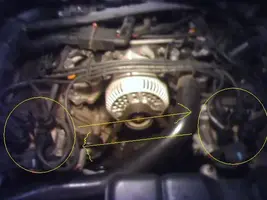
ok im gonna follow everything you told me to do early tommrow morning, but you know how you said to switch the coil packs? wouldnt that mess up the firing order and stuff? i was thinking of cleaning the plugs then switching with the wire from the cylinder rite next to it. wouldnt that cause more problems?
 
Guled22 said:
ok im gonna follow everything you told me to do early tommrow morning, but you know how you said to switch the coil packs? wouldnt that mess up the firing order and stuff? i was thinking of cleaning the plugs then switching with the wire from the cylinder rite next to it. wouldnt that cause more problems?


the coil packs are interchangable.. and it's a good idea to swap wires around to.. see if the misfire follows the coil or the wire.. If not and you do all this stuff then they were right and you have a base engine problem like poor valve sealing or bad rings..
 
Guled22 said:
ok im gonna follow everything you told me to do early tommrow morning, but you know how you said to switch the coil packs? wouldnt that mess up the firing order and stuff? i was thinking of cleaning the plugs then switching with the wire from the cylinder rite next to it. wouldnt that cause more problems?
Start off with checking the easiest stuff first. If you're going to try switching coil paks, you must put the wires back on the same way they came off. What you are doing is unplugging the wires off of both paks, removing the paks and switching them from one side to the other. I'd suggest you label the wires [if yours aren't numbered]or draw a diagram, whatever you need to do so you know where on the coil pak and to which plug they should be replaced.
If you're going to try switching one wire for another, make sure you put the replacement wire back in the exact same spot on the coil. Don't get them mixed up.
 
CanadaStang said:
Gotcha! :nice:
While I still get a few high mileage engines, most of our business nowadays is rebuilding engines that are still relatively low mileage but have been neglected or abused [I do alot of these for dealers] and a few "built" engines for performance cars. I do get alot of high mileage deisels but not too many people bother to get high mileage gas engines rebuilt anymore except for the odd sports cars.


Someday i would love to talk to a ford powertrain engineer about this plug problem.. it really does not make much sense.. I had one p[ostal truck that had random misses and I replaced the plugs and wires everything.. cleaned them multiple times and it would not stop fouling them out or even run right from the start untill I changed the oil.. :shrug: sure it was contaminated but thats sensitive... it has to be in the ignition and the tune
 
Photo 73.webp

ok just making 100 percent sure, sorry for the blurry picture but im just gonna unplug the wires and switch the packs and plug the wires back into there exact spots there in now and it wont mess up anything rite? and also ive never messed with the coil packs is it difficult to switch them? it looks like there just screwed in with a few screws.
 
Guled22 said:
Photo 73.webp

ok just making 100 percent sure, sorry for the blurry picture but im just gonna unplug the wires and switch the packs and plug the wires back into there exact spots there in now and it wont mess up anything rite? and also ive never messed with the coil packs is it difficult to switch them? it looks like there just screwed in with a few screws.

That is correct. They are mounted with 4 8mm screws (I believe that is the size). Just make sure you reconnect the wires in the exact order they were in before.
 
svttech76 said:
Someday i would love to talk to a ford powertrain engineer about this plug problem.. it really does not make much sense.. I had one p[ostal truck that had random misses and I replaced the plugs and wires everything.. cleaned them multiple times and it would not stop fouling them out or even run right from the start untill I changed the oil.. :shrug: sure it was contaminated but thats sensitive... it has to be in the ignition and the tune
Quirky things like that can drive a person crazy!!:bang:
If you ever get the chance to discuss it with Ford, it would certainly be interesting to hear what they had say. I'd sure appreciate it if you let me know if you ever find out anything.
 
CanadaStang said:
Quirky things like that can drive a person crazy!!:bang:
If you ever get the chance to discuss it with Ford, it would certainly be interesting to hear what they had say. I'd sure appreciate it if you let me know if you ever find out anything.


I will do that. Hopefully I will find somebody that can help..

The ignition system on these motors is pretty damm strong you would think it would be hard to foul out plugs and flood these motors.
 
ok i finnaly got everything done guys. I changed the oil and filter, cleaned the plugs and switched them, switched around the coil packs and put a few drops of oil in the misfiring cylinder 4.

I havent driven the car yet, its just been idiling for about 20 mins, and even though I can feel a very slight misfire its not throwing a code. Also it was smoking for a little bit in the beginning from the hood, but thats because I spilled a little bit of oil.