
I am looking into getting some 17x8 rims on my 67 mustang. i have been researching. i called the local les schwab and they said that spacers arent a good idea becaue of something doing with stress on the lug nuts. How safe are they for a daly driver like myself?
You are using an out of date browser. It may not display this or other websites correctly.
You should upgrade or use an alternative browser.
You should upgrade or use an alternative browser.
spacers safety???
- Thread starter chrua
- Start date
66moneypit
Member
chrua said:I am looking into getting some 17x8 rims on my 67 mustang. i have been researching. i called the local les schwab and they said that spacers arent a good idea becaue of something doing with stress on the lug nuts. How safe are they for a daly driver like myself?
I JUST asked Mustang Monthly magazine that question and it's in this months issue actually. They said they are safe to run but they don't go into what's safe and what's not. I should have been more specific about the size of the spacers. They did say you could run 1/4 spacers using the existing studs with no problem. I don't know if "how" you drive your car has any effect on that decision either.

Hack
15 Year Member
Safety is a tough issue in today's society because pretty much everyone is looking to win the "law suit lottery" if they ever get the opportunity. Very few businesses will assume the risk of officially saying that something is safe. Everything gets warning labels "for off road use only" etc, etc.
Lots of people will give advice on the internet, since they assume they won't be held responsible for any injuries or loss of life. In my opinion, it's your responsibility to make safe decisions. When you modify your car, remember that a mistake could kill a nearby child on a bike or a family in their car.
Ok, sorry I'm going on too much here. I'll cut to the chase.
Wheels do not hang from the studs. There is a circular protrusion called a hub that centers and supports the wheel on the spindle. If the spacer is thin enough that the hub still supports the wheel, in my opinion that is safe. It's still a good idea to use new, good quality wheel studs with the spacer.
If the spacer is too thick for the wheel to be properly supported by the hub, the spacer must have a hub built into it. In my opinion a thicker spacer with a hub built in is also safe, as long as the spacer is well made. I recommend inspecting a thick wheel spacer regularly. The regularity depends on use. If you are racing the car, don't use a spacer! If you like to corner hard and you drive on rough roads, I would think you should pull a wheel at every oil change and look for cracks in the spacer or bent studs. I wouldn't pull every wheel, just a different one each oil change.
Keep in mind all this advice just came out of my head. If you buy some junky cast spacer with all kinds of porosity in it, it may fail when you go to bolt it up. Please think and be careful and take responsibility for your own safety!
Lots of people will give advice on the internet, since they assume they won't be held responsible for any injuries or loss of life. In my opinion, it's your responsibility to make safe decisions. When you modify your car, remember that a mistake could kill a nearby child on a bike or a family in their car.
Ok, sorry I'm going on too much here. I'll cut to the chase.
Wheels do not hang from the studs. There is a circular protrusion called a hub that centers and supports the wheel on the spindle. If the spacer is thin enough that the hub still supports the wheel, in my opinion that is safe. It's still a good idea to use new, good quality wheel studs with the spacer.
If the spacer is too thick for the wheel to be properly supported by the hub, the spacer must have a hub built into it. In my opinion a thicker spacer with a hub built in is also safe, as long as the spacer is well made. I recommend inspecting a thick wheel spacer regularly. The regularity depends on use. If you are racing the car, don't use a spacer! If you like to corner hard and you drive on rough roads, I would think you should pull a wheel at every oil change and look for cracks in the spacer or bent studs. I wouldn't pull every wheel, just a different one each oil change.
Keep in mind all this advice just came out of my head. If you buy some junky cast spacer with all kinds of porosity in it, it may fail when you go to bolt it up. Please think and be careful and take responsibility for your own safety!
66moneypit
Member
chrua said:So is a 1" spacer for 17x8 considered a "thick" spacer? I have seen many people with 17x8 with spacers. Has anyone had any problems with spacers?
1 inch is fairly common from the post I have seen. I did see a post where a guy talked about off roaders using them on a their 4x4s. Don't have any first hand knowledge of that but that definitely had to be punishing on the spacer if they do that. If it holds up to that, then I think it should probably be okay for regular driving. I do agree with the post above though....try to be safe. I personally don't plan on running any spacer of .25 just because I got enough to worry about when I am driving


67coupe351w
New Member
The spacers are definately going to make your wheel creat more of a moment on your wheel bearings which will reduce their life since they are seeing more load than they were designed for.
So rather than lasting practicaly forever you may have to change them a time or two depending on how many miles you put on the car and how you drive it.
So rather than lasting practicaly forever you may have to change them a time or two depending on how many miles you put on the car and how you drive it.

Route666
Active Member
Hack said:Wheels do not hang from the studs.
Really? I've always been under the impression that most wheels were lug-centric and that hub-centric was usually a race-car thing. All OEM steel wheels I've seen have tapered lug nuts, telling me they are lug-centric, backed up by the ~0.5mm gap between wheel and hub when mounted.
I however wouldn't scorn anyone for making hub spacers to fit their wheels to their hubs. (Not wheel spacers)

ddonaca351
Active Member
Just fyi, you can get spacers from companies like Maximum Motorsports (the guys with the mustangs that pull OVER 1g) and in my opinion, if they feel its safe, and well made, then I trust their judgement.... but again thats just me.
I do not easily trust just any old company, but ones who have been racing and winning for years and years, tend to have a good amount of usefull knowledge and experience, as opposed to the local $10 and hour flunky at Less Schwab, who is trying to convince you that you need different wheels, so that he can sell them to you.
Just my opinion...
Dave-


I do not easily trust just any old company, but ones who have been racing and winning for years and years, tend to have a good amount of usefull knowledge and experience, as opposed to the local $10 and hour flunky at Less Schwab, who is trying to convince you that you need different wheels, so that he can sell them to you.
Just my opinion...
Dave-
Hack
15 Year Member
If you are using the spacer in order to compensate for incorrect backspacing on your rims, there will not be more of a moment on the wheel bearings. The tire patch will end up in about the same position relative to the bearings as the factory wheels.67coupe351w said:The spacers are definately going to make your wheel creat more of a moment on your wheel bearings which will reduce their life since they are seeing more load than they were designed for.
So rather than lasting practicaly forever you may have to change them a time or two depending on how many miles you put on the car and how you drive it.
Hack
15 Year Member
1" is thicker than the hub, so I would consider it thick. I haven't measured the hub, but I believe it sticks out about 3/8". Maybe someone can correct me.chrua said:So is a 1" spacer for 17x8 considered a "thick" spacer? I have seen many people with 17x8 with spacers. Has anyone had any problems with spacers?
Hack
15 Year Member
Huh, maybe I'm wrong. You're right that lugs are tapered. The taper allows the lugs to clamp the wheel without precision machining. My Eibach wheel spacers have a hub on them, and they accept the hub from my rotors. They were described as hub-centric in the sales literature.Route666 said:Really? I've always been under the impression that most wheels were lug-centric and that hub-centric was usually a race-car thing. All OEM steel wheels I've seen have tapered lug nuts, telling me they are lug-centric, backed up by the ~0.5mm gap between wheel and hub when mounted.
I however wouldn't scorn anyone for making hub spacers to fit their wheels to their hubs. (Not wheel spacers)
When I consider what you've said - I'm not sure why the hub is even there on the factory set up. Can you explain why the hub is there if it doesn't center the wheel?
Route666
Active Member
My guess is it provides the needed room for the bearing on that end, and the grease cap.
Wheels with flat nuts that are supposed to be used with washers are SUPPOSED to be hub-centric. Hang on I'll go downstairs and check my magnesiums. Hmm they don't appear to be riding on the hub but I'd have to take it off to really check, it's been a while. - They have flat bolts with washers.
I'm not real certain either lol but I asked Centreline about their wheels (one type of their wheels actually) and whether they were lug centric or hub, and I got this and only this in an email "lug centric..." I assume that means it's a stupid question.
I asked them that because they only seem to have one hub bore id for each wheel size / width / backspace / bolt-circle combination.
It seems the only aftermarket manufacturer of wheels that makes hub wheels are Weld and some other one that I've forgotten. Weld make real racing wheels though, so they're probably the hub-centric ones.
How many people specify their hub OD when getting new wheels? To me this is a clue as to what actually does the holding up of the car.
I also found a website half an hour ago that says hub-centric is for centering the wheel so it is centered when you tighten the lugs but I don't see how that really helps all that much, and so why it would be the reason why they're distinguished that way.
Wheels with flat nuts that are supposed to be used with washers are SUPPOSED to be hub-centric. Hang on I'll go downstairs and check my magnesiums. Hmm they don't appear to be riding on the hub but I'd have to take it off to really check, it's been a while. - They have flat bolts with washers.
I'm not real certain either lol but I asked Centreline about their wheels (one type of their wheels actually) and whether they were lug centric or hub, and I got this and only this in an email "lug centric..." I assume that means it's a stupid question.
I asked them that because they only seem to have one hub bore id for each wheel size / width / backspace / bolt-circle combination.
It seems the only aftermarket manufacturer of wheels that makes hub wheels are Weld and some other one that I've forgotten. Weld make real racing wheels though, so they're probably the hub-centric ones.
How many people specify their hub OD when getting new wheels? To me this is a clue as to what actually does the holding up of the car.
I also found a website half an hour ago that says hub-centric is for centering the wheel so it is centered when you tighten the lugs but I don't see how that really helps all that much, and so why it would be the reason why they're distinguished that way.
I have been posting on a few different forums to find different opinios on spacers. and one guy on another forum said this.
"Why do you think you need spacers? If your Back Spacing on the wheels is no more than 4.75, then you are good to go with the 17 X 8's. I would suggest that you not use spacers, because it does put more stress on the lug nuts. What you really should be concerned about is what size tires you put on those wheels. I would suggest 245-45-17 on the back, and 235-45-17 on the front. "
I dont know much about tires so could this work with newer mustang rims?
"Why do you think you need spacers? If your Back Spacing on the wheels is no more than 4.75, then you are good to go with the 17 X 8's. I would suggest that you not use spacers, because it does put more stress on the lug nuts. What you really should be concerned about is what size tires you put on those wheels. I would suggest 245-45-17 on the back, and 235-45-17 on the front. "
I dont know much about tires so could this work with newer mustang rims?

reenmachine
20+ Year Stangneter 
Late-model 17x8 wheels have a backspacing of 5.72" or something thereabouts, which is 1"+ too deep for your '67. Thus, you need a 1" or so adapter.
There's an important difference here. Not everyone uses this terminology, but it illustrates the difference.
A spacer is a round flat plate with 5 holes in it that fit over your wheel studs. It simply spaces the wheel outwards. The load scenario on the wheel studs is changed, but a 1/4" to 3/8" spacer is generally considered safe for street use provided that your studs are long enough to provide adequate engagement into the lug nut.
Any thicker than this, and you need an adapter. Adapters bolt to your wheel studs with their own set of lug nuts, and have 5 new studs sticking out of the face (pressed into the adapter, not the hub) which mount your wheel. It is common to see these in 1" or 1.25" thicknesses, and they are perfectly safe if installed correctly with properly-torqued lug nuts.
The Schwab flunkie was probably thinking of simple spacers. There are thousands of guys running late-model wheels on early Mustangs with 1" adapters.
There's an important difference here. Not everyone uses this terminology, but it illustrates the difference.
A spacer is a round flat plate with 5 holes in it that fit over your wheel studs. It simply spaces the wheel outwards. The load scenario on the wheel studs is changed, but a 1/4" to 3/8" spacer is generally considered safe for street use provided that your studs are long enough to provide adequate engagement into the lug nut.
Any thicker than this, and you need an adapter. Adapters bolt to your wheel studs with their own set of lug nuts, and have 5 new studs sticking out of the face (pressed into the adapter, not the hub) which mount your wheel. It is common to see these in 1" or 1.25" thicknesses, and they are perfectly safe if installed correctly with properly-torqued lug nuts.
The Schwab flunkie was probably thinking of simple spacers. There are thousands of guys running late-model wheels on early Mustangs with 1" adapters.
67coupe351w
New Member
Hack said:If you are using the spacer in order to compensate for incorrect backspacing on your rims, there will not be more of a moment on the wheel bearings. The tire patch will end up in about the same position relative to the bearings as the factory wheels.
Not true, the resultant force is applied farther out.
Route666
Active Member
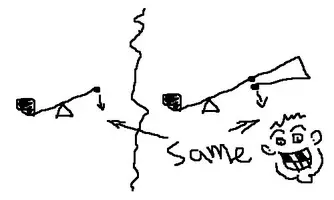
67coupe351w, that is true BUT the force at the new, further-from-the-fulcrum point is reduced before it gets there, because of the same leverage effect that amplifies it after it is there.
The wheel can exert no more leverage over the pinion if the track isn't increased.
Sure you've increased the lever by moving the mounting face outward BUT you're still pushing on it at the same place.
For example: you have a 1m lever, 0.5m on one side of a fulcrum, 0.5 on the other, a a big rock on one side you're trying to lift. NOW extend your side of the lever, so it goes out to 4m, bends back around and comes back to the same place as the original lever. Now disregarding the mass of the lever, if you pull on the lever at new handle position, which is the same distance from the fulcrum, you have no more mechanical advantage.
EDIT: Here's a pic

The wheel can exert no more leverage over the pinion if the track isn't increased.
Sure you've increased the lever by moving the mounting face outward BUT you're still pushing on it at the same place.
For example: you have a 1m lever, 0.5m on one side of a fulcrum, 0.5 on the other, a a big rock on one side you're trying to lift. NOW extend your side of the lever, so it goes out to 4m, bends back around and comes back to the same place as the original lever. Now disregarding the mass of the lever, if you pull on the lever at new handle position, which is the same distance from the fulcrum, you have no more mechanical advantage.
EDIT: Here's a pic
Attachments

stangman16
Active Member
So, this is an Adapter: (even though they call it a spacer..)

And this is a spacer?:

I think I'm going to buy the Maximum Motorsports ones when I get my bullit rims for my '66 coupe. Wonder if I need them for the rear, the PO installed a '67 8" rear end, so it's 1" wider... I think I'll only need 'em for the front. Good thread!!
And this is a spacer?:
I think I'm going to buy the Maximum Motorsports ones when I get my bullit rims for my '66 coupe. Wonder if I need them for the rear, the PO installed a '67 8" rear end, so it's 1" wider... I think I'll only need 'em for the front. Good thread!!
67coupe351w
New Member
Yeah My bad,
I did some scribbling and some calculations with diffrent backspacing and a spacer making up for the change in backspacing.
This is what I found:
As long as the track width stays the same (i.e. the tire is touching the same patch on the ground), the extra moment caused by the force being applied farther out gets canceled out by the moment due to the wheel backspacing change...if that makes sense.
If the track width gets wider that more moment is applied to the bearings.
I did some scribbling and some calculations with diffrent backspacing and a spacer making up for the change in backspacing.
This is what I found:
As long as the track width stays the same (i.e. the tire is touching the same patch on the ground), the extra moment caused by the force being applied farther out gets canceled out by the moment due to the wheel backspacing change...if that makes sense.
If the track width gets wider that more moment is applied to the bearings.
reenmachine
20+ Year Stangneter
That's the terminology I use at least, but everybody pretty much just calls them all spacers. Those pics illustrate the differences perfectly.stangman16 said:So, this is an Adapter: (even though they call it a spacer..)
And this is a spacer?:
Similar threads
- Replies
- 1
- Views
- 117
- Replies
- 3
- Views
- 449

- Replies
- 0
- Views
- 429

