what exactly is this?

Chuckman

GTFO you fat, heavy bastard
15 Year Member
Oct 21, 2005
1,604
1,002
173
st. louis, mo
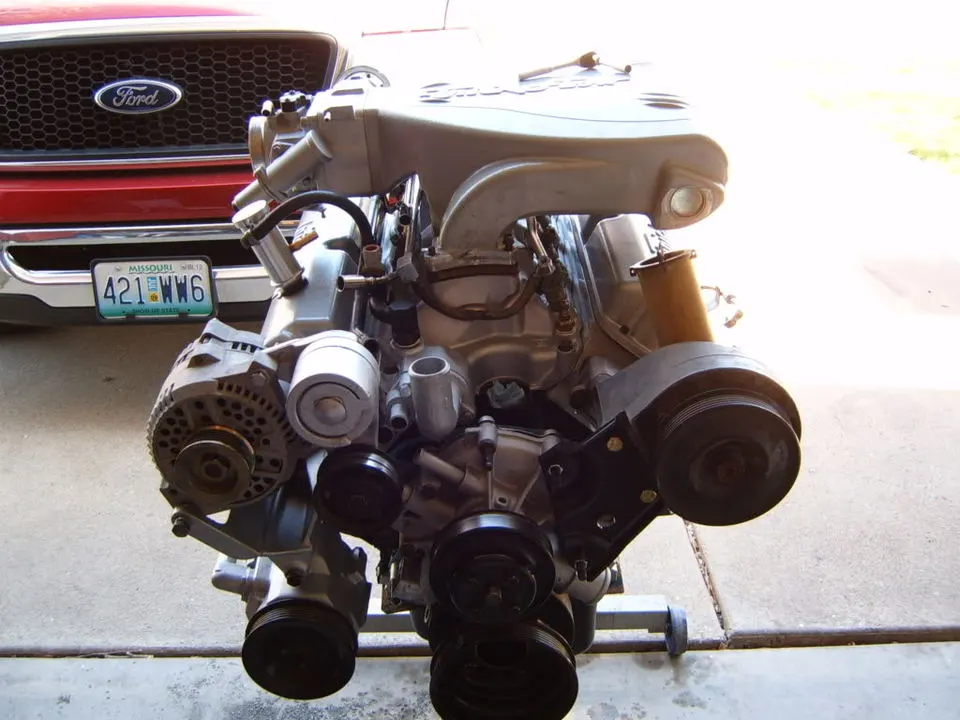
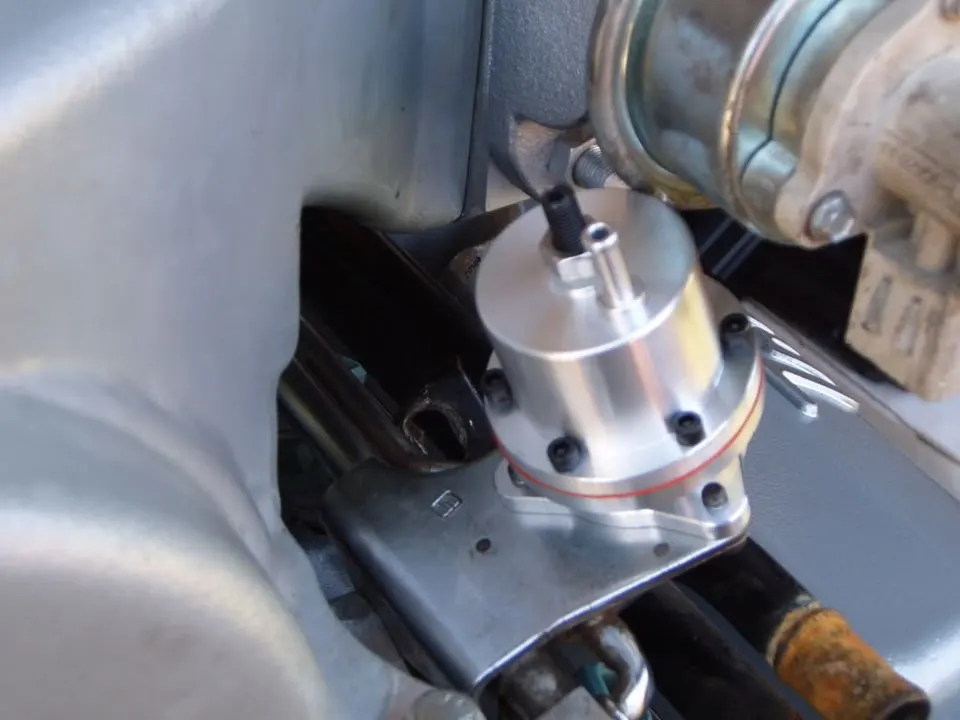
i was doing some work on the car the past few days, changing water pump, etc, and also putting in some new header gaskets. drivers side went fine as it should be, and of course when doing the passenger side theres the tubes that im guessing are part of the smog pump in the way. removed the rubber lines and the one going back to the headers, but there was still the one going to the back of the heads. bent it a bit to get it out of the way and one end of it broke off, and of course its right where it T's into the line going to the head, preventing me from just patching it with another short piece of rubber. question is what exactly does it do, and how would i go about fixing it? pics below.

where it broke:
Picture003.webp


what was there:
Picture004.webp


Picture005.webp
 
That looks like the smog crossover tube. Most people (with smog removed) remove that pipe and put two bolts in the holes in the heads to plug them.
 
If you have no cats, it's useless.
Ford actually has plugs to plug the holes.

When i had put my stock pipe back on for inspection, i had no air pump, and that tube was removed and i still passed.
But, NJ is weak on visual inspection, all the care about is if the car is smog legal, they dont' seemed to be concerned on why you are legal.
 
That is the tube that returns the EGR gasses through passages in the heads, up into the intake, through the EGR spacer (and valve), and finally back into the intake air charge. If you want a functional EGR system, then you'll have to fix the tube. If not, tear it all out, plug the exhaust mid pipe, plug the back of the heads and take the EGR valve off and cap the EGR spacer with a block off plate that can be bought from a lot of different aftermarket parts suppliers.

Good luck!
 
Thermactor Air System
Some review of how it works...

The Thermactor air pump (smog pump) supplies air to the heads or catalytic converters. This air helps break down the excess HC (hydrocarbons) and CO (carbon monoxide). The air supplied to the catalytic converters helps create the catalytic reaction that changes the HC & CO into CO2 and water vapor. Catalytic converters on 5.0 Mustangs are designed to use the extra air provided by the smog pump. Without the extra air, the catalytic converters will clog and fail.

The Thermactor air pump draws air from an inlet filter in the front of the pump. The smog pump puts air into the heads when the engine is cold and then into the catalytic converters when it is warm. The Thermactor control valves serve to direct the flow. The first valve, TAB (Thermactor Air Bypass) or AM1 valve) either dumps air to the atmosphere or passes it on to the second valve. The second valve, TAD (Thermactor Air Diverter valve or AM2 valve) directs it to the heads or the catalytic converters. Check valves located after the TAB & TAD solenoids prevent hot exhaust gases from damaging the control valves or pump in case of a backfire. The air serves to help consume any unburned hydrocarbons by supplying extra oxygen to the catalytic process. The computer tells the Thermactor Air System to open the dump valve at WOT (wide open throttle) minimizing engine drag. The dump valve reduces the parasitic drag caused by the smog pump to about 2-4 HP at WOT. The dump valve also opens during deceleration to reduce or prevent backfires.

attachment.php


Computer operation & control for the Thermactor Air System
Automobile computers use current sink technology. They do not source power to any relay, solenoid or actuator like the IAC, fuel pump relay, or fuel injectors. Instead the computer provides a ground path for the positive battery voltage to get back to the battery negative terminal. That flow of power from positive to negative is what provides the energy to make the IAC, fuel pump relay, or fuel injectors work. No ground provided by the computer, then the actuators and relays don't operate.

One side of the any relay/actuator/solenoid in the engine compartment will be connected to a red wire that has 12-14 volts anytime the ignition switch is in the run position. The other side will have 12-14 volts when the relay/actuator/solenoid isn't turned on. Once the computer turns on the clamp side, the voltage on the computer side of the wire will drop down to 1 volt or less.

In order to test the TAD/TAB solenoids, you need to ground the white/red wire on the TAB solenoid or the light green/black wire on the TAD solenoid.

For 94-95 cars: the colors are different. The White/Red wire (TAB control) is White/Orange (Pin 31 on the PCM). The Green/Black wire (TAD control) should be Brown (pin 34 at the PCM). Thanks to HISSIN50 for this tip.

To test the computer, you can use a test light across the TAB or TAD wiring connectors and dump the codes. When you dump the codes, the computer does a self test that toggles every relay/actuator/solenoid on and off. When this happens, the test light will flicker.
 
That is the tube that returns the EGR gasses through passages in the heads, up into the intake, through the EGR spacer (and valve), and finally back into the intake air charge. If you want a functional EGR system, then you'll have to fix the tube. If not, tear it all out, plug the exhaust mid pipe, plug the back of the heads and take the EGR valve off and cap the EGR spacer with a block off plate that can be bought from a lot of different aftermarket parts suppliers.

Good luck!

That tube has nothing to do with the EGR. As others have stated it is for the smog or Thermactor system. Both systems are exclusive from each other.

You can use the plugs from ford, sparkplug bases or if your in a real hurry you can unbolt the crossover tube, cut it, flip the plates that bolt to the heads and bolt them back on with a little black RTV. That is what I did once when I broke the tube while swapping heads.
 
Haha wow, I feel like an ass. Truth be told, my car had the smog/EGR removed long before I knew what it did, but I was always told thats what the tubes were for.

So if the tubes have nothing to do with EGR, what are the passages that run from the heads, through the intake, and into the EGR spacer/valve? Where does it pull exhaust gas from?

And why do you have to plug the heads when you remove the tubes?
 
The EGR runs from from the cylinder heads through passages in the intake that feeds up to the EGR spacer on at the throttle body. Engine vacuum operates the EGR valve and allows exhaust gases to enter the combustion chamber based on how much vacuum the engine is pulling. So the valve modulates with RPM. The actual plumbing for the EGR system is completely internal to the engine on Mustangs. There is a passage in the cylinder heads, right at the middle of the heads. This passage lines up with a passage in the intake that feeds through to the EGR spacer.

There is also a passage in the heads that connects all the exhaust ports to a hole in the back of the cylinder heads. The tube that runs across the back of the heads bolts up to these holes in the back of the cylinder heads. The tube is connected to the smog pump, also called the air pump. There is a hard line that leaves the pump and kind of Ts off. One side of the T runs to the tube behind the heads, the other runs down to the H pipe. There are two vacuum operated valves, one for the tube to the heads and H pipe and one for a bypass to atmosphere. The TAB and TAD solenoids that are usually mounted behind the passenger side strut tower control the operation of these vacuum valves based on commands from the computer. Jrichker's write up a little farther up is a really good description of the system and has drawings to boot.

So if you remove the pipe and don't plug the holes you end up with a BAD exhaust leak.

No worries about the mix up with the EGR and Thermactor system. Most people think that they are one and the same.
 
Ahhh, I see. If only I was the one that removed, the smog/egr, I might have known the difference. I assumed the EGR passages in the top of the heads lined up with the smog passages that come out the rear. Its not that I don't understand the function of both systems, it just I always thought they were linked inside the heads.

Thanks for the clarity. To the OP, sorry for the misleading post.