'90 hatch issue. told to ask jrickter

pat_tm

New Member
Sep 8, 2010
7
0
0
Here's where I'm at with my '90 hatch

Ok here's what I did tonight. I installed a new fuel filter and new plugs gaped at .054
I removed the MAF and sprayed it with MAF cleaner and reinstalled it. the maf is a pro flow tech 75mm calibrated to 24. car also has bbk 70mm tb. injectors are blue top which are 24's right? it also has no cats with 1 O2 sensor in each pip right off of the headers

Didn't make a damn difference. car still wont run right. It really wont even idle for any lenght of time. I have to hold it pretty far on throttle to keep it running.
I borrowed a Ford code reader from my friend and a member on here.
with the key on and engine off it sent out these codes in this order.

31 , 67 , 85 , 31 , 67 , 85 , 10 , 29 , 31 , 41 , 87 , 91

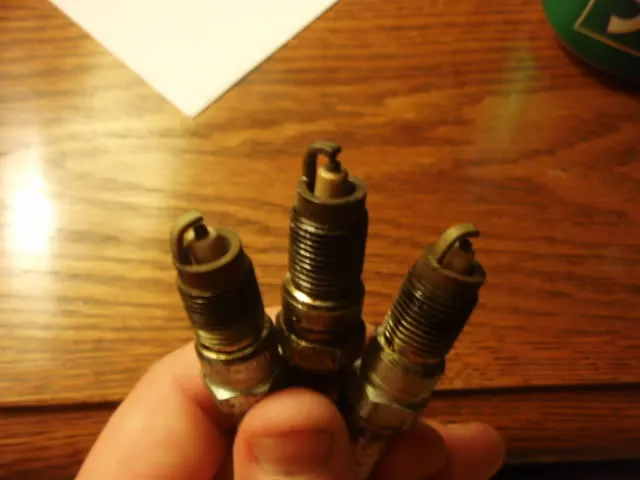
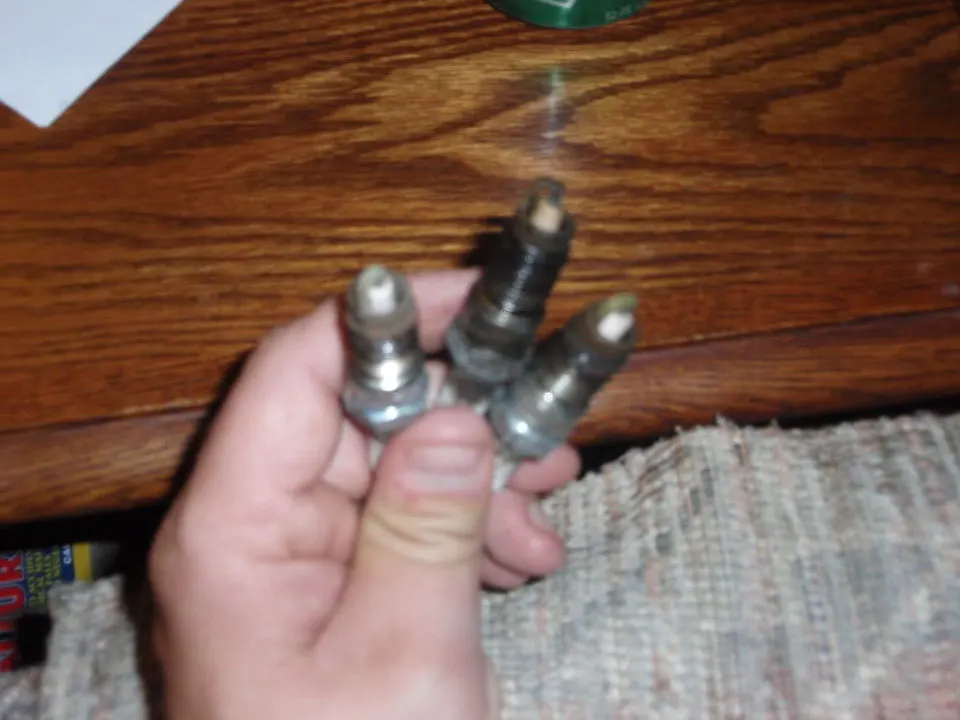
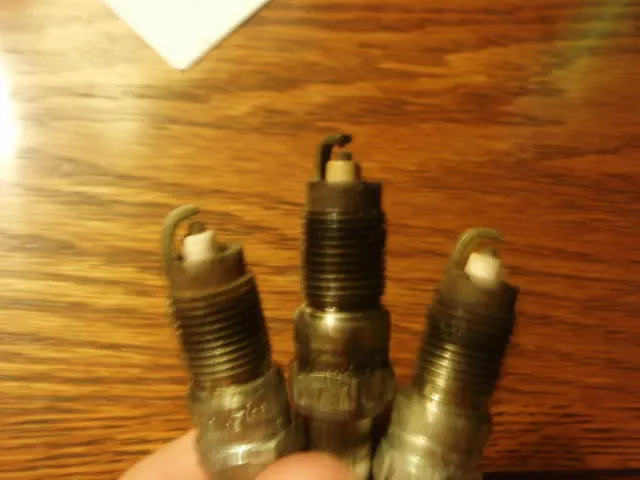
Here is what the plugs looked like that came out of the car tonight also.
P9080143.webp

P9080140.webp

P9080148.webp
 
A couple questions that might or might not help get things rolling for Joe.

Is the IAC functioning?
Have you tried clocking the MAF?
How is fuel pressure?
Has timing been checked recently?
If you have an EGR, is the valve stuck open at all?
 
A couple questions that might or might not help get things rolling for Joe.

Is the IAC functioning?
Have you tried clocking the MAF?
How is fuel pressure?
Has timing been checked recently?
If you have an EGR, is the valve stuck open at all?

Let me start this by saying I'm not really well versed on efi cars. I've owned a '65 coupe for over 17 years and know it inside and out. SO I'll answer the best I can
Things I'm going to try tonight are replacing/checking the vaccum lines
Is the IAC functioning? I honestly dont know. I was going to pull it off and give it a visual to see what it looks like. I know the one on my '97gt looked awful inside and after I sprayed it and cleaned the inside of it things seemed to get better.

Have you tried clocking the MAF? I took it off last night , cleaned it with MAF cleaner spray and put it back on the car.

How is fuel pressure? That's my thought. I'm not sure. Prob is that I dont own a gauge. I am going to look at the parts store today and see if I can score one at a good price. The "master" set from my MAC dealer is just too much to justify right now. There is an adjustable pressure regulator that does have a gauge on it but I couldn't keep the car runing enough to get out of the drivers seat and go take a look at it to even see IF it's working at all.

Has timing been checked recently? About a month ago it was adjusted a little. It was dead on.

If you have an EGR, is the valve stuck open at all? Honestly I have to see there. I was told by a friend it was removed. Since I'm "green" with the EFI stuff I couldn't tell you for sure.
 
Clocking the MAF means rotating it in relation to the inlet pipe/outlet pipe. You usually will rotate it so that the sensor is nearest the outside of the bend of the inlet pipe. This is really a band-aid for a poorly setup intake tube/MAF sensor, but some people get it to work with pretty good results.

When you turn the key to the "on" position, without starting the car, the fuel pump should kick on temporarily and pressurize the system. If the gauge is functioning, you can check it at this point, without the engine running.

When you set the timing, did you do it with the SPOUT plug pulled out? (You should.)

Error codes are displayed twice, so I'm a little confused by the codes you're getting.

The first part makes sense (KOEO):
(31 , 67 , 85) , (31 , 67 , 85) <<Repeating code twice.

But this doesn't (assuming these are the continuous memory codes?):
10 (was this your "separator pulse"?), 29 , 31 , 41 , 87 , 91 <<No repeating pattern.
 
Clocking the MAF means rotating it in relation to the inlet pipe/outlet pipe. You usually will rotate it so that the sensor is nearest the outside of the bend of the inlet pipe. This is really a band-aid for a poorly setup intake tube/MAF sensor, but some people get it to work with pretty good results.

When you turn the key to the "on" position, without starting the car, the fuel pump should kick on temporarily and pressurize the system. If the gauge is functioning, you can check it at this point, without the engine running.

When you set the timing, did you do it with the SPOUT plug pulled out? (You should.)

Error codes are displayed twice, so I'm a little confused by the codes you're getting.

The first part makes sense (KOEO):
(31 , 67 , 85) , (31 , 67 , 85) <<Repeating code twice.

But this doesn't (assuming these are the continuous memory codes?):
10 (was this your "separator pulse"?), 29 , 31 , 41 , 87 , 91 <<No repeating pattern.

I do hear the fuel pump kick on when the key is turned to "on". I will take a look at the pressure gauge to see if it reads anything.

I didn't do the jumper wire and watch the flashes on the cluster I used a Ford reader that displays the codes so I simply wrote them down in the order they displayed in. what I typed in is exactly what was displayed. I'm going to make sure I have fuel pressure , check the vaccum lines along with making sure the pcv didn't work it's way out now that i know where it's located , and go from there tonight.

Yes the timing was set correctly.
 
Fix the 41/91 code first: it will cure a multitude of problems.

Code 29 - Vehicle Speed Sensor (VSS) is an electronic sender mounted on the speedo pickup gear on the trans. It works the cruse control for both 5 speed and auto trans cars. The VSS is used to tell the computer to speed up the idle as you slow to a stop. This helps keep the engine from stalling when you slow down for a stop sign or stop light.
Check to see if the electrical connector is plugged into it. Clean the connector & contacts with non flammable brake parts cleaner prior to replacing the sensor, as that may fix the problem. The sensor cost is under $30 and it is easy to replace.


CODE: 31 (KOEO) - EVP circuit below minimum voltage. Sensor removed or disconnected, Vref (5 volt reference voltage supplied by the computer) missing or broken wire or bad connection in circuit. Use a DVM to check for 5 volts on the orange/white wire. If it is missing, look for +5 volts at the orange/white wire on the TPS or MAP sensor located on the firewall near the center of the car. Use the black/white wire for the ground for the DVM.
With the sensor removed from the EGR and still connected, press the plunger and watch the voltage change on the brown/lt green wire. Pull the passenger side kick panel and measure the voltage at the computer. You will need to remove the plastic cover over the wires and probe them from the backside. A safety pin may prove very useful for this task. Use pin 27, EVR input (brown/lt green wire) and pin 46, signal ground (black/white wire) to measure the voltage. The orange/white wire is Vref and should always be 5 volts -/+ .25 volt. Be sure to measure Vref at the EGR sensor to rule out any broken wires or bad connections.
Measuring the voltage at the computer helps you spot broken wiring and intermittent connections.


Code 41 or 91 Three digit code 172 or 176 - O2 sensor indicates system lean. Look for a vacuum leak or failing O2 sensor.

Revised 24-Sep-2009 to correct computer pin description for 94-95 5.0 Mustangs

Code 41 is a RH side sensor,
Code 91 is the LH side sensor.

Code 172 is the RH side sensor
Code 176 is the LH side sensor

The computer sees a lean mixture signal coming from the O2 sensors and tries to compensate by adding more fuel. Many times the end result is an engine that runs pig rich and stinks of unburned fuel.

The following is a Quote from Charles O. Probst, Ford fuel Injection & Electronic Engine control:
"When the mixture is lean, the exhaust gas has oxygen, about the same amount as the ambient air. So the sensor will generate less than 400 Millivolts. Remember lean = less voltage.

When the mixture is rich, there's less oxygen in the exhaust than in the ambient air , so voltage is generated between the two sides of the tip. The voltage is greater than 600 millivolts. Remember rich = more voltage.

Here's a tip: the newer the sensor, the more the voltage changes, swinging from as low as 0.1 volt to as much as 0.9 volt. As an oxygen sensor ages, the voltage changes get smaller and slower - the voltage change lags behind the change in exhaust gas oxygen.

Because the oxygen sensor generates its own voltage, never apply voltage and never measure resistance of the sensor circuit. To measure voltage signals, use an analog voltmeter with a high input impedance, at least 10 megohms. Remember, a digital voltmeter will average a changing voltage." End Quote

Testing the O2 sensors 87-93 5.0 Mustangs
Measuring the O2 sensor voltage at the computer will give you a good idea of how well they are working. You'll have to pull the passenger side kick panel off to gain access to the computer connector. Remove the plastic wiring cover to get to the back side of the wiring. Use a safety pin or paper clip to probe the connections from the rear. The computer pins are 29 (LH O2 with a dark green/pink wire) and 43 (RH O2 with a dark blue/pink wire). Use the ground next to the computer to ground the voltmeter. The O2 sensor voltage should switch between .2-.9 volt at idle.

Testing the O2 sensors 94-95 5.0 Mustangs
Measuring the O2 sensor voltage at the computer will give you a good idea of how well they are working. You'll have to pull the passenger side kick panel off to gain access to the computer connector. Remove the plastic wiring cover to get to the back side of the wiring. Use a safety pin or paper clip to probe the connections from the rear. The computer pins are 43 (LH O2 with a red/black wire) and 44 (RH O2 with a gray/lt blue wire). Use the metal next to the computer to ground the voltmeter. The O2 sensor voltage should switch between .2-.9 volt at idle.

Note that all resistance tests must be done with power off. Measuring resistance with a circuit powered on will give false readings and possibly damage the meter. Do not attempt to measure the resistance of the O2 sensors, it may damage them.

Testing the O2 sensor wiring harness
Most of the common multimeters have a resistance scale. Be sure the O2 sensors are disconnected and measure the resistance from the O2 sensor body harness to the pins on the computer.

The O2 sensor ground (orange wire with a ring terminal on it) is in the wiring harness for the fuel injection wiring. I grounded mine to one of the intake manifold bolts

Make sure you have the proper 3 wire O2 sensors. Only the 4 cylinder cars used a 4 wire sensor, which is not compatible with the V8 wiring harness.

Replace the O2 sensors in pairs if replacement is indicated. If one is weak or bad, the other one probably isn't far behind.

If you get only code 41or 91 and have changed the sensor, look for vacuum leaks. This is especially true if you are having idle problems. The small plastic tubing is very brittle after many years of the heating it receives. Replace the tubing and check the PVC and the hoses connected to it.
A secondary problem with only a code 41 or 91 is for cars with an intact smog pump and cats. If the tube on the back of the heads clogs up, all the air from the smog pump gets dumped into one side. This excess air upsets the O2 sensor calibration and can set a false code 41 or 91. The cure is to remove the crossover tube and thoroughly clean the insides so that there is no carbon blocking the free flow of air to both heads.


Code 67 - cl
utch not depressed (5 speed) or car not in neutral or park (auto) or A/C in On position when codes where dumped. Possible neutral safety switch or wiring problem. This code may prevent you from running the Key On Engine On tests. You can generally ignore this code, since it has no effect on engine performance.

The computer wants to make sure the A/C is off due to the added load on the engine for the engine running tests. It also checks to see that the transmission is in Neutral or the clutch depressed (T5, T56, Tremec 3550 & TKO). This prevents the diagnostics from being run when the car is driven. Key On Engine Running test mode takes the throttle control away from the driver for several tests. This could prove hazardous if the computer was jumpered into test mode and then driven.

The NSS code 67 can be bypassed for testing. You will need to temporarily ground computer pin 30 to the chassis. Computer pin 30 uses a Lt blue/yellow wire. Remove the passenger side kick panel and then remove the plastic cover from the computer wiring connector. Use a safety pin to probe the connector from the rear and jumper the safety pin to the ground near the computer.


Code 85 - CANP solenoid - The Carbon Canister solenoid is inoperative or missing. Check vacuum lines for leaks and cracks. Check electrical wiring for loose connections, damaged wiring and insulation. Check solenoid valve operation by grounding the gray/yellow wire to the solenoid and blowing through it.
The computer provides the ground for the solenoid. The red wire to the solenoid is always energized any time the ignition switch is in the run position.

Charcoal canister plumbing - one 3/8" tube from the bottom of the upper manifold to the rubber hose. Rubber hose connects to one side of the canister solenoid valve. Other side of the solenoid valve connects to one side of the canister. The other side of the canister connects to a rubber hose that connects to a line that goes all the way back to the gas tank. There is an electrical connector coming from the passenger side injector harness near #1 injector that plugs into the canister solenoid valve. It's purpose is to vent the gas tank. The solenoid valve opens at cruse to provide some extra fuel. The canister is normally mounted on the passenger side frame rail near the smog pump pulley.

attachment.php


It does not weigh but a pound or so and helps richen up the cruse mixture. It draws no HP & keeps the car from smelling like gasoline in a closed garage. So with all these good things and no bad ones, why not hook it up & use it?


The purge valve solenoid connector is a dangling wire that is near the ECT sensor and oil filler on the passenger side rocker cover. The actual solenoid valve is down next to the carbon canister. There is about 12"-16" of wire that runs parallel to the canister vent hose that comes off the bottom side of the upper intake manifold. That hose connects one port of the solenoid valve; the other port connects to the carbon canister.
Purge valve solenoid:
6


The carbon canister is normally mounted on the passenger side frame rail near the smog pump pulley.
Carbon Canister:
getimage.php


Code 87 – fuel pump primary circuit failure. The fuel pump lost power while the engine was running. Check fuel pump relay, check inertia switch, wiring to/from inertia switch, red wire going to inertia switch for +12volts. Check the other side of inertia switch for +12 volts.

Diagram of the fuel pump wiring for 86-90 cars
attachment.php


Diagram of the fuel pump wiring for 91-93 cars.
attachment.php
 
Got it figured out. Got a fuel pressure gauge hooked up and it only had 20 lbs. On the advice of a friend I dropped the fuel tank and pulled the pump. Here's what I found.

P9090157.webp

P9090159.webp


As you can see the damn hanger for the pump broke at some point and allowed the pump to "swing" on the lower mount by the rubber line from the pump to the metal lines. The return hard line must have rubbed the rubber feed line through and it allowed the pump to just pump the fuel right back into the tank rather than building pressure.
I had a spare mount and it had a Wal. pump in it already. I installed it in the tank and put it all back together only to find that the pump doesn't appear to be any good cause it wont run (yes it's plugged in). So tomorrow night I'll pull it back apart again and install the Ford pump that came out of the tank in the 1st place in the spare mount and call it done for NOW. I will still have to change to a better pump very soon and I'll be getting one from a friend very soon.
 
Fix the 41/91 code first: it will cure a multitude of problems.

Code 29 - Vehicle Speed Sensor (VSS) is an electronic sender mounted on the speedo pickup gear on the trans. It works the cruse control for both 5 speed and auto trans cars. The VSS is used to tell the computer to speed up the idle as you slow to a stop. This helps keep the engine from stalling when you slow down for a stop sign or stop light.
Check to see if the electrical connector is plugged into it. Clean the connector & contacts with non flammable brake parts cleaner prior to replacing the sensor, as that may fix the problem. The sensor cost is under $30 and it is easy to replace.


CODE: 31 (KOEO) - EVP circuit below minimum voltage. Sensor removed or disconnected, Vref (5 volt reference voltage supplied by the computer) missing or broken wire or bad connection in circuit. Use a DVM to check for 5 volts on the orange/white wire. If it is missing, look for +5 volts at the orange/white wire on the TPS or MAP sensor located on the firewall near the center of the car. Use the black/white wire for the ground for the DVM.
With the sensor removed from the EGR and still connected, press the plunger and watch the voltage change on the brown/lt green wire. Pull the passenger side kick panel and measure the voltage at the computer. You will need to remove the plastic cover over the wires and probe them from the backside. A safety pin may prove very useful for this task. Use pin 27, EVR input (brown/lt green wire) and pin 46, signal ground (black/white wire) to measure the voltage. The orange/white wire is Vref and should always be 5 volts -/+ .25 volt. Be sure to measure Vref at the EGR sensor to rule out any broken wires or bad connections.
Measuring the voltage at the computer helps you spot broken wiring and intermittent connections.


Code 41 or 91 Three digit code 172 or 176 - O2 sensor indicates system lean. Look for a vacuum leak or failing O2 sensor.

Revised 24-Sep-2009 to correct computer pin description for 94-95 5.0 Mustangs

Code 41 is a RH side sensor,
Code 91 is the LH side sensor.

Code 172 is the RH side sensor
Code 176 is the LH side sensor

The computer sees a lean mixture signal coming from the O2 sensors and tries to compensate by adding more fuel. Many times the end result is an engine that runs pig rich and stinks of unburned fuel.

The following is a Quote from Charles O. Probst, Ford fuel Injection & Electronic Engine control:
"When the mixture is lean, the exhaust gas has oxygen, about the same amount as the ambient air. So the sensor will generate less than 400 Millivolts. Remember lean = less voltage.

When the mixture is rich, there's less oxygen in the exhaust than in the ambient air , so voltage is generated between the two sides of the tip. The voltage is greater than 600 millivolts. Remember rich = more voltage.

Here's a tip: the newer the sensor, the more the voltage changes, swinging from as low as 0.1 volt to as much as 0.9 volt. As an oxygen sensor ages, the voltage changes get smaller and slower - the voltage change lags behind the change in exhaust gas oxygen.

Because the oxygen sensor generates its own voltage, never apply voltage and never measure resistance of the sensor circuit. To measure voltage signals, use an analog voltmeter with a high input impedance, at least 10 megohms. Remember, a digital voltmeter will average a changing voltage." End Quote

Testing the O2 sensors 87-93 5.0 Mustangs
Measuring the O2 sensor voltage at the computer will give you a good idea of how well they are working. You'll have to pull the passenger side kick panel off to gain access to the computer connector. Remove the plastic wiring cover to get to the back side of the wiring. Use a safety pin or paper clip to probe the connections from the rear. The computer pins are 29 (LH O2 with a dark green/pink wire) and 43 (RH O2 with a dark blue/pink wire). Use the ground next to the computer to ground the voltmeter. The O2 sensor voltage should switch between .2-.9 volt at idle.

Testing the O2 sensors 94-95 5.0 Mustangs
Measuring the O2 sensor voltage at the computer will give you a good idea of how well they are working. You'll have to pull the passenger side kick panel off to gain access to the computer connector. Remove the plastic wiring cover to get to the back side of the wiring. Use a safety pin or paper clip to probe the connections from the rear. The computer pins are 43 (LH O2 with a red/black wire) and 44 (RH O2 with a gray/lt blue wire). Use the metal next to the computer to ground the voltmeter. The O2 sensor voltage should switch between .2-.9 volt at idle.

Note that all resistance tests must be done with power off. Measuring resistance with a circuit powered on will give false readings and possibly damage the meter. Do not attempt to measure the resistance of the O2 sensors, it may damage them.

Testing the O2 sensor wiring harness
Most of the common multimeters have a resistance scale. Be sure the O2 sensors are disconnected and measure the resistance from the O2 sensor body harness to the pins on the computer.

The O2 sensor ground (orange wire with a ring terminal on it) is in the wiring harness for the fuel injection wiring. I grounded mine to one of the intake manifold bolts

Make sure you have the proper 3 wire O2 sensors. Only the 4 cylinder cars used a 4 wire sensor, which is not compatible with the V8 wiring harness.

Replace the O2 sensors in pairs if replacement is indicated. If one is weak or bad, the other one probably isn't far behind.

If you get only code 41or 91 and have changed the sensor, look for vacuum leaks. This is especially true if you are having idle problems. The small plastic tubing is very brittle after many years of the heating it receives. Replace the tubing and check the PVC and the hoses connected to it.
A secondary problem with only a code 41 or 91 is for cars with an intact smog pump and cats. If the tube on the back of the heads clogs up, all the air from the smog pump gets dumped into one side. This excess air upsets the O2 sensor calibration and can set a false code 41 or 91. The cure is to remove the crossover tube and thoroughly clean the insides so that there is no carbon blocking the free flow of air to both heads.


Code 67 - cl
utch not depressed (5 speed) or car not in neutral or park (auto) or A/C in On position when codes where dumped. Possible neutral safety switch or wiring problem. This code may prevent you from running the Key On Engine On tests. You can generally ignore this code, since it has no effect on engine performance.

The computer wants to make sure the A/C is off due to the added load on the engine for the engine running tests. It also checks to see that the transmission is in Neutral or the clutch depressed (T5, T56, Tremec 3550 & TKO). This prevents the diagnostics from being run when the car is driven. Key On Engine Running test mode takes the throttle control away from the driver for several tests. This could prove hazardous if the computer was jumpered into test mode and then driven.

The NSS code 67 can be bypassed for testing. You will need to temporarily ground computer pin 30 to the chassis. Computer pin 30 uses a Lt blue/yellow wire. Remove the passenger side kick panel and then remove the plastic cover from the computer wiring connector. Use a safety pin to probe the connector from the rear and jumper the safety pin to the ground near the computer.


Code 85 - CANP solenoid - The Carbon Canister solenoid is inoperative or missing. Check vacuum lines for leaks and cracks. Check electrical wiring for loose connections, damaged wiring and insulation. Check solenoid valve operation by grounding the gray/yellow wire to the solenoid and blowing through it.
The computer provides the ground for the solenoid. The red wire to the solenoid is always energized any time the ignition switch is in the run position.

Charcoal canister plumbing - one 3/8" tube from the bottom of the upper manifold to the rubber hose. Rubber hose connects to one side of the canister solenoid valve. Other side of the solenoid valve connects to one side of the canister. The other side of the canister connects to a rubber hose that connects to a line that goes all the way back to the gas tank. There is an electrical connector coming from the passenger side injector harness near #1 injector that plugs into the canister solenoid valve. It's purpose is to vent the gas tank. The solenoid valve opens at cruse to provide some extra fuel. The canister is normally mounted on the passenger side frame rail near the smog pump pulley.

attachment.php


It does not weigh but a pound or so and helps richen up the cruse mixture. It draws no HP & keeps the car from smelling like gasoline in a closed garage. So with all these good things and no bad ones, why not hook it up & use it?


The purge valve solenoid connector is a dangling wire that is near the ECT sensor and oil filler on the passenger side rocker cover. The actual solenoid valve is down next to the carbon canister. There is about 12"-16" of wire that runs parallel to the canister vent hose that comes off the bottom side of the upper intake manifold. That hose connects one port of the solenoid valve; the other port connects to the carbon canister.
Purge valve solenoid:
6


The carbon canister is normally mounted on the passenger side frame rail near the smog pump pulley.
Carbon Canister:
getimage.php


Code 87 – fuel pump primary circuit failure. The fuel pump lost power while the engine was running. Check fuel pump relay, check inertia switch, wiring to/from inertia switch, red wire going to inertia switch for +12volts. Check the other side of inertia switch for +12 volts.

Diagram of the fuel pump wiring for 86-90 cars
attachment.php


Diagram of the fuel pump wiring for 91-93 cars.
attachment.php

WOW thank you for all the info. I'm printing and saving it all so I can really learn it. So much to learn on the EFI systems. A far cry from my '65 stang