

You are using an out of date browser. It may not display this or other websites correctly.
You should upgrade or use an alternative browser.
You should upgrade or use an alternative browser.
NikwoaC's "Commitment Issues" Engine Build
- Thread starter NIKwoaC
- Start date

well stop bsing and get er done!!
I know it, dammit, I wanna be home right now working on it!!!

Meh, wouldn't be driving it much anyway, with all this RAIN.
FoxGT87
5 Year Member
i think ill dump my money into my car and THEN get married hahaha
^ this ^
Mr. Rustypwnz
Advanced Member
I know it, dammit, I wanna be home right now working on it!!!
Meh, wouldn't be driving it much anyway, with all this RAIN.
damn right! stupid crap weather
Man, I'll tell you what, building an engine is a humbling experience. I gain more and more respect for the pros every day.
I installed the cam this morning, only to realize that I forgot to check the ID numbers on it against my cam card. So, I went to yank it out, and SURE enough, I smacked the #1 cam bearing with the distributor drive gear.
I called my machinist to determine if it was necessary to replace it, and it turns out that with a little finesse and a scotch brite pad, I'm going to be OK, but that was just another scare and speed bump that I didn't need.
I installed the cam this morning, only to realize that I forgot to check the ID numbers on it against my cam card. So, I went to yank it out, and SURE enough, I smacked the #1 cam bearing with the distributor drive gear.
I called my machinist to determine if it was necessary to replace it, and it turns out that with a little finesse and a scotch brite pad, I'm going to be OK, but that was just another scare and speed bump that I didn't need.
FoxGT87
5 Year Member
Hey Nik I was hoping you would chime in on my thread about choosing a cam shaft for the new heads I'm going to be purchasing tomorrow morning. Getting a set of 180cc Windsor JR iron heads. I have what I think to be a stock or very mild cam in the car. I do not see myself upgrading the heads after this any time soon. So my question is: do I hold off on just bolting the heads as they sit so that i can get some port and polish work done and buy a custom ground cam that will have nice drivability on the street but scream on the top end? Or should i just bolt on the horsepower and ride out? I personally have been loving the progress thread and what you had to say on the argument that big heads don't belong on a 302. I think i want to mimic your build in a sense, however I think that the only way to get there would be porting and a custom cam. do you have any advice for me?
Hey Nik I was hoping you would chime in on my thread about choosing a cam shaft for the new heads I'm going to be purchasing tomorrow morning. Getting a set of 180cc Windsor JR iron heads. I have what I think to be a stock or very mild cam in the car. I do not see myself upgrading the heads after this any time soon. So my question is: do I hold off on just bolting the heads as they sit so that i can get some port and polish work done and buy a custom ground cam that will have nice drivability on the street but scream on the top end? Or should i just bolt on the horsepower and ride out? I personally have been loving the progress thread and what you had to say on the argument that big heads don't belong on a 302. I think i want to mimic your build in a sense, however I think that the only way to get there would be porting and a custom cam. do you have any advice for me?
Check out my response in your thread.

Little update for you hungry little Mustang tech addicts out there.
Spent half the day yesterday running around town looking for random stuff I needed to progress on the build, but I spent the other half of the day spinning wrenches. In short, this is what I did:
Stabbed the cam back in.
Degreed it. (Comp called for a 112* ICL, my measurements showed a 111*, so that's good.)
Checked cam end play. (Right at .005", so that's good.)
Slapped a head on and checked piston to valve clearance. Roughly .115" clearance on the intake and .185" on the exhaust, which is plenty. So what they say is true, Twisted Wedge heads will clear 1986 flat top pistons! Woo hoo!
Here are some pics of the PtV checking. I can't believe how EASY it is! If you do this right, it is absolutely cake. After doing this once, I don't know why everybody doesn't check PtV when putting new heads and/or a new cam in. I'll try to describe it step-by-step for ya here.
1. Install and degree your cam (this is actually the hardest part).
2. Coat the top of the piston and cylinder walls with oil. Also coat the combustion chamber on the head, the valve faces, and the quench area of the head (deck around the combustion chamber) with oil. This step is key in not messing up your clay.
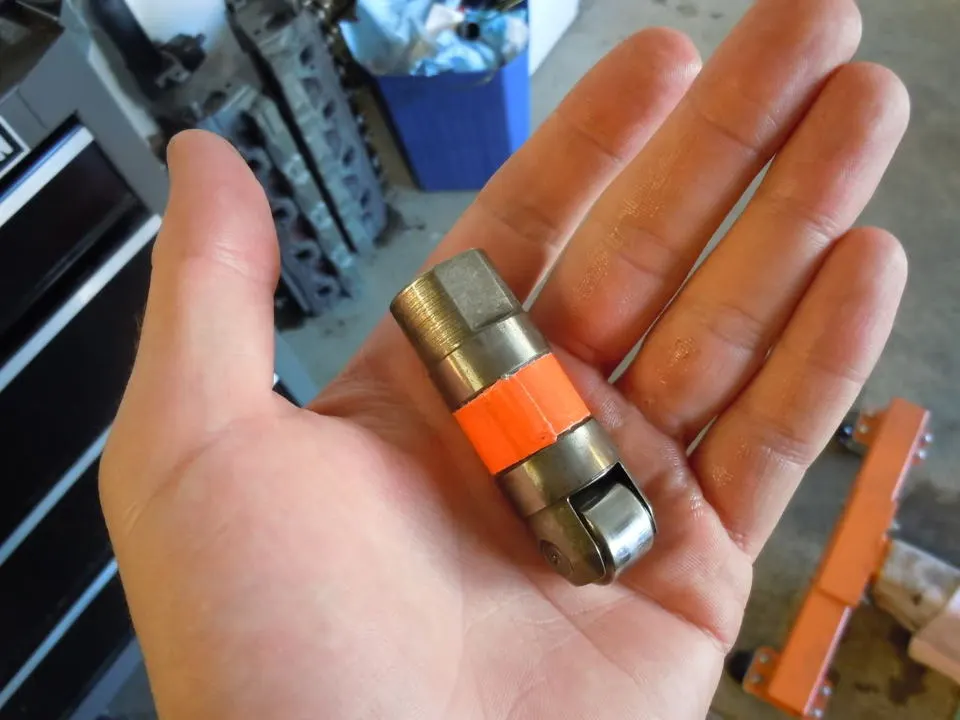
3. Install solid lifters, or hydraulic lifters converted to solid (Super easy with stock lifters. Take them apart, flip the plunger, and reassemble without the spring.) I used two of my old stock lifters for this, and marked them with orange duck tape.
4. Lay down a lump of clay, about 1/4" thick, on the piston where the valves will be nearest to. Rotate the engine so the piston is about half way up the cylinder on its compression stroke. See pic.
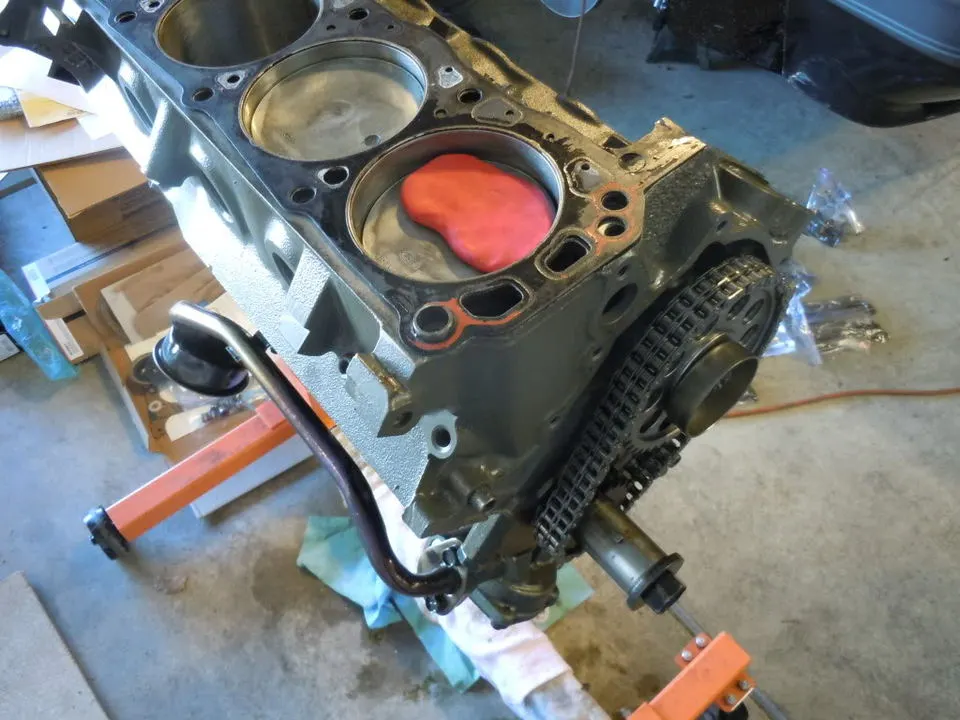
5. Use an old head gasket (in other words, one that has been compressed to the proper thickness, NOT a new gasket), and put it on the block along with the head alignment dowels. Put the head on the block and install and hand tighten 4 head bolts/studs around the cylinder being checked. You do not need to torque the bolts to spec, just hand tighten.
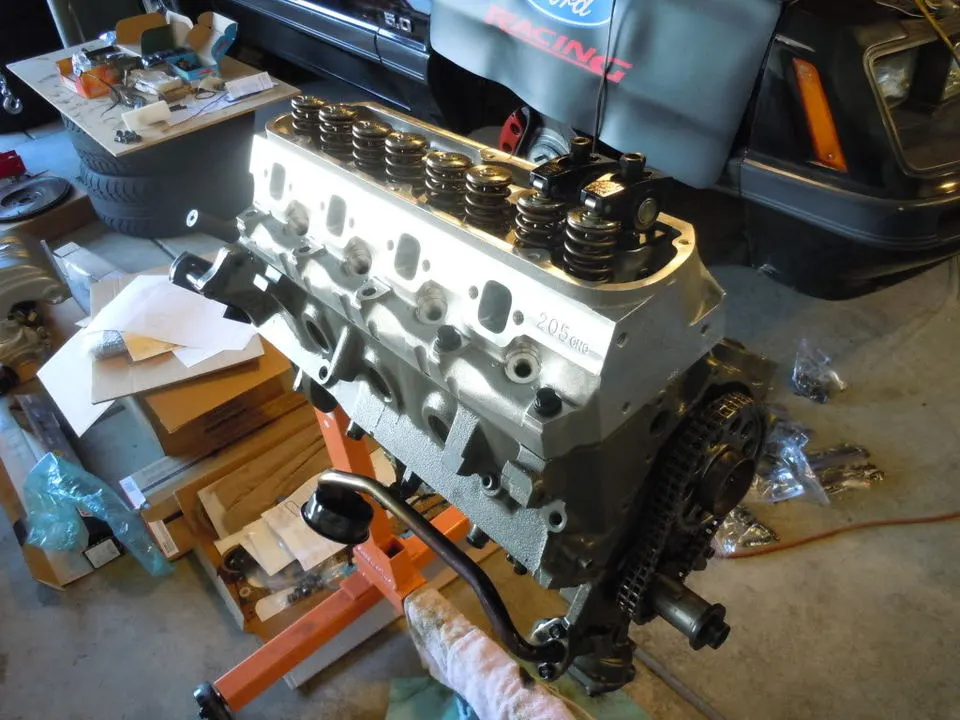
6. Install the pushrods and rocker arms (with a little oil on the contact points). Adjust the rocker arms to "0" preload, or, in other words, until there is no more movement in the pushrod, but DON'T over tighten, this will begin to compress the spring and lift the valve, and your measurement will be off.
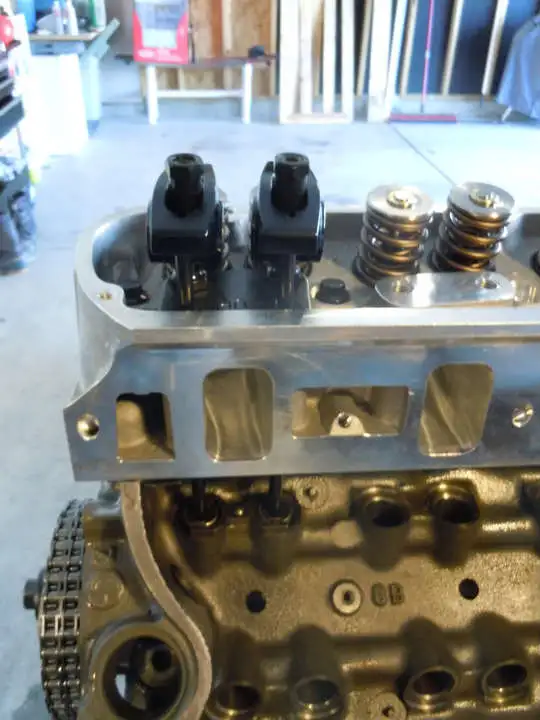
7. Turn the engine over (in the operating direction) 2 full revolutions, until you are once again on the compression stroke. If, at any time, the engine wants to stop turning, STOP! Your valve has probably contacted the piston, and you're hosed. Your PtV is "0".
8. Pull the head and the valvetrain off.
9. Rotate the engine until the piston is at TDC.
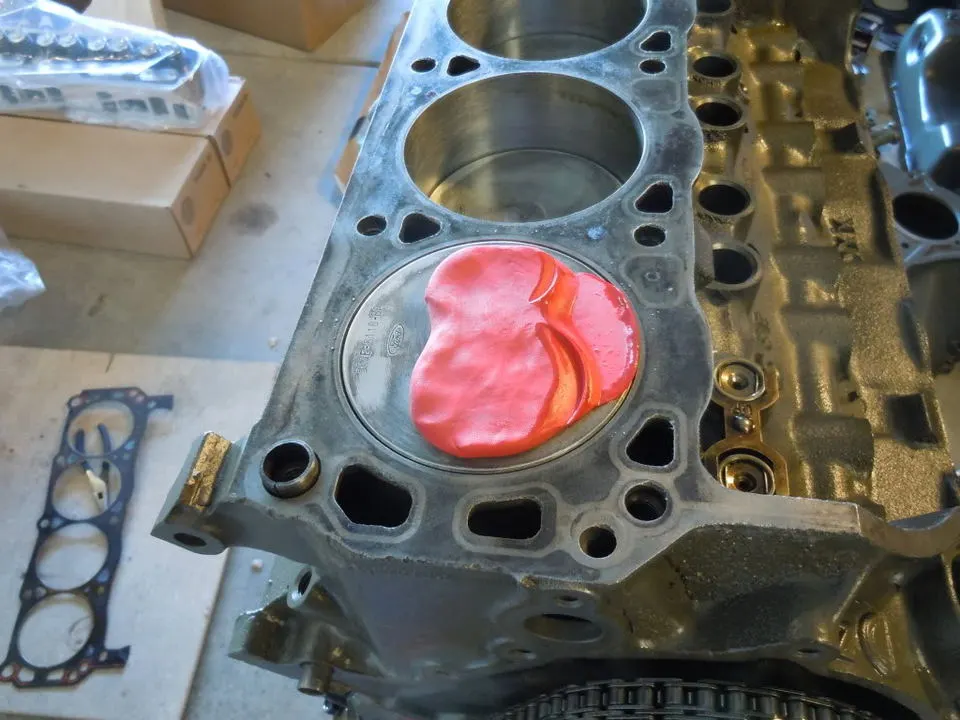
10. Slice the clay where the valve marks are the deepest with a razor. Measure the thinnest part of the clay with a dial caliper (I left the clay on the piston for this, you may choose to take it off the piston.) If you have enough clay thickness (valve clearance) you're done! If not, I feel bad for you. You have to either cut valve grooves in your piston or get a milder cam. OR, in some cases, you can advance or retard your cam to gain clearance on one valve, but you'll reduce clearance on the other.
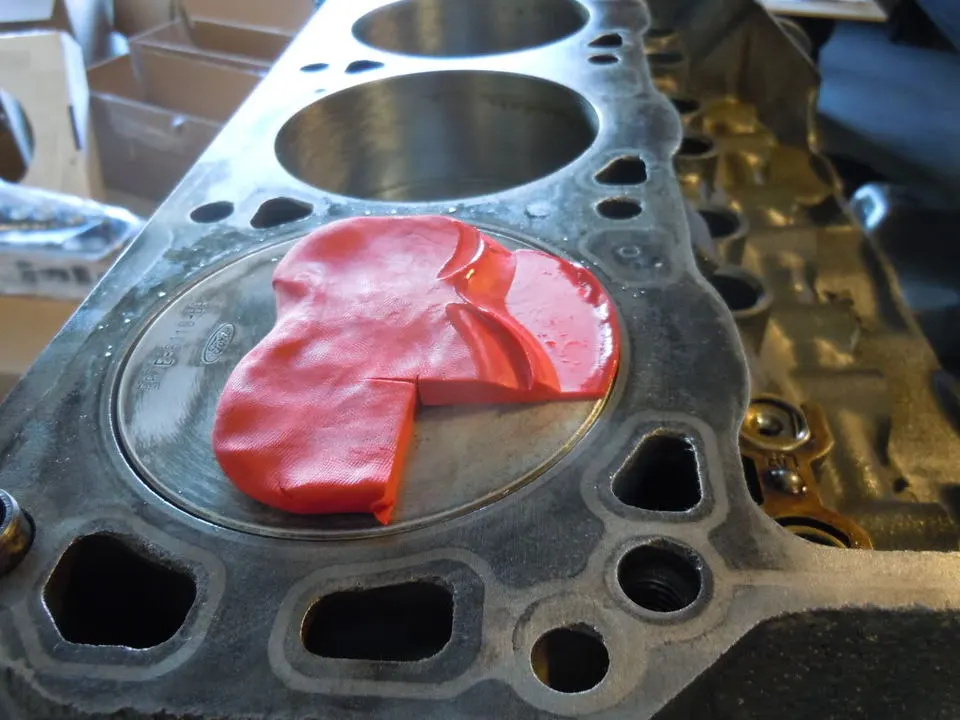
Ta Daaaa!
Spent half the day yesterday running around town looking for random stuff I needed to progress on the build, but I spent the other half of the day spinning wrenches. In short, this is what I did:
Stabbed the cam back in.
Degreed it. (Comp called for a 112* ICL, my measurements showed a 111*, so that's good.)
Checked cam end play. (Right at .005", so that's good.)
Slapped a head on and checked piston to valve clearance. Roughly .115" clearance on the intake and .185" on the exhaust, which is plenty. So what they say is true, Twisted Wedge heads will clear 1986 flat top pistons! Woo hoo!
Here are some pics of the PtV checking. I can't believe how EASY it is! If you do this right, it is absolutely cake. After doing this once, I don't know why everybody doesn't check PtV when putting new heads and/or a new cam in. I'll try to describe it step-by-step for ya here.
1. Install and degree your cam (this is actually the hardest part).
2. Coat the top of the piston and cylinder walls with oil. Also coat the combustion chamber on the head, the valve faces, and the quench area of the head (deck around the combustion chamber) with oil. This step is key in not messing up your clay.
3. Install solid lifters, or hydraulic lifters converted to solid (Super easy with stock lifters. Take them apart, flip the plunger, and reassemble without the spring.) I used two of my old stock lifters for this, and marked them with orange duck tape.
4. Lay down a lump of clay, about 1/4" thick, on the piston where the valves will be nearest to. Rotate the engine so the piston is about half way up the cylinder on its compression stroke. See pic.
5. Use an old head gasket (in other words, one that has been compressed to the proper thickness, NOT a new gasket), and put it on the block along with the head alignment dowels. Put the head on the block and install and hand tighten 4 head bolts/studs around the cylinder being checked. You do not need to torque the bolts to spec, just hand tighten.
6. Install the pushrods and rocker arms (with a little oil on the contact points). Adjust the rocker arms to "0" preload, or, in other words, until there is no more movement in the pushrod, but DON'T over tighten, this will begin to compress the spring and lift the valve, and your measurement will be off.
7. Turn the engine over (in the operating direction) 2 full revolutions, until you are once again on the compression stroke. If, at any time, the engine wants to stop turning, STOP! Your valve has probably contacted the piston, and you're hosed. Your PtV is "0".
8. Pull the head and the valvetrain off.
9. Rotate the engine until the piston is at TDC.
10. Slice the clay where the valve marks are the deepest with a razor. Measure the thinnest part of the clay with a dial caliper (I left the clay on the piston for this, you may choose to take it off the piston.) If you have enough clay thickness (valve clearance) you're done! If not, I feel bad for you. You have to either cut valve grooves in your piston or get a milder cam. OR, in some cases, you can advance or retard your cam to gain clearance on one valve, but you'll reduce clearance on the other.
Ta Daaaa!
90stang5speed
Member


Awesome write up on the piston to valve clearance. You should make that its own thread and try and get it stickied in tech.
You can also check PTV clearance with the heads on the motor. We did it on mine. The machine shop had a tool to compress the rocker arm and we used the degree wheel and checked where the valve contacted the piston every 10 degrees. We used a dial indicator on the retainer to get a measurement.
This is not as accurate as the way you did it but it works if you dont want to remove the heads.
You can also check PTV clearance with the heads on the motor. We did it on mine. The machine shop had a tool to compress the rocker arm and we used the degree wheel and checked where the valve contacted the piston every 10 degrees. We used a dial indicator on the retainer to get a measurement.
This is not as accurate as the way you did it but it works if you dont want to remove the heads.
Awesome write up on the piston to valve clearance. You should make that its own thread and try and get it stickied in tech.
You can also check PTV clearance with the heads on the motor. We did it on mine. The machine shop had a tool to compress the rocker arm and we used the degree wheel and checked where the valve contacted the piston every 10 degrees. We used a dial indicator on the retainer to get a measurement.
This is not as accurate as the way you did it but it works if you dont want to remove the heads.
Maybe next time Chris sticks his head in here, he'll see it and add it to the tech reference sticky.
You can actually do the method you're talking about with checking springs and a dial indicator at home, but that requires you take the heads off and change springs. Wouldn't be a bad alternative, though.
Here are a few shots from yesterday's progress. I actually have the driver's side head on now, but I don't have pics of that yet.
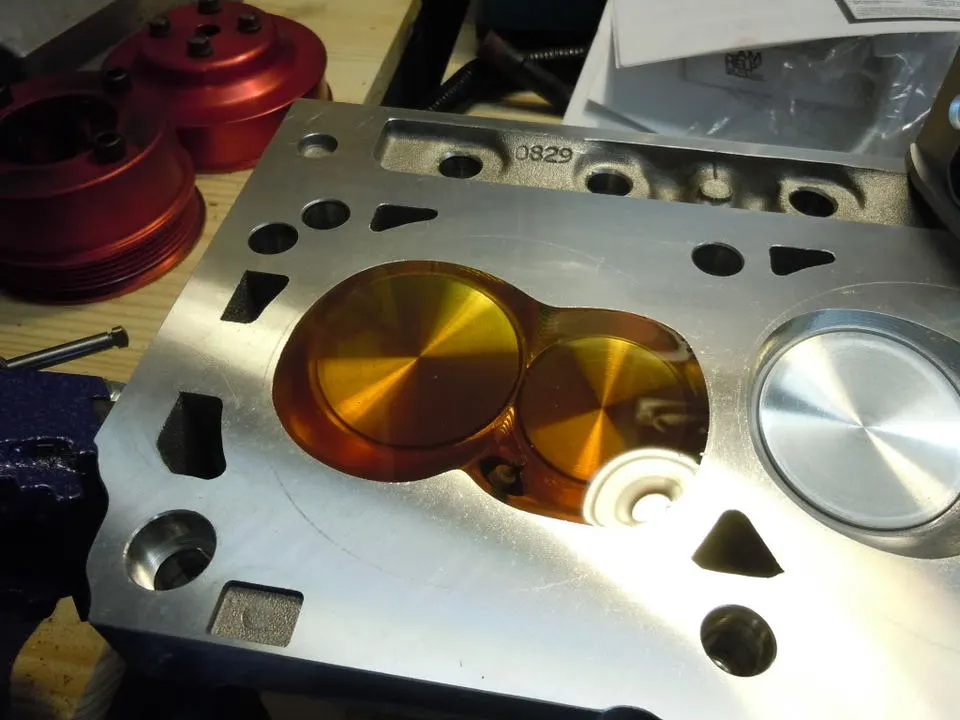
I wanted to verify the combustion chamber size, just for peace of mind. The heads were supposed to be milled to 61cc, so this is what I did:
Using my adjustable bench vice, I leveled out one of the heads on my workbench.
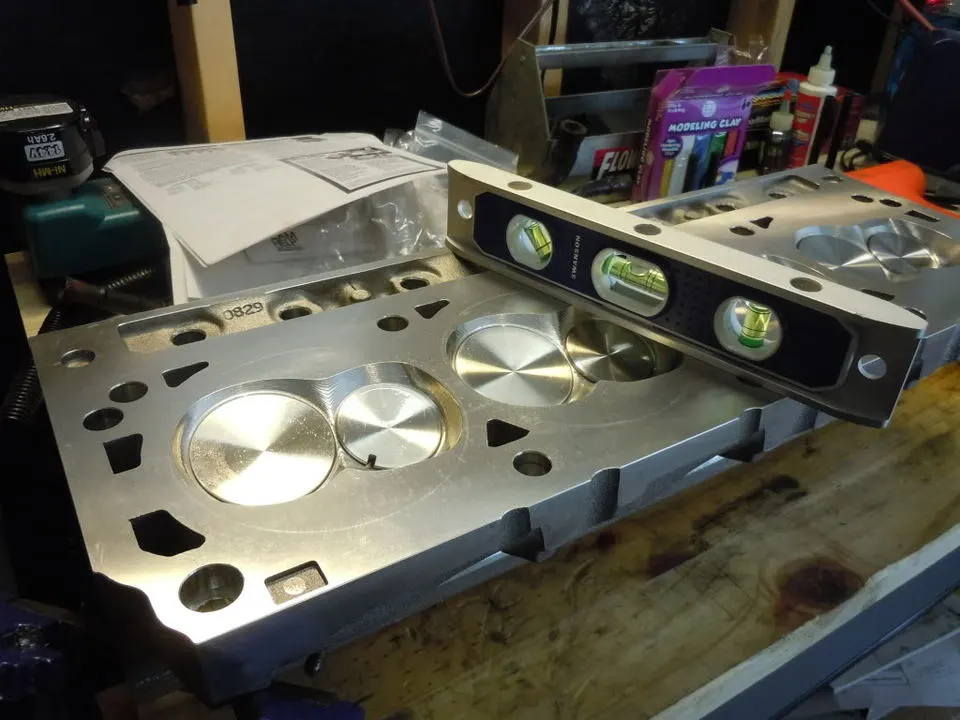
I grabbed a couple different syringes, the smaller one is a medical use, the larger is for cooking. Both measure in mL, which, if you guys paid attention in chemistry class, you'll remember mL=cc.
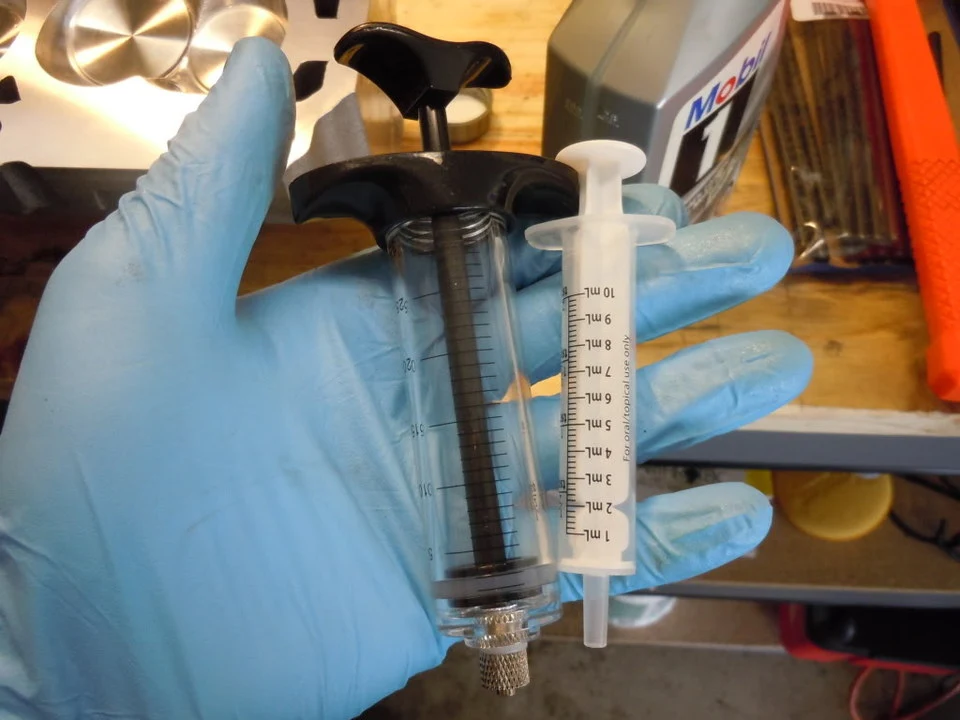
I filled the syringes with 10w-30, and incrementally filled one of the combustion chambers, paying attention to how much oil went in, by reading the markings on the syringe. I plugged the spark plug hole with an old spark plug.
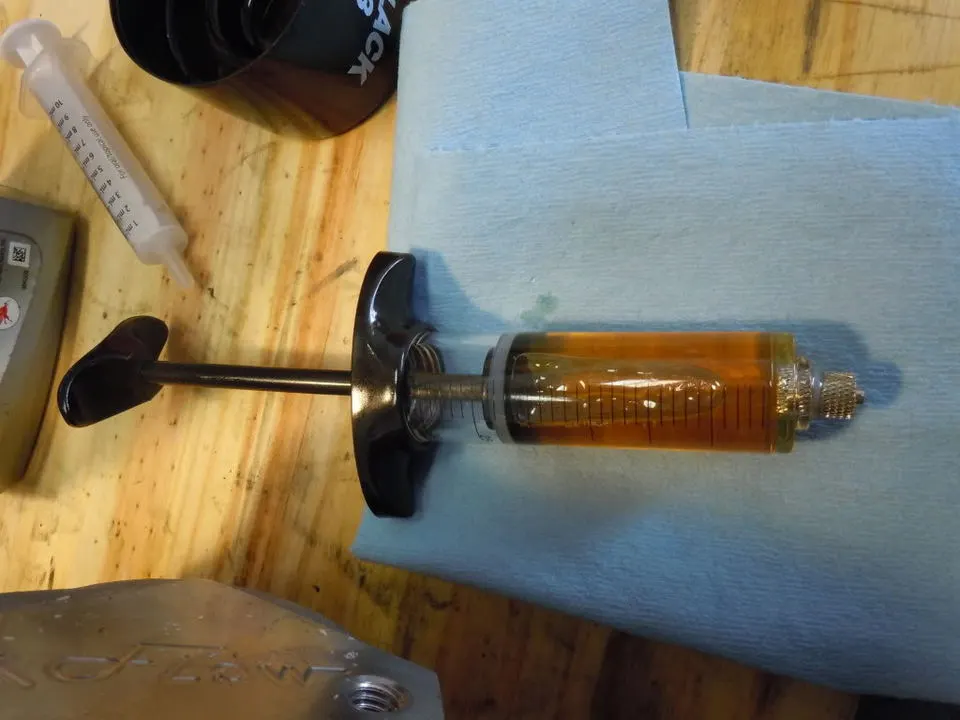
This is what the head looked like after 60mL. As you can see, the oil is pretty much perfectly level with the deck surface. When I tried to move to 65mL, the oil started spilling out of the chamber, telling me the chamber volume is less than 65. It was hard to be EXACT, but it made me confident the chamber is at least CLOSE to 61cc.
Oh, I also got the timing cover and stuff on.
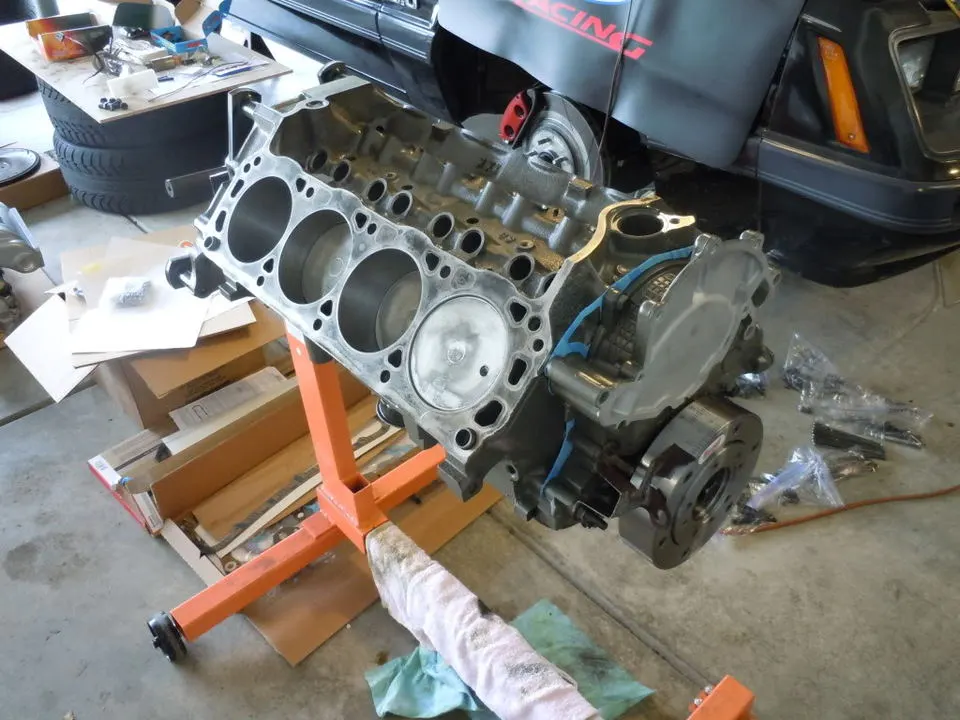
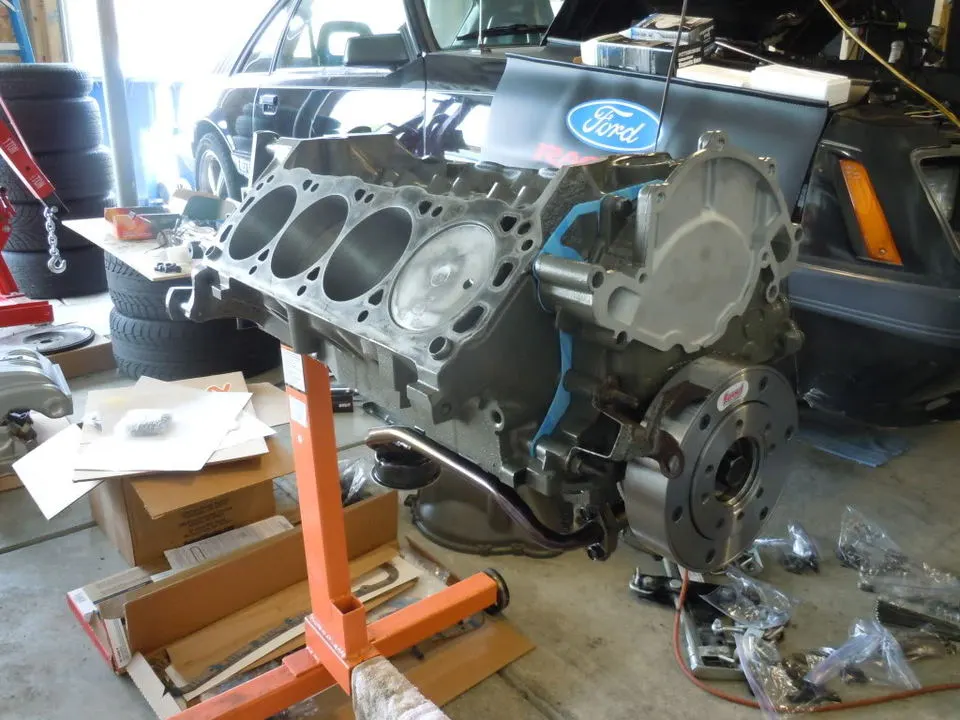
I wanted to verify the combustion chamber size, just for peace of mind. The heads were supposed to be milled to 61cc, so this is what I did:
Using my adjustable bench vice, I leveled out one of the heads on my workbench.
I grabbed a couple different syringes, the smaller one is a medical use, the larger is for cooking. Both measure in mL, which, if you guys paid attention in chemistry class, you'll remember mL=cc.
I filled the syringes with 10w-30, and incrementally filled one of the combustion chambers, paying attention to how much oil went in, by reading the markings on the syringe. I plugged the spark plug hole with an old spark plug.
This is what the head looked like after 60mL. As you can see, the oil is pretty much perfectly level with the deck surface. When I tried to move to 65mL, the oil started spilling out of the chamber, telling me the chamber volume is less than 65. It was hard to be EXACT, but it made me confident the chamber is at least CLOSE to 61cc.
Oh, I also got the timing cover and stuff on.
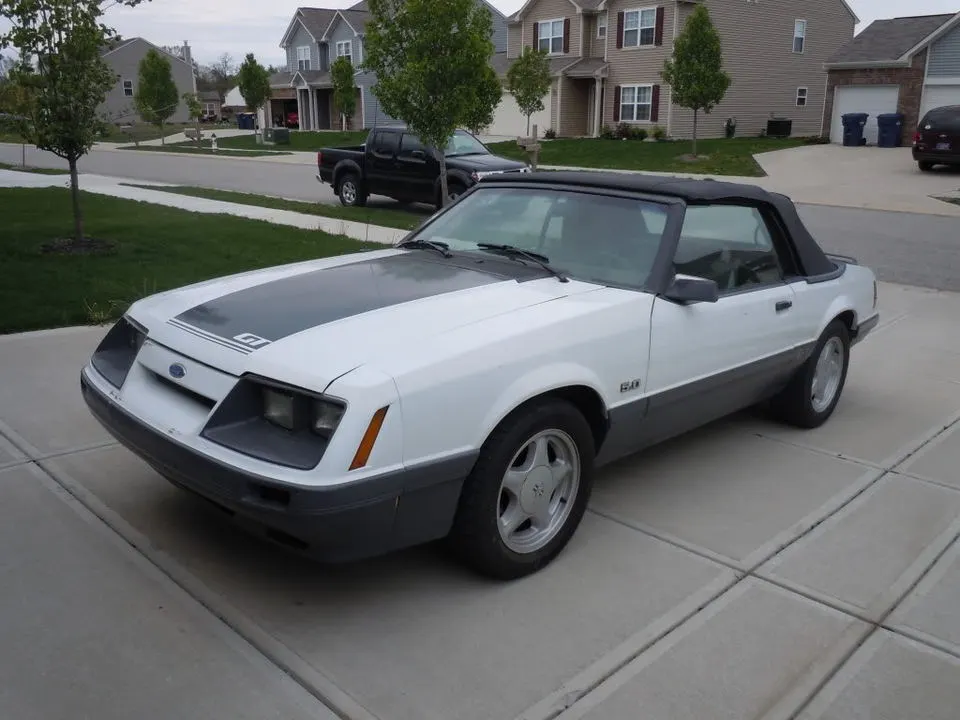
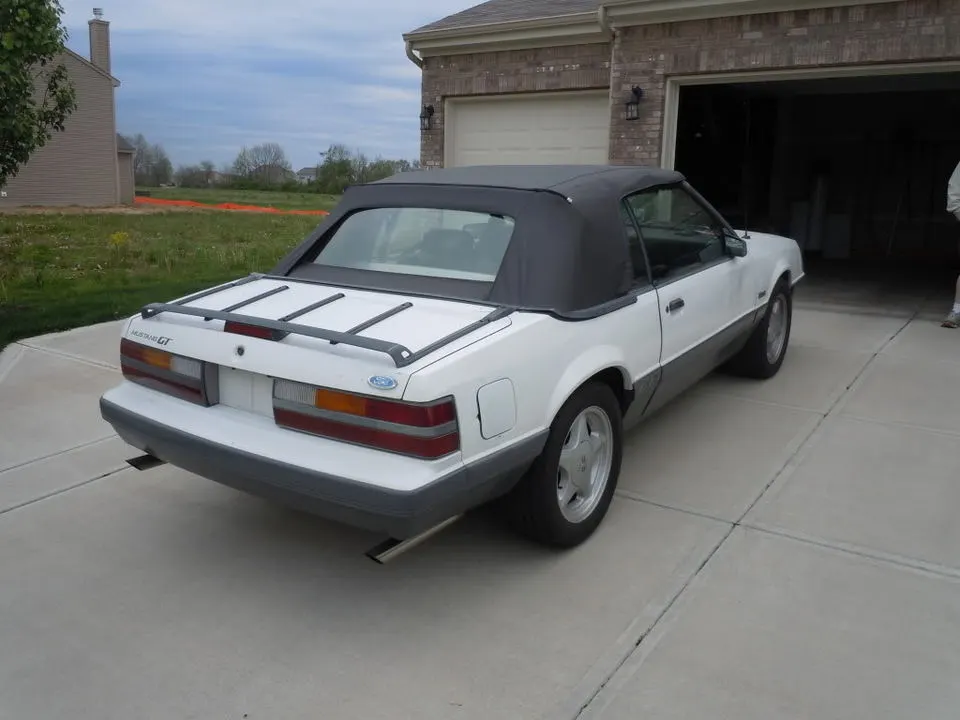
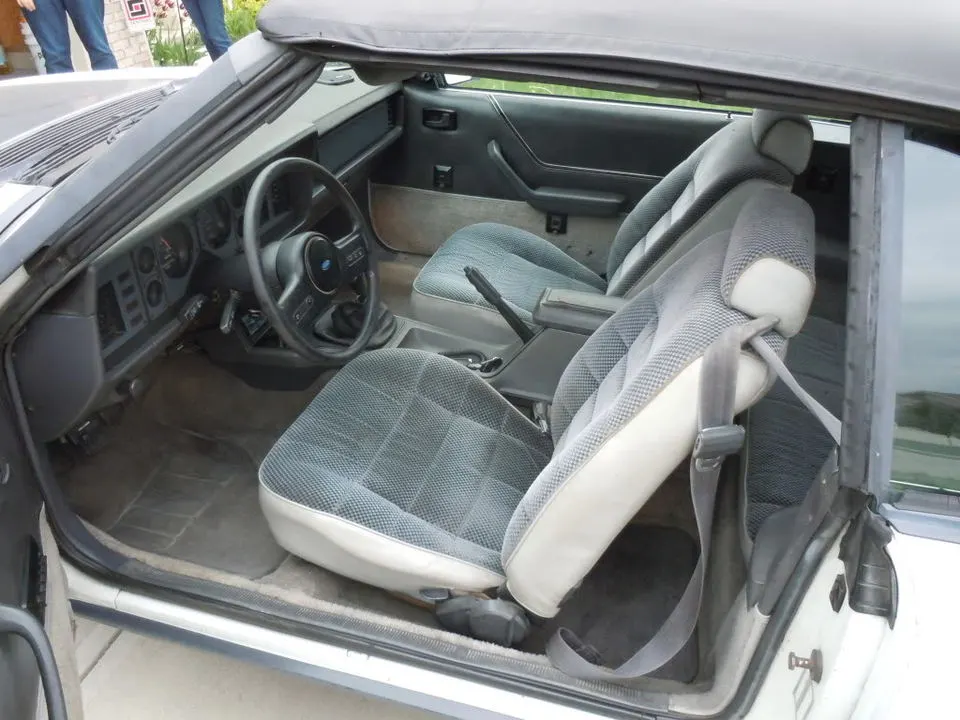
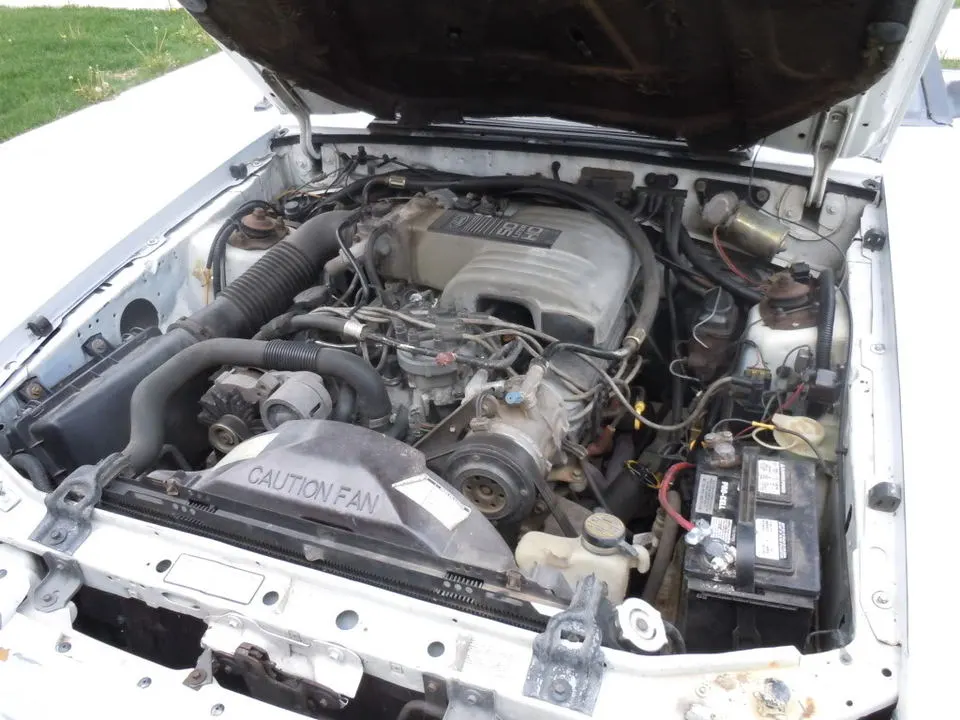
As a side note, I got a little distracted yesterday, because my next door neighbor brought this home- It's an '86, and is COMPLETELY stock except for a cat back and POSSIBLY gears, judging by the shift points. And, of course, the Pony wheels. The body is a little rough, but is completely rust free. I was blown away, because it's a high mileage car.

Maybe next time Chris sticks his head in here, he'll see it and add it to the tech reference sticky.
Copied your post into a new thread in Tech - http://www.stangnet.com/mustang-forums/837135-checking-piston-valve-clearance.html which is now linked in the How-to sticky in tech...


And your wife doesn't get pissed when you bring her cooking utensils into the garage and fill them w/ oil?
The last time I did that, I needed to suck out some of the water out of an overfilled battery,...(Obviously I had no intention of putting the sulfuric acid contaminated baster back) When my wife asked if I had seen her turkey baster I played stupid.
She saw it sitting on a shelf in the garage a month later....(my ears still ring)
The last time I did that, I needed to suck out some of the water out of an overfilled battery,...(Obviously I had no intention of putting the sulfuric acid contaminated baster back) When my wife asked if I had seen her turkey baster I played stupid.
She saw it sitting on a shelf in the garage a month later....(my ears still ring)
you guys make married life sound so fun!
Yeah, But being single, you'd have to go to a store to buy a turkey baster. I just went into the kitchen and snagged it.

Dunno if this was already noted or not, but how much did TEA take off the heads to get them to 61cc's?
That's a good question, I don't know. My paperwork doesn't say, it just says "mill to 61cc". The Trick Flow spec sheet says "Flat mill .006" per cc", so since it starts out at 65cc, I'd guess .024".

And your wife doesn't get pissed when you bring her cooking utensils into the garage and fill them w/ oil?
Oh, she would MURDER me haha. Nah, I went out and bought these new. She's a huge germaphobe, I'm not even allowed to wash my hands in the kitchen sink if I've been in the garage, regardless of how dirty my hands actually are.
you guys make married life sound so fun!
Eh, you only hear the bad stuff, because that's the stuff that's fun to joke about. All the good stuff about marriage is boring to talk about. Except for the sex. That's still not boring.

Mintsick
10 Year Member
Looking good man, like the little write up on checking PtV! I may have missed it but do you have a target completion date on having the car drivable?
Similar threads
- Replies
- 6
- Views
- 213
- Replies
- 8
- Views
- 343

- Replies
- 20
- Views
- 456

- Replies
- 16
- Views
- 527

